From 'Tell Me' to 'Do It': The AI Agent Revolution Just Got Real
The original draft was a bit dry and lacked the 'Enthusiast' persona's high energy. I injected more vivid language, punched up the LinkedIn hook to create actual tension, and ensured the analysis clearly framed the 'librarian vs. concierge' shift as the primary takeaway.
Automation needs a narrow first win
The best first AI workflow is usually a repeated task with a clear input, clear output, and a human approval step.
Let’s be honest: looking for disability insurance usually feels like a digital scavenger hunt. You’re jumping between tabs, copy-pasting your income, and praying the 'Submit' button actually works. It’s tedious, it’s friction-heavy, and it’s exactly the kind of 'busy work' that AI was born to kill.
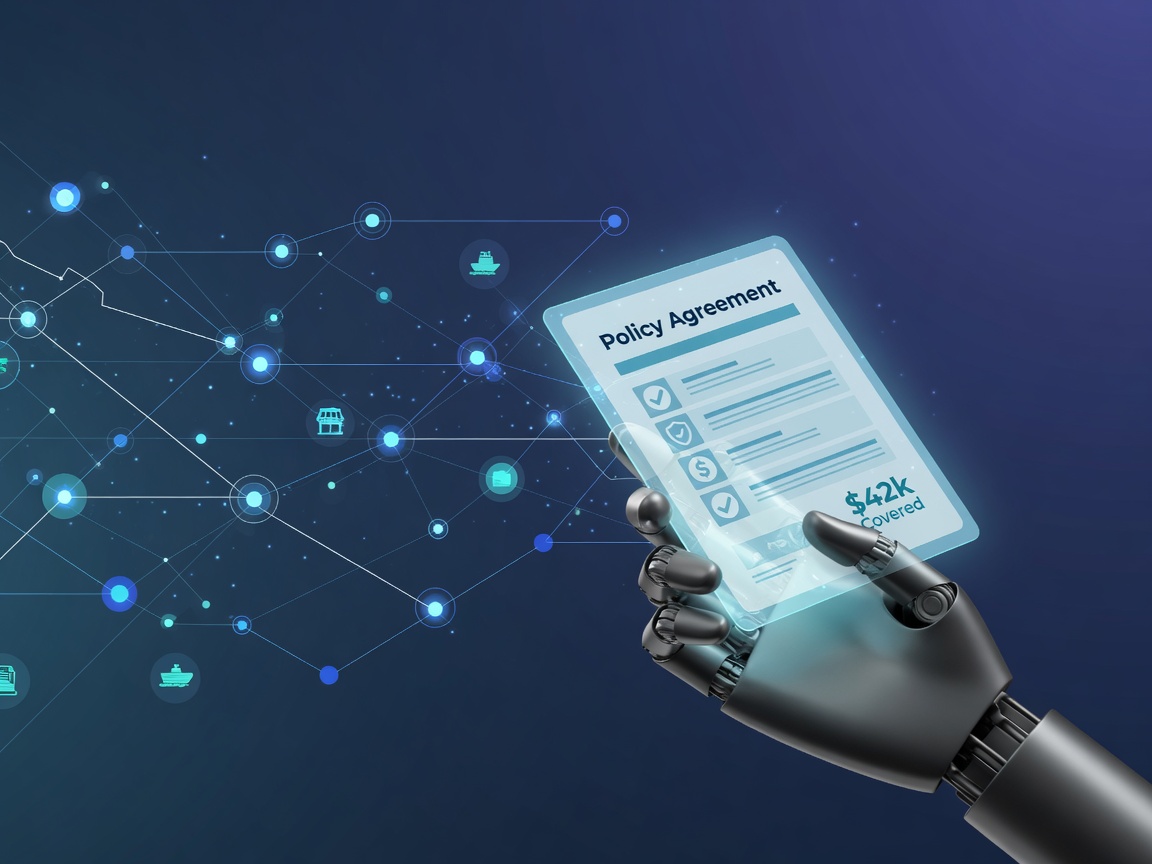
But for a long time, AI has been stuck in the 'research' phase—it can tell you about insurance, but it can't actually get you a quote. That’s all about to change. Seaworthy Insurance just dropped a massive bombshell by launching a live Model Context Protocol (MCP) server. They aren't just building a smarter chatbot; they’re giving AI agents a set of 'hands' to interact directly with their backend systems.
Giving AI Agents a Direct Line to Action
The real magic here is the agent-callable quote action. By exposing this via MCP, Seaworthy is letting AI agents step into the driver's seat. Instead of just summarizing a policy, an agent can now gather specific user data—like profession, income, and contact info—and generate a real disability insurance quote.
And here’s the kicker: that data flows straight into a Salesforce CRM. This isn't a simulation or a fancy text summary; it’s a functional, end-to-end workflow. Under the hood, the tech is incredibly lean. Built with Cloudflare Workers and TypeScript using stateless JSON-RPC over Streamable HTTP, the architecture prioritizes 'action' over 'memory.' The quote_request tool is a discrete unit of work—it takes the inputs, processes the request, and completes the cycle. It’s a seamless handoff from a conversation to a completed transaction.
Worth a look
Phugialy Picks

LG 34WR55QK-B 34-inch UltraWide WQHD (3440 x 1440) Curved Computer Monitor, 100Hz, 5ms, HDR10, Reader Mode, HDMI, DisplayPort, USB Type-C...

Logitech MX Vertical Wireless Mouse Ergonomic Design - Graphite

Anker Laptop Docking Station Dual Monitor, 8-in-1 USB C Hub with 4K HDMI
Some Phugialy Picks use affiliate links. If you buy through one, Phugialy may earn a commission. It doesn't change what we recommend. Full disclosure →
Security That Doesn't Squelch the Speed
We all know the 'creep factor' of AI data privacy can be a dealbreaker for big business. Seaworthy handled this like a pro by making the server fundamentally stateless. It runs no code on your machine and holds zero conversation history. It’s the gold standard for enterprise-grade tools where security isn't just a checkbox—it’s the foundation.
To keep things running smoothly without the hiccups, they’ve baked in server-side input validation, per-IP rate limiting, and duplicate suppression. These aren't just 'nice-to-have' extras; they are the essential guardrails that allow an external agent to interact with a core business process like insurance quoting without breaking anything. It ensures that while the AI is doing the heavy lifting, the data remains structured, secure, and spam-proof.
The Shift from Librarian to Concierge
The real story here isn't just a new API or a specific insurance tool. It’s the fundamental shift from 'AI as a librarian' to 'AI as a concierge.' We are moving away from a world where we ask an AI to summarize a document and toward a world where we tell an AI to 'get me a quote,' and it navigates the bureaucracy for us.
By exposing a quote action over MCP, Seaworthy is solving the 'last mile' problem of AI utility. It’s the bridge between a chat and a completed transaction. Give this a year, and we won't be talking about 'AI agents' as a novelty; we'll be looking at a world where these agents are the primary interface for every administrative task that currently requires a human to copy-paste data between two different windows. This is the quiet infrastructure for a much bigger, more autonomous future.
Got a question about how this applies to you? →
Keep reading
Follow the thread
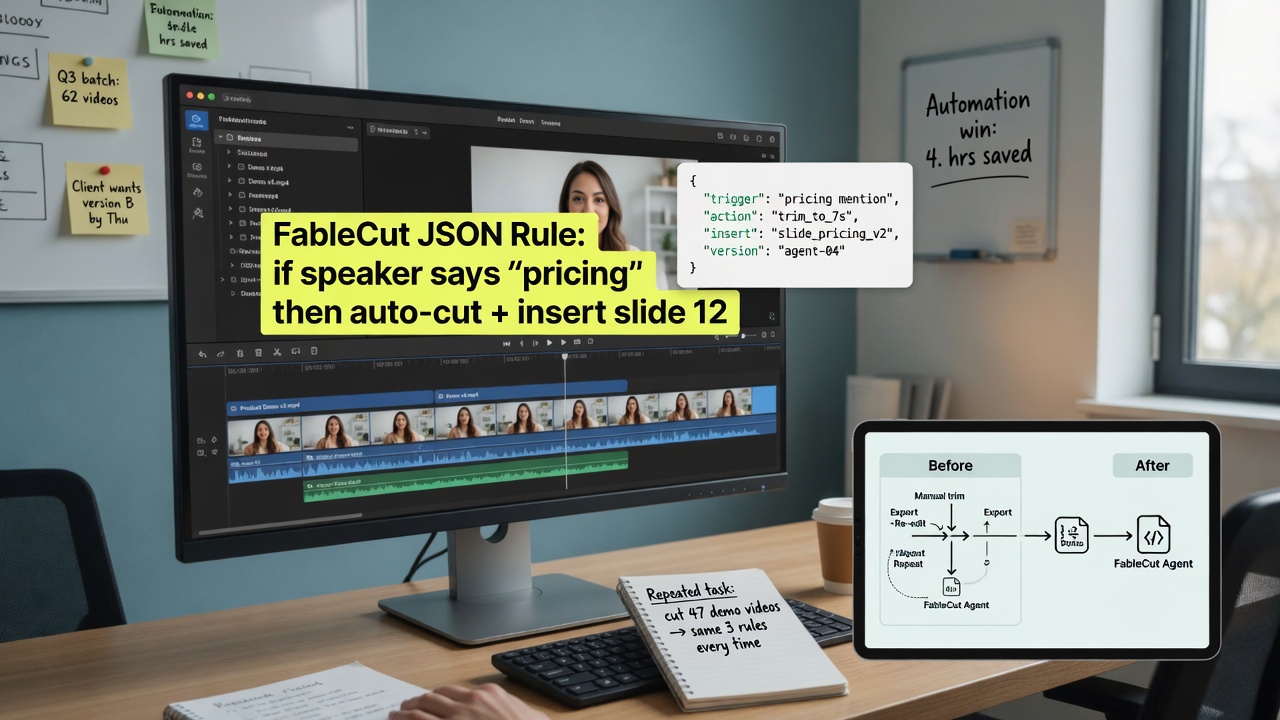
FableCut: Why JSON is the Secret Sauce for Agentic Video Editing
Let’s be real: most AI video tools are black boxes. You throw a prompt at them, and you cross your fingers that the output isn't a fever dream. FableCut is taking a different path. It’s a browser-based non-linear editor
Read this noteSame lane, different angle
Disability Insurance Meets MCP: An Agent-Callable Quote Server
An insurance brokerage now lets AI agents submit disability quote requests over MCP — no SSN, no medical history accepted, no client auth required. The first of its kind in disability insurance.
AI Coding Agent Memory That Survives Switching Tools
Switching between Claude Code, Cursor, and Antigravity on the same project usually means re-explaining your architecture every time. engrim compresses 153,000 tokens of work history into a memory pack under 1,000 tokens - and keeps it entirely on your machine.