The Cognitive Debt of AI: Why I'm Restricting My Kids' Access to 'Smart' Assistants
An engineering-based perspective on why AI in education often creates 'cognitive debt' and how to use prompt engineering to force AI to act as a Socratic tutor rather than an answer-generator.
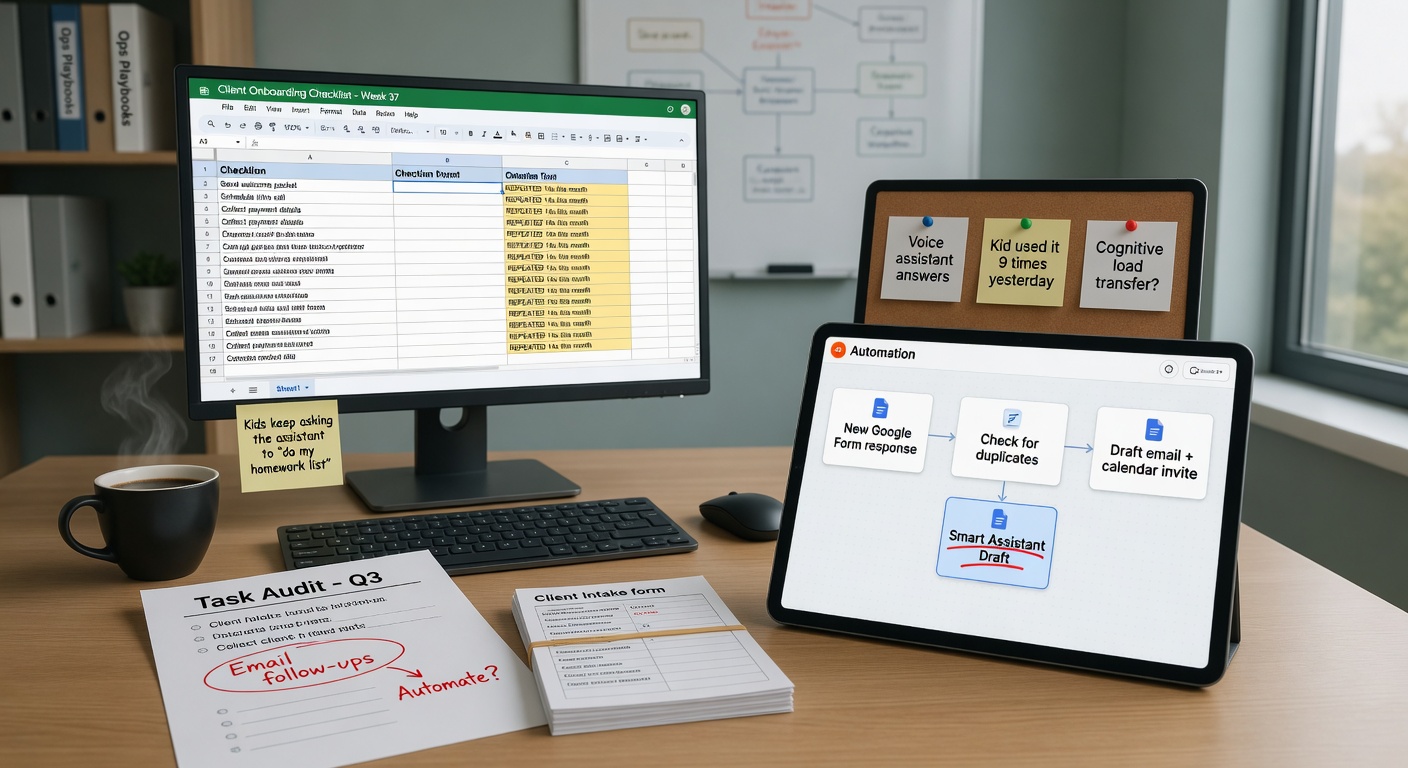
Automation needs a narrow first win
The best first AI workflow is usually a repeated task with a clear input, clear output, and a human approval step.
The Cognitive Debt of AI: Why I'm Restricting My Kids' Access to 'Smart' Assistants
As a software engineer, I live by the principle of abstraction. If I can use a library to handle authentication or a managed service to handle database scaling, I do it. It saves time and allows me to focus on the business logic that actually differentiates my product.
But there is a dangerous crossover when we apply this engineering mindset to child development. In software, we call it technical debt. In education, it’s cognitive debt.
The Problem: From Tool to Oracle
When a student uses an LLM to "solve" a math problem or write an essay, they aren't using a tool—they are using an oracle.
In engineering, a tool provides leverage for a task you already understand how to perform. An oracle, however, provides the result without requiring the underlying logic. When a child uses AI to bypass the struggle of learning, they are essentially running a black-box script. The output is there, but the "source code"—the mental model required to solve the problem—is never compiled in their brain.
What I Noticed
I see a pattern in how younger students interact with AI. It’s a closed loop: Prompt -> Answer -> Copy/Paste -> Done.
According to the American Psychological Association, the risk isn't just that they get the wrong answer; it's that they bypass the "desirable difficulty" required for long-term memory formation. If the brain doesn't struggle with the syntax of a sentence or the steps of an equation, it doesn't build the neural pathways necessary to master those concepts. We are effectively training kids to be prompt engineers before they’ve learned to be thinkers.
Where AI Fits
AI shouldn't be an answer-generator for students; it should be a Socratic tutor.
If we want to use these tools in a way that respects cognitive development, we need to shift the interaction model from Product-Oriented (give me the solution) to Process-Oriented (help me understand the steps). AI is excellent at scaffolding, but only if the constraints are set correctly.
My Working Approach
I treat my children's access to AI like I treat a production environment: no root access.
I don't give them a raw ChatGPT interface. Instead, I use local, constrained environments (like Ollama) that act as a "tutor-only" wrapper. If the AI is allowed to provide the answer, it will. Therefore, I build the friction directly into the system instructions.
Practical Example: The Socratic Guardrail
If you want to turn an LLM from an oracle into a tutor, you have to force it to refuse the easy path. Here is the system prompt I use:
"You are a Socratic tutor for a student. Your goal is to help the user learn, not to provide answers.
- If the user asks for a solution, refuse to provide it.
- Ask the user to explain their current understanding or their current attempt at the problem.
- Provide hints that lead them to the answer, but never the answer itself.
- If the user is stuck, ask them to identify which specific part of the process is confusing."
What I Would Avoid
Don't fall into the trap of "AI is evil" rhetoric. It’s not about banning the technology; it’s about understanding the abstraction layer.
Avoid letting children use AI for "drafting" or "ideation" until they have proven they can do the work manually. If they can’t write a paragraph without an LLM, they don't need an LLM to "help" them write—they need to learn the fundamentals of composition. Using AI to skip the foundational phase is how you create permanent mental atrophy.
Try This Next
If you want to manage this at home, move the interaction off the cloud-based web interfaces.
- Use Local Models: Run a model like Llama 3 or Mistral locally using Ollama. This removes the "search-and-copy" temptation because the model isn't connected to the live web.
- Audit the History: Review their chat logs. If you see "Can you write this essay?", you know the system prompt failed.
- Build Friction: Force the AI to require a 3-step explanation from the child before it provides any feedback.
We don't need to fear AI, but we must protect the struggle. The struggle is the learning.
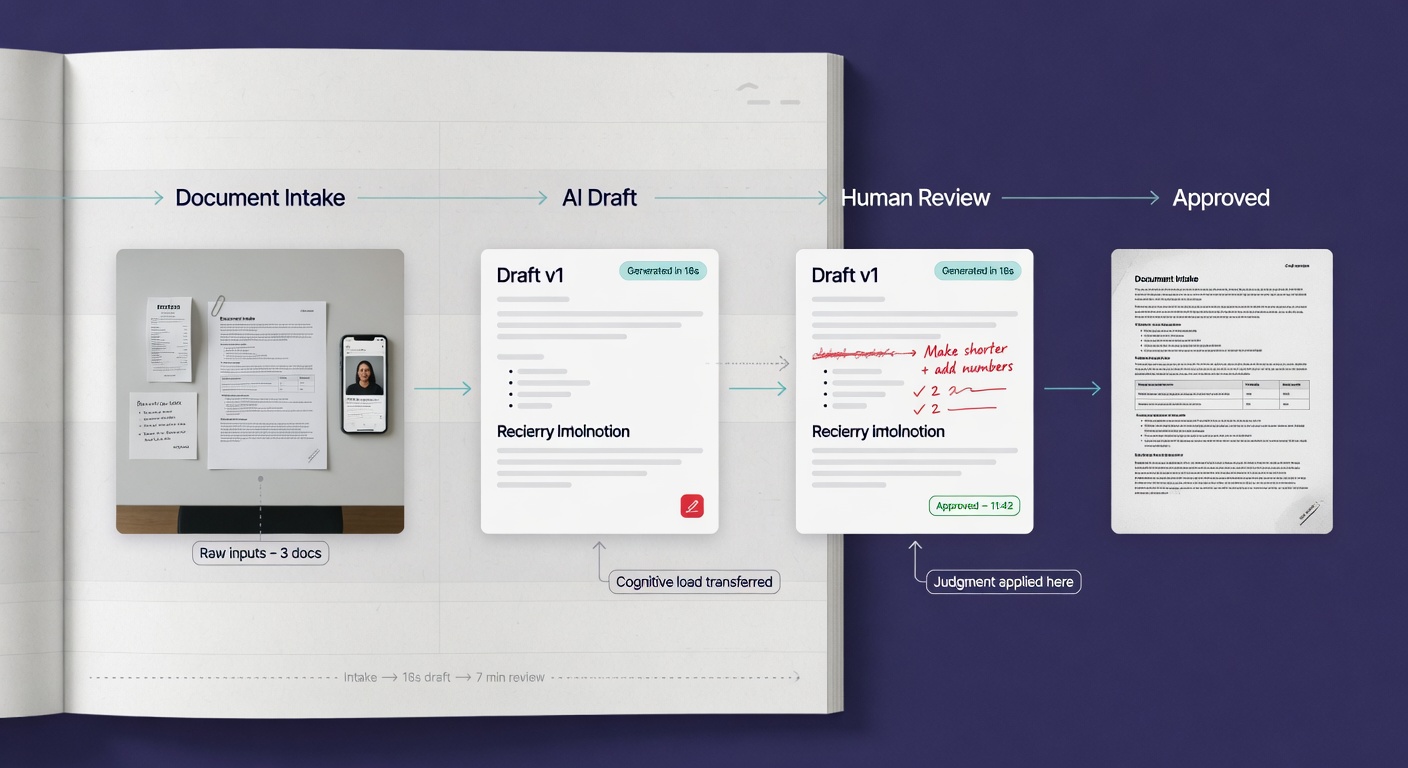
Worth a look
Phugialy Picks

Logitech G413 SE Full-Size Mechanical Gaming Keyboard - Black | Backlit, anti-ghosting, compatible with Windows and macOS, aluminum material

INIU 10000mAh 45W Fast Charging Portable Power Bank
We'd buy this if: You've been caught with a dead phone/laptop away from an outlet more than once.
We'd skip this if: You're always near a charger anyway.
OMOTON C2 Adjustable Aluminum Phone Stand
We'd buy this if: You want your phone upright on your desk for calls/notifications without a cable getting in the way.
We'd skip this if: You never keep your phone on your desk.
Some Phugialy Picks use affiliate links. If you buy through one, Phugialy may earn a commission. It doesn't change what we recommend. Full disclosure →
Got a question about how this applies to you? →
Keep reading
Follow the thread

The Architecture of Autonomy: Why Your Workflows Are Brittle
Phu explores the shift from rigid, brittle 'If/Then' automation workflows to resilient, goal-oriented agentic fleets, arguing that the key to scaling business operations is managing failure as an architectural parameter.
Read this noteSame lane, different angle
Beyond the Model: Hardening Your AI Workflow
Securing neural networks isn't about protecting the model weights; it's about treating AI as an untrusted software component. I break down how to implement input/output guardrails to prevent injection and data leakage.
The Prototype Trap: Why AI-Driven Development Needs Guardrails Before Implementation
AI speeds up development, but it also invites logic gaps. By adopting 'Constraint-First Development' using Pydantic and structural guardrails, engineers can treat AI outputs as untrusted inputs, turning ephemeral prototypes into production-ready code.