Codex Moving Into Enterprise Infrastructure Is Really About Workflow Control
A practical look at why enterprise Codex adoption is less about AI hype and more about context, review gates, cost control, and production workflow discipline.
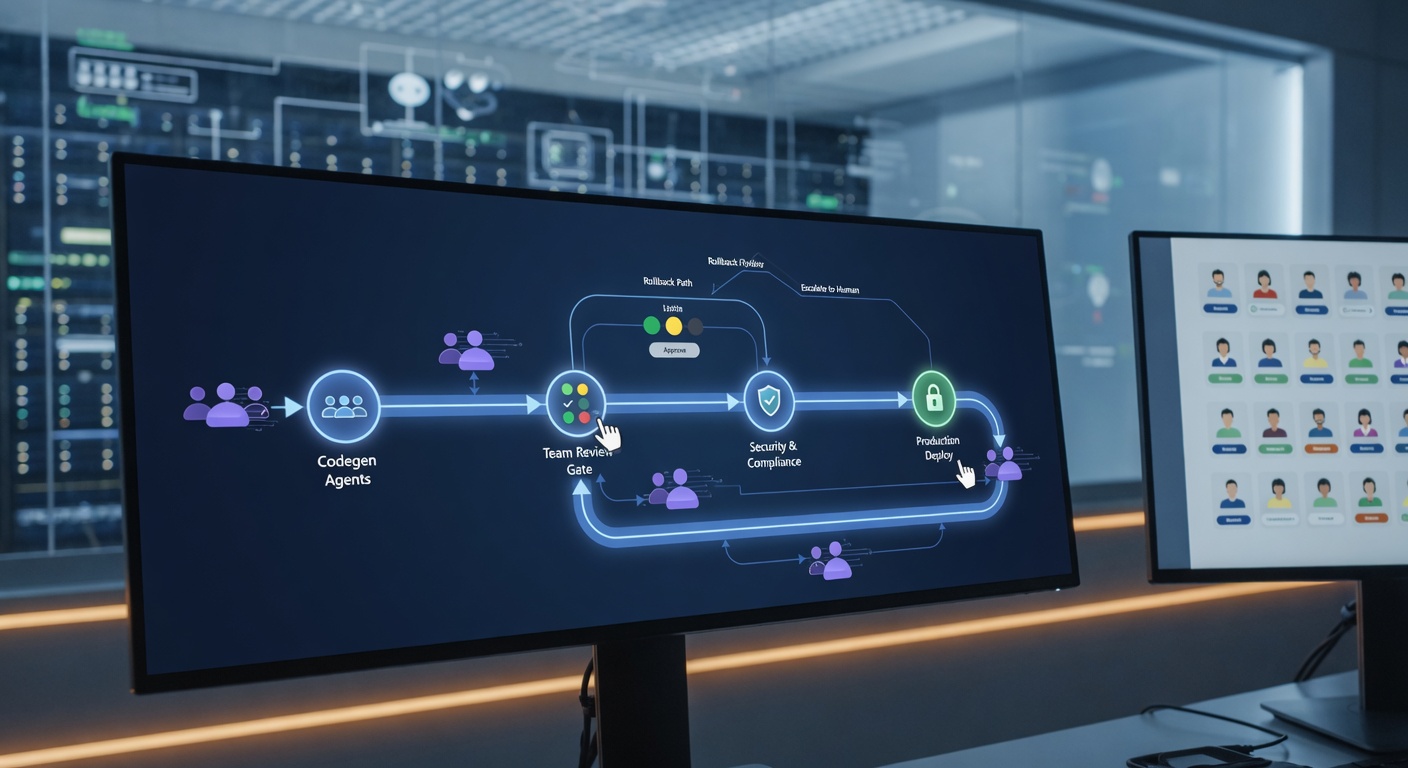
Agents need team boundaries
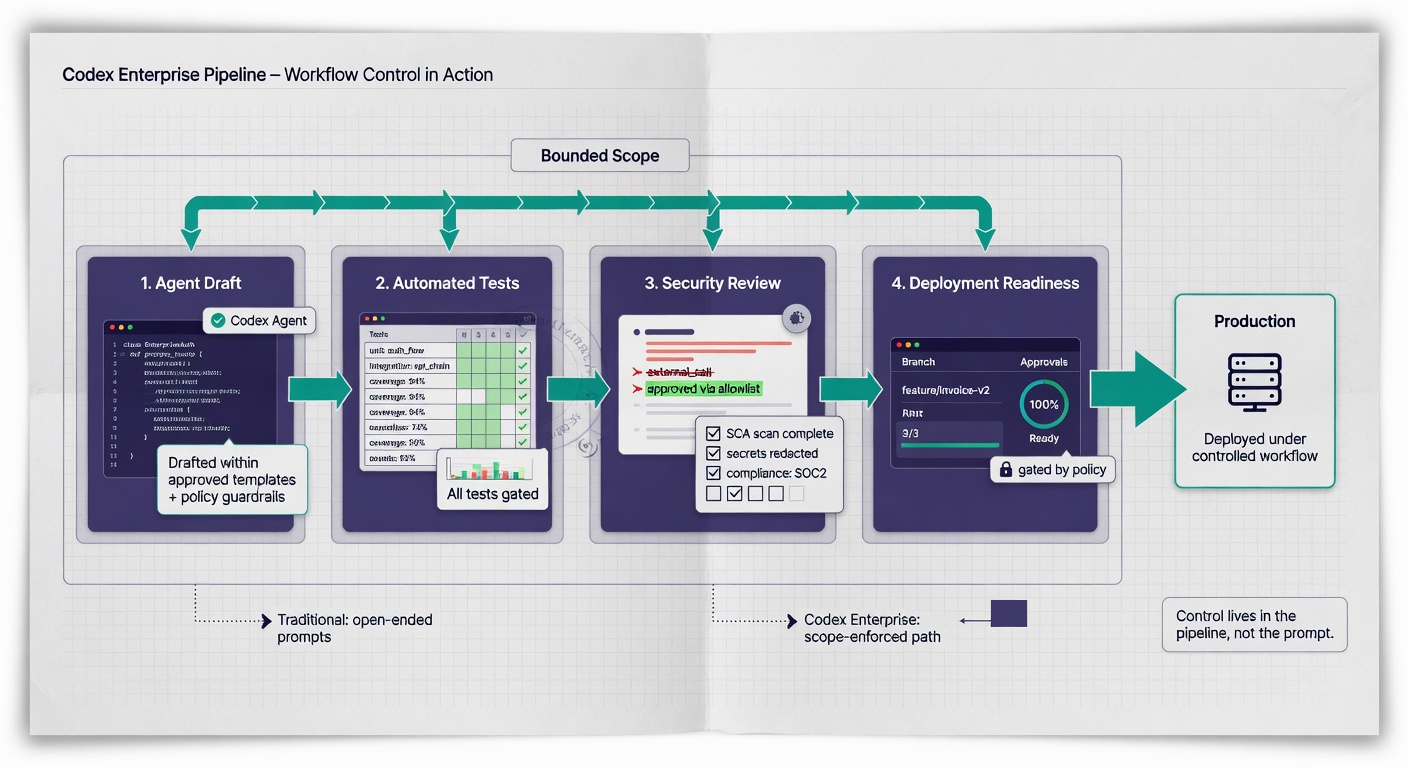
The useful shift is not more generated code. It is putting agent output through scope, review, tests, and release checks.
Codex Moving Into Enterprise Infrastructure Is Really About Workflow Control
The recent announcement regarding OpenAI’s partnership with Dell to bring Codex-level models directly into enterprise infrastructure is being framed as an "AI breakthrough." If you look past the marketing, the reality is much more pragmatic: we are moving away from the era of "chatting with an LLM" and into the era of "integrating AI into the build pipeline."
For those of us building software and automation systems, this isn't about smarter code completion. It’s about the shift from AI as a productivity tool to AI as a component of your infrastructure.
The Problem
Most teams currently use AI in a silo. A developer copies a block of code, pastes it into a browser tab, gets a suggestion, and pastes it back. This workflow is disconnected, creates "black box" code, and ignores the specific constraints of the existing codebase. When you scale this to a team, you end up with inconsistent patterns, security debt, and a lack of traceability.
What I Noticed
The enterprise push isn't about better models; it’s about context boundaries. By integrating directly with internal documentation, business systems, and operational knowledge, these tools are finally acknowledging the one thing that keeps AI from being truly useful: the lack of situational awareness.
If an AI doesn't know your deployment architecture, your naming conventions, or your specific legacy tech debt, it’s just guessing. By moving this into the infrastructure layer, the "guess" becomes a "query" against your own internal data.
Where AI Fits
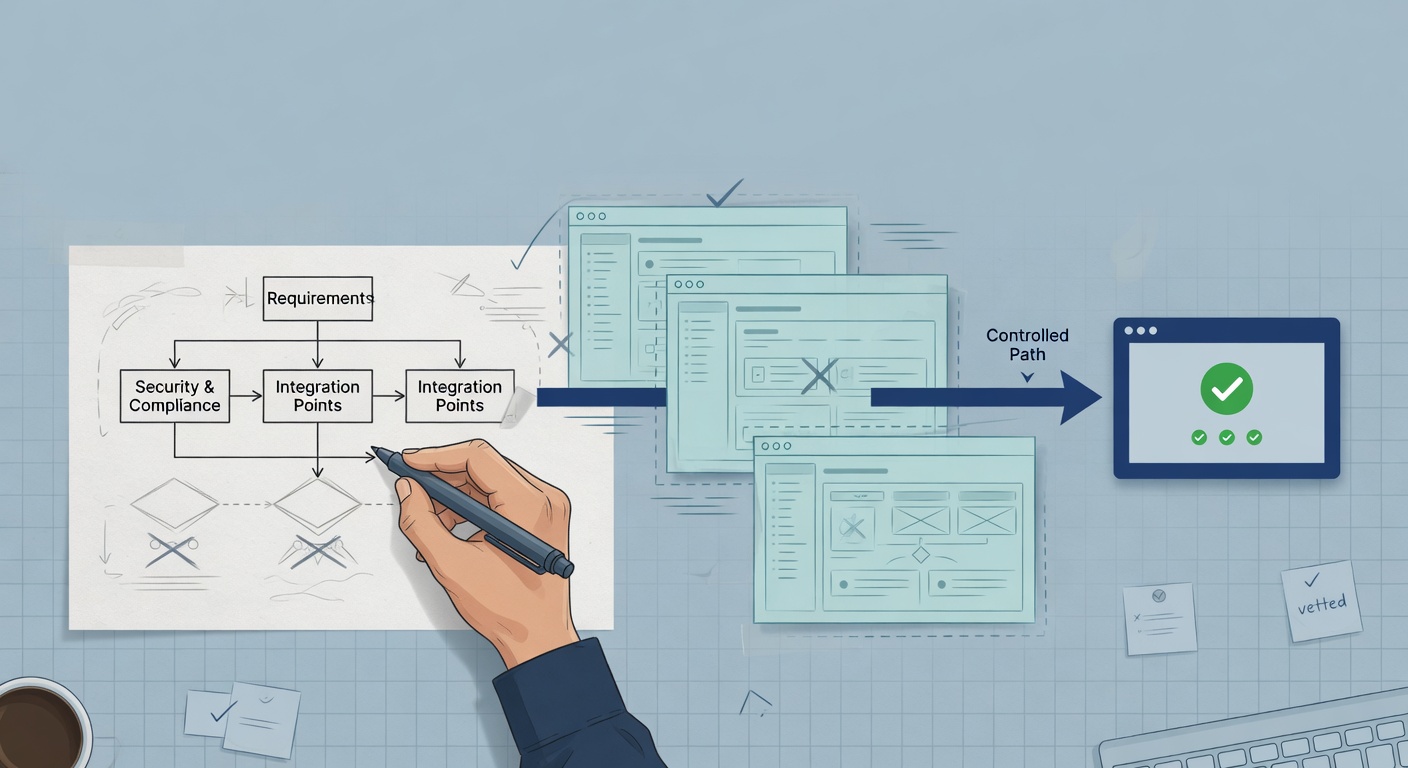
AI is no longer an external assistant; it is becoming a gatekeeper and a translator. In a production-ready environment, AI should sit between your requirements and your version control. It should be the bridge that ensures that a feature request doesn't just result in code, but in code that adheres to the team's established CI/CD patterns.
My Working Approach
When I integrate AI into my portfolio workflows, I treat it like a junior developer who has access to the documentation but is not allowed to commit to main without a human review.
My approach is built on three pillars:
- Context Injection: I explicitly feed the model the relevant service definitions and API contracts before asking for a solution.
- Review Gates: Every AI-generated block must be accompanied by an automated test suite. If the test doesn't pass, the code is discarded.
- Cost Visibility: I track the token usage against the complexity of the task. If I’m spending more on API calls than the time it would take to write a standard boilerplate, I revert to manual coding.
Practical Example: Automated PR Documentation
In one of my recent automation projects, I set up a local workflow using a custom script that triggers whenever a new branch is pushed.
Instead of relying on the AI to "write code," I have it generate a detailed diff summary based on the existing CONTRIBUTING.md and the current project structure.
# Workflow logic:
1. Capture git diff
2. Pass diff + local documentation context to the model
3. Generate a summary that highlights potential regressions
4. Append this summary to the PR description as a "Reviewer’s Note"
This doesn't replace the human reviewer; it forces the human reviewer to look at the specific areas where the code might deviate from our internal infrastructure standards. It turns the AI into a tool for enforcing discipline, not just generating lines of text.
What I Would Avoid
- The "One-Click" Fallacy: Do not automate the deployment of AI-generated code. The moment you remove the human review gate, you are essentially outsourcing your production stability to a probability engine.
- Over-reliance on Global Context: Don't feed the entire codebase into the model. It leads to hallucinations and "Frankenstein code." Stick to domain-specific context—only give the model what it needs to solve the current module.
- Ignoring Cost: When AI is "infrastructure," it’s easy to let usage run wild. Monitor your API costs as rigorously as you monitor your cloud server bills.
Try This Next
If you are working in a small team or managing a portfolio, stop using AI as a chatbot. Start building a "Context Wrapper."
Create a simple script that pulls your project’s README, your API_SPEC.yaml, and your CONTRIBUTING.md into a single local file. Before you start a new feature or fix a bug, use that file as the system prompt for your AI tool. You’ll notice an immediate difference in the quality of the output—it will actually sound like it belongs in your codebase.
The future of software engineering isn't about writing code faster; it's about managing the flow of logic through a system that is increasingly automated. The tools are catching up to this reality. It's time we caught up with them.
Reference: OpenAI and Dell Technologies Partnership
Worth a look
Phugialy Picks

GMKtec K15 AI Mini PC Oculink Intel Ultra 5 125U 32GB DDR5 512GB SSD | Desktop Computer AI Boost, 3X M.2 2280 Storage Expansion, Dual NIC...

Anker USB-C to USB-C 60W Fast Charging Cable (2-Pack)
We'd buy this if: You need a reliable spare charging cable that won't fray in a month.
We'd skip this if: You already have enough cables lying around.
Stanley Quencher H2.0 Tumbler 30oz
We'd buy this if: You want a large, well-reviewed insulated tumbler and don't mind it having nothing to do with AI.
We'd skip this if: You'd rather every Pick on this site stay strictly on-topic.
Some Phugialy Picks use affiliate links. If you buy through one, Phugialy may earn a commission. It doesn't change what we recommend. Full disclosure →
Got a question about how this applies to you? →
Keep reading
Follow the thread
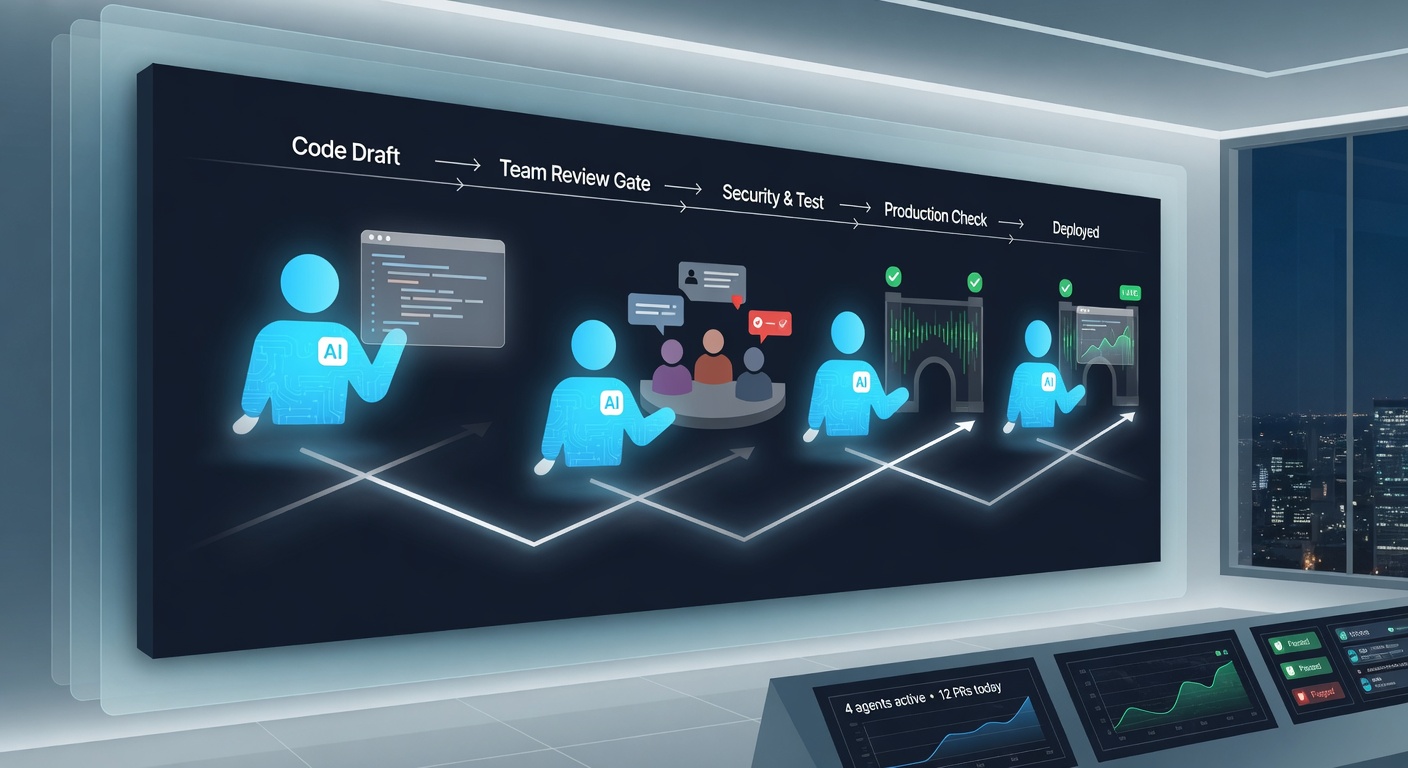
AI Coding Agents Are Becoming Team Infrastructure
AI coding agents are moving from individual prompts into managed team infrastructure; the useful work is defining scope, review gates, and production promotion paths.
Read this noteSame lane, different angle
Why Most Enterprise AI Agents Never Reach Production
Two out of three enterprise AI agents never reach production — and the reason isn't model quality. It's that the agent doesn't know what your data means.
AgentsDock: One Workspace for Agentic AI Research
AgentsDock 1.0 puts Claude Code, Codex, and Cursor in one workspace reachable from your phone - with training plots showing up inline in chat instead of behind an SSH login.