TimEE: Time Series Classification With Zero Real Training Data
A time series is just a list of numbers measured over time - heartbeats, sensor readings, stock prices - and classifying one usually means training a new model from scratch for every single dataset. TimEE, a new 4.5M-par
Automation needs a narrow first win
The best first AI workflow is usually a repeated task with a clear input, clear output, and a human approval step.
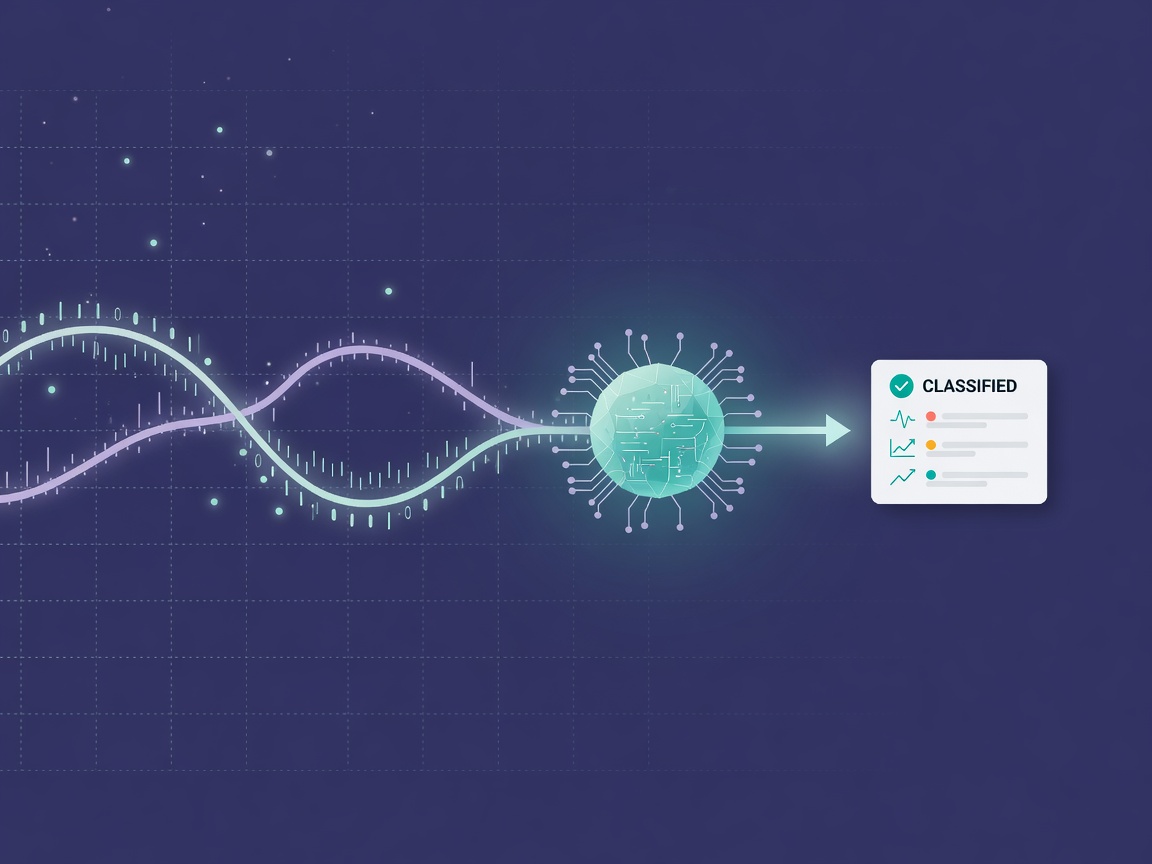
A time series is just a list of numbers measured over time - heartbeats, sensor readings, stock prices - and classifying one usually means training a new model from scratch for every single dataset. TimEE, a new 4.5M-parameter foundation model described in a recent arXiv article, does something different: it classifies time series end-to-end using in-context learning, without any per-dataset training at all.
If that sounds familiar, it's because it's the same idea behind large language models: pre-train once on a broad mix of tasks, then handle new tasks at inference time by showing examples in context. TimEE applies that recipe to time series classification (TSC), and the surprising part is what it was trained on.
Trained Entirely on Data That Doesn't Exist
TimEE was meta-trained exclusively on synthetic TSC tasks - artificial time series generated with structured distributional shifts built in. It never saw a real time series during pre-training. Despite that, it ranks first in ROC AUC and third on accuracy on the UCR benchmark, a standard collection of real-world classification datasets, among all compared methods.
That makes it the first purely synthetic-pretrained model to reach state-of-the-art performance on the UCR benchmark. The bet baked into the design is that well-structured synthetic tasks teach the general skill of pattern-matching over sequences well enough that real data at inference time doesn't require real data at training time.
Worth a look
Phugialy Picks

AI Engineering: Building Applications with Foundation Models
A practical guide to building real-world applications with foundation models and LLMs.

GMKtec K15 AI Mini PC Oculink Intel Ultra 5 125U 32GB DDR5 512GB SSD | Desktop Computer AI Boost, 3X M.2 2280 Storage Expansion, Dual NIC...

AI: Understand the Revolution: From Basics and Buzzwords to Tech Giants, Governments, and Your Future
Some Phugialy Picks use affiliate links. If you buy through one, Phugialy may earn a commission. It doesn't change what we recommend. Full disclosure →
Why 4.5 Million Parameters Is Part of the Story
Most coverage of foundation models treats parameter count as the headline number, and bigger usually reads as better. Here the more interesting fact is how small this model is: 4.5 million parameters - the source article even notes a submission size of just 653 KB. This is not a brute-force scale story; it's evidence that for this task family, the pre-training distribution may matter more than model size.
My read - and this is interpretation rather than a claim from the paper itself - is that this is the part most summaries will gloss over. The headline result is "synthetic pre-training works," but the sharper insight is that in-context learning for classification might be a much cheaper capability to build than we've assumed. A tiny model with the right training curriculum can compete with per-dataset pipelines that each require their own training run.
What This Changes Practically
The traditional TSC workflow - collect data, train a specialized classifier, repeat for each new dataset - carries real cost every time you face a new problem. An end-to-end foundation model flips that: you bring your labeled examples as context and get predictions without training anything.
That's not automatically better for every case; ranking third on accuracy means some specialized methods still win on raw correctness, even though TimEE leads on ROC AUC. But as a starting point that requires zero per-dataset work, it changes where you'd begin.
The code is publicly available, so this is checkable today rather than something to wait on. What I'll be watching for is whether other researchers adopt synthetic-prior pre-training for their own sequence tasks - if results like this replicate beyond UCR, synthetic-only pre-training stops being a curiosity and becomes a default technique.
Got a question about how this applies to you? →
Keep reading
Follow the thread
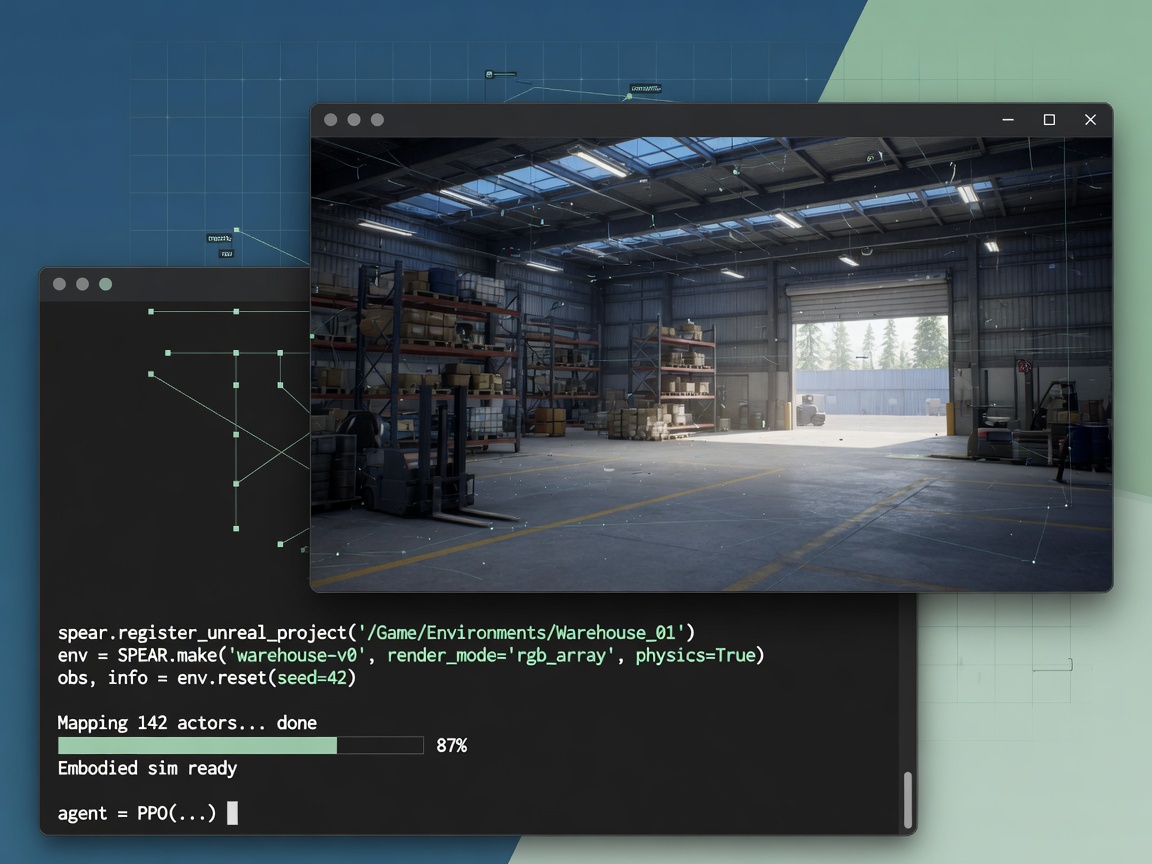
SPEAR Turns Any Unreal Project Into an Embodied AI Simulator
A new open-source library exposes over 14,000 Unreal Engine functions to Python at no wrapper cost — turning any UE project into candidate training infrastructure for embodied AI at 73 fps photorealistic rendering.
Read this noteSame lane, different angle
Your Playlists Are a Privacy Leak: Inferring PII From Spotify
Researchers have built a deep learning tool that infers sensitive personal information — age, gender, country, drinking and smoking habits, even Big Five personality scores — from nothing but a user's public Spotify play
Knowledge Distillation For Time Series Classification: What Holds Up
A study across three architectures found knowledge distillation helps time series models most at intermediate sizes — not at maximum compression. One distilled FCN student dropped parameters by a factor of 38.