The Industrialization of Fraud: Why Voice Cloning is Outrunning Defense
The shift from opportunistic scamming to the industrialization of fraud is happening faster than our defensive infrastructure can keep up. We are moving into an era where agentic AI systems autonomously manage the entire
Automation needs a narrow first win
The best first AI workflow is usually a repeated task with a clear input, clear output, and a human approval step.
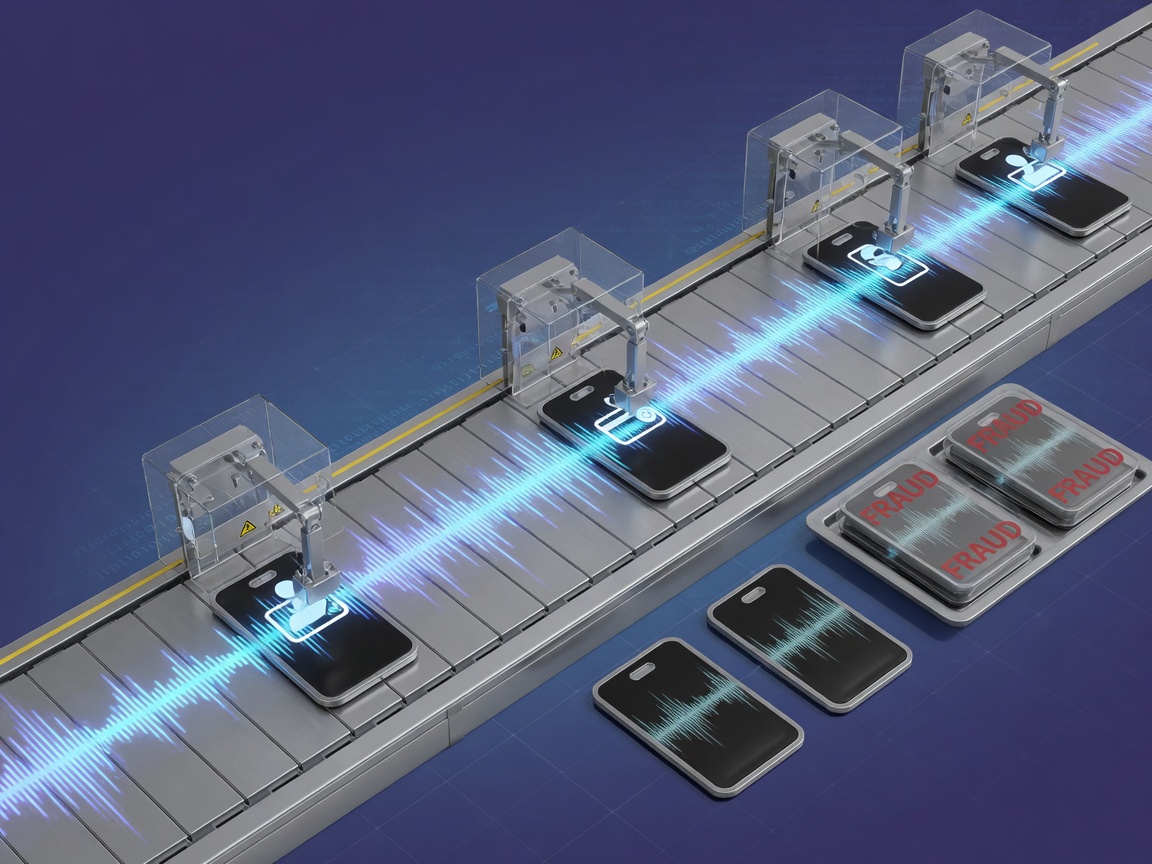
The shift from opportunistic scamming to the industrialization of fraud is happening faster than our defensive infrastructure can keep up. We are moving into an era where agentic AI systems autonomously manage the entire lifecycle of a fraud campaign—from initial reconnaissance to the final ransom demand. This isn't just a smarter version of an old trick; it's a scalable, automated pipeline that makes AI-enhanced fraud roughly 4.5 times more profitable than traditional methods.
In 2026, the FBI officially categorized artificial-intelligence-enabled fraud as a distinct crime category, signaling that this isn't a niche problem—it's a systemic shift. With worldwide losses to financial fraud hitting $442 billion in 2025, the scale of the threat is becoming impossible to ignore.
The Automation of the Attack Lifecycle
The most significant shift here is the move toward agentic systems. While voice cloning is the "front-end" of the scam, the agentic AI handles the "back-end" logic. These systems can plan and execute complex campaigns autonomously, allowing organized groups to scale operations at a pace that manual human scammers couldn't match. This automation is a primary driver behind why cybercrime losses in the United States rose 26 percent in a single year to $20.9 billion.
With more than 22,000 complaints already showing an AI nexus and adjusted losses exceeding $893 million, we are seeing a shift toward high-margin industrial fraud. When you combine this with the fact that voice cloning now requires as little as three seconds of audio to produce an indistinguishable synthetic voice, the barrier to entry for high-scale fraud has effectively collapsed. We aren't just looking at more scams; we're looking at a factory model of crime where the cost of entry is near zero and the reach is global.
Worth a look
Phugialy Picks

AI Engineering: Building Applications with Foundation Models
A practical guide to building real-world applications with foundation models and LLMs.

GMKtec K15 AI Mini PC Oculink Intel Ultra 5 125U 32GB DDR5 512GB SSD | Desktop Computer AI Boost, 3X M.2 2280 Storage Expansion, Dual NIC...

GEEKOM IT15 AI Mini PC, Intel Ultra 9 285H(99 Tops), 32GB DDR5, 1TB SSD | The Most Powerful Workstation,Arc 140T GPU,WiFi 7,8K Business D...
Some Phugialy Picks use affiliate links. If you buy through one, Phugialy may earn a commission. It doesn't change what we recommend. Full disclosure →
Reactive Provenance vs. Proactive Friction
Current safety measures from major providers like ElevenLabs are largely reactive. They focus on provenance—providing a way to verify a clip's origin after the fact—rather than preventing the generation of a clone in the first place. Many commercial products still rely on simple self-attestation checkboxes for consent, which offer almost no protection against malicious actors. This creates a massive gap between the technology's capabilities and its actual security posture.
For example, while we see $352 million in losses to victims aged sixty and over, the technology to prevent that specific theft is currently being sidelined in favor of a "fast-moving market" that avoids friction. This is where the builder's dilemma hits home: we are shipping tools that are inherently "easy" to abuse because "easy" is what sells to the consumer.
The Friction Gap in Production Environments
The real story here is the intentional omission of verification. The evidence points out that robust, mandatory verification—where the person being cloned must explicitly consent—is the exact friction that a competitive market is reluctant to impose on itself. From an engineering perspective, this means we are building tools that are inherently "easy" to abuse because "easy" is what sells to the consumer.
If you're integrating voice AI into a production environment, the interesting question isn't just "can we clone this voice?" but "how do we build a verification layer that doesn't break the user experience?" Until we move past self-attestation and toward mandatory, cryptographically backed consent, the industrialization of fraud will continue to outpace the defensive measures we're currently deploying. We need to stop asking how we can make these tools faster and start asking how we can make them safer without sacrificing the very speed that makes them valuable.
Got a question about how this applies to you? →
Keep reading
Follow the thread

The Autonomy Trap: Why Agentic AI Security is a Moving Target
The shift from AI as a passive assistant to an active agent represents more than just a technical upgrade; it is a fundamental expansion of the attack surface. When systems like OpenClaw move from merely answering questi
Read this noteSame lane, different angle
Moving Beyond Scanners: Evaluating Capital One’s VulnHunter Agentic AI
The original draft was solid but slightly dry for a 'Builder' persona. I injected more direct, high-energy language and sharpened the tension in the hook to move beyond just restating the quote. I also ensured the analytical perspective on legacy code complexity and model overhead was front and center.
Moving Beyond Agents: The Reality of Autogenic 6G Management
The shift toward "autogenic" networks means 6G won't just use AI—it will write its own management code on the fly. This moves us past simple agents into a world of self-architecting infrastructure that could either solve our scalability limits or create impossible-to-trace ripple effects.