SenseTime’s Galaxy Project: The Software Play for Hardware Independence
SenseTime is moving past the 'chip replacement' phase and into a full-stack infrastructure play. By launching the Galaxy Project, they aren't just trying to source better silicon; they are attempting to build a domestic
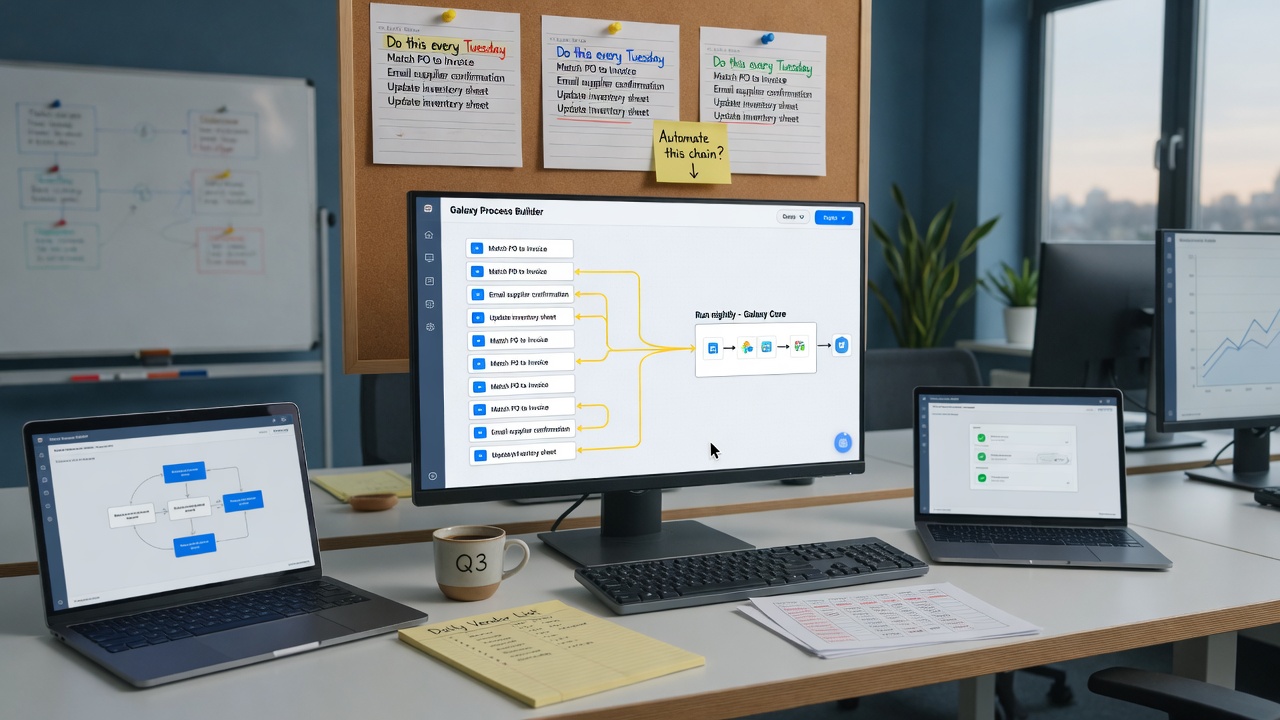
Automation needs a narrow first win
The best first AI workflow is usually a repeated task with a clear input, clear output, and a human approval step.
SenseTime is moving past the 'chip replacement' phase and into a full-stack infrastructure play. By launching the Galaxy Project, they aren't just trying to source better silicon; they are attempting to build a domestic AI chip ecosystem that makes hardware variety irrelevant through a dedicated adaptation layer.
Rather than focusing on a single piece of hardware, the project targets a "closed loop" of technology, partnerships, and deployment. By partnering with nearly 20 companies and research institutions like the Shanghai Artificial Intelligence Laboratory, SenseTime is attempting to bridge the gap between raw compute and production-ready applications.
Beyond the Silicon Lottery
The project highlights several metrics designed to quantify domestic hardware against established benchmarks. SenseTime claims an 85–152 percent increase in Model FLOPs Utilization on mainstream domestic chips and positions inference cost-effectiveness at 1.25x that of Nvidia’s H-series parts. They also report a 2.5x increase in token output at equivalent cost and a 93 percent multi-card parallel acceleration ratio for domestic chips running DiT models.
For a practitioner, these numbers are the headline, but the real engineering hurdle is consistency. A high Model FLOPs Utilization is a solid milestone, but it doesn't guarantee seamless performance across diverse workloads. However, the introduction of "Tokens Per Watt" as a primary metric suggests a shift toward power-constrained optimization—a reality for any data center operating at scale. If SenseTime can maintain these margins while scaling from 3,000 petaflops to a target of 40,000 by 2030, the economic argument for domestic hardware moves from theoretical to practical.
Worth a look
Phugialy Picks

AI Engineering: Building Applications with Foundation Models
A practical guide to building real-world applications with foundation models and LLMs.

GMKtec K15 AI Mini PC Oculink Intel Ultra 5 125U 32GB DDR5 512GB SSD | Desktop Computer AI Boost, 3X M.2 2280 Storage Expansion, Dual NIC...

GEEKOM IT15 AI Mini PC, Intel Ultra 9 285H(99 Tops), 32GB DDR5, 1TB SSD | The Most Powerful Workstation,Arc 140T GPU,WiFi 7,8K Business D...
Some Phugialy Picks use affiliate links. If you buy through one, Phugialy may earn a commission. It doesn't change what we recommend. Full disclosure →
The Orchestration Moat
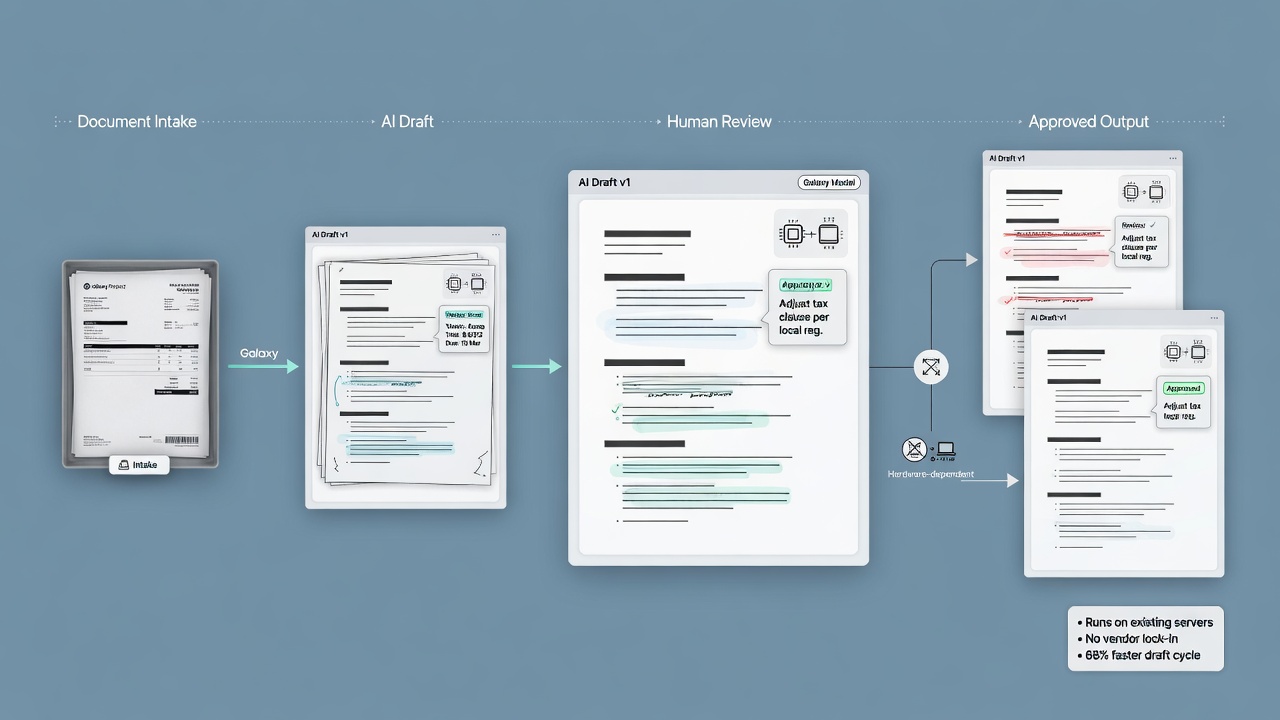
The most critical component of the Galaxy Project is the development of a full-stack adaptation layer. In a landscape where hardware variety creates fragmented software pipelines, this layer is the actual bridge to production. It allows for workload migration across different domestic chip vendors, effectively decoupling the software from the specificities of any single chip.
The expansion into space computing with Guoxing Aerospace and overseas infrastructure in Saudi Arabia further indicates that this isn't just a localized hardware push; it's an attempt to create a versatile, geographically distributed compute fabric. By integrating "AI for Science" (AI4S) into the roadmap, they are signaling a move toward high-value research in materials science and life sciences, where the availability of specialized compute outweighs the specific constraints of any single chip.
The Real Story: Masking the Hardware
The real story here isn't just about replacing Nvidia chips; it's about the massive engineering effort required to make heterogeneous hardware usable. By building a "closed loop" and a full-stack adaptation layer, SenseTime is acknowledging that hardware alone won't solve the problem of domestic AI.
What this actually points to is a massive investment in software orchestration to mask the limitations of domestic silicon. They are betting that by creating a standardized way to move workloads across different chips, they can build a resilient infrastructure that isn't beholden to a single supply chain. It’s a move toward making the underlying hardware a commodity—which is the only way to achieve the scale they are projecting for 2026 and beyond.
Got a question about how this applies to you? →
Keep reading
Follow the thread

The Capex Trap: Why Big Tech is Doubling Down on AI Infrastructure
Let’s cut through the hype and look at the actual balance sheets. Big tech's Q2 earnings are starting to reveal a massive friction point: the gap between astronomical capital expenditure (Capex) and actual, broad-based e
Read this noteSame lane, different angle
The ROI Reality Check: Navigating the AI Infrastructure Correction
Nvidia’s 5% share price drop on Monday, which saw it lose its position as the world’s most valuable listed company to Apple, represents a fundamental recalibration of the AI investment thesis. We are moving out of a peri
The Physicality Pivot: Why AI’s Next Frontier is Hardware, Not Just Hype
AI is moving from your screen into your physical space. From 1X's robotic hands to Meta's smart glasses, the next competitive frontier isn't just better chat—it's physical agency.