Self-Evolving LLM Agents: Why SOPs Beat Bigger Models
The cheapest performance upgrade for an LLM agent isn't a bigger model - it's turning what the agent already did once into something it can reuse. That's the core idea behind EvoSOP, a framework described in a recent arX
Automation needs a narrow first win
The best first AI workflow is usually a repeated task with a clear input, clear output, and a human approval step.
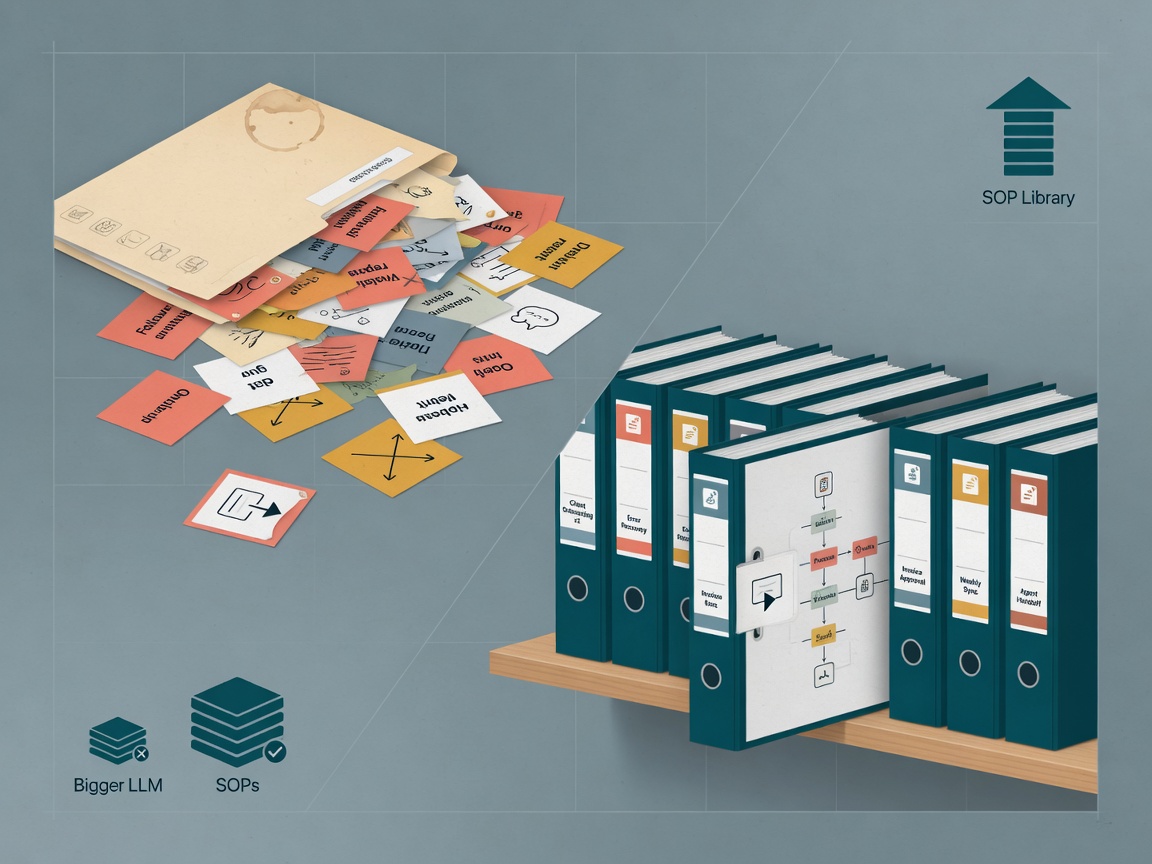
The cheapest performance upgrade for an LLM agent isn't a bigger model - it's turning what the agent already did once into something it can reuse. That's the core idea behind EvoSOP, a framework described in a recent arXiv paper where agents synthesize their atomic actions into callable higher-order tools called Standard Operating Procedures, or SOPs.
How Self-Evolving LLM Agents Actually Work
Instead of treating every task as a fresh sequence of small tool calls, the EvoSOP framework lets an agent extract SOPs from its own execution trajectories - essentially distilling a successful run into a reusable procedure. The system then iteratively optimizes the toolset through systematic construction, merging, evaluation, and pruning of these SOPs.
The reported results are the kind that matter operationally: significantly boosted task success rates while reducing interaction rounds compared to baselines. Fewer interaction rounds means fewer tokens billed, less latency per task, and fewer chances for an agent to wander off mid-job. Success rate plus efficiency moving together is the combination you want, because it rules out the common failure mode where an agent gets faster only by cutting corners.
Worth a look
Phugialy Picks

AI Engineering: Building Applications with Foundation Models
A practical guide to building real-world applications with foundation models and LLMs.

GMKtec K15 AI Mini PC Oculink Intel Ultra 5 125U 32GB DDR5 512GB SSD | Desktop Computer AI Boost, 3X M.2 2280 Storage Expansion, Dual NIC...

AI: Understand the Revolution: From Basics and Buzzwords to Tech Giants, Governments, and Your Future
Some Phugialy Picks use affiliate links. If you buy through one, Phugialy may earn a commission. It doesn't change what we recommend. Full disclosure →
What You'd Actually Deploy
Nothing here is plug-and-play for a business tomorrow - this is research-stage work on arXiv, not a product with a pricing page. But the operational pattern it points to is worth understanding now, because it maps onto how experienced teams already run automation: don't re-solve problems you've solved before; codify the solution and call it.
If your team runs agents on repetitive workflows - document processing, support triage, scheduled reporting - the EvoSOP pattern suggests where the leverage is. Every time an agent completes a workflow successfully, that run contains a procedure someone paid full price for once. Capturing it as a callable unit is how you stop paying full price on every repeat. The pruning step matters too: toolsets that only grow become their own maintenance burden, so the framework's explicit evaluation and pruning loop is what keeps the reusable library from rotting.
The Real Cost Isn't the Framework - It's the Discipline
The real cost of adopting this pattern isn't compute or licenses; it's building the operational discipline to treat agent runs as auditable assets. Someone has to decide which trajectories are trustworthy enough to distill into an SOP, which merged procedures stay in the library, and what triggers pruning. That's process work before any code gets written.
What this actually points to, in my read: agent reliability in production will increasingly come from curation rather than raw model capability. A team that maintains a clean library of validated procedures will beat a team running raw agents off bigger models at lower cost - because their error surface shrinks with every distilled workflow instead of staying flat. The business this helps most isn't AI labs; it's any operation running the same agent workflows hundreds of times a week with thin margins per task.
Worth adopting once your workflows are stable enough that their success patterns repeat reliably - not before. If your tasks vary wildly day to day, there's nothing consistent to distill yet, and building extraction infrastructure would be spending money on procedure capture for procedures that don't exist.
Got a question about how this applies to you? →
Keep reading
Follow the thread
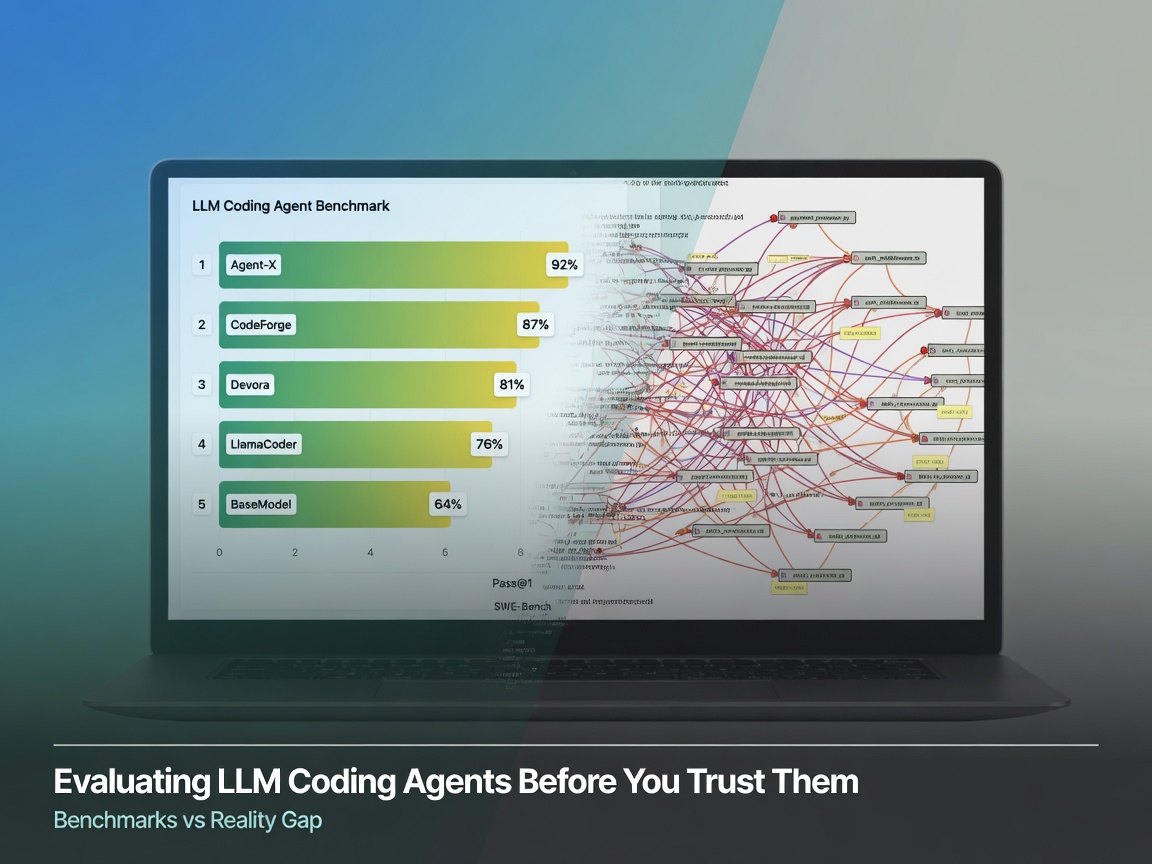
Evaluating LLM Coding Agents Before You Trust Them
Benchmark scores stop meaning much the moment you wire an agent into your actual repo - and a new paper argues existing evaluation techniques produce a distorted projection of exactly that. The fix being proposed: contamination-awareness and trajectory-aware benchmarks built on real-world development practice.
Read this noteSame lane, different angle
Bypassing the Database Engine: LLM-Assisted Storage Readers for Faster Analytics
The draft was a bit dry and lacked the 'Practitioner' persona's direct, slightly opinionated edge. I've tightened the prose, removed the repetitive 'This is the particularly important part' phrasing, and sharpened the LinkedIn hook to create a real tension regarding the waste of engineering effort.
Why Most Enterprise AI Agents Never Reach Production
Two out of three enterprise AI agents never reach production — and the reason isn't model quality. It's that the agent doesn't know what your data means.