Evaluating LLM Coding Agents Before You Trust Them
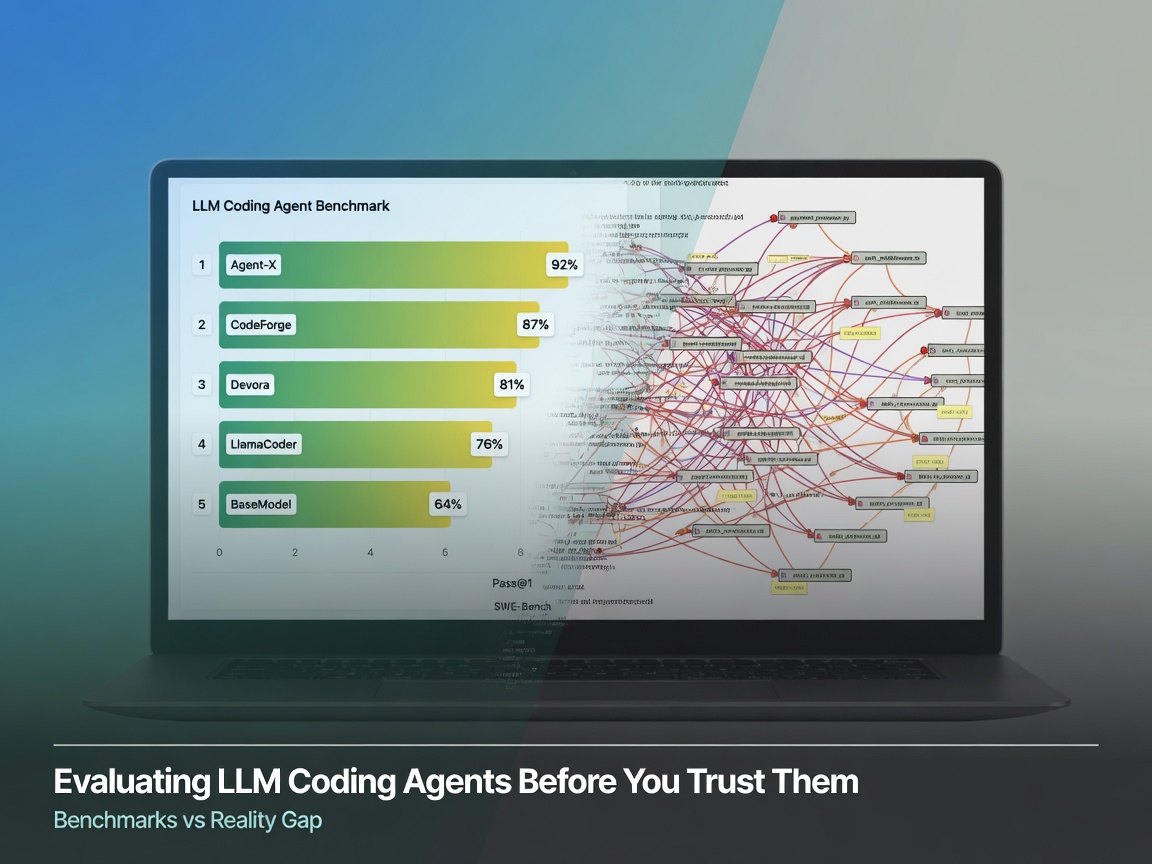
Benchmark scores stop meaning much the moment you wire an agent into your actual repo - and a new paper argues existing evaluation techniques produce a distorted projection of exactly that. The fix being proposed: contamination-awareness and trajectory-aware benchmarks built on real-world development practice.
Automation needs a narrow first win
The best first AI workflow is usually a repeated task with a clear input, clear output, and a human approval step.
A new paper on arXiv proposes an evaluation methodology for LLM-powered agents in software development, and the interesting part isn't the methodology itself - it's the diagnosis behind it. The researchers argue that existing evaluation techniques are limited: fragmented in nature and producing a distorted projection of how these agents actually behave. As LLM models move toward closing the development cycle - not just assisting but contributing autonomously in collaborative environments - that distortion stops being an academic annoyance and becomes a real integration risk.
Why Benchmark Scores Stop Meaning Anything at Integration Time
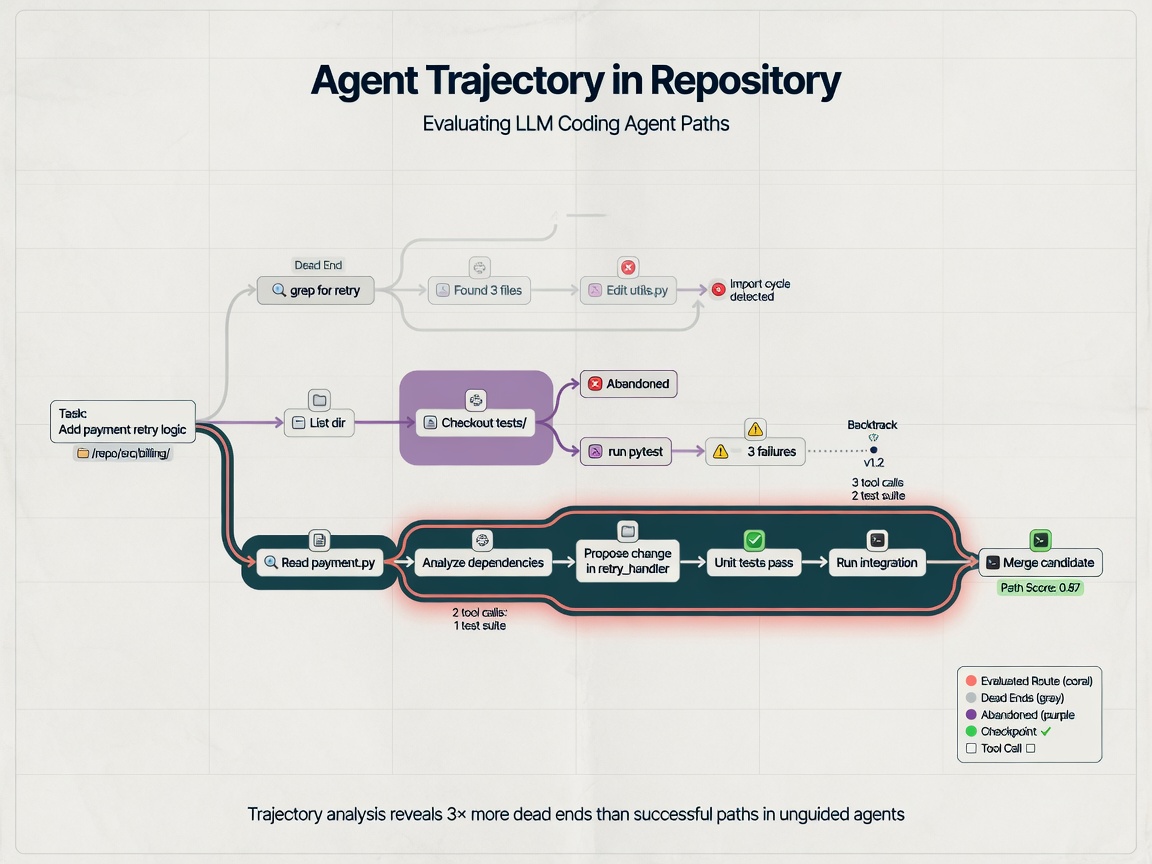
The paper's core claim is that we're transitioning from agents as assistive companions to autonomous contributors, and our benchmarks haven't kept up. The proposed approach rests on three pillars: contamination-awareness, in-the-wild agentic behavior assessment, and trajectory-aware benchmarks grounded in real-world software development practice.
Contamination-awareness is the one I'd underline. If your benchmark data has leaked into training corpora, the score you're reading is partly a memory test, not a capability test. Anyone who has picked a model off a leaderboard and then watched it fumble their actual codebase knows this gap intimately. Trajectory-aware evaluation matters for the same reason: what you care about in production isn't whether the final diff compiles, it's how the agent got there - whether it explored sensibly, asked for input where it should have, or burned forty tool calls going in circles.
Worth a look
Phugialy Picks

AI Engineering: Building Applications with Foundation Models
A practical guide to building real-world applications with foundation models and LLMs.

LLM Systems Engineering: Training and Building Large Language Models – Engineering AI Models Through Fine-Tuning, Continued Pretraining, and From-Scratch Development (AI Engineering)

GMKtec K15 AI Mini PC Oculink Intel Ultra 5 125U 32GB DDR5 512GB SSD | Desktop Computer AI Boost, 3X M.2 2280 Storage Expansion, Dual NIC...
Some Phugialy Picks use affiliate links. If you buy through one, Phugialy may earn a commission. It doesn't change what we recommend. Full disclosure →
What Actually Breaks When You Wire One of These In
The paper says the methodology captures realistic coding contexts, human-aligned behavior, and model failure modes. Read that list as a checklist of where current evals fail: they use synthetic contexts instead of realistic ones, they score outputs instead of behavior, and they measure successes without systematically cataloguing how things fail.
My read on where this bites first: messy production data. A clean demo repository behaves nothing like your monolith with ten years of history, half-documented conventions, and flaky tests. An agent that scores well on curated tasks can still be unusable in that environment - and without trajectory-aware evaluation, you find out by shipping it and watching.
The Real Story Here
What this actually points to is an accountability shift. When an agent is an assistant, bad suggestions cost you seconds; when it's closing the development cycle autonomously, bad trajectories cost you review time at best and broken builds at worst. The real story here is that evaluation methodology becomes part of your integration infrastructure, not a research side-topic.
The part worth trying yourself is applying the paper's framing internally: before trusting an agent with real work in your repo, build small trajectory-level checks on your own tasks - watch how it works through them, not just what it produces. That's essentially doing contamination-free, in-the-wild evaluation on your own codebase. It won't be as rigorous as what this paper proposes, but it directly targets the gap between leaderboard numbers and your reality.
Got a question about how this applies to you? →
Keep reading
Follow the thread
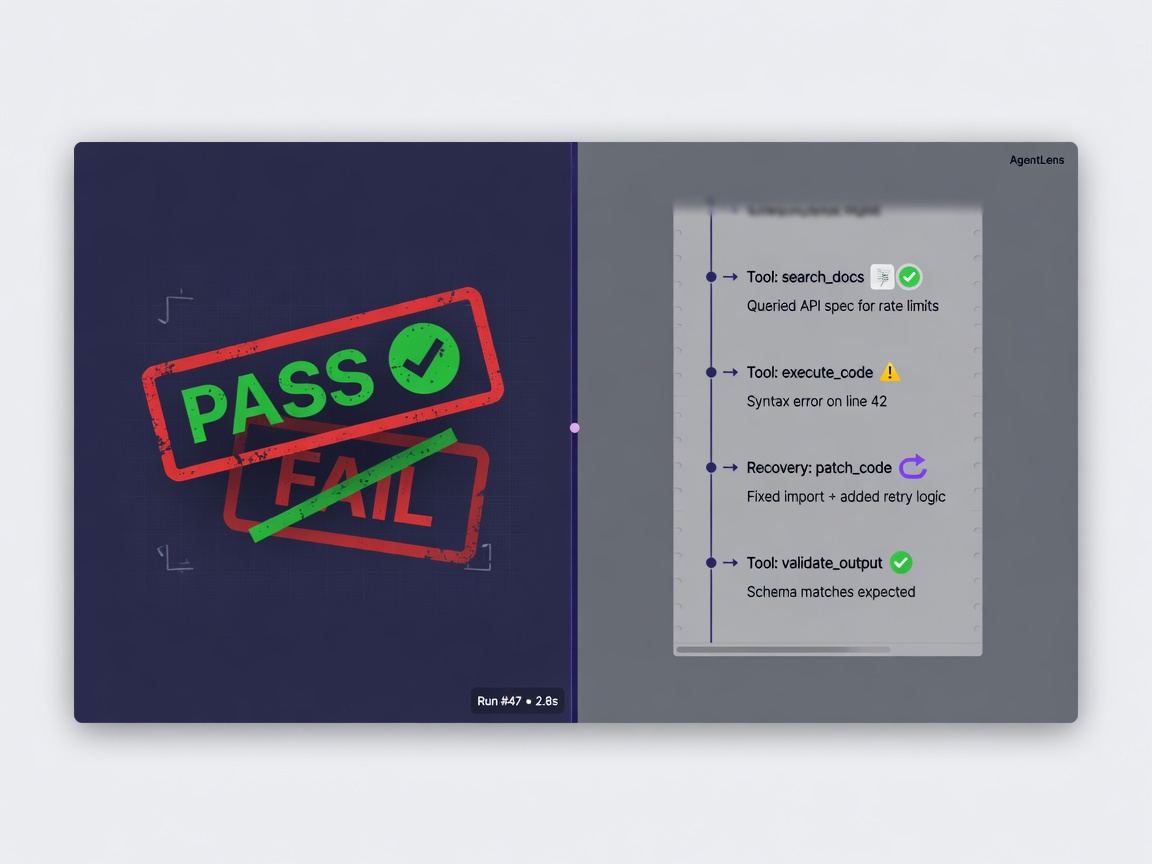
AgentLens: A Code Agent Benchmark That Explains Itself
Most code-agent benchmarks give you one bit: pass or fail. AgentLens evaluates the whole trajectory - tool usage, error recovery, communication - and writes out why a run scored what it did. That makes it a diagnosis tool, not a leaderboard, and the two serve very different teams.
Read this noteSame lane, different angle
Self-Evolving LLM Agents: Why SOPs Beat Bigger Models
The cheapest performance upgrade for an LLM agent isn't a bigger model - it's turning what the agent already did once into something it can reuse. That's the core idea behind EvoSOP, a framework described in a recent arX
Bypassing the Database Engine: LLM-Assisted Storage Readers for Faster Analytics
The draft was a bit dry and lacked the 'Practitioner' persona's direct, slightly opinionated edge. I've tightened the prose, removed the repetitive 'This is the particularly important part' phrasing, and sharpened the LinkedIn hook to create a real tension regarding the waste of engineering effort.