Bypassing the Database Engine: LLM-Assisted Storage Readers for Faster Analytics
The draft was a bit dry and lacked the 'Practitioner' persona's direct, slightly opinionated edge. I've tightened the prose, removed the repetitive 'This is the particularly important part' phrasing, and sharpened the LinkedIn hook to create a real tension regarding the waste of engineering effort.
Automation needs a narrow first win
The best first AI workflow is usually a repeated task with a clear input, clear output, and a human approval step.
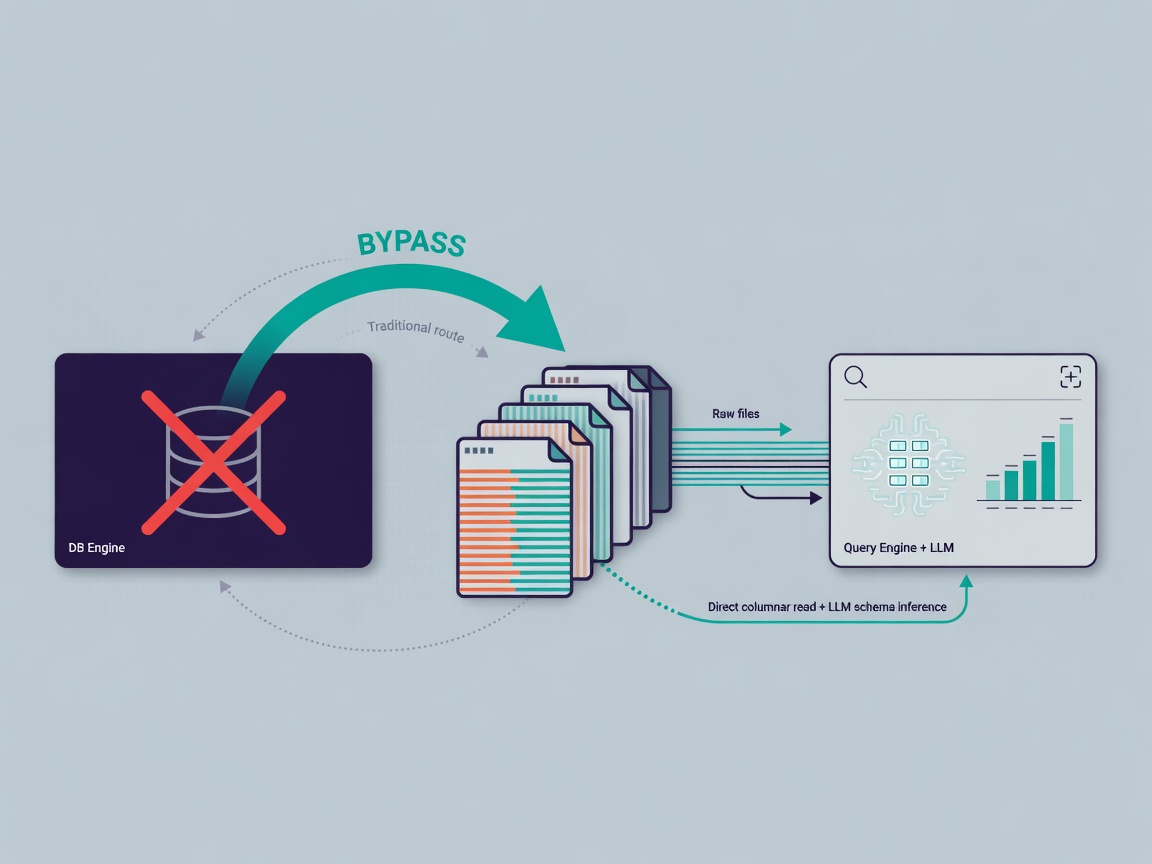
Database access via JDBC/ODBC drivers is a known bottleneck for bulk columnar analytics. When you query a database, the overhead of per-tuple serialization and redundant metadata often kills performance.
Jailbreak is a new agentic LLM-based approach that solves this by bypassing the database engine entirely. Instead of relying on standard connectors, it reads storage files directly and materializes data as in-memory columnar buffers (Apache Arrow).
The system works by leveraging LLMs to ingest documentation and source code to automatically generate format-specific table reading components. This eliminates the need for manual, human-engineered parsing logic. For example, a developer can use the system to generate a reader for complex formats like PostgreSQL’s heap files or MySQL’s InnoDB .ibd pages. Since these formats are fully specified by their source code and documentation, an LLM can manage the ingest of these artifacts to regenerate operator-specific table reading components in a single automated pass.
Jailbreak employs a multi-agent LLM pipeline—comprising a Dataset Generator, Architect, Coder, and QA Tester—to produce verified, plug-in-compatible shared libraries. These libraries are consumable in a zero-copy fashion by query engines like DuckDB, Apache Spark, and GPU-accelerated frameworks like cuDF and Spark RAPIDS.
By materializing data as in-memory columnar buffers (Apache Arrow), the system achieves significant performance improvements. The paper reports up to 27x speedups. The core issue is that more than 85% of the wall-clock time in a typical read_sql call is consumed by client-side deserialization and format conversion.
This approach is generalizable to any database system whose file format is available as documentation or source code. If you have the source source code for a database, you can use Jailbreak to want to bypass the engine, and you might be able to avoid the most significant bottleneck in your analytics pipeline.
This isn't just a bit of automation; it's a way to change how we think about data access. By moving from human-engineered parsing logic to LLM-generated, verified shared libraries, we can potentially eliminate the database engine as a bottleneck for specific analytical workloads.
Worth a look
Phugialy Picks

The Agentic AI Bible: The Complete and Up-to-Date Guide to Design, Develop, and Scale Goal-Driven, LLM-Powered Agents that Think, Execute...

Logitech MX Vertical Wireless Mouse Ergonomic Design - Graphite

Anker USB-C to USB-C 60W Fast Charging Cable (2-Pack)
We'd buy this if: You need a reliable spare charging cable that won't fray in a month.
We'd skip this if: You already have enough cables lying around.
Some Phugialy Picks use affiliate links. If you buy through one, Phugialy may earn a commission. It doesn't change what we recommend. Full disclosure →
Got a question about how this applies to you? →
Keep reading
Follow the thread
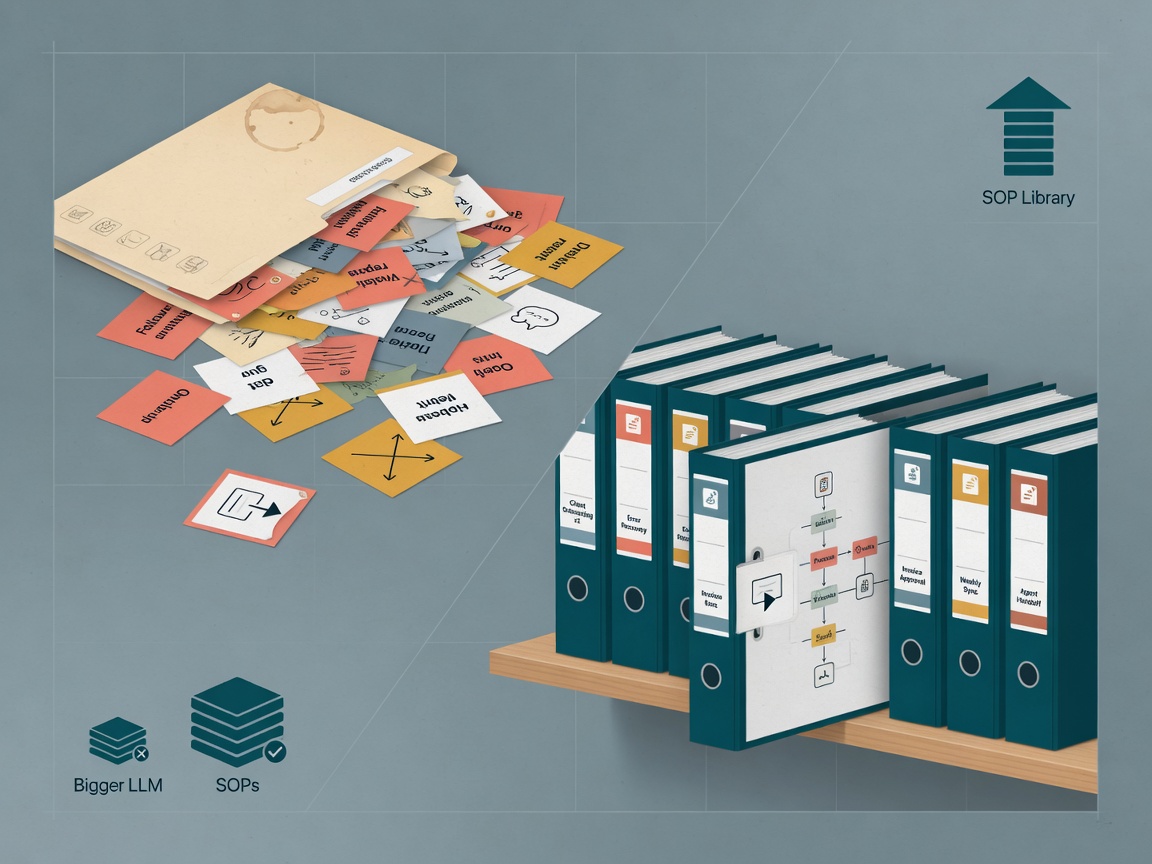
Self-Evolving LLM Agents: Why SOPs Beat Bigger Models
The cheapest performance upgrade for an LLM agent isn't a bigger model - it's turning what the agent already did once into something it can reuse. That's the core idea behind EvoSOP, a framework described in a recent arX
Read this noteSame lane, different angle
Evaluating LLM Coding Agents Before You Trust Them
Benchmark scores stop meaning much the moment you wire an agent into your actual repo - and a new paper argues existing evaluation techniques produce a distorted projection of exactly that. The fix being proposed: contamination-awareness and trajectory-aware benchmarks built on real-world development practice.
Why Most Enterprise AI Agents Never Reach Production
Two out of three enterprise AI agents never reach production — and the reason isn't model quality. It's that the agent doesn't know what your data means.