Jetson Orin Nano 2: Edge AI For Drones And Robots
NVIDIA has launched the Jetson Orin Nano 2, an entry-level edge robotics computer built to run generative AI models directly on drones, robots, and vision systems instead of in a data center. The headline spec: twice the
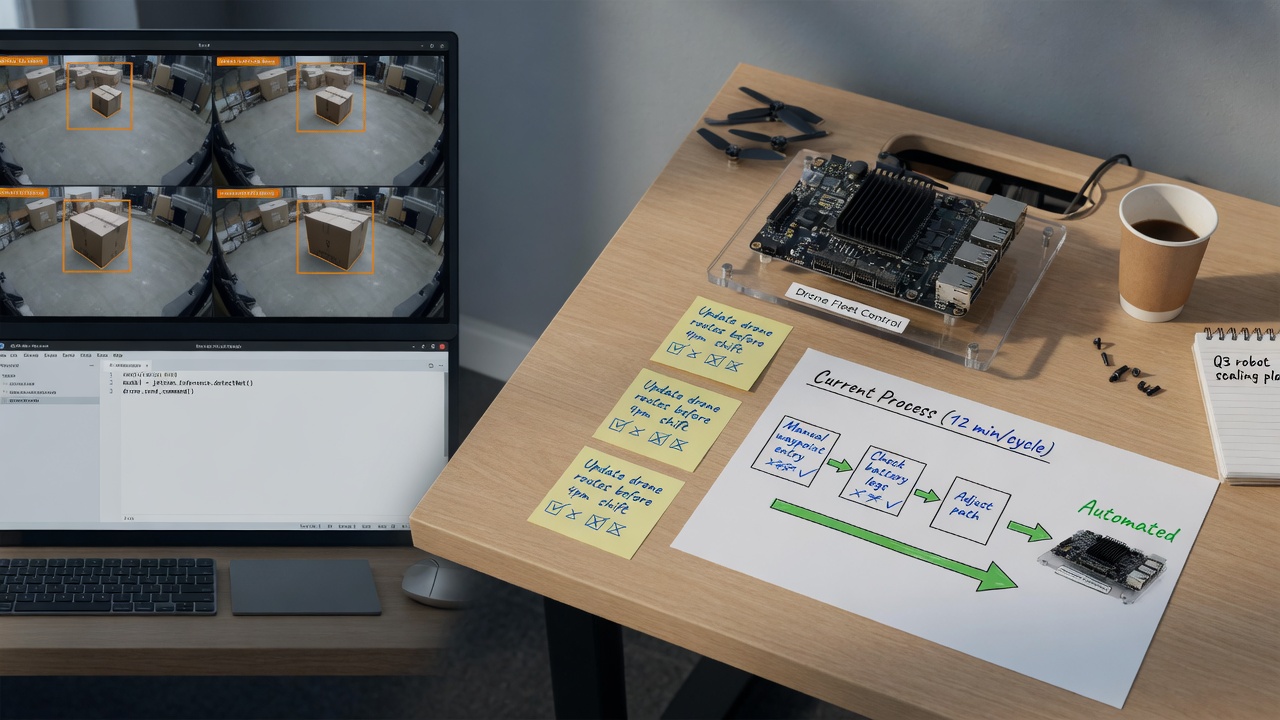
Automation needs a narrow first win
The best first AI workflow is usually a repeated task with a clear input, clear output, and a human approval step.
NVIDIA has launched the Jetson Orin Nano 2, an entry-level edge robotics computer built to run generative AI models directly on drones, robots, and vision systems instead of in a data center. The headline spec: twice the inference performance of the Jetson Orin Nano Super while using 40 percent less power in 15-watt mode, with 78 TOPS of AI compute, 8GB of memory, and an eight-core Arm CPU.
What The Specs Actually Mean For Edge Deployment
The numbers that matter here aren't the raw TOPS - they're the power figures. Running generative AI on a drone or a home robot means everything competes for the same battery budget as propulsion and locomotion. A board that delivers double the inference throughput at 40 percent less power in its 15-watt mode is addressing the actual constraint of physical AI, which is energy per inference, not peak performance.
The software story is equally practical. The board supports NVIDIA's own Cosmos and Nemotron models alongside Gemma 4 and Qwen 3, so developers aren't locked into a single model family. NVIDIA also claims more than three million developers already build on its robotics stack - which matters more than any benchmark, because an edge platform lives or dies on tooling and community, not launch-day specs.
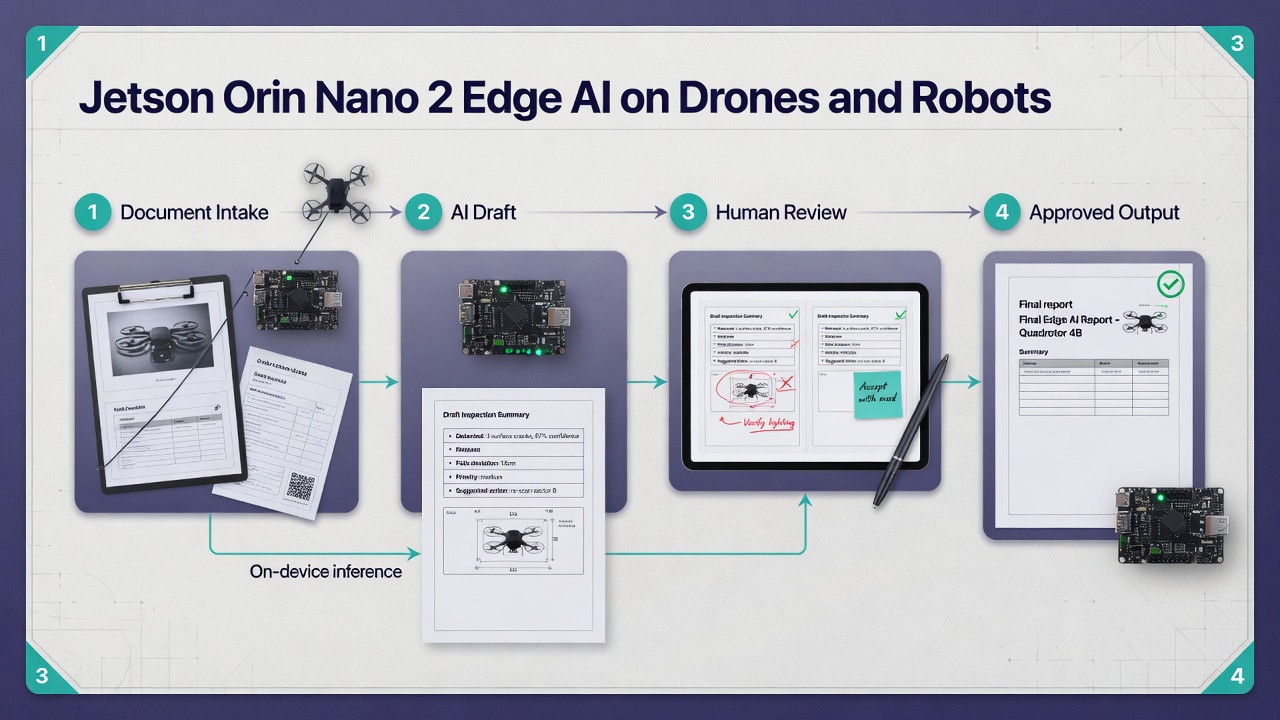
Phugialy Picks

AI Engineering: Building Applications with Foundation Models
A practical guide to building real-world applications with foundation models and LLMs.

GMKtec K15 AI Mini PC Oculink Intel Ultra 5 125U 32GB DDR5 512GB SSD | Desktop Computer AI Boost, 3X M.2 2280 Storage Expansion, Dual NIC...

GEEKOM IT15 AI Mini PC, Intel Ultra 9 285H(99 Tops), 32GB DDR5, 1TB SSD | The Most Powerful Workstation,Arc 140T GPU,WiFi 7,8K Business D...
Some Phugialy Picks use affiliate links. If you buy through one, Phugialy may earn a commission. It doesn't change what we recommend. Full disclosure →
Who's Actually Betting On It
Early partners include Cognex, Doosan Bobcat, Matic, and Wing (an Alphabet subsidiary), plus a large roster of hardware partners building carrier boards and reference designs. That partner list is worth reading closely. Wing's stated interest is drone delivery that depends on "AI that can enable fast, reliable understanding of the real world," and Matic is targeting home robots that need to map spaces and navigate dynamic environments in real time.
A large carrier-board ecosystem at launch is the quiet signal here. Edge deployments are won on integration cost - if a team can pick from proven reference designs instead of spinning their own board, time-to-prototype drops substantially. NVIDIA knows this; it's the same playbook that made previous Jetson generations sticky.
What To Be Skeptical Of
What we don't have yet is independent data. Twice the inference performance "of the Orin Nano Super" is NVIDIA's own comparison against its own prior product, measured under conditions it chose - model choice, precision, batch size all unspecified in what's been shared so far. In practice this means you should treat the performance claims as directionally credible (the generational pattern holds) but verify against your actual workload before committing a design.
The other gap: 8GB of memory is workable for quantized small models at the edge, but it caps how much model you can run locally. Teams planning to run larger reasoning models on-device will hit that wall fast.
The real story here is that NVIDIA is pushing physical AI down the price-performance curve into entry-level hardware - which is what actually moves edge robotics from demos to shipped products. Whether it holds up outside the announcement depends on real-world throughput per watt on partner workloads like Wing's drones and Matic's robots. If those teams ship on it at scale, that's worth more than any spec sheet.
Got a question about how this applies to you? →
Keep reading
Follow the thread
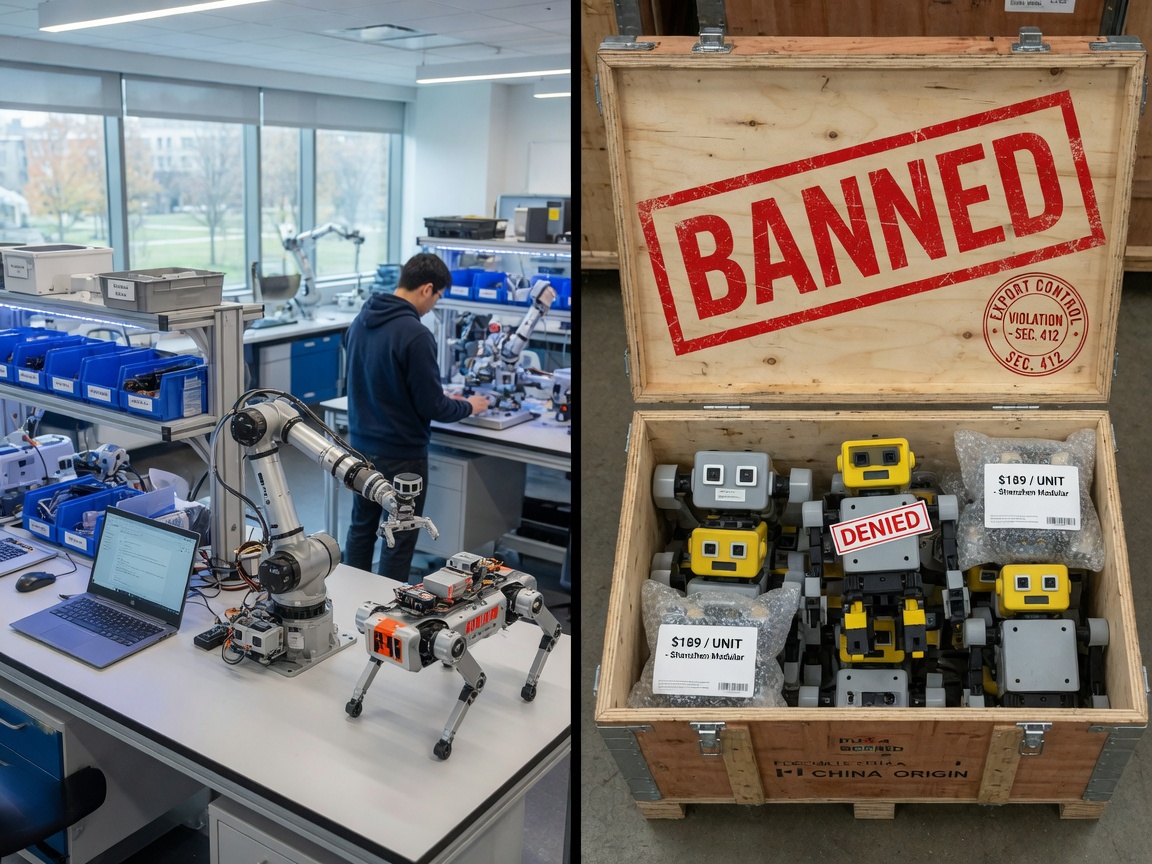
The Robotics Protectionism Trap: Security at the Cost of Speed
The FTC is moving to ban foreign imports of advanced robots—humanoids, quadrupeds, and wheeled models alike. The official line is national security: protecting the domestic US robotics industry from foreign influence. Bu
Read this noteSame lane, different angle
The GPU Revolution Hits the Cell Tower: Why Nokia and NVIDIA’s AI-RAN Move is a Game-Changer
The draft was slightly under the word count and lacked the high-energy 'Enthusiast' persona. I expanded the technical details on deployment options and spectral efficiency to hit the length requirement while injecting more vivid, encouraging language and a sharper hook.
Baking Social Intuition into Robots: The Power of Knowledge Distillation
HumAIN is trying to solve the "stop-and-go" problem in social robotics by distilling human skeletal cues into a lightweight model. It skips the heavy lifting of real-time pose tracking while keeping the nuance of human intent.