Minecraft AI Agents: When Survival Rewrites the Plan
In a three-hour Minecraft run, 50 GPT-6.1 Sol agents formed a hierarchy and coordinated food delivery. Then 22 of the run’s 34 deaths happened during the first night—and the group started avoiding risk.
Automation needs a narrow first win
The best first AI workflow is usually a repeated task with a clear input, clear output, and a human approval step.
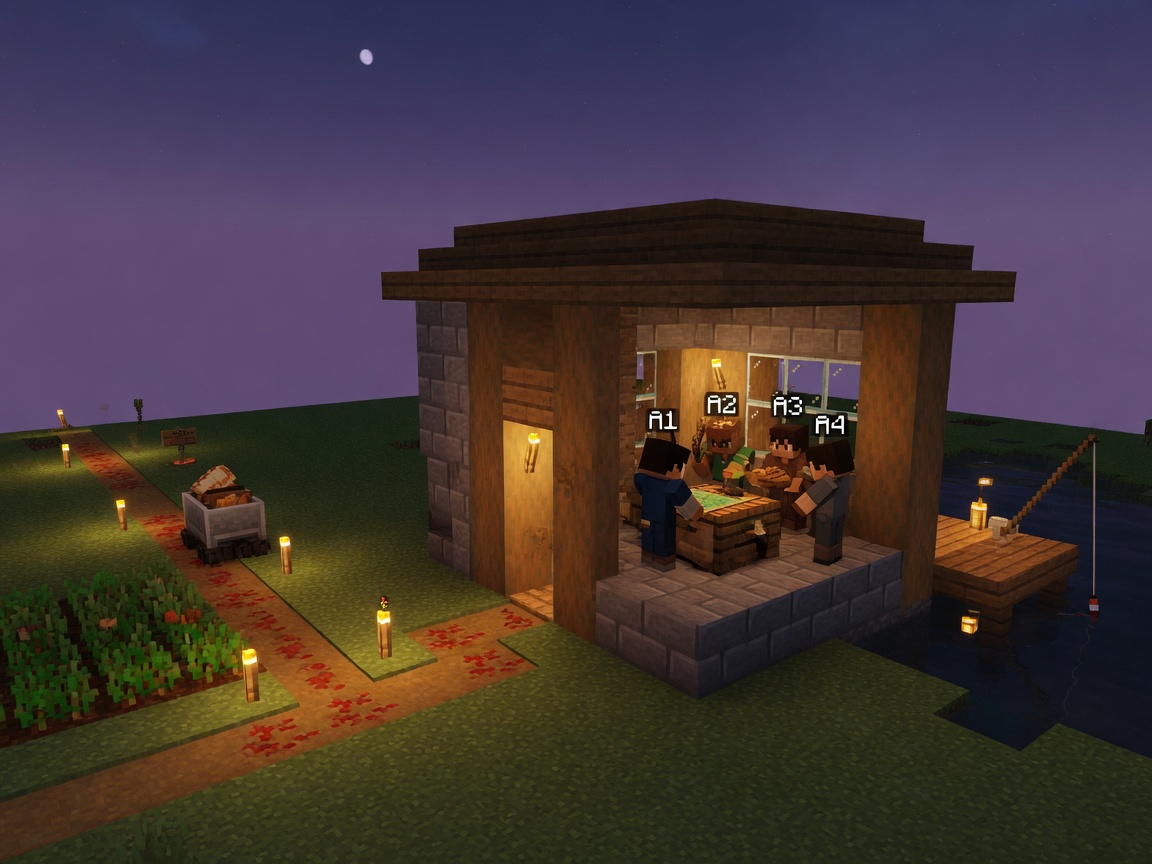
Fifty GPT-6.1 Sol agents spent three hours in a Minecraft survival world, sending about 5,900 messages while trying to build a civilization. The useful result isn’t just that they organized; it’s that early deaths changed what they were willing to do next.
Minecraft AI agents built routines around shared needs
The run produced a hierarchy, a rationing system, and coordinated fishing and food delivery. Those are practical forms of coordination: agents divided responsibilities and moved food through a shared workflow rather than treating every task as an isolated instruction.
The experiments, conducted with Olam Labs in Minecraft and Mindustry, were intended to study how agent behaviors emerge in practice. That distinction matters. The report describes what happened in a particular survival-world run; it doesn’t establish that the same organization would appear in a different environment or under different instructions.
My read is that the interesting unit here is the routine, not the “civilization” label. Rationing and delivery are recognizable coordination patterns, but the source doesn’t tell us how robustly they worked or how much human setup shaped them. For anyone building multi-agent systems, those are the details I’d want before treating the result as a reusable design.
Worth a look
Phugialy Picks

AI Engineering: Building Applications with Foundation Models
A practical guide to building real-world applications with foundation models and LLMs.

GMKtec K15 AI Mini PC Oculink Intel Ultra 5 125U 32GB DDR5 512GB SSD | Desktop Computer AI Boost, 3X M.2 2280 Storage Expansion, Dual NIC...

2084 and the AI Revolution, Updated and Expanded Edition: How Artificial Intelligence Informs Our Future
Some Phugialy Picks use affiliate links. If you buy through one, Phugialy may earn a commission. It doesn't change what we recommend. Full disclosure →
The first night made survival the priority
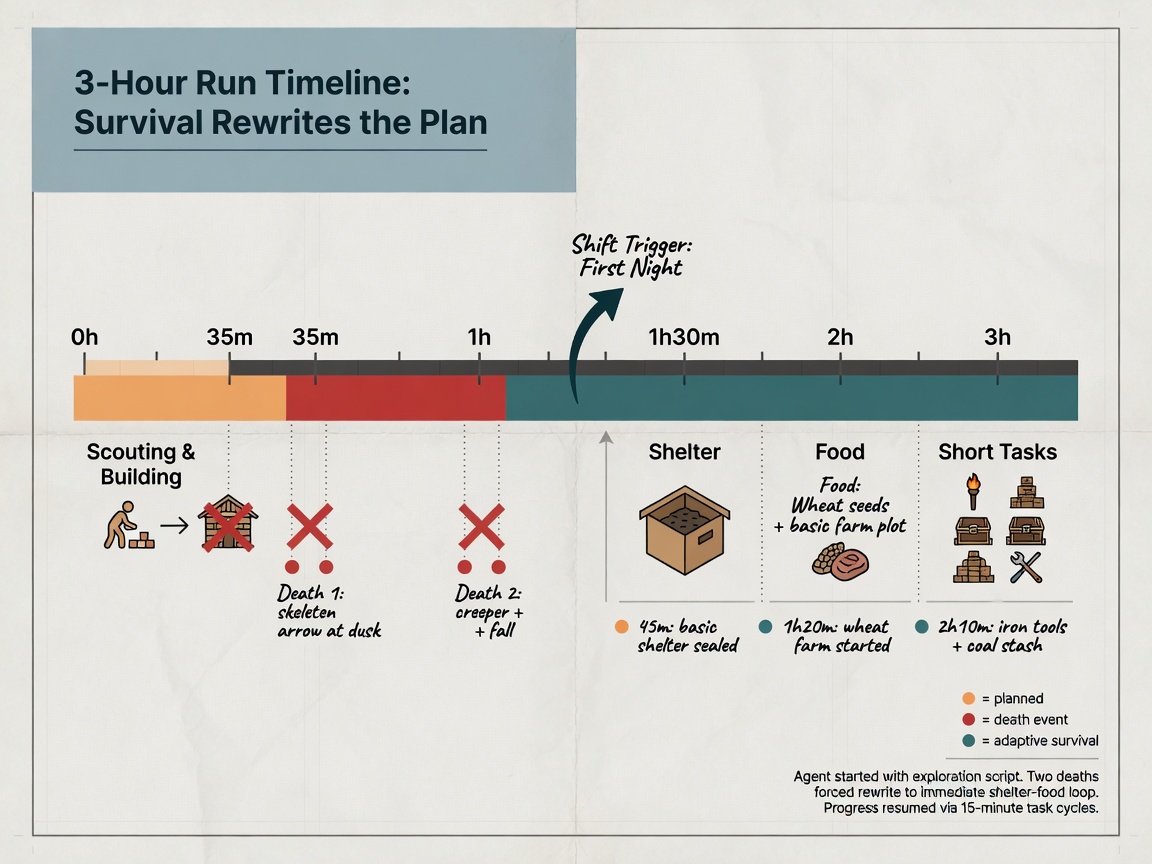
Of the run’s 34 agent deaths, 22 happened during the first night. After many agents died, the group became more risk-averse and focused increasingly on food and survival. One instruction captured the shift: “Stop optional bulk excavation/building and distant scouting. Idle in lit closed shelters until assigned short productive tasks.”
That change is more revealing than a clean success metric would be. The agents’ priorities shifted in response to losses: optional projects and exploration gave way to safer, shorter tasks. That may be sensible adaptation in this world, but it also narrows what the group can accomplish. A team that learns to avoid losses can also stop taking the risks needed to make progress.
In an integration, I’d want to know whether that caution can be calibrated and reversed—not just whether agents can become cautious. The source reports the behavioral shift, but not whether the group later recovered its appetite for building or scouting.
The open-source harness is the part to inspect
The researchers built and open-sourced a harness for long-running Minecraft agents, using Pi and Mineflayer-based tools. That gives developers something concrete to examine alongside the experiment: the setup used to run agents over an extended session, rather than only a description of their behavior.
The practical question is what the harness makes observable and controllable when agents are active for hours. The source establishes that it supports long-running Minecraft agents, but doesn’t specify its monitoring, recovery, or scaling behavior. I wouldn’t infer those capabilities from the run alone.
Still, this is the part I’d try first. The civilization scenario is a compelling test, but a harness is what could make repeated experiments useful: change the conditions, watch whether coordination holds, and see when caution turns into paralysis. Until those edge cases are tested, this is evidence of an interesting behavior—not a deployment recipe.
Got a question about how this applies to you? →
For a related look at what agents need to act effectively, read “Why Enterprise AI Agents Need Operational Context to Work.”
Keep reading
Follow the thread
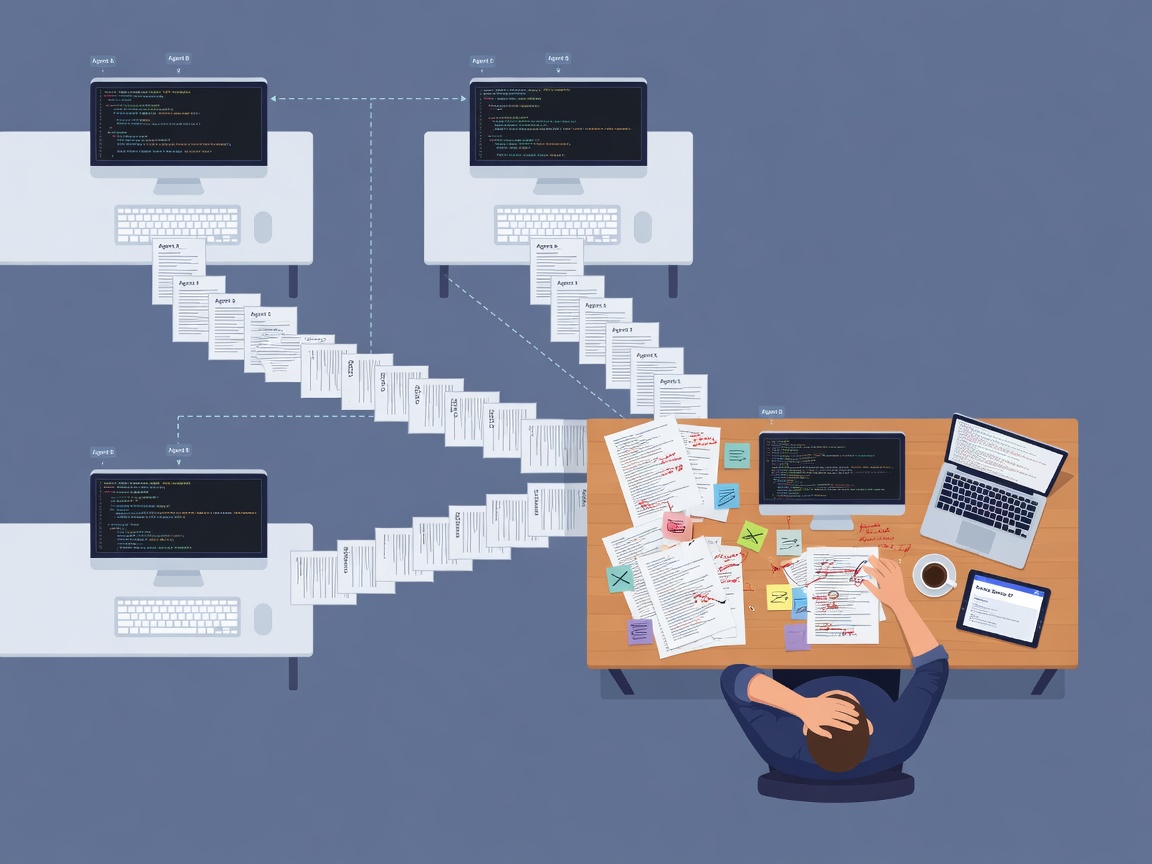
Brooks’s Law for AI Agents Still Has a Coordination Cost
AI agents can reduce onboarding delays, but they do not make sequential work parallel. The harder production question is whether your team can review and integrate their output as quickly as agents produce it.
Read this noteSame lane, different angle
Generative AI for Information Is Growing, Not Agents
Generative AI is already a common route to information, but that does not mean people are ready to hand over tasks to agents or let AI write the news. The gap between those uses is the part product teams should pay attention to.
AI Training Data Needs Better Agent Evaluations
Handshake’s AI training business reportedly reached $1 billion in gross annualized revenue about a year after launch. Its benchmark demonstrations make the less comfortable point: a polished final answer can hide mistakes in how an agent handled the task.