AI Copyright Disputes Expose Game Industry Tensions
Epic Games and Microsoft are challenging AI-powered browser ports of their games while using AI themselves. That overlap raises a real consistency question—but it does not prove that every use of AI creates the same copyright issue.
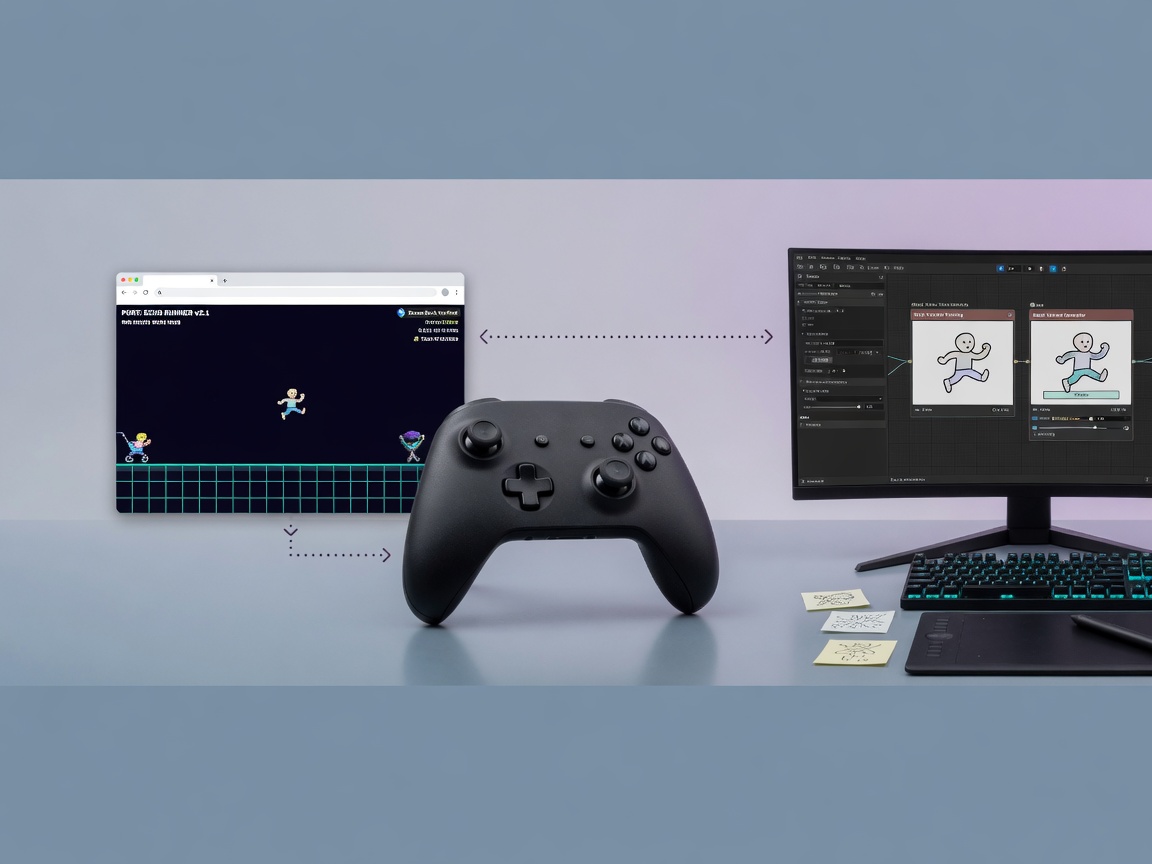
Automation needs a narrow first win
The best first AI workflow is usually a repeated task with a clear input, clear output, and a human approval step.
AI copyright disputes are getting harder to frame as a simple fight between game companies and AI users. Epic Games and Microsoft sent DMCA notices targeting AI-powered browser ports of their games, while both companies also use AI in their own work. That overlap is worth examining, but it does not automatically make the cases equivalent: the source material does not establish what the ports used or how the companies’ own systems were trained.
AI copyright disputes put the companies’ own AI use under scrutiny
The contrast is specific. Epic’s upcoming “AI first” Disney/Marvel game is reportedly being developed using Anthropic’s Claude. Microsoft has used AI-generated artwork in Call of Duty: Black Ops 6 and Call of Duty: Black Ops 7. At the same time, both companies have taken action against AI-powered browser ports of their games.
The source article describes this as inconsistent: the companies object when others use their intellectual property, yet use AI tools themselves. That is a fair question about standards, but “uses AI” and “uses someone else’s protected game” are not interchangeable claims. A DMCA notice over a port does not, by itself, tell us whether the companies’ own AI use involved the same kind of copying, permissions, or material. Those details matter if the aim is to assess consistency rather than just point out a contradiction.
My read is that the strongest criticism is not that any company using AI loses the right to object to infringement. It is that companies should explain the boundary they are enforcing: what use they consider unauthorized, and what safeguards or permissions make their own use acceptable. Without that, the public sees selective enforcement, even where the underlying legal situations may differ.
Worth a look
Phugialy Picks

AI Engineering: Building Applications with Foundation Models
A practical guide to building real-world applications with foundation models and LLMs.

GMKtec K15 AI Mini PC Oculink Intel Ultra 5 125U 32GB DDR5 512GB SSD | Desktop Computer AI Boost, 3X M.2 2280 Storage Expansion, Dual NIC...

2084 and the AI Revolution, Updated and Expanded Edition: How Artificial Intelligence Informs Our Future
Some Phugialy Picks use affiliate links. If you buy through one, Phugialy may earn a commission. It doesn't change what we recommend. Full disclosure →
Anthropic’s settlement leaves a training-data question open
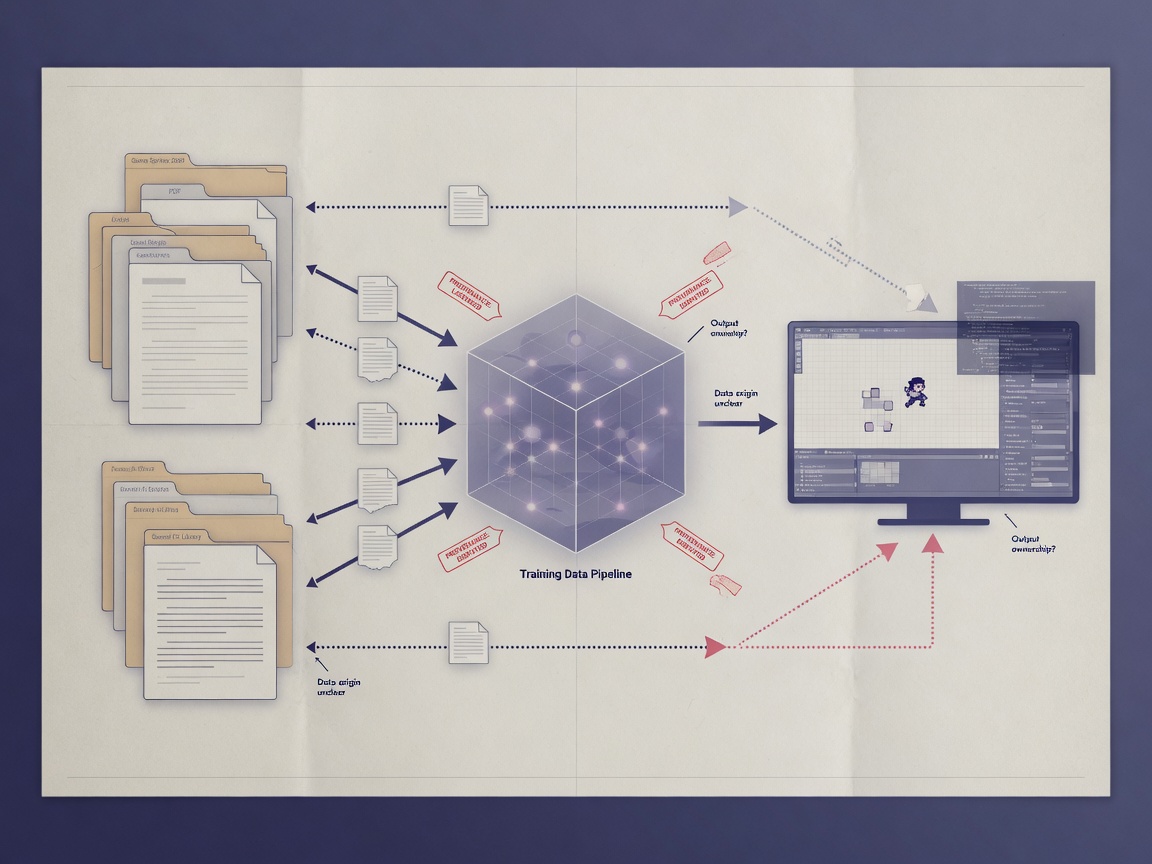
The source also points to Anthropic’s agreement to pay $1.5 billion over training its models on illegally obtained data. It notes that Anthropic was not required to delete or rework those models, and that models trained on that data remain in use. That leaves a practical gap between settling a dispute over training material and changing the systems already built from it.
For a company reportedly using Claude in game development, that distinction is relevant. The settlement is a concrete signal about the provenance of training data, but it does not establish that every later use of the model reproduces protected material or is unlawful. Nor does the source provide details about which model or outputs are involved in Epic’s project. Treating the settlement as proof of a specific infringement in that game would go beyond what is known here.
The useful test is whether the rules apply consistently
The pressure point is accountability across the whole chain: what data went into a model, what a model produces, and what a company permits other people to do with its intellectual property. The source’s examples raise all three questions, but do not answer them in detail. That is why the headline tension is persuasive as a challenge to corporate consistency, not as a settled legal conclusion.
In practice, I would look for clearer disclosures about training-data provenance and a consistent explanation of how AI-generated work is handled. A company can oppose unauthorized ports while using AI; the harder question is whether it applies a defensible standard to both its own systems and everyone else’s. Until those standards are visible, DMCA notices and AI-assisted releases will keep looking like two different rules for the same industry.
Got a question about how this applies to you? →
Keep reading
Follow the thread
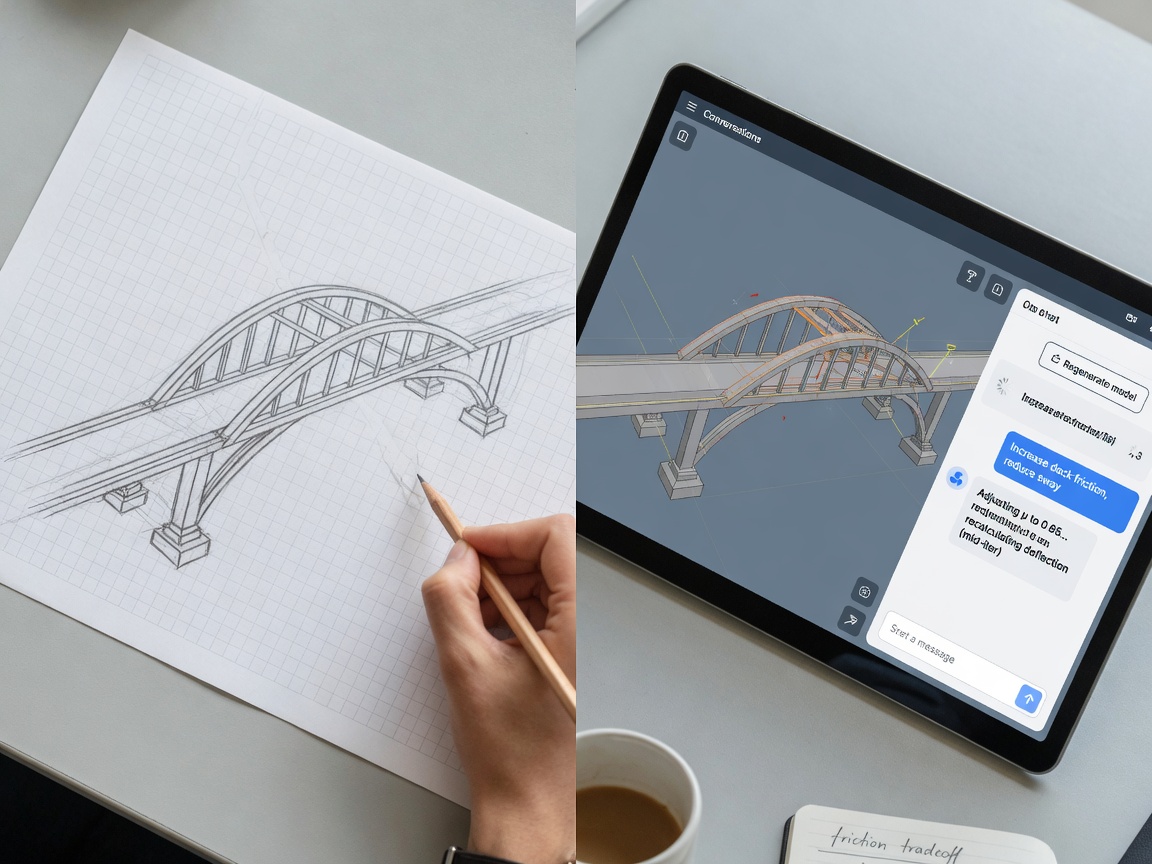
Interactive AI Systems for Structural Design Get Friction Right
Imagine sketching a bridge concept out loud, pointing at a rough drawing, and having an AI that argues back, iterates, and reshapes the structure with you instead of handing you a finished design you never asked for. Tha
Read this noteSame lane, different angle
LLMs in Cybersecurity: Reading Past the 50% Malware Claim
A new survey claims LLM-generated malware will account for 50% of detected threats in 2025, up from just 2% in 2021 — and that projection is doing more work than any evidence behind it. The paper, a synthesis of over 70
Why Graph Encoders Are Winning the Multimodal MRI Generation Race
If we keep treating brain connectivity like a flat list of numbers, how much signal are we actually losing to noise?