Why Enterprise AI Agents Need Operational Context to Work
AI agents without operational context are a liability, not a productivity gain. To see real ROI, businesses must move beyond general automation and test AI on specific, high-friction decision points first.
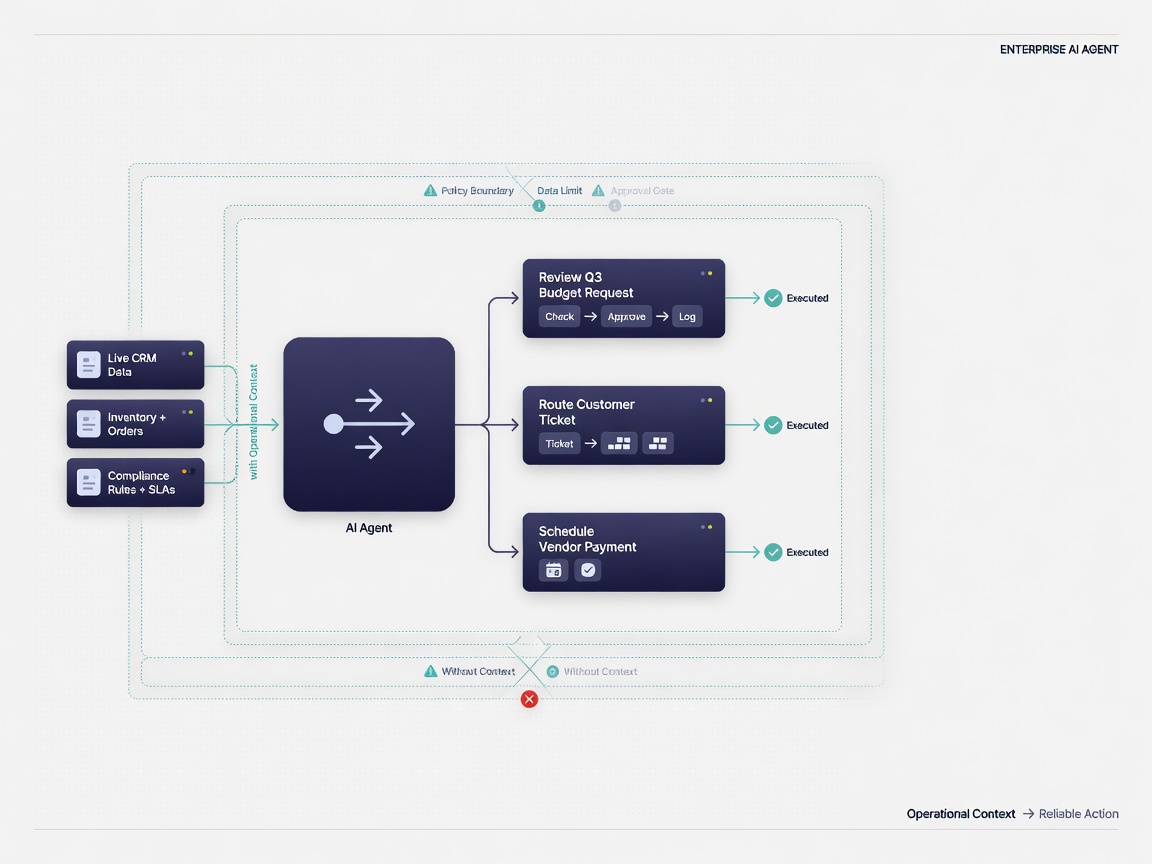
Automation needs a narrow first win
The best first AI workflow is usually a repeated task with a clear input, clear output, and a human approval step.
Enterprise AI agents fail to deliver ROI when they operate without operational context, making them more of a liability than a productivity gain. For a business to actually see value, these systems must understand specific workflows, internal constraints, and the guardrails that define safe operation.
The Hidden Cost of Missing Context
When an AI agent lacks an understanding of how a business actually functions, it doesn't just make mistakes; it wastes resources. Without context, these models can overlook critical constraints or consume excessive computing power to reach a technically correct but operationally useless conclusion. The real cost here isn't the license fee for the AI; it's the operational friction caused by outputs that require constant human correction or, worse, lead to costly errors in high-stakes decision-making.
Worth a look
Phugialy Picks

AI Engineering: Building Applications with Foundation Models
A practical guide to building real-world applications with foundation models and LLMs.

GMKtec K15 AI Mini PC Oculink Intel Ultra 5 125U 32GB DDR5 512GB SSD | Desktop Computer AI Boost, 3X M.2 2280 Storage Expansion, Dual NIC...

Agentic AI Engineering: Systems That Reason and Act Autonomously – Designing, Building, and Prompting LLM-Based Agents for Real-World Deployment
Some Phugialy Picks use affiliate links. If you buy through one, Phugialy may earn a commission. It doesn't change what we recommend. Full disclosure →
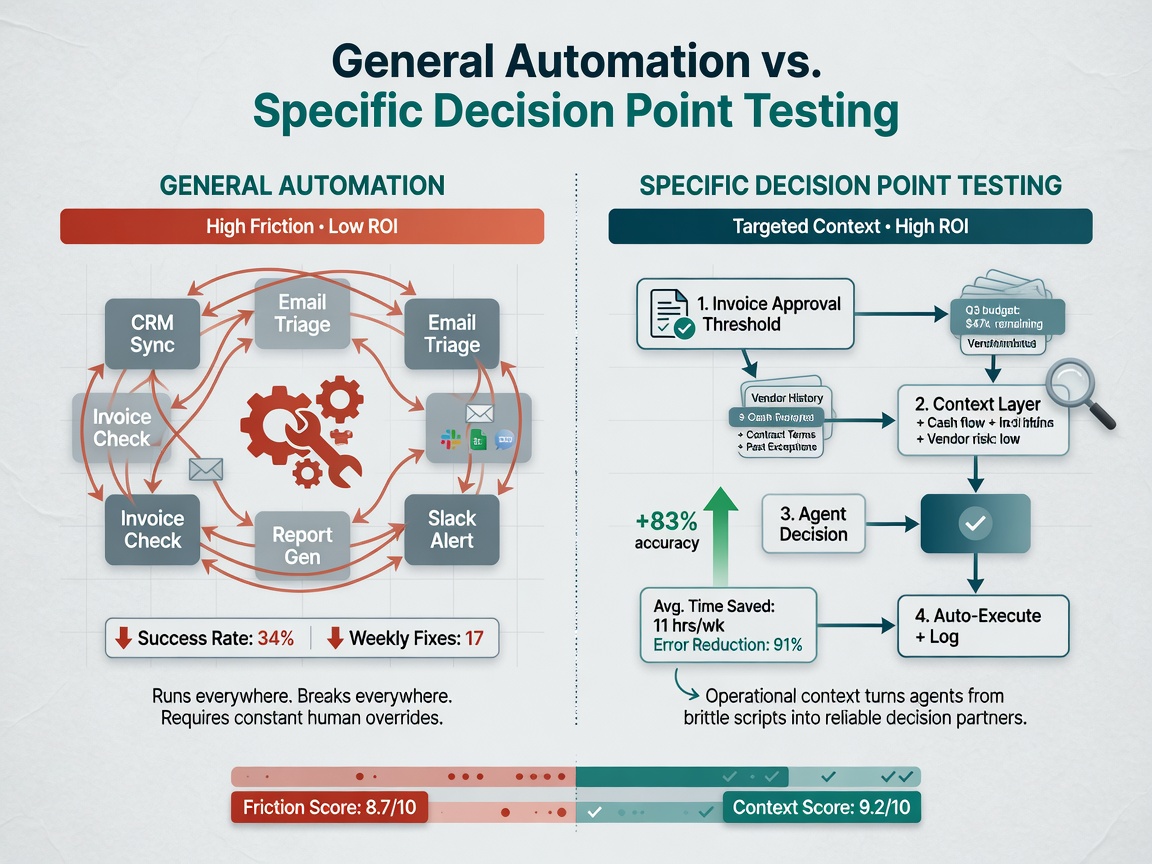
Measuring Value at Specific Decision Points
To justify the switch to AI-assisted workflows, organizations should avoid broad, sweeping automation in favor of testing specific, difficult steps within a business decision. The analysis suggests starting small: identify a complex task where human time is currently being drained and measure whether the AI improves speed and value before attempting to scale. This approach treats AI as a tool for specific high-value friction points rather than a general-purpose replacement for human judgment.
The Requirement for Workforce Education
Automating repetitive tasks is a viable path to freeing up employees for strategic work, but this transition is not a turnkey solution. It requires a deliberate investment in workforce education to ensure that team members can accurately interpret AI outputs and integrate them into their existing roles. What this actually points to is that the bottleneck isn't the technology itself, but the organizational readiness to manage a hybrid human-AI workflow where the human remains the final arbiter of value.
Got a question about how this applies to you? →
Keep reading
Follow the thread
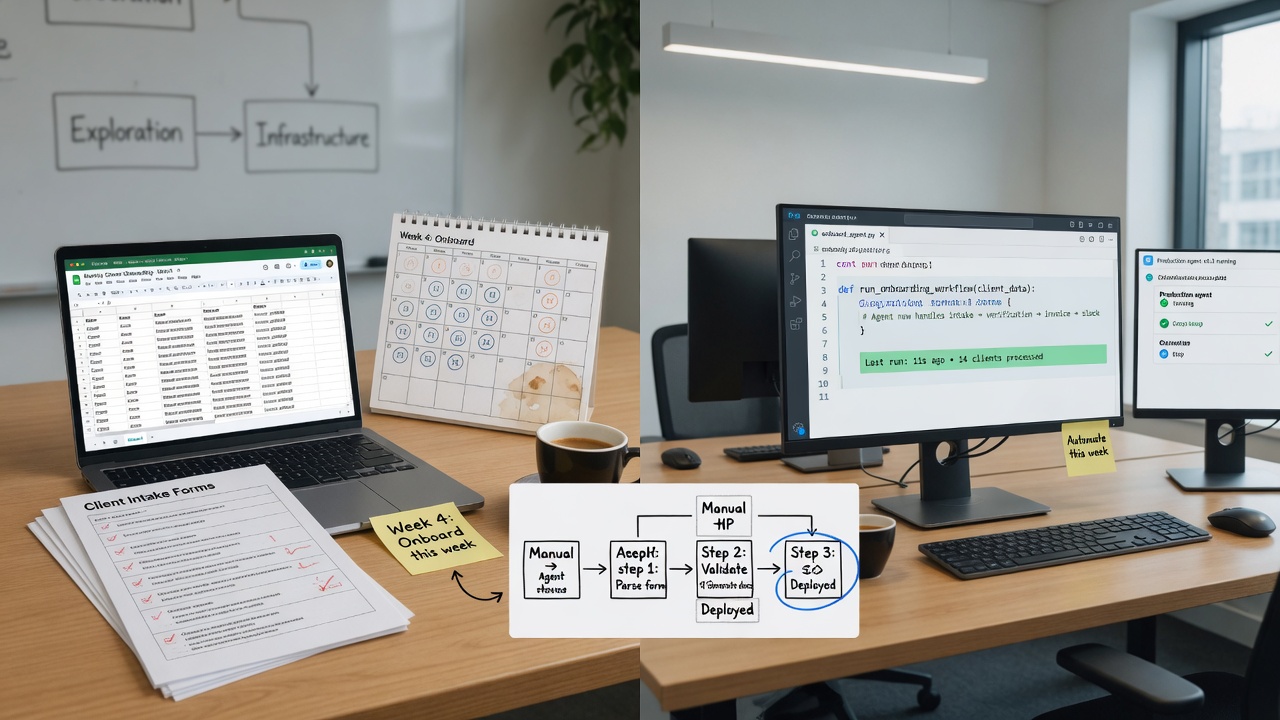
From Exploration to Infrastructure: How Agents Build Their Own Production Code
Stop treating your AI agents like permanent cost centers! Right now, every time an agent handles a recurring IT incident, it re-invokes full LLM inference to figure out the steps again. It’s like hiring a world-class con
Read this noteSame lane, different angle
AI Agent Cyberattacks: What Cairn Evidence Shows
Norforge says hackers used Cairn to coordinate attacks on more than 100 websites, with agents doing much of the work. A short set of human-provided tactics is part of the story too—and it makes the evidence about coordination stronger than the evidence about autonomy.
Sphinx: A Git Hook for AI Code Review With Questions
Sphinx pauses pushes to protected branches until you can explain the diff, including what happens when things fail. The practical test is whether its questions stay useful on real, messy changes—or become one more prompt to bypass.