FSU-QA Tests Foresight Intelligence in Vision-Language Models
Small Vision-Language Models fine-tuned on FSU-QA beat much larger frontier models at anticipating future events - but only when measured by FSU-QA itself. That circularity is the part worth thinking about before citing this result.
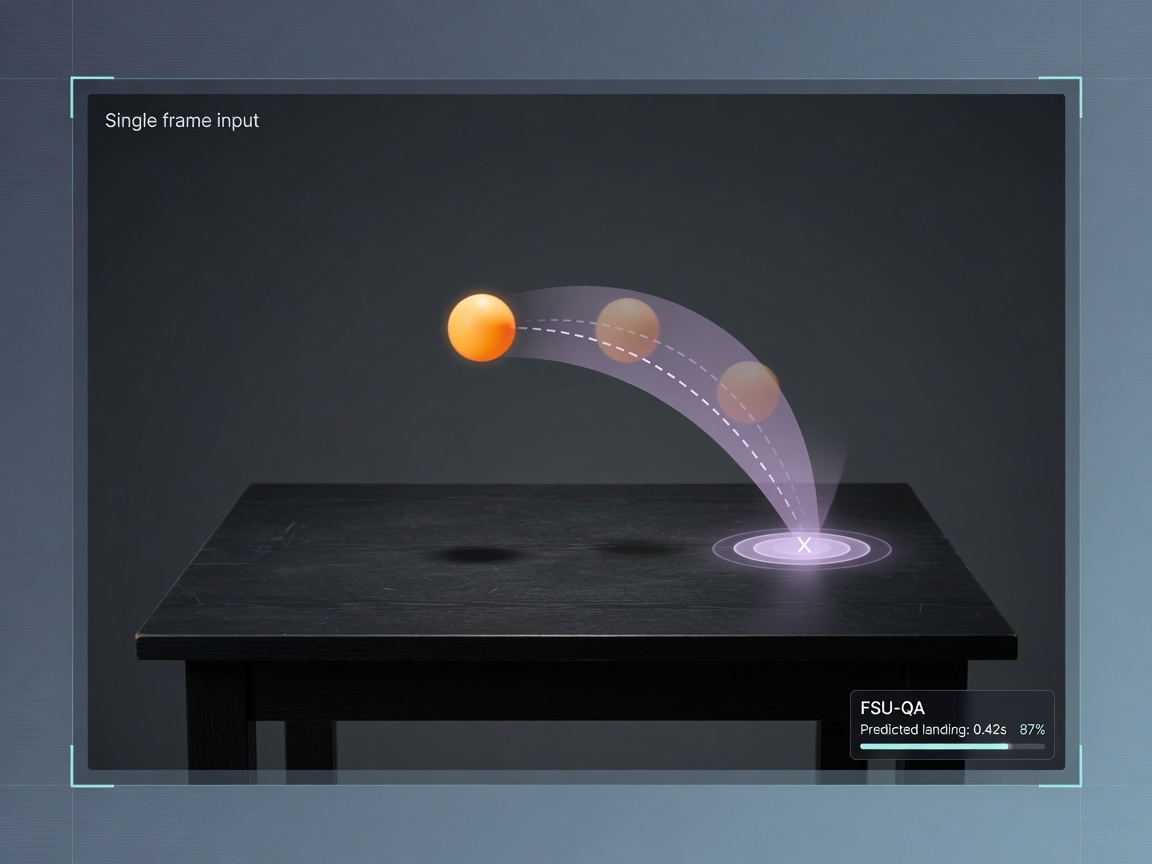
Automation needs a narrow first win
The best first AI workflow is usually a repeated task with a clear input, clear output, and a human approval step.
Most VQA benchmarks test whether a model can describe what's already in the image. FSU-QA, a new Visual Question-Answering dataset described in a recent arXiv paper, tests something harder: whether a model can reason about what happens next. The headline result is that small Vision-Language Models fine-tuned on this dataset beat much larger, more advanced models at foresight reasoning by a substantial margin. That's an interesting result - but the interesting question is what it does and doesn't demonstrate.
What The Benchmark Actually Measures
The researchers behind FSU-QA built it specifically to elicit and evaluate what they call Foresight Intelligence - the capability to anticipate and interpret future events. Their finding about the current state of the art is blunt: leading Vision-Language Models struggle to reason about future situations. That's not surprising if you've worked with these models; they're trained overwhelmingly on images of things that already happened, and nothing in that distribution rewards thinking a step ahead.
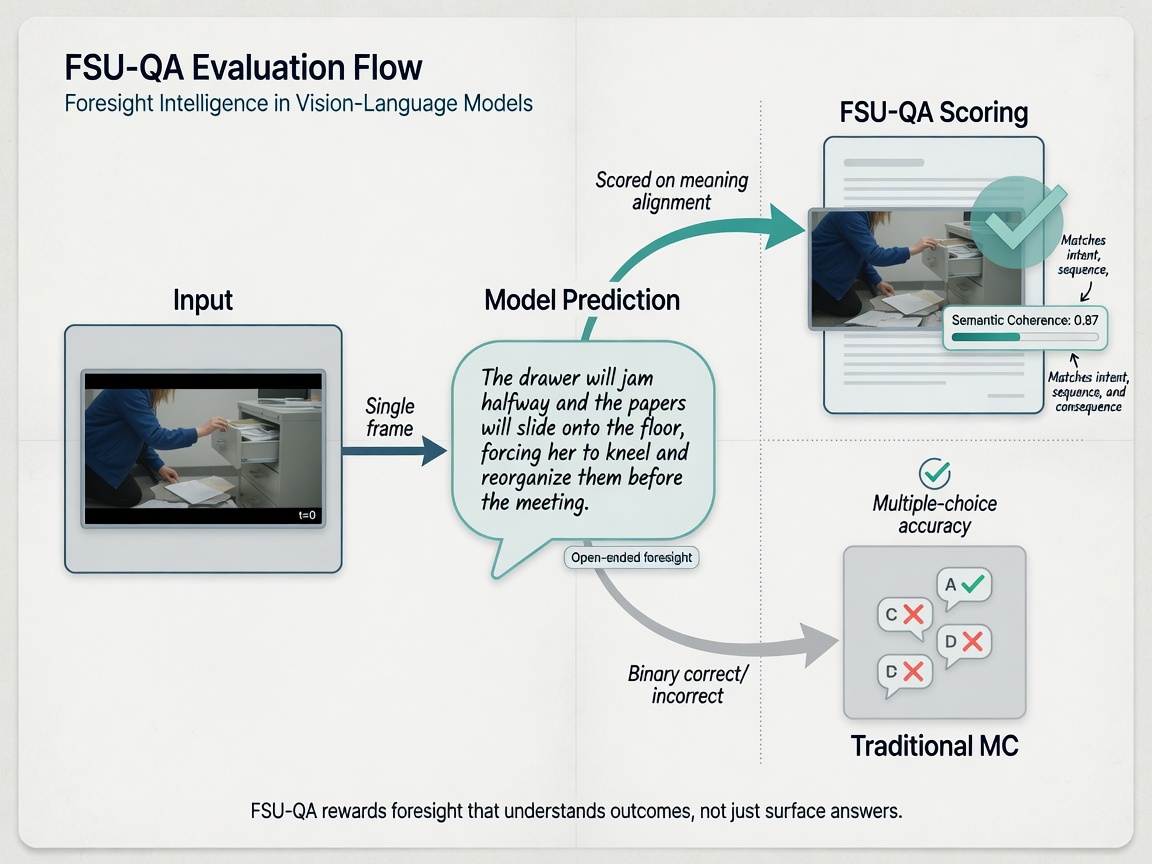
The dataset also includes a mechanism for assessing world models by measuring the semantic coherence of generated predictions - so it's not just checking whether a model picks the right multiple-choice answer, but whether its open-ended predictions hang together semantically. That's a more honest evaluation design than pure accuracy scoring, and worth taking seriously.
Worth a look
Phugialy Picks

AI Engineering: Building Applications with Foundation Models
A practical guide to building real-world applications with foundation models and LLMs.

GMKtec K15 AI Mini PC Oculink Intel Ultra 5 125U 32GB DDR5 512GB SSD | Desktop Computer AI Boost, 3X M.2 2280 Storage Expansion, Dual NIC...

AI: Understand the Revolution: From Basics and Buzzwords to Tech Giants, Governments, and Your Future
Some Phugialy Picks use affiliate links. If you buy through one, Phugialy may earn a commission. It doesn't change what we recommend. Full disclosure →
What Small Models Beating Large Ones Actually Means
The fine-tuning result is the part getting attention: small VLMs fine-tuned on FSU-QA surpass much larger, advanced models by a substantial margin. Fine-tuning on FSU-QA leads to substantial improvements in foresight understanding across the board.
Here's my read on that, and it's where I'd apply some skepticism before anyone cites this as evidence that small models are suddenly better at reasoning: this is exactly the pattern you expect when a benchmark measures something specific enough to be learned. A small model trained directly on the target distribution can beat a large generalist that never saw it. That doesn't make the result fake - it makes it narrow until proven otherwise. The claim "fine-tuned small models beat large ones" holds up inside FSU-QA's evaluation; whether it holds up on real-world anticipation tasks outside the dataset is exactly what the paper can't tell you yet, because FSU-QA is both the training signal and the measuring stick.
That's not a knock unique to this work - it's structural to nearly every dataset-driven capability claim in this field. The honest framing is: we now have a tool that measures foresight reasoning, and we know current frontier models are bad at it by that tool's lights.
Where This Actually Matters
What this actually points to, in my view, is less about leaderboard position and more about evaluation infrastructure. If you're building anything where anticipation matters - planning systems, video understanding pipelines, agent workflows that need to predict state changes - you currently have no good way to measure whether your model reasons about futures or just describes frames well. FSU-QA gives you one, including for open-ended generative predictions rather than just classification.
The practical takeaway I'd act on: if your application needs foresight-style reasoning, don't assume model scale buys it - current SOTA VLMs demonstrably lack it per this benchmark. But before betting production behavior on fine-tuned small models "surpassing" larger ones, test those fine-tuned checkpoints against data your task actually generates, not just against FSU-QA itself.
Got a question about how this applies to you? →
Keep reading
Follow the thread
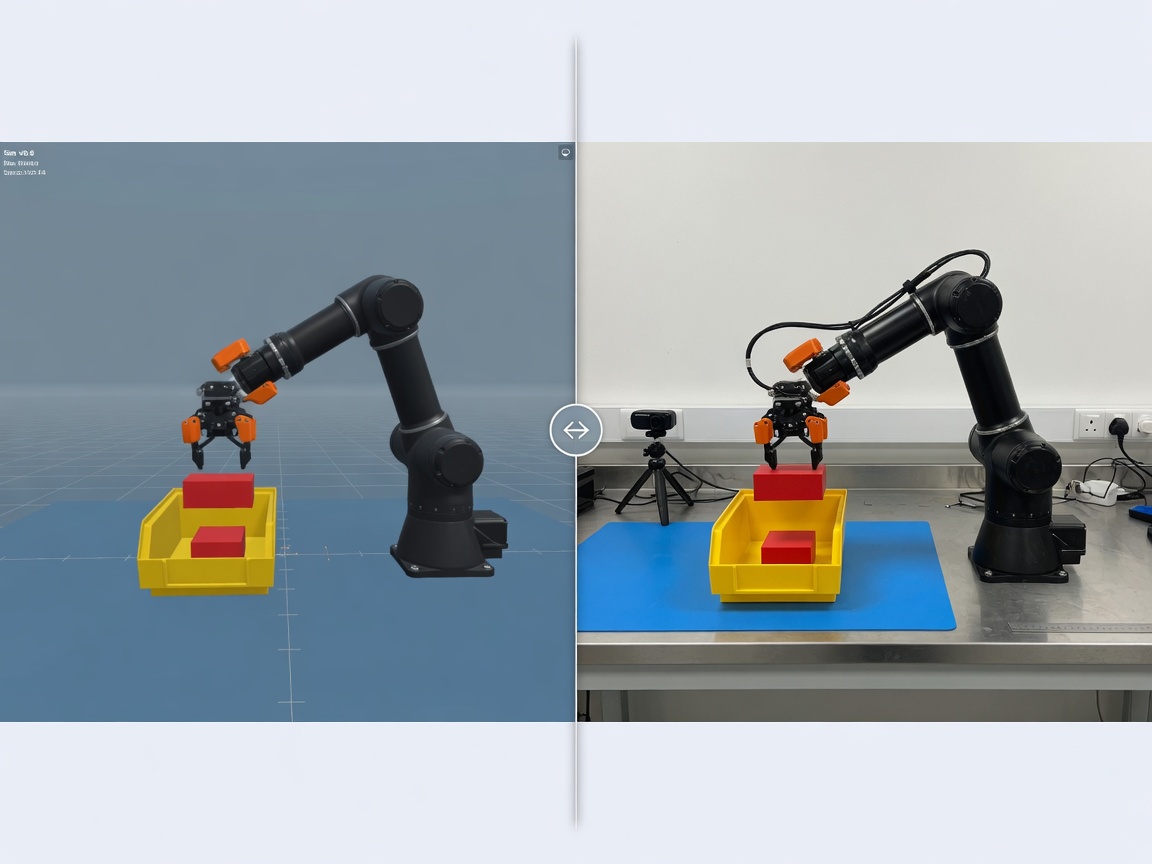
RoboDojo Tests Robot Manipulation Policies Where It Counts
A new benchmark finally tests robot manipulation policies in both simulation and the real world - 42 sim tasks, 18 physical ones, and 30 policies already ranked under identical conditions. Here's what that changes about every robotics result you've seen so far.
Read this noteSame lane, different angle
Spectral Attacks Reveal a Hidden Weak Spot in Vision-Language Models
Researchers found a way to attack vision-language models using the model's own internal geometry — aligning representations with the subspaces the model cares about least. It beats existing baselines, and the same insight could make these models tougher.
MADB: Where Music AI Actually Stands on Human Judgment
Models asked to judge music like humans do fall substantially short — and for once we know because someone built the benchmark first instead of shipping demos.