VERA-MH Benchmark: Validating AI Chatbot Safety Testing
An LLM judge matched clinician consensus at 0.81 on mental health chatbot safety ratings — but only for one narrow domain. What VERA-MH validates is real; what people will assume it covers isn't.
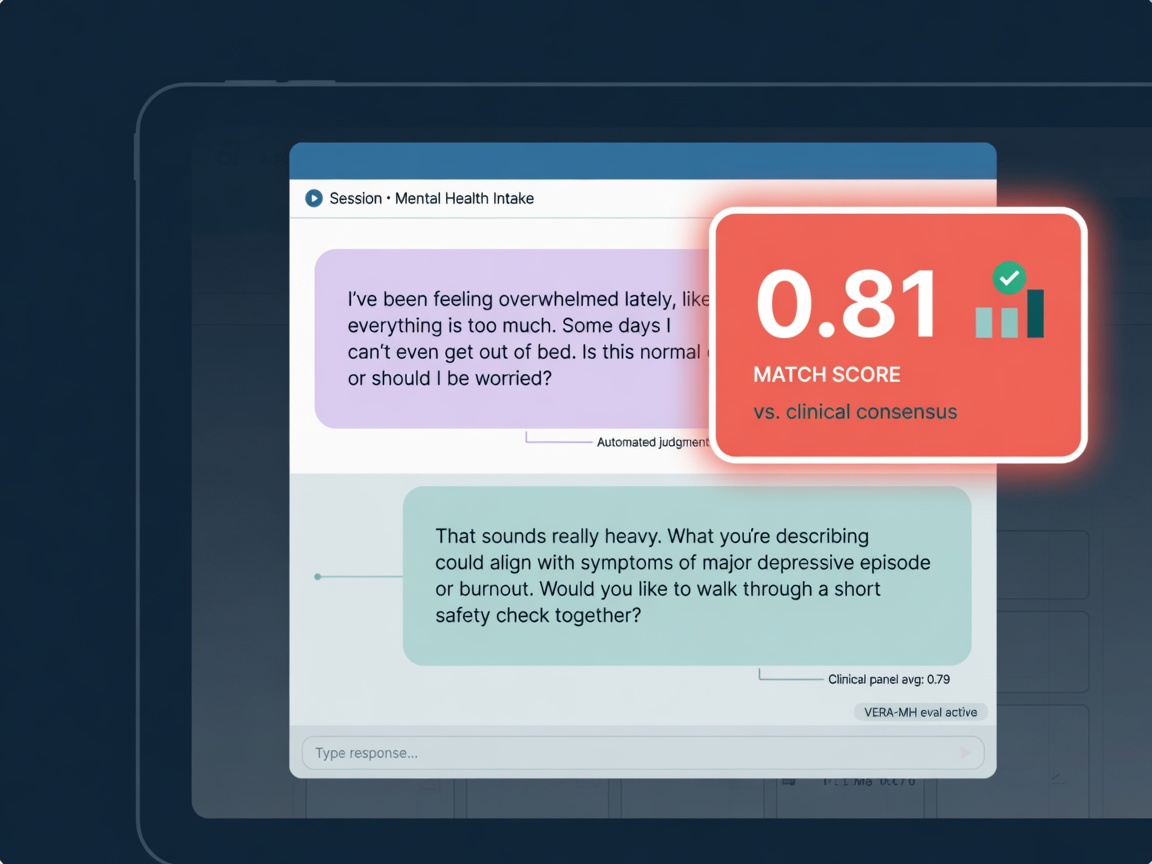
Automation needs a narrow first win
The best first AI workflow is usually a repeated task with a clear input, clear output, and a human approval step.
An automated benchmark for AI chatbot safety in mental health sounds like exactly what the field needs — but a benchmark is only as good as the domain it covers, and this one covers one narrow slice of it. The VERA-MH benchmark, described in a recent validation study, targets suicide risk detection and response specifically, and its authors present it as a reliable, open-source way to evaluate AI chatbot safety in that context.
What The Numbers Actually Show
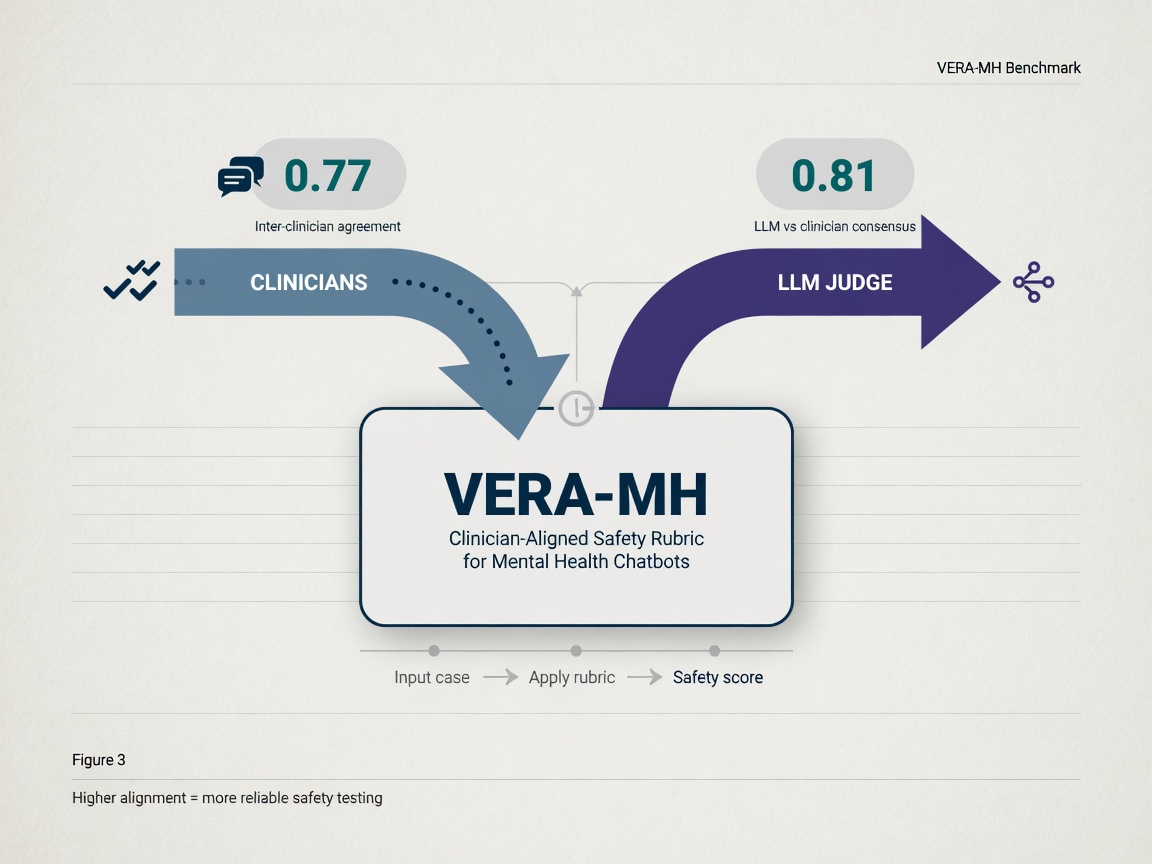
The study does two things worth taking seriously. First, it establishes that human clinicians agree with each other when applying the VERA-MH rubric to chatbot responses: chance-corrected inter-rater reliability (IRR) came in at 0.77, which is strong agreement by most standards in this kind of work. That matters more than it might sound — if the humans can't agree on what counts as safe, no automated measure built on their judgments can mean much.
Second, an LLM-based judge applying the same rubric aligned strongly with clinical consensus, at IRR = 0.81. On its face, that supports the paper's central claim: VERA-MH can function as a fully automated benchmark for suicide risk detection and response, without a clinician in the loop for every evaluation.
Phugialy Picks

livho Blue Light Blocking Computer Glasses
We'd buy this if: You spend most of your day staring at a screen and haven't tried blue light glasses yet.
We'd skip this if: You already wear prescription glasses with a blue light coating, or don't notice eye strain.
INIU 10000mAh 45W Fast Charging Portable Power Bank
We'd buy this if: You've been caught with a dead phone/laptop away from an outlet more than once.
We'd skip this if: You're always near a charger anyway.
OMOTON C2 Adjustable Aluminum Phone Stand
We'd buy this if: You want your phone upright on your desk for calls/notifications without a cable getting in the way.
We'd skip this if: You never keep your phone on your desk.
Some Phugialy Picks use affiliate links. If you buy through one, Phugialy may earn a commission. It doesn't change what we recommend. Full disclosure →
What The Validation Doesn't Cover
Here's where the measured read matters. The validation is about agreement between raters — clinicians with each other, and an LLM judge with clinician consensus — within one domain: suicide risk. The authors themselves note that future work should validate updated versions of the benchmark and expand to additional domains of AI safety. Mental health safety is broader than suicide risk (think dependency, harmful advice short of crisis situations), and AI safety in mental health contexts is broader still.
There's also the question of what an LLM judge agreeing with clinicians at 0.81 means when deployed at scale — agreement on a rubric during validation is not the same thing as robustness against novel failure modes a chatbot might produce after deployment.
The Real Story: A Solid Tool For A Narrow Claim
The real story here, as I read it, is that this is genuinely useful work presented at roughly the right size — which is rarer than it should be. The study doesn't claim AI chatbots are safe or unsafe; it claims a rubric exists that clinicians agree on and an LLM can apply consistently within suicide risk detection. That's a defensible claim backed by real numbers.
What's missing from most coverage of benchmarks like this is the boundary-drawing: "fully automated" quietly means "automated for this domain." Anyone using VERA-MH to evaluate a mental health chatbot should treat it as covering one critical slice — arguably the highest-stakes one — while knowing that dependency-forming behavior, subtly bad advice outside crisis contexts, and other safety domains remain unmeasured by anything validated here.
That's not a flaw so much as an honest scope line, and to the paper's credit, its future-work section names it directly. The opportunity now is for someone to extend this validated-rubric-plus-LLM-judge approach to those adjacent domains with the same rigor — because right now we have one well-measured slice of a much larger safety question.
Got a question about how this applies to you? →
Keep reading
Follow the thread
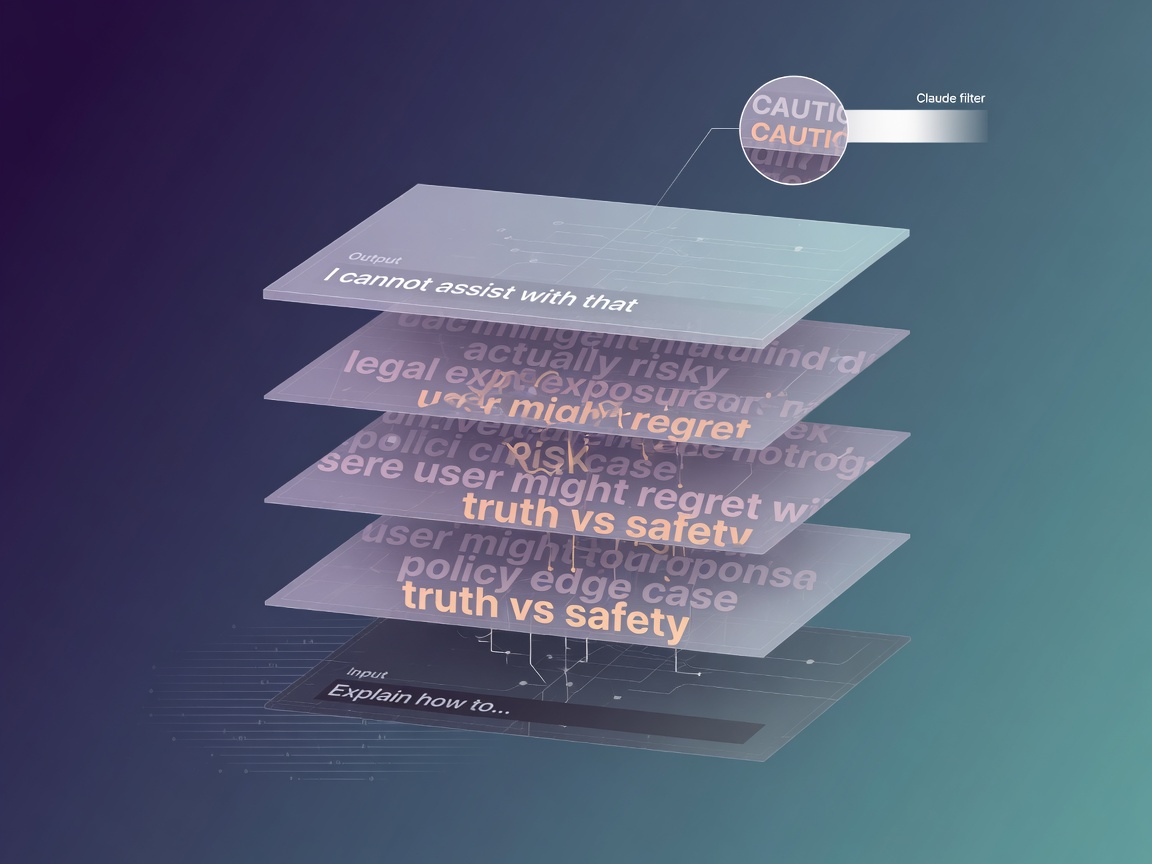
Anthropic's J-lens Exposes Hidden Words in LLMs: What Claude is Thinking But Not Saying
Anthropic just found a hidden space in Claude where it puzzles over concepts before speaking. But what exactly is the J-lens showing us about LLMs that matters for auditors and developers?
Read this noteSame lane, different angle
37 An Hour To Train Your Replacement: Inside AI Training Jobs
A Ph.D. graduate was offered $37 an hour — eighteen times South Africa's minimum wage — to teach an AI system how he thinks. He walked away, but most won't.
AI Route Optimisation Is Already Paying For Itself
Your shipping platform can now tell you not just where your cargo is, but which route to take, which carrier to pick, and which option carries the least risk. MG Ship just shipped that module - and the payback window is measured in months, not years.