Gradient-Based Alignment for ASR Models: What Holds Up
You can now align audio to word boundaries using nothing but gradients from any differentiable ASR model - including speech LLMs - with zero retraining. Sixteen models from four families passed the test. The catch: one backward pass per token.
Automation needs a narrow first win
The best first AI workflow is usually a repeated task with a clear input, clear output, and a human approval step.
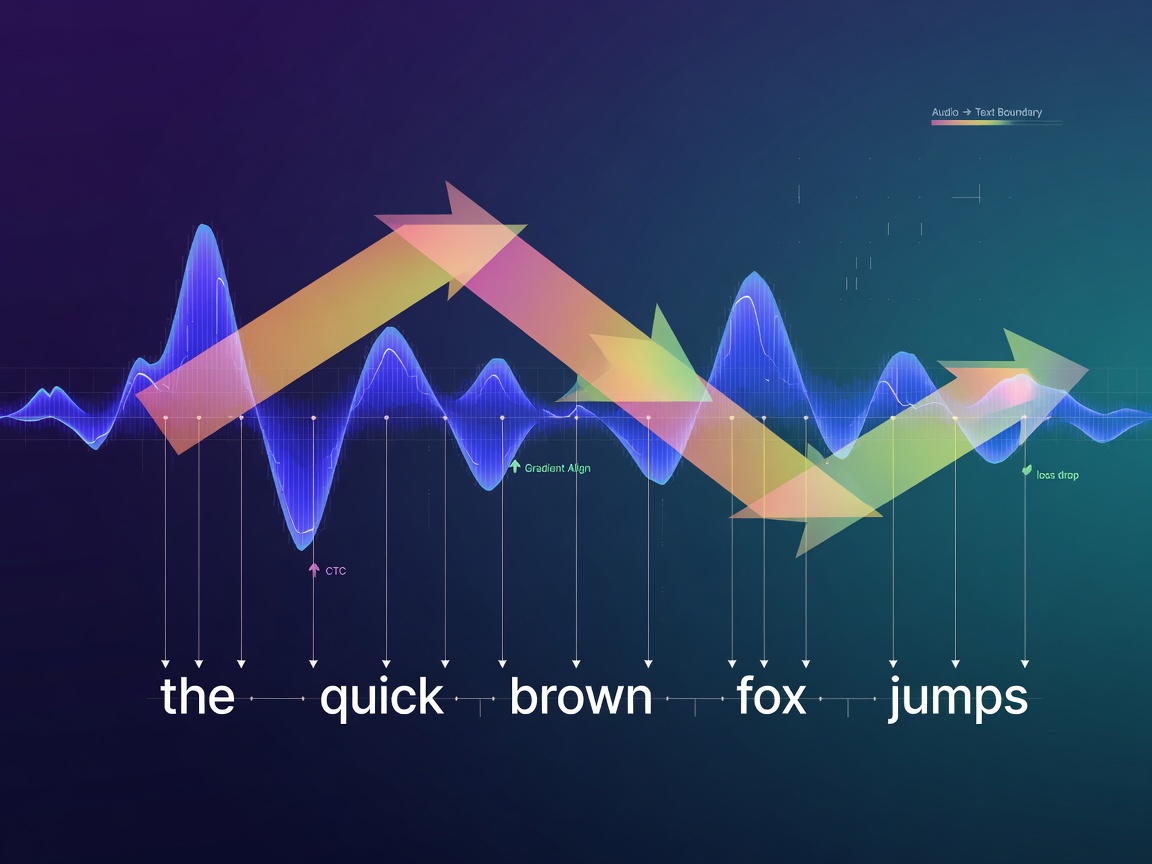
Gradient-based alignment for ASR models is now a real, tested option: a new arXiv paper (2607.06831) shows you can align audio input with word boundaries using gradient saliency alone, across every differentiable ASR model family tested - no training, no model modification, no alignment heads.
What The Method Actually Does
The idea is straightforward once you see it: run a forward pass on the audio, compute gradients with respect to the input, and use that saliency signal to find where each word's evidence lives in the audio. Because it works on gradients rather than learned alignment mechanisms, it applies to any differentiable ASR model - including speech LLMs, which historically don't expose clean alignments the way CTC or RNN-T transducers do.
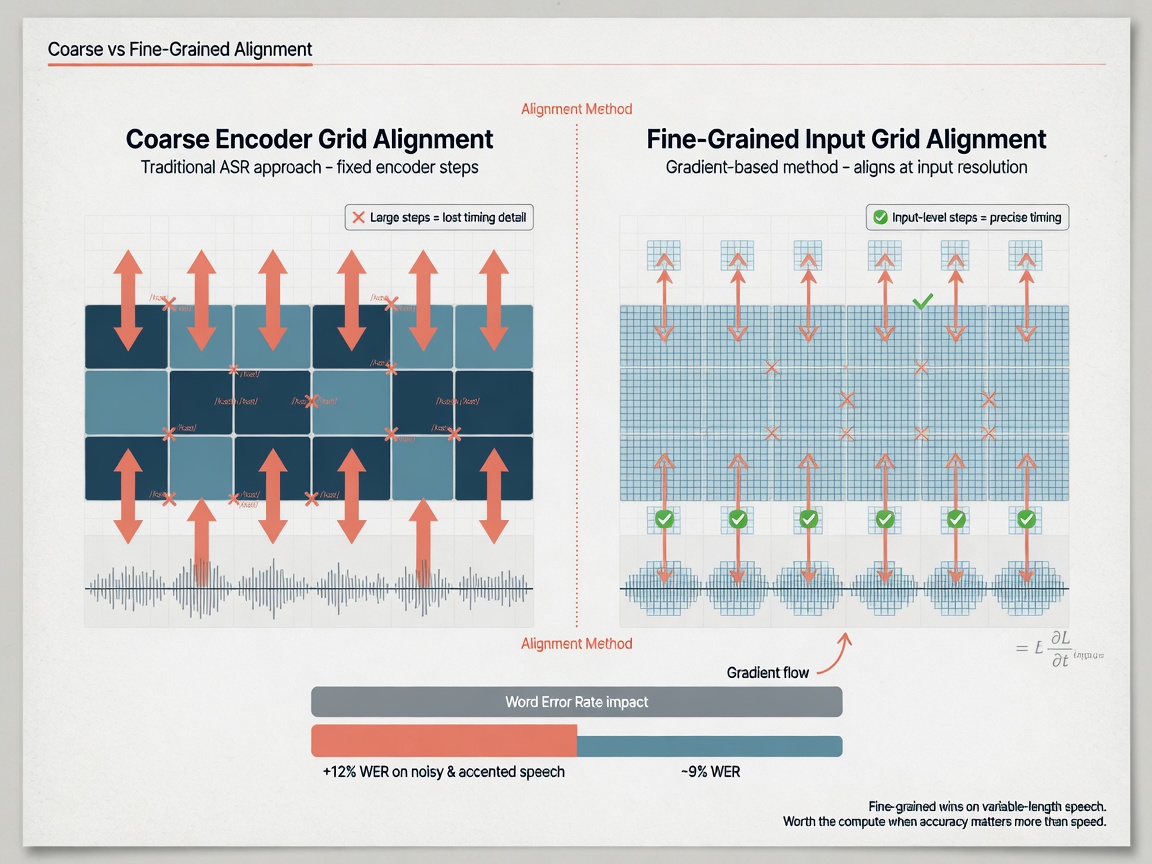
Two design choices matter here. First, it aligns on the input grid rather than the coarser encoder grid, so you get finer-grained boundaries. Second, it needs nothing from the model itself - no retraining, no extra heads, no architecture changes. The researchers evaluated sixteen models from four families, on both read speech (TIMIT) and spontaneous speech (Buckeye), and report that gradients yield usable alignment for every model tested.
Worth a look
Phugialy Picks

AI Engineering: Building Applications with Foundation Models
A practical guide to building real-world applications with foundation models and LLMs.

GMKtec K15 AI Mini PC Oculink Intel Ultra 5 125U 32GB DDR5 512GB SSD | Desktop Computer AI Boost, 3X M.2 2280 Storage Expansion, Dual NIC...

AI: Understand the Revolution: From Basics and Buzzwords to Tech Giants, Governments, and Your Future
Some Phugialy Picks use affiliate links. If you buy through one, Phugialy may earn a commission. It doesn't change what we recommend. Full disclosure →
The Tradeoff Nobody Gets To Skip
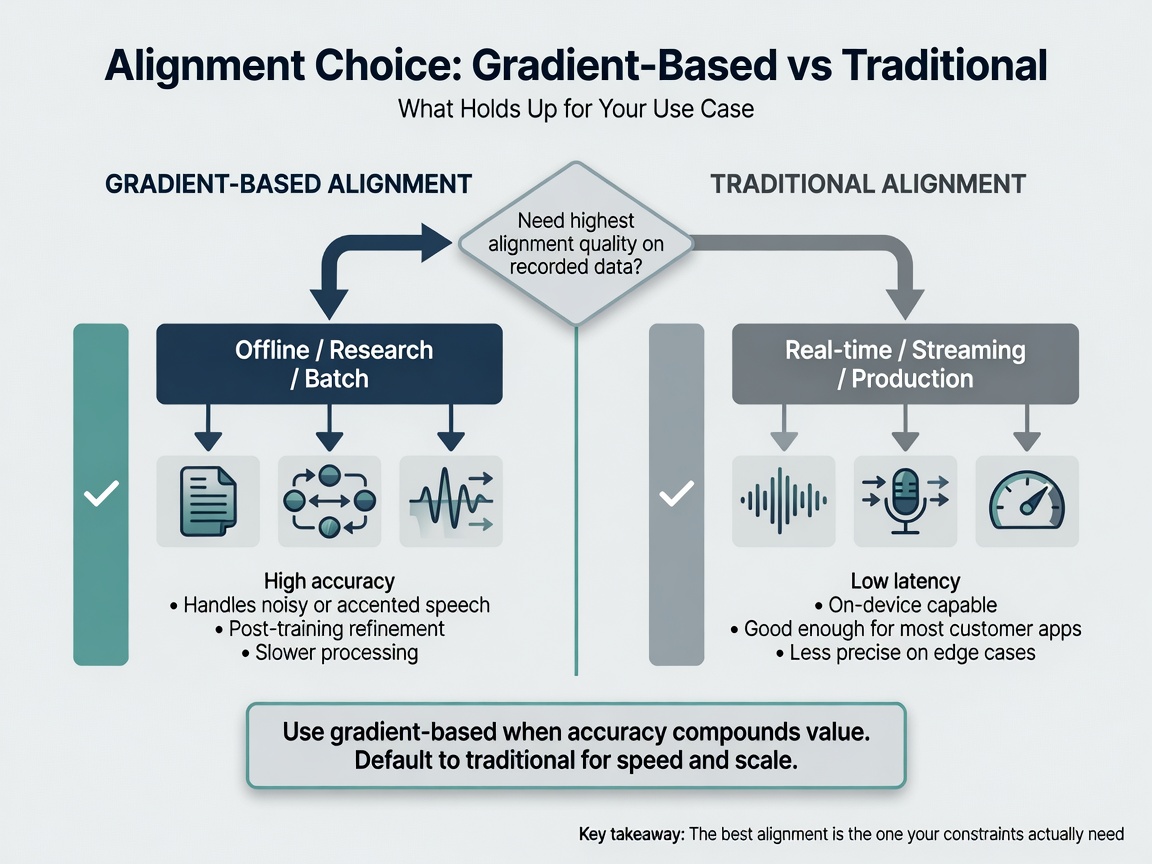
The main disadvantage is stated plainly in the material: one backward pass per token. That's not a footnote - that's the production story. If you're aligning a ten-minute recording with a few thousand tokens, you're doing thousands of backward passes through your model. For offline analysis of evaluation sets or building training corpora, that's fine. For anything streaming or latency-sensitive, it's a non-starter as written.
This is also why "works on all differentiable models" deserves a careful read rather than an applause. It's true as tested - sixteen models is a genuinely broad sweep, and covering both read and spontaneous speech is more than most alignment papers bother with. But "usable" is doing quiet work in that sentence; the material doesn't report where the boundaries land relative to established aligners' precision levels in production conditions like noisy audio or accented speech outside TIMIT and Buckeye's speaker populations.
Where This Actually Fits In A Pipeline
The real story here isn't that this replaces forced alignment tools - it's that it removes the coupling between your ASR model and your aligner. If you've ever had to maintain a separate alignment setup because your production ASR was an encoder-decoder or a speech LLM with no native timestamps, this gives you one method that works across whatever model you happen to be running. That consolidation is worth something even if per-token backward passes make it slow: correctness and simplicity of tooling usually beat raw speed for offline work.
What I'd want before trusting it in anger is an error analysis against known-good boundaries on messy audio - spontaneous speech in Buckeye is a good start, but real pipelines eat worse than that. The method holding up on sixteen models in-lab tells me the math works; it doesn't yet tell me how much cleanup my timestamps will need at scale.
Got a question about how this applies to you? →
Keep reading
Follow the thread
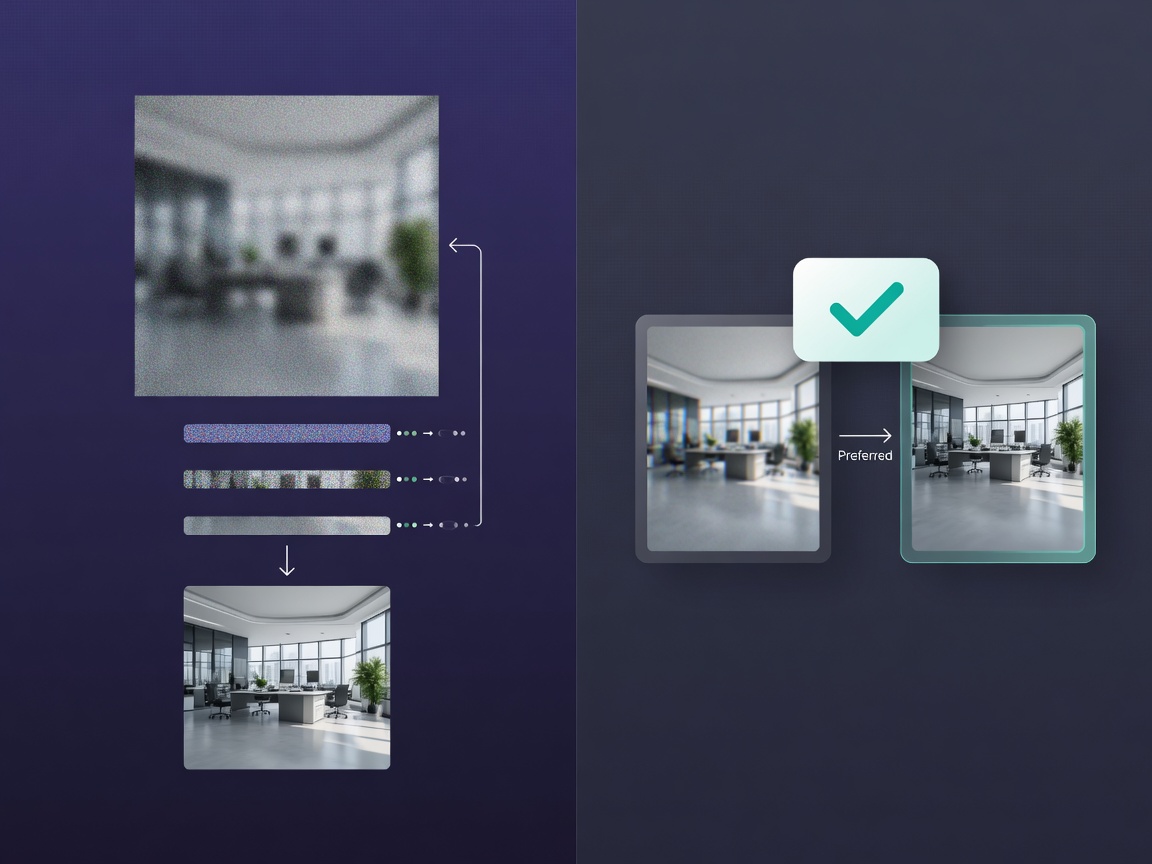
D2PO: Training Diffusion Samplers by Preference
Image generators take pictures step by step, and most samplers are trained by regression - match the target, step after step. A new framework called D2PO throws that out and trains samplers by preference instead. The surprising part is where those preferences come from.
Read this noteSame lane, different angle
AI Tutors Work Only If Students Use Them: Trial
A two-year trial across 18 middle schools found Khan Academy's AI tutor raised math scores modestly - but here's the catch: the gains looked just like those from practice without any AI at all. The real story isn't whether AI tutoring works; it's that 96% of students tried it and almost none used it when they actually needed help.
Spectral Attacks Reveal a Hidden Weak Spot in Vision-Language Models
Researchers found a way to attack vision-language models using the model's own internal geometry — aligning representations with the subspaces the model cares about least. It beats existing baselines, and the same insight could make these models tougher.