From Oracles to Agents: The Next Phase of Scientific Discovery
AlphaFold was a massive milestone. It proved that high-quality data and deep learning could map protein structures with enough accuracy to build on 53 years of international cooperation and $21 billion worth of experimen
Automation needs a narrow first win
The best first AI workflow is usually a repeated task with a clear input, clear output, and a human approval step.
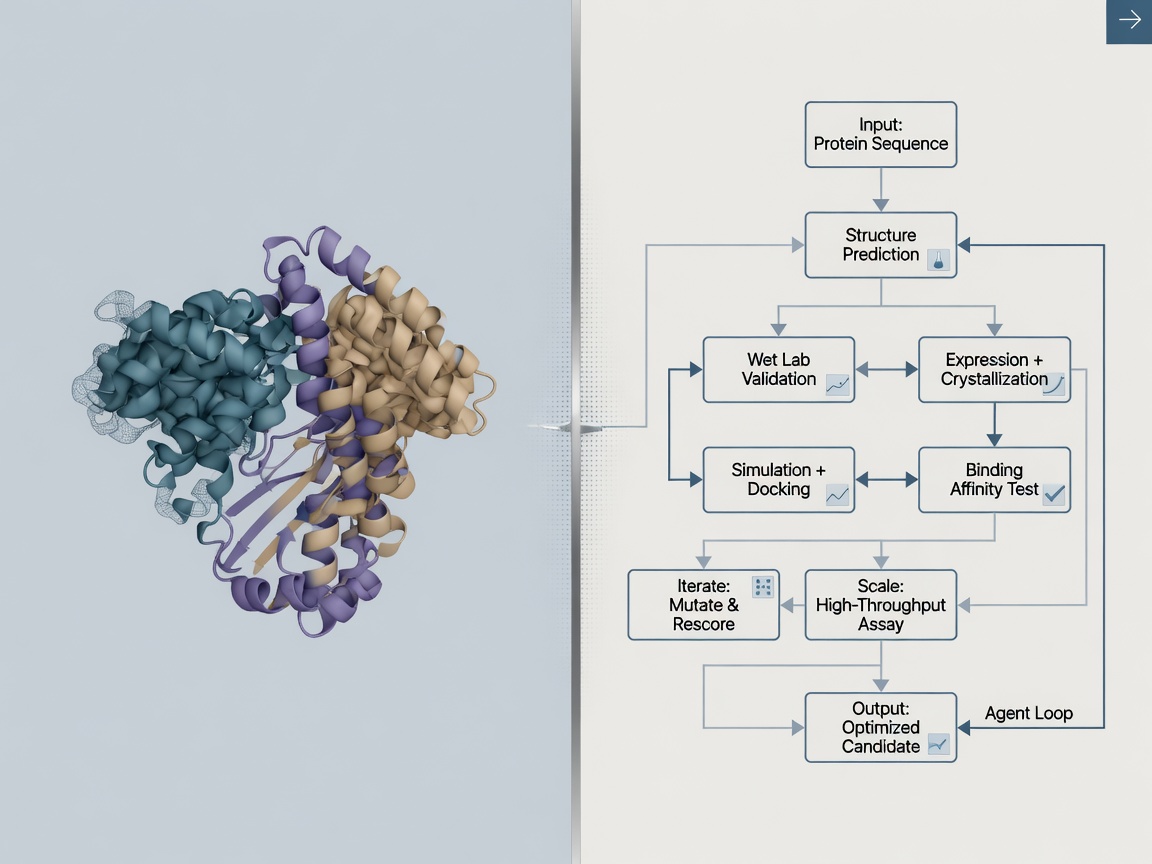
AlphaFold was a massive milestone. It proved that high-quality data and deep learning could map protein structures with enough accuracy to build on 53 years of international cooperation and $21 billion worth of experimental work. But AlphaFold is a "static" win—it is an oracle that provides an answer to a specific question. The next frontier isn't just better prediction; it is the move toward AI agents. We are shifting from tools that solve problems to systems that can navigate the messy, iterative process of discovery itself.
Synthesis as a Reasoning Engine
The difference lies in how these systems handle information. While AlphaFold is a specialized tool, AI agents are generalist systems designed to mimic human scientific reasoning by using digital and physical tools. Take Google’s AI Co-Scientist: it identified a mechanism for antibiotic resistance spread that took human researchers over a decade to reach. This wasn't just a faster calculation; it was a synthesis of information. As the source insight notes, the real skill of science is synthesizing what many tools produce and revising results as evidence comes in. Agents are being built to handle that synthesis, automating the heavy lifting of experimental design and data interpretation.
Worth a look
Phugialy Picks

AI Engineering: Building Applications with Foundation Models
A practical guide to building real-world applications with foundation models and LLMs.

GMKtec K15 AI Mini PC Oculink Intel Ultra 5 125U 32GB DDR5 512GB SSD | Desktop Computer AI Boost, 3X M.2 2280 Storage Expansion, Dual NIC...

GEEKOM IT15 AI Mini PC, Intel Ultra 9 285H(99 Tops), 32GB DDR5, 1TB SSD | The Most Powerful Workstation,Arc 140T GPU,WiFi 7,8K Business D...
Some Phugialy Picks use affiliate links. If you buy through one, Phugialy may earn a commission. It doesn't change what we recommend. Full disclosure →
From Data Processing to Workflow Ownership
The real story here is a fundamental shift in who—or what—owns the scientific workflow. One of the most practical applications for these agents is solving the reproducibility crisis. By automatically logging every move made during a research cycle, agents can create an exact, auditable record of methods, eliminating the "dark data" that plagues current research. This transforms "tribal knowledge" into a standardized repository of institutional history.
By preserving a lab's entire scientific history in a machine-readable format, we move away from siloed expertise and toward a persistent, searchable record of what worked, what failed, and why. It turns the "tribal knowledge" of a laboratory into a structured asset that can be queried as easily as a database. In practice, this means the value prop shifts from "look at this result" to "here is the path we took to get here." The challenge won't be getting the AI to find a new molecule; it will be ensuring that the automated reasoning logs are high-fidelity enough to actually replace human oversight in high-stakes environments. We are moving from tools that help scientists do their jobs to systems that may eventually manage the jobs themselves.
Got a question about how this applies to you? →
Keep reading
Follow the thread
From Exploration to Infrastructure: How Agents Build Their Own Production Code
Stop treating your AI agents like permanent cost centers! Right now, every time an agent handles a recurring IT incident, it re-invokes full LLM inference to figure out the steps again. It’s like hiring a world-class con
Read this noteSame lane, different angle
Moving Beyond Agents: The Reality of Autogenic 6G Management
The shift toward "autogenic" networks means 6G won't just use AI—it will write its own management code on the fly. This moves us past simple agents into a world of self-architecting infrastructure that could either solve our scalability limits or create impossible-to-trace ripple effects.
Giving AI Agents the Keys to the Kingdom (Without the Risk of Burning it Down)
Let’s talk about the 'Super-Powered Intern' problem. We all want an AI agent like Claude Code or Gemini CLI to handle the heavy lifting—writing code, managing configs, and spinning up entire environments—but every IT hea