Your Private AI Agent Just Got a Massive Brain Upgrade
Let’s talk about a massive win for the privacy-first crowd. We’ve all dreamed of a personal AI that knows your schedule, reads your files, and helps you crush your to-do list—all without sending a single byte of your lif
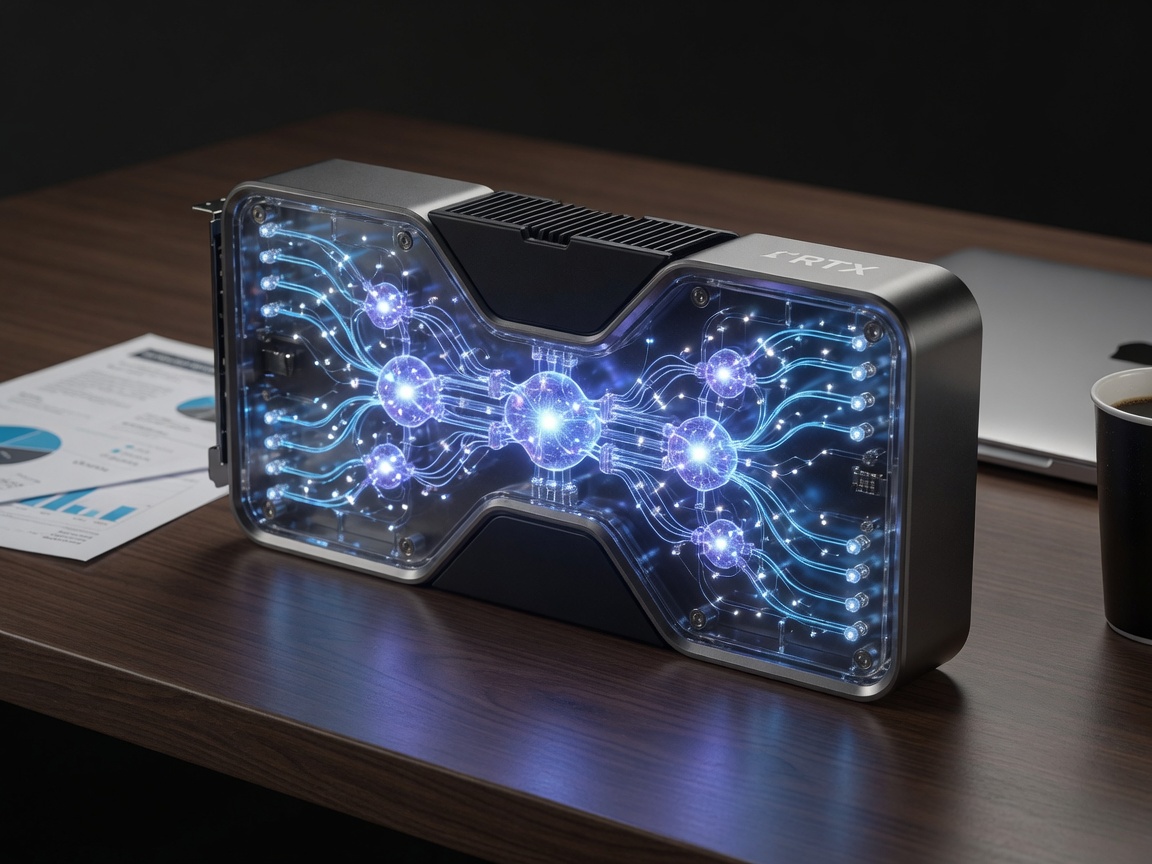
Automation needs a narrow first win
The best first AI workflow is usually a repeated task with a clear input, clear output, and a human approval step.
Let’s talk about a massive win for the privacy-first crowd. We’ve all dreamed of a personal AI that knows your schedule, reads your files, and helps you crush your to-do list—all without sending a single byte of your life to a corporate cloud. Well, Meta just handed us the keys to that kingdom. With the release of Muse Glimmer, we’re moving from 'cloud-dependent' to 'locally-governed' in a way that actually feels ready for prime time.
Cracking the 'Memory Wall' for Home Labs
For a long time, the biggest headache for local AI enthusiasts has been the 'memory wall.' You want the heavy-hitting intelligence of a large model, but your consumer GPU usually hits a ceiling before the model even finishes loading. Muse Glimmer is a total game-changer here because it masters the art of the squeeze. By utilizing 4-bit weight quantization, Meta has managed to shrink a 30-billion-parameter powerhouse down to under 20 GB.
Why does that matter? Because it fits perfectly into the 24 GB or 32 GB memory envelopes that most of us actually own. But here’s the clever bit: Meta didn't just cram the model in there. They left enough breathing room for the KV cache and a DFlash-based drafter. This means your local agent isn't just 'running'—it has the overhead it needs to actually perform complex tasks like function calling and multimodal interactions without breaking a sweat.
Worth a look
Phugialy Picks

Logitech G413 SE Full-Size Mechanical Gaming Keyboard - Black | Backlit, anti-ghosting, compatible with Windows and macOS, aluminum material

RK ROYAL KLUDGE R98 Pro Wired Mechanical Keyboard, 96% Creamy Gaming Keyboard RGB Backlit with Number Pad and Volume Knob, Gasket Mount, ...

AULA F99 Wireless Mechanical Keyboard,Tri-Mode BT5.0/2.4GHz/USB-C Hot Swappable Custom Keyboard,Pre-lubed Linear Switches,RGB Backlit Com...
Some Phugialy Picks use affiliate links. If you buy through one, Phugialy may earn a commission. It doesn't change what we recommend. Full disclosure →
From Chatty Bots to Actual Agents
What really gets my heart racing is that Muse Glimmer isn't just another chatbot to play with. It’s built for agency. It supports OpenClaw and other agent-orchestration patterns, meaning it can be plugged into scaffolds that let it interact with your terminal, test environments, and specific repositories. We’re moving the needle from a model that just 'talks' to a tool that actually 'does.'
The benchmarks prove it's punching way above its weight class. Muse Glimmer is currently outperforming heavy hitters like Gemma4-31B and Qwen3.6-27B in several agentic and reasoning tests. It hit a 74.6 on MCP Atlas (compared to 61.7 for Gemma4-31B) and put up solid numbers on WildClawBench and SWE-Bench Pro. When you combine that level of reasoning with local coding capabilities, you’re looking at a tool that can genuinely execute workflows.
The Revolution of Private Context
The real story here isn't just a new model release; it’s the unlocking of 'private context' as a viable standard for AI. By moving these capabilities to the edge, we are finally breaking the trade-off between high utility and personal privacy. We are moving away from 'generic AI' and toward 'personal AI.'
This points to a future where your AI is a specialized extension of your own digital life. Give it a year, and we won't be talking about 'using an AI'—we'll be talking about personal agents that manage our lives autonomously because they have the permission to see our files and the local compute to process them instantly. Muse Glimmer is the bridge that lets us cross from cloud-dependent prompts to locally-governed agency.
Got a question about how this applies to you? →
Keep reading
Follow the thread
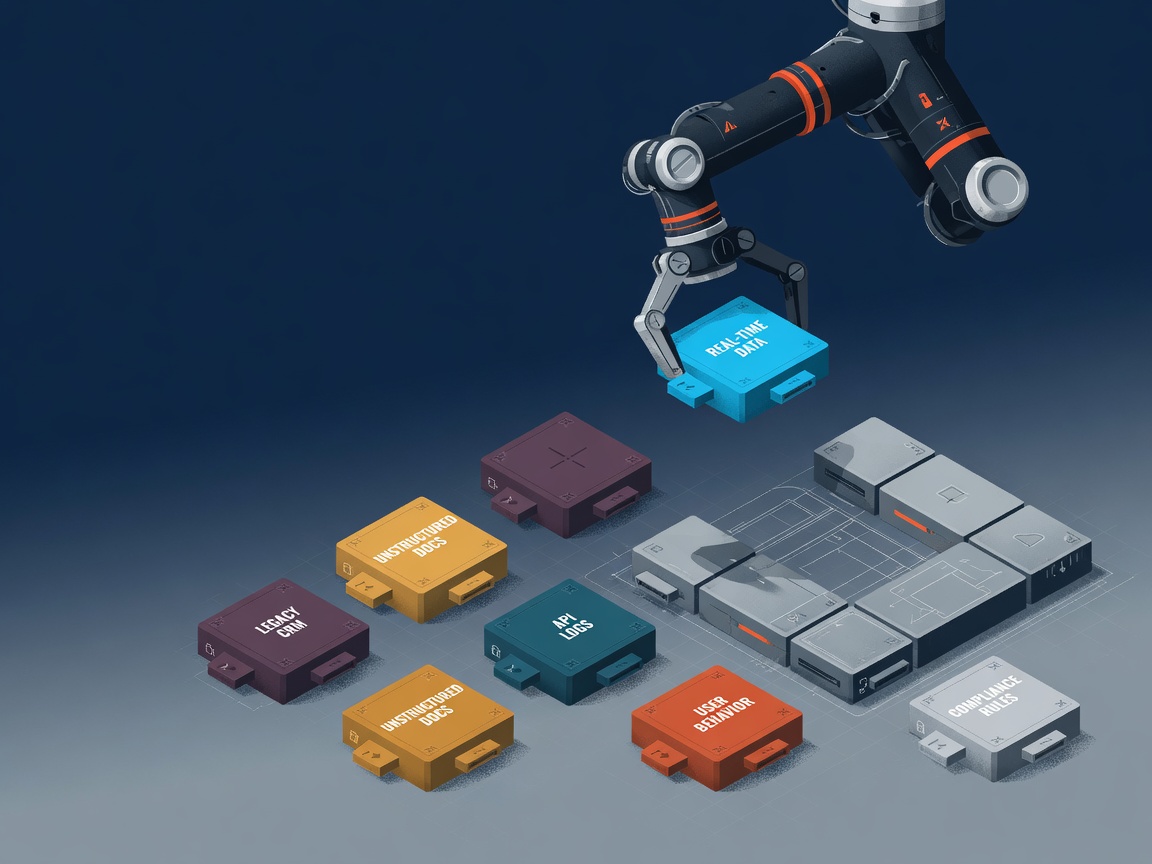
Why Most Enterprise AI Agents Never Reach Production
Two out of three enterprise AI agents never reach production — and the reason isn't model quality. It's that the agent doesn't know what your data means.
Read this noteSame lane, different angle
AgentsDock: One Workspace for Agentic AI Research
AgentsDock 1.0 puts Claude Code, Codex, and Cursor in one workspace reachable from your phone - with training plots showing up inline in chat instead of behind an SSH login.
Automated PoC Generation Fixes AI Bug Reports
AnyPoC turns LLM bug reports into executable proof-of-concept tests — rejecting 9.7x more false positives than naive validation. The architecture behind why one agent grading its own homework fails.