Formally Verifying 3D Mesh Intersections with AI-Generated Proofs
If we can treat AI-generated code as a black box because it's mathematically verified, does the 'hallucination' problem actually matter for high-stakes engineering?
Automation needs a narrow first win
The best first AI workflow is usually a repeated task with a clear input, clear output, and a human approval step.
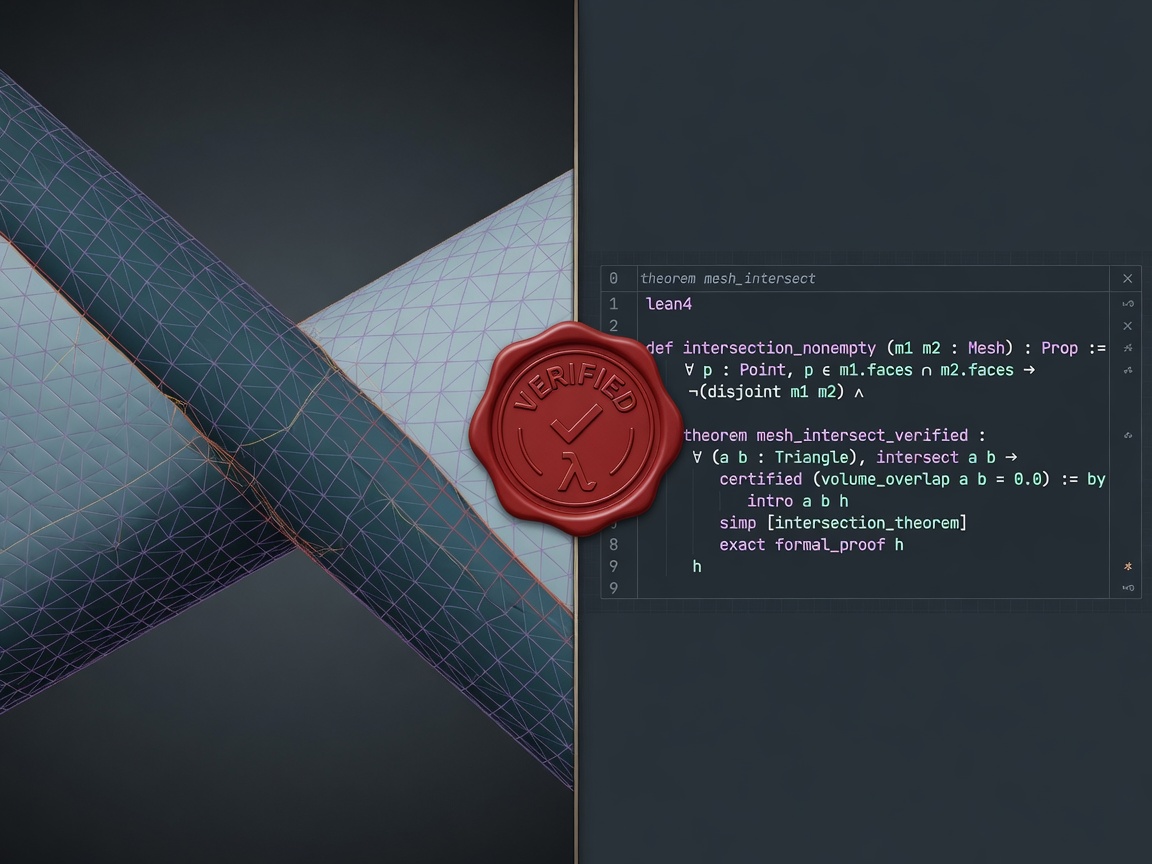
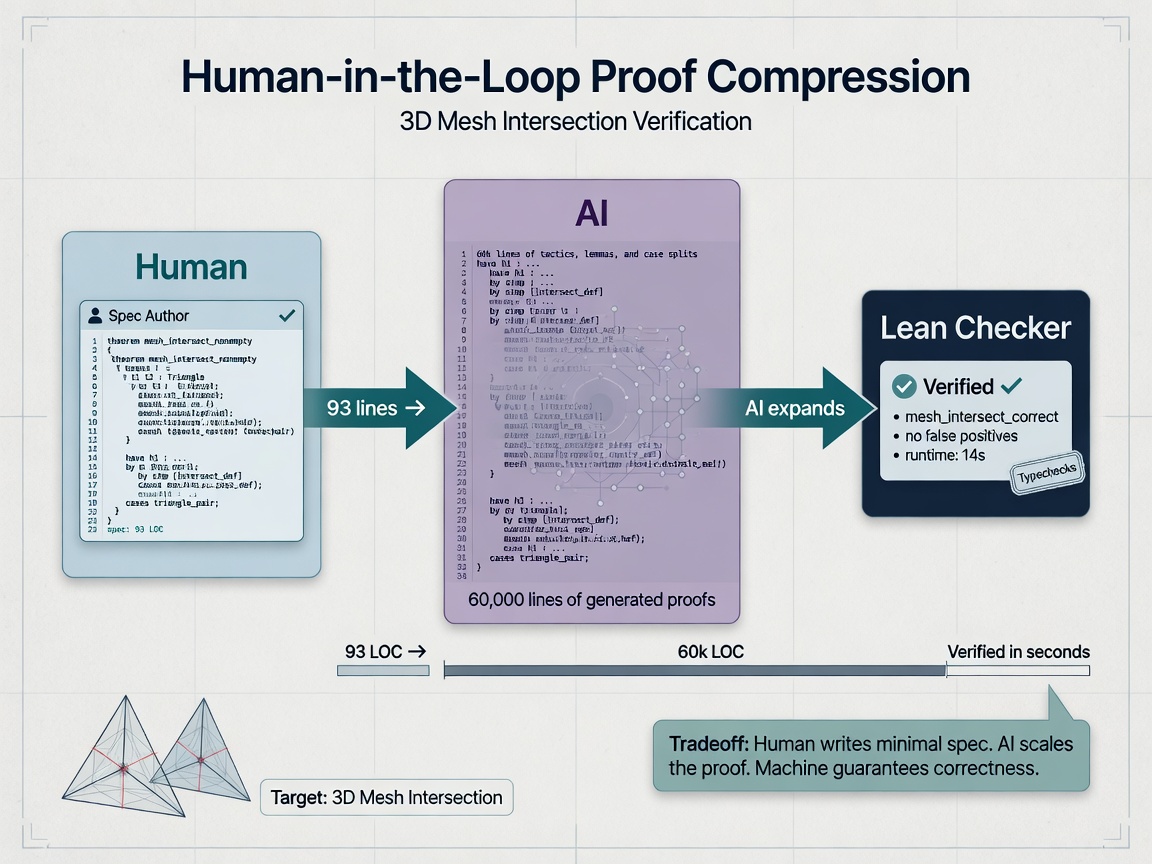
We just hit a massive milestone in formal verification: the first formally verified implementation of a 3D constructive solid geometry (CSG) operation—mesh intersection—using the Lean 4 theorem prover. This isn't just an academic 'what if.' It’s a functional workflow where AI agents autonomously churned out over 60,000 lines of formal proofs and 1,000+ lines of implementation code. The kicker? Human reviewers only had to certify 93 lines of formal specification.
Shrinking the Human Review Loop
The real engineering win here is the massive compression of human effort. In traditional formal verification, you’re often stuck auditing thousands of lines of dense, error-prone logic. This project flips that script. The AI does the heavy lifting—navigating the grueling requirements of a formal proof system—while the human acts as a high-level architect. You only need to ensure the 93-line specification is correct. Because the Lean checker guarantees conformance to that spec at compile time, you can treat the AI-generated proofs and code as a verified black box. We’re moving from 'trusting the LLM' to 'verifying the requirements.'
Worth a look
Phugialy Picks

AI Engineering: Building Applications with Foundation Models
A practical guide to building real-world applications with foundation models and LLMs.

GMKtec K15 AI Mini PC Oculink Intel Ultra 5 125U 32GB DDR5 512GB SSD | Desktop Computer AI Boost, 3X M.2 2280 Storage Expansion, Dual NIC...

GEEKOM IT15 AI Mini PC, Intel Ultra 9 285H(99 Tops), 32GB DDR5, 1TB SSD | The Most Powerful Workstation,Arc 140T GPU,WiFi 7,8K Business D...
Some Phugialy Picks use affiliate links. If you buy through one, Phugialy may earn a commission. It doesn't change what we recommend. Full disclosure →
The Reality of Correctness vs. Speed
Let’s be real: this isn't about real-time rendering. The project prioritizes absolute correctness over raw performance. Intersecting two 70k-triangle Stanford bunnies takes 24 seconds. In a game engine, that’s a non-starter. But in aerospace manufacturing, medical robotics, or high-precision CAD, a single geometric error can be catastrophic. For those industries, 'correct-by-construction' geometry isn't a luxury—it's a requirement. This provides a blueprint for building systems where the cost of failure is higher than the cost of latency.
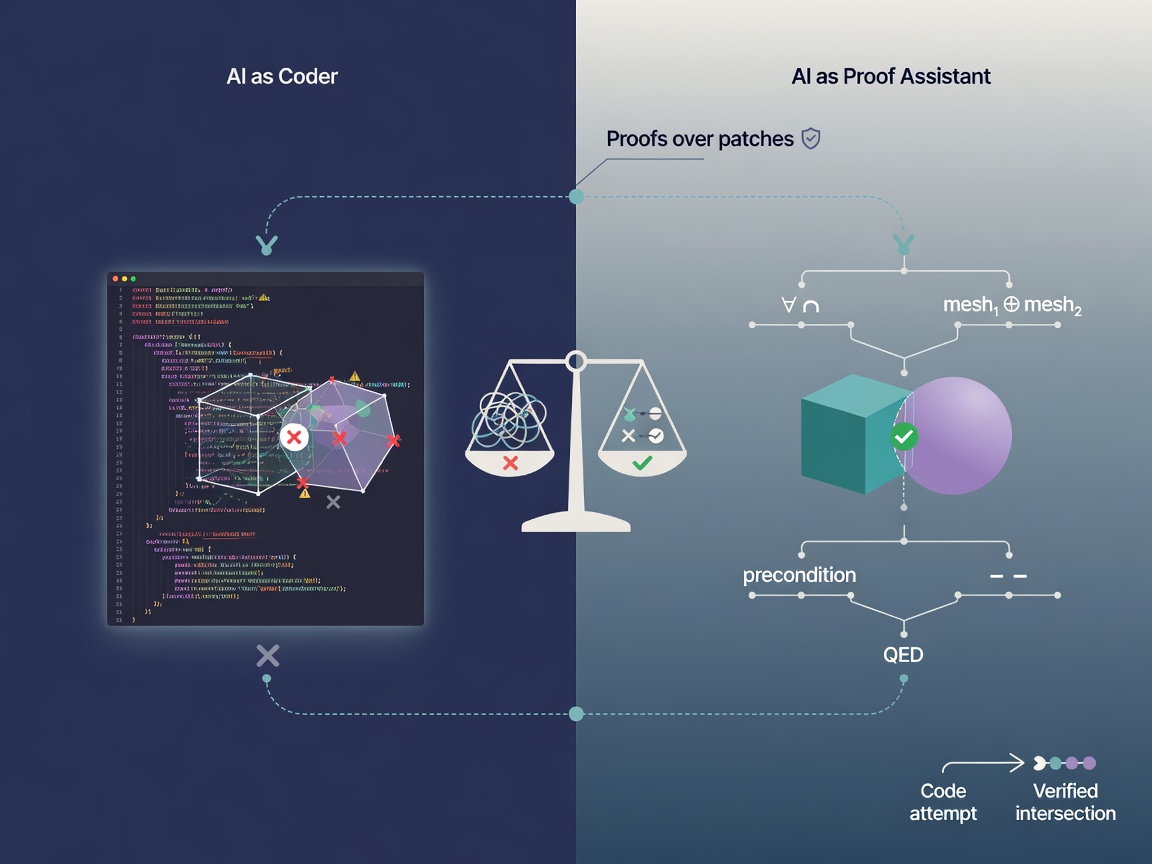
From 'AI as Coder' to 'AI as Proof Assistant'
The big takeaway here is a fundamental shift in how we use LLMs. Anyone can prompt an AI to write a messy Python script for mesh intersection. The real power lies in the AI’s ability to navigate the dense, logical requirements of a formal proof system like Lean 4. The value isn't in the syntax; it's in the logic. The next hurdle for the industry isn't just making these proofs faster—it's finding the sweet spot where formal specifications are small enough for humans to audit but robust enough to handle the messy, unpredictable realities of production data.
Got a question about how this applies to you? →
Keep reading
Follow the thread
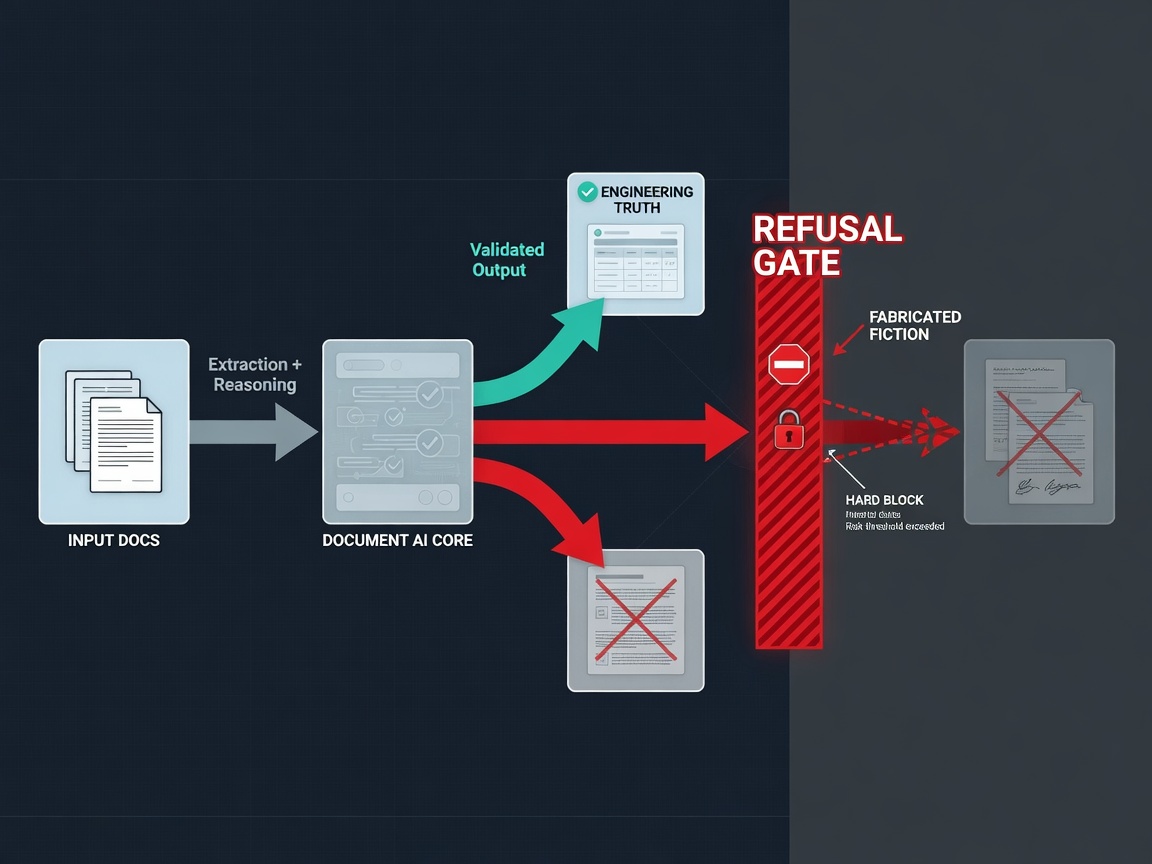
Engineering Truth in High-Stakes Document AI
If your AI can't say 'no,' it’s not a tool—it’s a liability generator for your legal team.
Read this noteSame lane, different angle
Why AI Isn't Closing the Engineering Productivity Gap
AI isn't a magic button for shipping software faster because the hardest part of engineering isn't writing the syntax—it's figuring out what to write in the first place. While the demos show instant code generation, the
Moving Facts Out of Weights: Why Co-LMLM Matters for Production
If we can just 'delete' facts from a database, why is the industry still obsessed with retraining models to fix a few bad facts?