AgentLens: A Code Agent Benchmark That Explains Itself
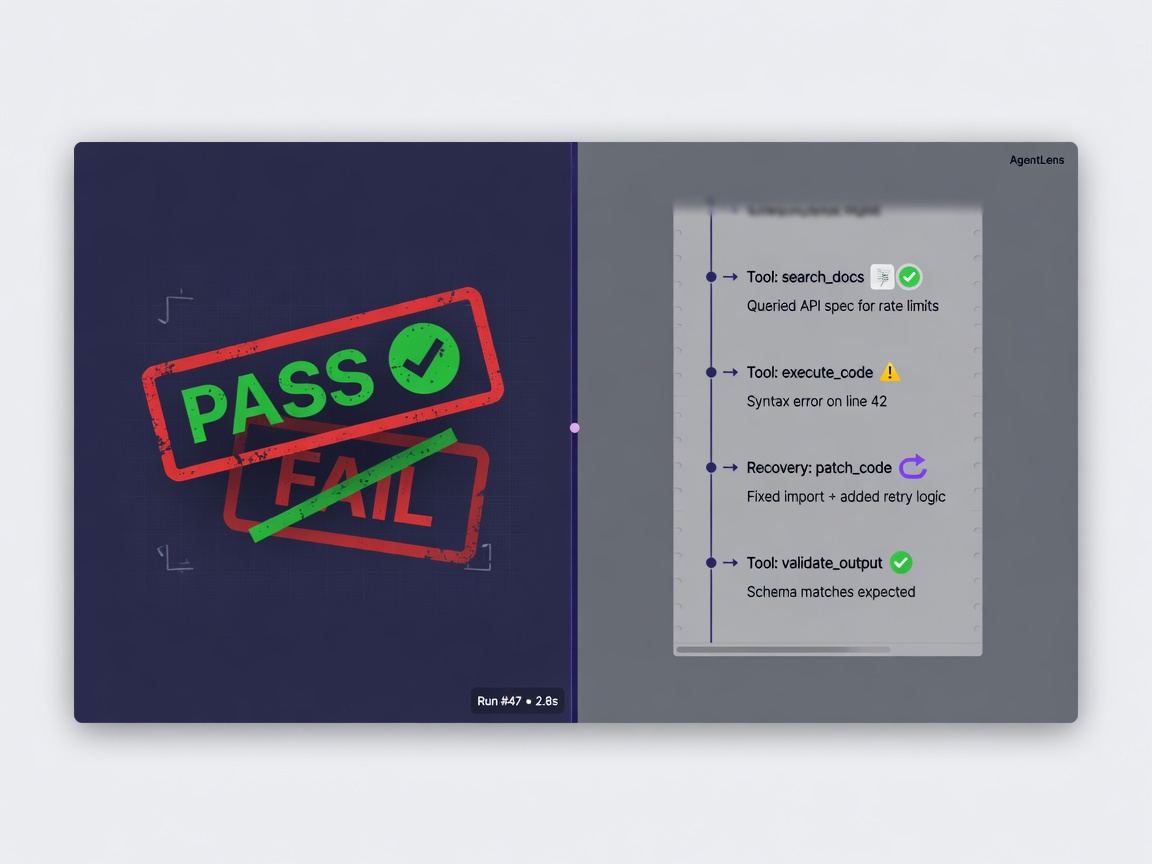
Most code-agent benchmarks give you one bit: pass or fail. AgentLens evaluates the whole trajectory - tool usage, error recovery, communication - and writes out why a run scored what it did. That makes it a diagnosis tool, not a leaderboard, and the two serve very different teams.
Automation needs a narrow first win
The best first AI workflow is usually a repeated task with a clear input, clear output, and a human approval step.
Most benchmarks tell you whether a code agent passed a task. AgentLens tells you what it actually did to get there - and that difference is exactly why it's worth a look if you ship agents rather than just rank them.
AgentLens is a new open-source benchmark for interactive code agents, and its core move is structural: instead of reducing a run to a single bit - pass or fail - it evaluates the entire trajectory of the agent's actions. The argument behind that design is hard to dismiss. Anyone who has actually used a code agent knows the score at the end is not the whole experience. What you live through is the instruction following, the tool usage, the self-verification, the error recovery, the communication. A benchmark that throws all of that away is measuring something you don't buy.
Why Pass/Fail Benchmarks Miss What Users Actually Feel
The clearest critique in the source material is that most code-agent benchmarks compress everything into one bit of information: did the task pass or not. Two agents with identical pass rates can feel completely different to use - one recovers cleanly from its own errors and communicates what it's doing, the other flails, burns tool calls, and lands on the right answer by luck. Pass/fail scoring makes them look the same.
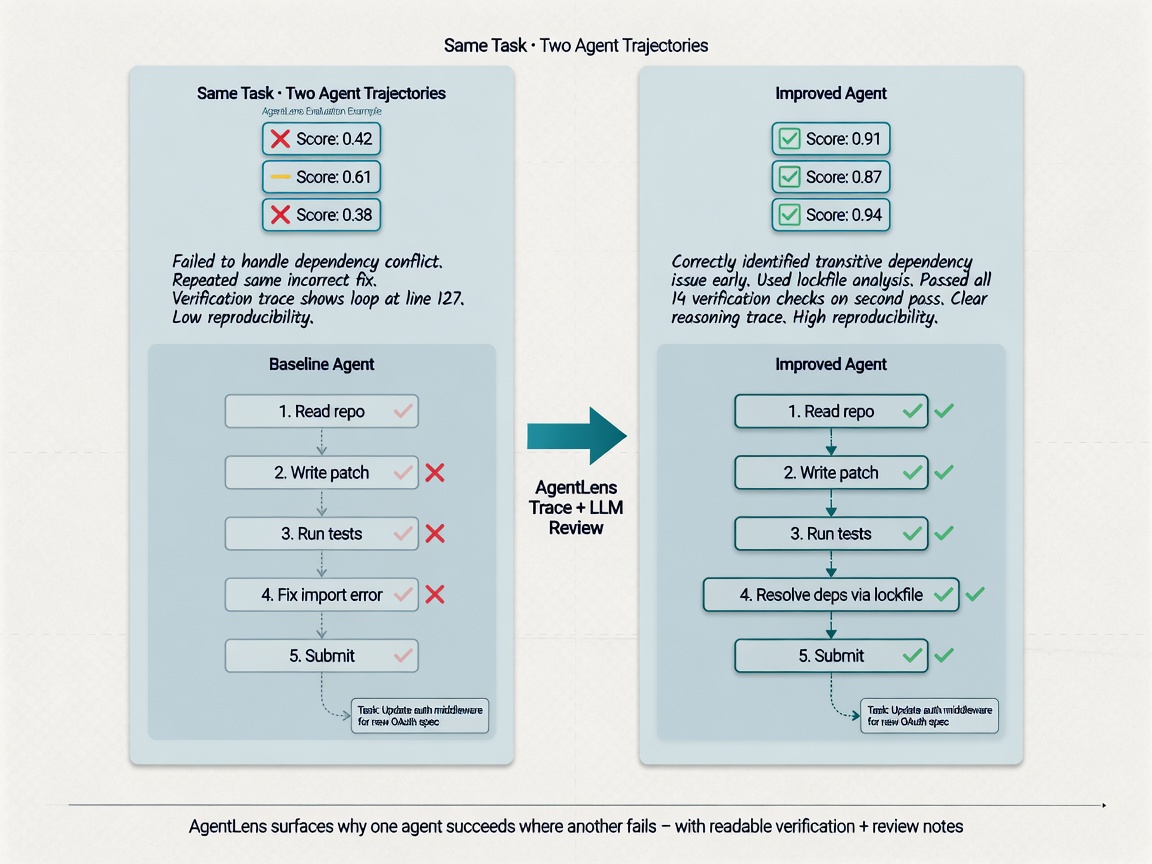
AgentLens fixes the measurement side with a two-part method: formal verification provides the objective checks, and LLM-written trajectory reviews and side-by-side comparisons provide the readable layer on top. The practical consequence is that each run yields an explanation of why a specific score was achieved - not just the number. If your agent loses points, you can read why.
That last part matters more than it sounds. A benchmark that explains itself turns scoring into diagnosis, and diagnosis is what teams actually need when deciding whether to ship a new agent version.
Worth a look
Phugialy Picks

AI Engineering: Building Applications with Foundation Models
A practical guide to building real-world applications with foundation models and LLMs.

GMKtec K15 AI Mini PC Oculink Intel Ultra 5 125U 32GB DDR5 512GB SSD | Desktop Computer AI Boost, 3X M.2 2280 Storage Expansion, Dual NIC...

AI: Understand the Revolution: From Basics and Buzzwords to Tech Giants, Governments, and Your Future
Some Phugialy Picks use affiliate links. If you buy through one, Phugialy may earn a commission. It doesn't change what we recommend. Full disclosure →
Who AgentLens Is Actually For - And What To Use It For
This is where the source is specific, and it changes how you should think about the tool. AgentLens is not positioned as a leaderboard. Its described uses are diagnosing model behavior, comparing successive versions of an agent, and catching product regressions in a nightly evaluation pipeline. In other words, the real competition for this isn't other ranking leaderboards - it's whatever ad-hoc logging and manual review your team does today when an agent version gets worse and nobody can say exactly where.
If you're a researcher trying to crown the best model, a single-bit benchmark is cheaper and probably sufficient. If you're a team running an agent in production, the trajectory-level explanation is the part you can't easily get elsewhere, and a nightly pipeline that catches regressions with a written reason attached is a genuinely different artifact than a score delta.
The honest caveat: the source describes the design and its intended uses; it doesn't give me evidence about adoption, cost of running the pipeline, or how noisy the LLM-written reviews are in practice. LLM-as-judge layers always carry that question. I'd treat AgentLens as worth adopting specifically if you already run repeated evaluations of successive agent versions and have felt the pain of unexplained regressions; skip it if you evaluate rarely and just need a coarse ranking - the formal-verification half alone won't justify the setup.
The Real Story: Trajectory Is the Product
What this actually points to, in my read, is a shift in what "agent quality" means. When agents were demos, the final answer was the product. When agents are products, the trajectory is the product - the user sits inside every wasted tool call and every failed recovery. A benchmark built around trajectories is the measurement world catching up to that.
It also fits a broader pattern this site keeps circling: the interesting work has moved from making agents capable to making their failures legible. AgentLens does for evaluation what trajectory-level observability did for operations - it stops asking "did it work?" and starts asking "what did it do, and why did that score that way?" If the benchmark holds up in practice, expect trajectory-based evaluation to become the expectation for anyone shipping interactive agents, not a research nicety. Watch whether teams actually wire it into nightly pipelines - that, not the paper, will tell you if it's real.
Got a question about how this applies to you? →
For the operational side of the same problem, see "Stop Guessing: How Agnost AI Turns 'Silent' Agent Frustrations into Your Next Big Feature."
Keep reading
Follow the thread
Evaluating LLM Coding Agents Before You Trust Them
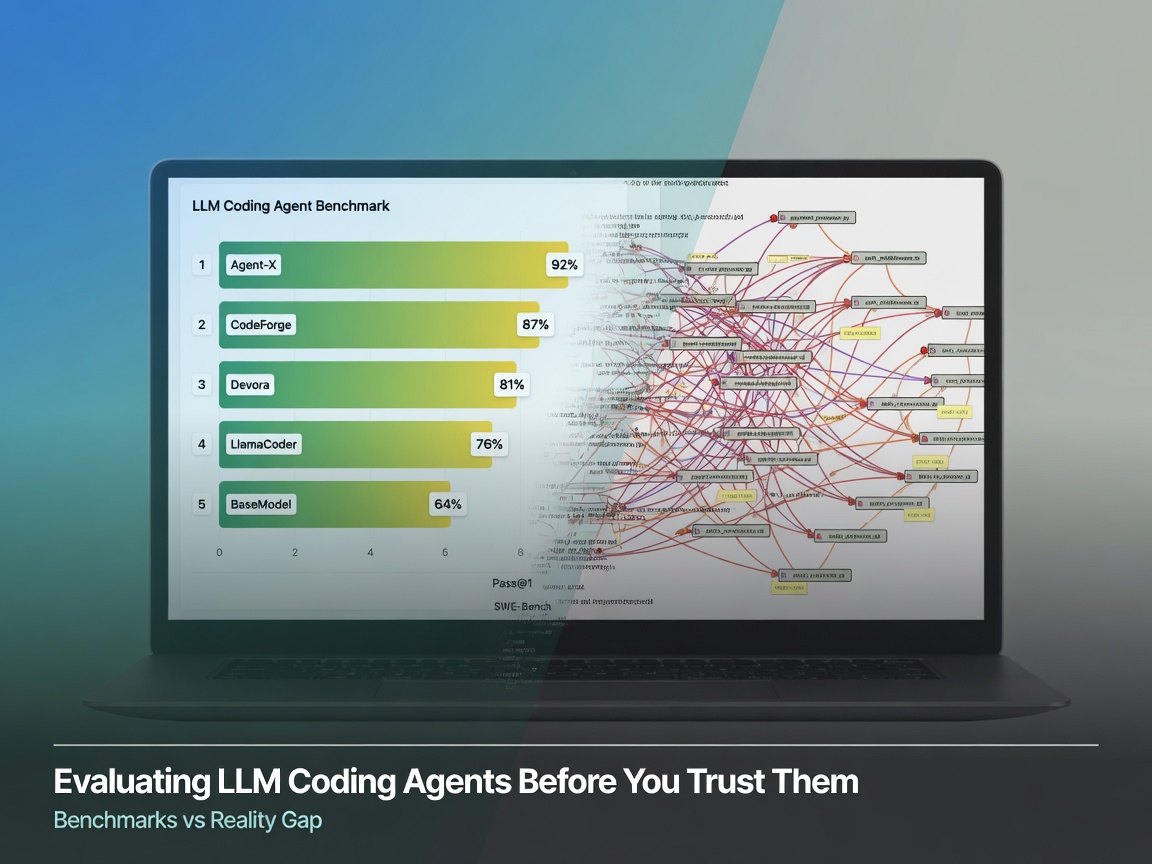
Benchmark scores stop meaning much the moment you wire an agent into your actual repo - and a new paper argues existing evaluation techniques produce a distorted projection of exactly that. The fix being proposed: contamination-awareness and trajectory-aware benchmarks built on real-world development practice.
Read this noteSame lane, different angle
Why Most Enterprise AI Agents Never Reach Production
Two out of three enterprise AI agents never reach production — and the reason isn't model quality. It's that the agent doesn't know what your data means.
AgentsDock: One Workspace for Agentic AI Research
AgentsDock 1.0 puts Claude Code, Codex, and Cursor in one workspace reachable from your phone - with training plots showing up inline in chat instead of behind an SSH login.