Craft Coding vs. Vibe-Coding: Why Reviewing Beats Generation
Stop letting AI write your logic and start letting it audit your craft. If you're just "vibe-coding," you're building a house of cards that will eventually collapse under its own complexity.
Automation needs a narrow first win
The best first AI workflow is usually a repeated task with a clear input, clear output, and a human approval step.
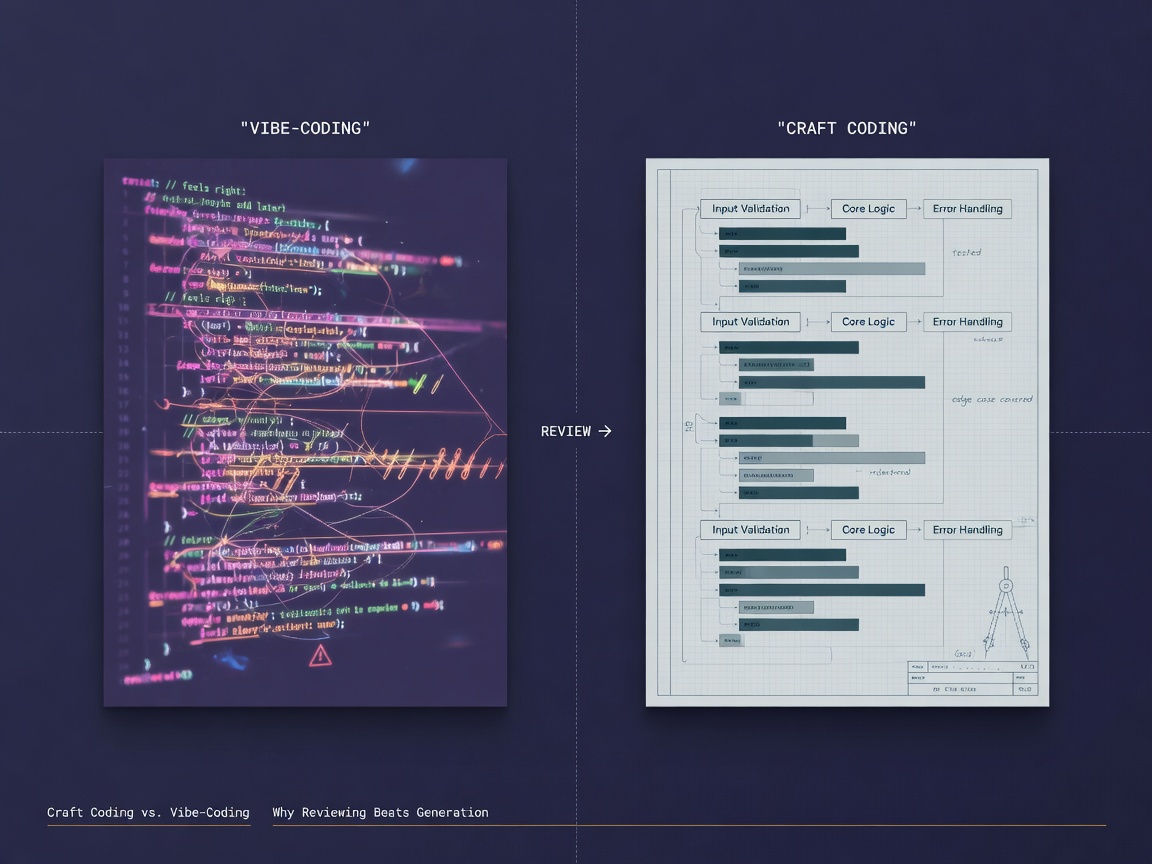
Vibe-coding is a shortcut that trades long-term codebase maintainability for immediate, superficial output, making it a significant liability for professional development. When developers defer every line of code to an AI without verifying the underlying logic, they enter a state of "vibe-coding." This approach prioritizes the "vibe" of a working feature over the structural integrity of the software. The result is often a codebase that functions in a vacuum but becomes an unmaintainable mess as complexity scales or when a bug requires deep-tissue repair. In professional environments, this isn't just a stylistic choice; it's a risk to the system's longevity.
The Trap of "Vibe-Coding" and Cognitive Atrophy
The real danger of vibe-coding isn't just the messy code; it's the erosion of the developer's ability to gauge true understanding. If you defer every decision to a machine, you lose the cognitive skills required to navigate complex systems. Students and developers alike must learn to operate in a world where AI is a major presence, but they cannot pretend that AI replaces the need for human cognition. Relying on the machine to do the thinking prevents the development of the very skills needed to oversee that machine effectively. When you stop exercising your mental muscles, you lose the ability to spot hallucinations, architectural flaws, or subtle security vulnerabilities before they hit production. You become a passenger in your own codebase rather than the pilot.
Phugialy Picks

AI Engineering: Building Applications with Foundation Models
A practical guide to building real-world applications with foundation models and LLMs.

LG 34WN80C-B UltraWide Monitor 34” 21:9 Curved WQHD (3440 x 1440) IPS Display, USB Type-C (60W PD), sRGB 99% Color Gamut, 3-Side Virtuall...

Alienware 34 Curved Gaming Monitor – AW3425DWM - 34-inch WQHD 180Hz 1ms Display, 1500R, AMD FreeSync Premium, VESA AdaptiveSync.
Some Phugialy Picks use affiliate links. If you buy through one, Phugialy may earn a commission. It doesn't change what we recommend. Full disclosure →
Implementing a Reviewer-First Workflow
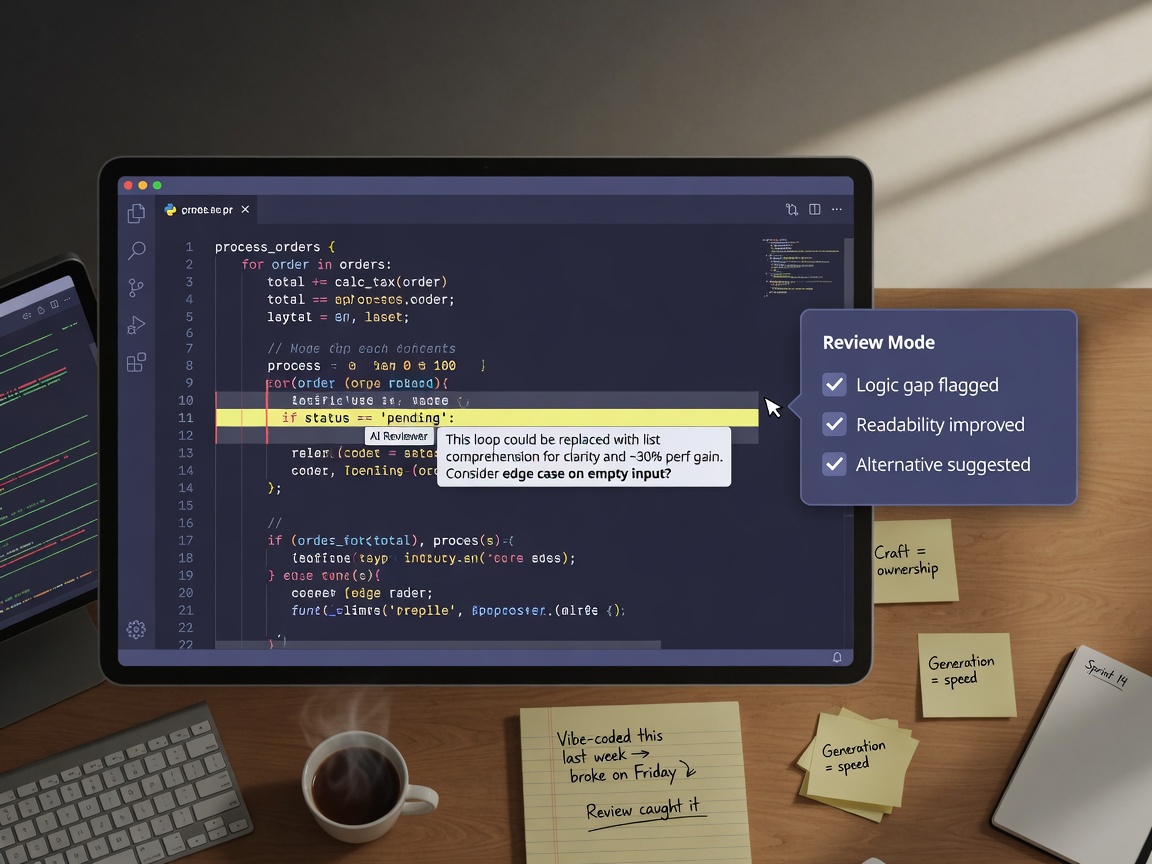
The most effective way to integrate AI into a professional workflow is through "craft coding." This is a style where the programmer commits to understanding every aspect of the codebase and uses AI only to benefit that specific ideal. Instead of asking the AI to write the code for you, you write the code and have the AI check your work. By treating the AI as a reviewer rather than a producer, you maintain ownership of the logic while leveraging the machine for quality assurance and error detection. This shift ensures that every line of code serves a human-understood purpose. It isn't about slowing down; it's about building a foundation that doesn't crumble. When the AI serves as a peer reviewer, it acts as a force multiplier for your existing knowledge, rather than a crutch that replaces it.
Delegating Logic vs. Augmenting Comprehension
The real story here is that the competition for your workflow isn't between "using AI" and "not using AI," but between "delegating logic" and "augmenting comprehension." This is my interpretation of the core tension: vibe-coding offers a faster path to a prototype, but it creates a dependency where the human is no longer the primary architect. Craft coding is the correct choice for production systems where maintainability and deep understanding are non-negotiable. If your goal is long-term system stability, you must switch to a "reviewer-first" AI workflow. If you are simply looking for a one-off script where you never intend to touch the code again, then vibe-coding is a tool—but don't mistake it for a career path.

Got a question about how this applies to you? →
Keep reading
Follow the thread
From Logs to PRs: Closing the Loop on AI Agent Observability
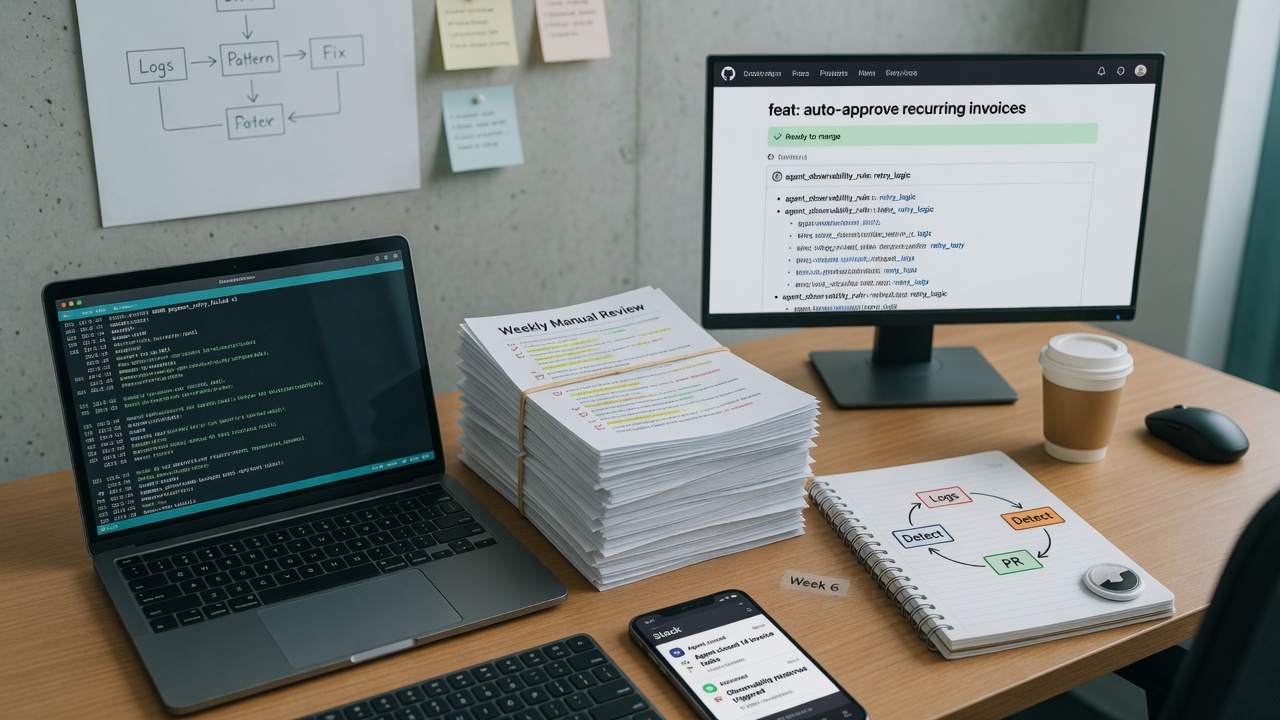
Most observability tools are just fancy log viewers. They tell you the house is on fire, but they don't grab the extinguisher. Agnost AI is trying to do something much more aggressive: it's trying to put the fire out aut
Read this noteSame lane, different angle
Beyond the Demo: The Gritty Reality of Agentic Video Production
The original draft was solid but lacked the high-energy 'Builder' persona, leaning slightly too academic. I injected more direct, hands-on language and sharpened the 'Orchestration Gap' analysis to ensure a distinct point of view. I also refined the hook to create a stronger tension regarding the reality of agentic architecture.
AI Coding Agent Memory That Survives Switching Tools
Switching between Claude Code, Cursor, and Antigravity on the same project usually means re-explaining your architecture every time. engrim compresses 153,000 tokens of work history into a memory pack under 1,000 tokens - and keeps it entirely on your machine.