AI Agents and Workload: When Faster Means More Work
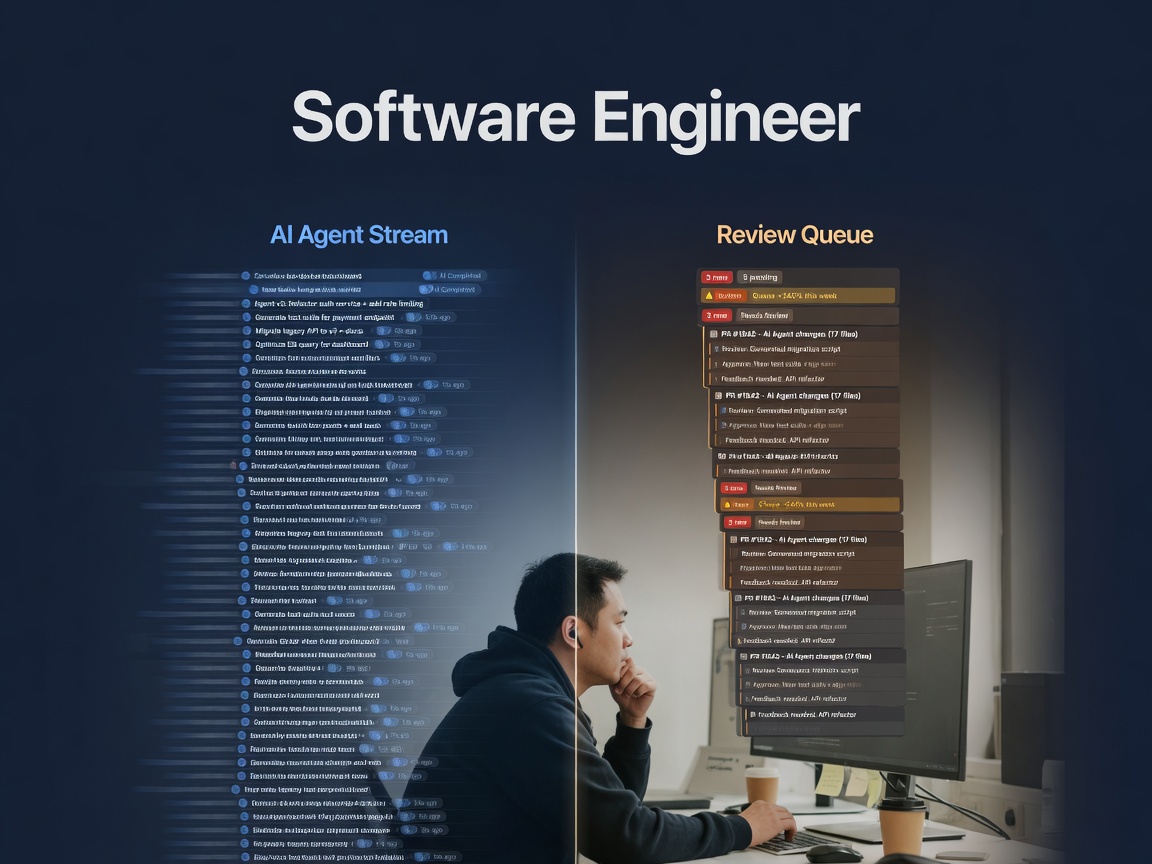
AI agents did not simply help one engineer finish the same work faster. They made it easy to take on more—and the review burden and context switching followed. The useful question is whether your workflow can contain that extra work.
Automation needs a narrow first win
The best first AI workflow is usually a repeated task with a clear input, clear output, and a human approval step.
AI agents and workload are a trade-off, not a simple productivity win: implementation got cheaper, but the author used that capacity to take on more work rather than merely finish existing work faster. If you are deciding whether to bring agents into your own engineering routine, the key question is whether you can absorb the added review and context switching.
AI agents and workload: more scope, not just speed
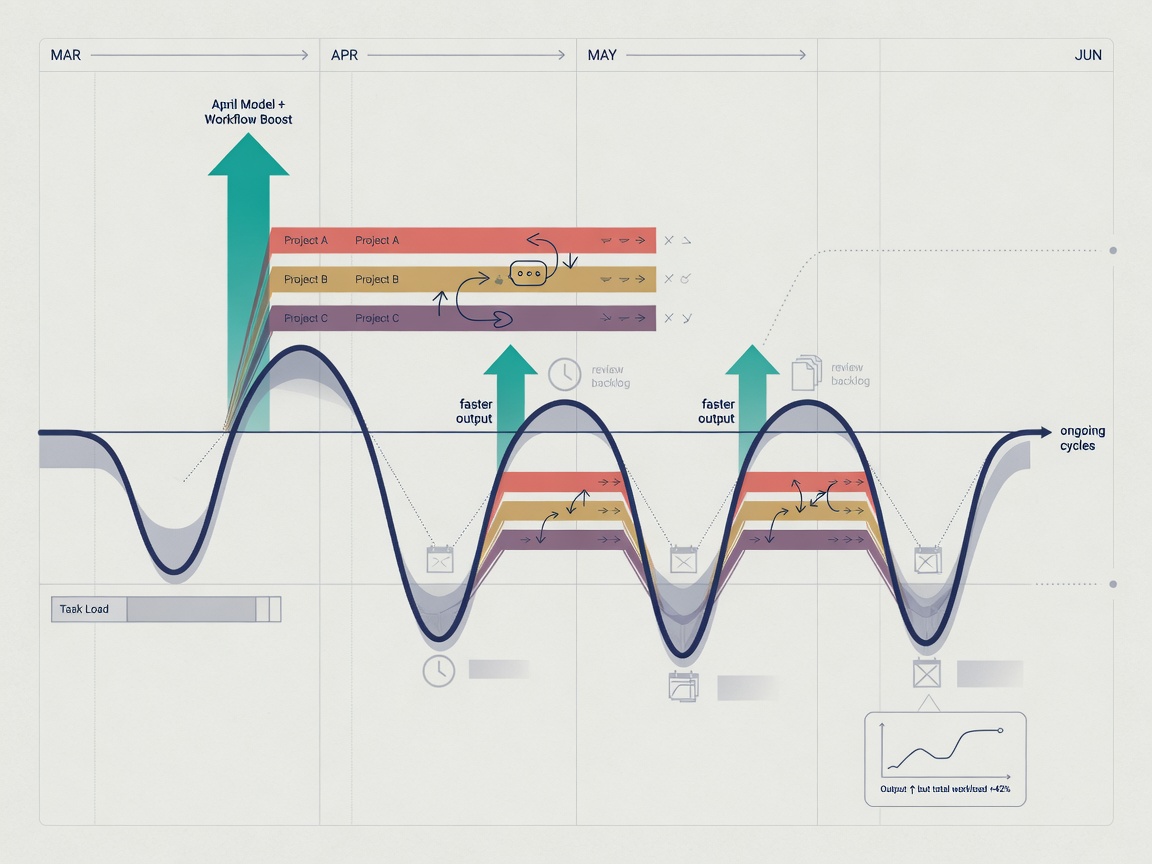
The source article describes agents making more projects and improvements worth pursuing. Its clearest summary is: “Agents did not just make my existing workload faster to finish. They made it easy to give myself a much bigger one.” That is a different outcome from using automation to clear a fixed backlog. The amount of work expands because the cost of starting another task feels lower.
The activity figures show how pronounced that expansion became for this engineer. By October 27, 2026, the author had recorded 2,102 GitHub contributions—more than in any full year from 2021 through 2025. August 2026 was the busiest month in the timeline, with 427 contributions, above the previous high of 319 in April 2020. The author counts three cycles of renewed activity since January.
Those numbers document activity, not whether the resulting work was more valuable or completed to a higher standard. That distinction matters: a contribution count can show a burst of output, but it cannot tell us whether the extra projects justified the time spent reviewing them.
Worth a look
Phugialy Picks

AI Engineering: Building Applications with Foundation Models
A practical guide to building real-world applications with foundation models and LLMs.

2084 and the AI Revolution, Updated and Expanded Edition: How Artificial Intelligence Informs Our Future

Agentic AI Engineering: Systems That Reason and Act Autonomously – Designing, Building, and Prompting LLM-Based Agents for Real-World Deployment
Some Phugialy Picks use affiliate links. If you buy through one, Phugialy may earn a commission. It doesn't change what we recommend. Full disclosure →
Reviews and context switching set the real limit
The source describes a recurring pattern: a new model or workflow makes more work seem possible, enthusiasm rises, then reviewing parallel work and switching contexts bring fatigue. The author associates renewed energy in April partly with model improvements, but names no specific model or release. The useful comparison, then, is not between named AI products. It is between an agent-assisted workflow that expands the task list and a more bounded workflow that uses assistance to finish a defined set of tasks.
My read is that review capacity—not implementation speed—is the constraint this account exposes. If agents make implementation cheaper while the person still has to inspect the work and keep multiple projects in mind, faster production can move the bottleneck rather than remove it. That is an interpretation of this experience, not proof that every agent workflow creates the same strain.
Use agents when you can control what they add
The practical case for agents is strongest when you have a clear boundary around incoming work: a fixed project list, enough time to review changes, or a deliberate rule for what gets deferred. If cheaper implementation helps you complete work you already consider important, the trade-off may be worthwhile. If it mainly tempts you to open more parallel projects, this account offers a reason to be cautious—not a reason to reject agents outright.
I would not treat a rising contribution count as a verdict on productivity. Watch whether completed, reviewed work rises without a matching increase in fatigue and context switching. Until that is clear, the sensible choice is conditional: use agents where you can contain the extra work they make possible; otherwise, the saved implementation effort may come back as a larger workload.
Got a question about how this applies to you? →
Keep reading
Follow the thread

Forever Juniors": How Junior Engineers Beat AI Agents
The real risk of AI agents isn't that software engineers disappear - it's that seniors do, as a generation becomes 'forever Juniors.' A Criteo engineer lays out exactly which skills keep you out of that trap: questioning agents until they catch their own mistakes, and occasionally coding without AI at all.
Read this noteSame lane, different angle
Generative AI for Information Is Growing, Not Agents
Generative AI is already a common route to information, but that does not mean people are ready to hand over tasks to agents or let AI write the news. The gap between those uses is the part product teams should pay attention to.
AI Training Data Needs Better Agent Evaluations
Handshake’s AI training business reportedly reached $1 billion in gross annualized revenue about a year after launch. Its benchmark demonstrations make the less comfortable point: a polished final answer can hide mistakes in how an agent handled the task.