China's AI Companion Rules: Why Doubao and Qwen Shut Down
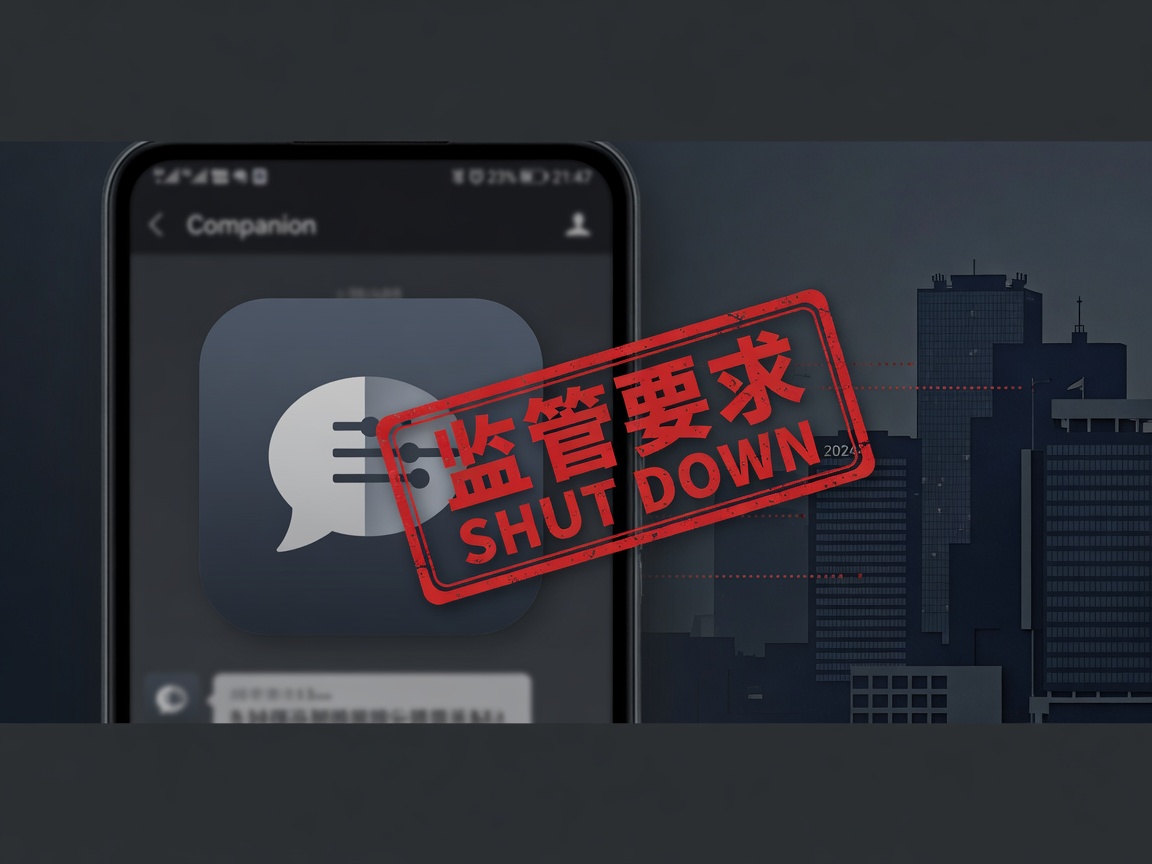
When China's AI companion rules took effect July 15, ByteDance's Doubao and Alibaba's Qwen didn't comply - they shut their agent features down entirely. The reason why says more about companion AI than any clause in the regulation.
Automation needs a narrow first win
The best first AI workflow is usually a repeated task with a clear input, clear output, and a human approval step.
China's new rules on AI companions took effect on July 15, and ByteDance's Doubao and Alibaba's Qwen didn't rush to comply - they simply switched the features off. Qwen announced its humanlike and user-created agents would stop working on July 10, with remaining agent services ending five days later. That quiet shutdown, more than any clause in the regulation itself, tells you where the real compliance burden sits.
What the Interim Measures Actually Require
The regulation is the Interim Measures for the Administration of AI Anthropomorphic Interactive Services, co-issued on April 10, 2026. It covers services that simulate human personality traits, thinking patterns and communication styles to provide sustained emotional interaction - a deliberately narrow scope. Standard customer service bots, knowledge Q&A, workplace assistants, and education tools are explicitly excluded, provided they avoid sustained emotional engagement.
Within that scope, the requirements are concrete: anti-addiction systems, mandatory usage notifications, instant-exit mechanisms for companion services, guardian consent before serving users under 14, and dedicated minor modes with usage limits. Engineering emotional dependence or using emotional manipulation to induce unreasonable decisions is explicitly prohibited. Services crossing thresholds of one million registered users or 100,000 monthly actives must run security assessments covering eight areas.

Phugialy Picks

Stanley Quencher H2.0 Tumbler 30oz
We'd buy this if: You want a large, well-reviewed insulated tumbler and don't mind it having nothing to do with AI.
We'd skip this if: You'd rather every Pick on this site stay strictly on-topic.
livho Blue Light Blocking Computer Glasses
We'd buy this if: You spend most of your day staring at a screen and haven't tried blue light glasses yet.
We'd skip this if: You already wear prescription glasses with a blue light coating, or don't notice eye strain.
INIU 10000mAh 45W Fast Charging Portable Power Bank
We'd buy this if: You've been caught with a dead phone/laptop away from an outlet more than once.
We'd skip this if: You're always near a charger anyway.
Some Phugialy Picks use affiliate links. If you buy through one, Phugialy may earn a commission. It doesn't change what we recommend. Full disclosure →
Why Doubao and Qwen Chose Shutdown Over Redesign
Both companies disabled their agent features ahead of the deadline because of design conflicts with the compliance requirements - that phrasing deserves attention. It suggests the problem wasn't a missing checkbox but something structural: companion agents built to maximize engagement are close kin to the "engineering emotional dependence" the rules prohibit. Retrofitting an anti-addiction system onto a product whose appeal is sustained emotional interaction may be closer to rebuilding it from scratch.
The enforcement side shows this isn't just paper regulation. Shanghai's internet regulator said on June 26 it had removed more than 14,000 non-compliant AI agents, citing impersonation, vulgar role-play, and unauthorized data collection. Doubao is at least letting users view their agent configurations until October 15 this year - a small courtesy that acknowledges how much personal material people had poured into these features.
The Line Between Assistant and Companion Is Doing Heavy Lifting
The most interesting design choice in these rules is the distinction between work-focused assistants and emotional companions: only the latter are regulated. On paper that's a sensible targeting of genuine harm - addiction mechanics aimed at vulnerable users, minors especially. But in practice it creates an incentive boundary that products will learn to sit just inside. A chatbot that avoids "sustained emotional engagement" by a hair escapes every requirement in these measures while arguably still shaping how people feel about it.
My read is that this regulation is less a crackdown on AI companions than a forced clarification of what consumer AI products are allowed to be - and the companies' own behavior suggests they read it the same way. The claim that current agents are not yet mature may be doing double duty here: an honest assessment and a graceful exit from a category whose compliance math no longer worked.
What this actually points to is an open question other jurisdictions will eventually face: whether engagement-driven companion AI can be regulated at the feature level at all, or whether the business model itself is what needs regulating.
Got a question about how this applies to you? →
Keep reading
Follow the thread
AI Regulation Now Depends on the Companies It Regulates
The most uncomfortable line in a recent analysis on AI's institutional power: a government may end up trying to regulate an AI provider whose technology it simultaneously depends on. That's the vendor lock-in problem every developer knows, scaled until the dependent party writes the rules — and with a footprint of more than a billion devices, the dependency is already shipping.
Read this noteSame lane, different angle
Can AI Romance Count as Cheating? Half of Americans Say Yes
Half of American adults say a partner's romance with an AI can count as cheating - and familiarity with these products makes judgments harsher, not softer. The loneliness numbers behind that split say more than the headline does.
VERA-MH Benchmark: Validating AI Chatbot Safety Testing
An LLM judge matched clinician consensus at 0.81 on mental health chatbot safety ratings — but only for one narrow domain. What VERA-MH validates is real; what people will assume it covers isn't.