Building for AGI: Why Your Current Stack is About to Break
The claim that Artificial General Intelligence (AGI) is only a few short years away isn't just a hype cycle—it’s a technical warning for every engineer in the room. If AGI is defined as a system that exhibits all the cog
Automation needs a narrow first win
The best first AI workflow is usually a repeated task with a clear input, clear output, and a human approval step.
The claim that Artificial General Intelligence (AGI) is only a few short years away isn't just a hype cycle—it’s a technical warning for every engineer in the room. If AGI is defined as a system that exhibits all the cognitive capabilities the brain has, we aren't just looking at a better chatbot. We’re looking at a rapid convergence toward a system that can mirror human-level cognition across the board.
From Probabilistic Text to Persistent Agency
For developers, 'all cognitive capabilities' is a massive scope. It means moving past the current 'next-token prediction' game. A system with these capabilities implies unified reasoning, complex planning, and the ability to generalize from sparse data.
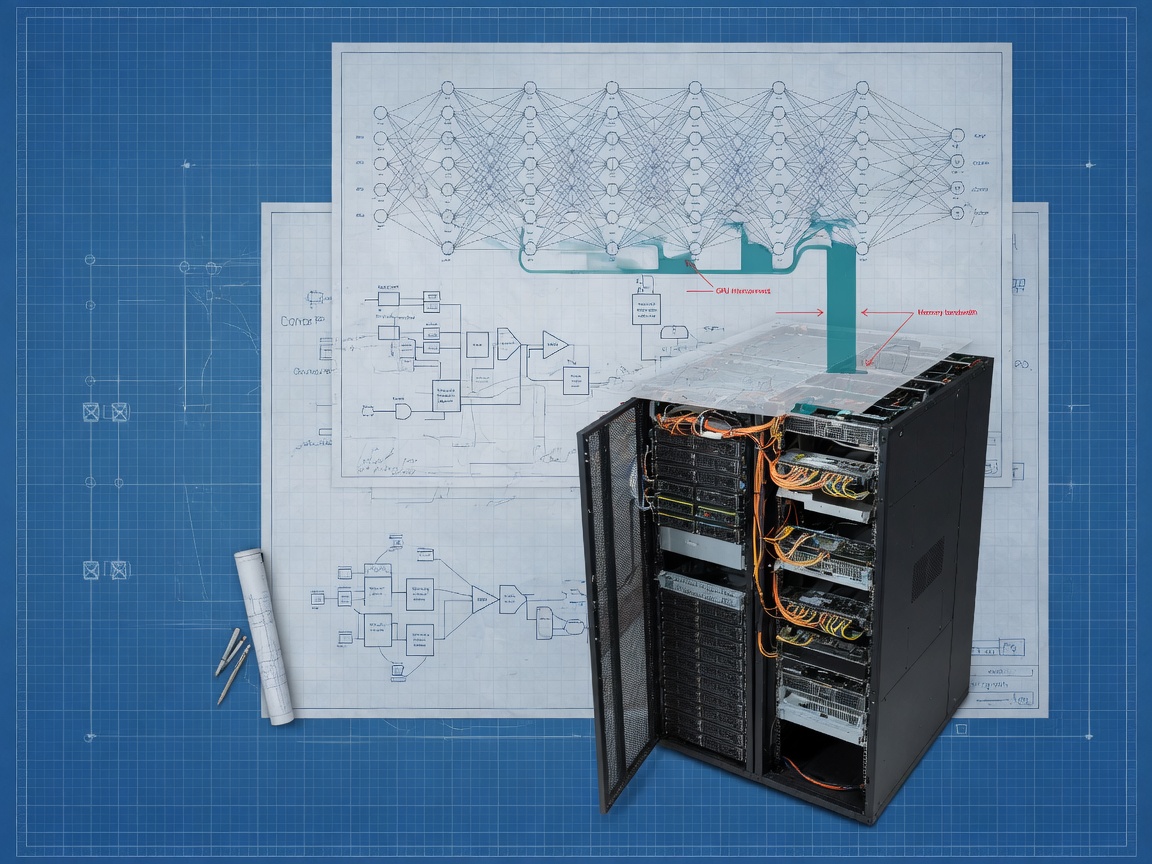
This means our current request-response architecture is hitting a wall. If a model can exhibit the full range of human brain capabilities, it won't just be answering questions; it will be managing goals, identifying sub-tasks, and maintaining a long-term internal state. We need to stop building stateless inference points and start building architectures that support persistent agency.
Worth a look
Phugialy Picks

AI Engineering: Building Applications with Foundation Models
A practical guide to building real-world applications with foundation models and LLMs.

GMKtec K15 AI Mini PC Oculink Intel Ultra 5 125U 32GB DDR5 512GB SSD | Desktop Computer AI Boost, 3X M.2 2280 Storage Expansion, Dual NIC...

GEEKOM IT15 AI Mini PC, Intel Ultra 9 285H(99 Tops), 32GB DDR5, 1TB SSD | The Most Powerful Workstation,Arc 140T GPU,WiFi 7,8K Business D...
Some Phugialy Picks use affiliate links. If you buy through one, Phugialy may earn a commission. It doesn't change what we recommend. Full disclosure →
The Infrastructure Bottleneck
The prediction that AGI is 'probably only a few short years away' puts a heavy demand on our current stack. It suggests that the scaling laws we’ve seen are on a direct trajectory toward a general intelligence threshold. For anyone building in production, the 'experimental' phase is closing.
We’re moving from 'Can the model do this?' to 'How do we scale this reliably?' As we approach human-level cognitive capabilities, the challenges of rate limits, latency, and cost don't disappear—they get compounded by the complexity of the tasks. A system that thinks like a human brain requires a much more sophisticated orchestration layer to handle multi-step reasoning processes without falling apart.
Building Guardrails-as-Code
The real story here is that the arrival of AGI changes what we have to build around it. If AGI is truly on the horizon, the biggest hurdle isn't the model's intelligence; it's managing non-deterministic behavior at scale. A system with 'all' cognitive capabilities can find creative—and potentially chaotic—paths to a goal that a standard heuristic wouldn't allow.
The move here is away from rigid prompt engineering and toward robust environment control. If we are building for general intelligence, we need to focus on how to provide it with the right tools and boundaries. The real challenge isn't whether the model can perform a task, but what happens when you give a system with human-level cognitive capabilities the autonomy to execute a complex workflow in production. We need to build 'guardrails-as-code' that can handle a system whose cognitive scope is, by definition, vast and unpredictable.
Got a question about how this applies to you? →
Keep reading
Follow the thread
Moving Past the AI Mythology: Engineering Social Collaboration
We need to stop treating "Artificial Intelligence" as a literal description of the technology and start treating it as a misleading label. For developers trying to integrate these models into production, the mythological
Read this noteSame lane, different angle
Moving from Trust to Verification: The Case for Jacquard
We’re trying to solve AI code safety by asking humans to be better auditors, but that’s a losing bet as the volume of generated code scales.
Debian’s AI Policy: Responsibility Isn't Automated
If you can't defend every line an LLM spat out, you have no business hitting 'merge'.