Moving from Trust to Verification: The Case for Jacquard
We’re trying to solve AI code safety by asking humans to be better auditors, but that’s a losing bet as the volume of generated code scales.
Automation needs a narrow first win
The best first AI workflow is usually a repeated task with a clear input, clear output, and a human approval step.
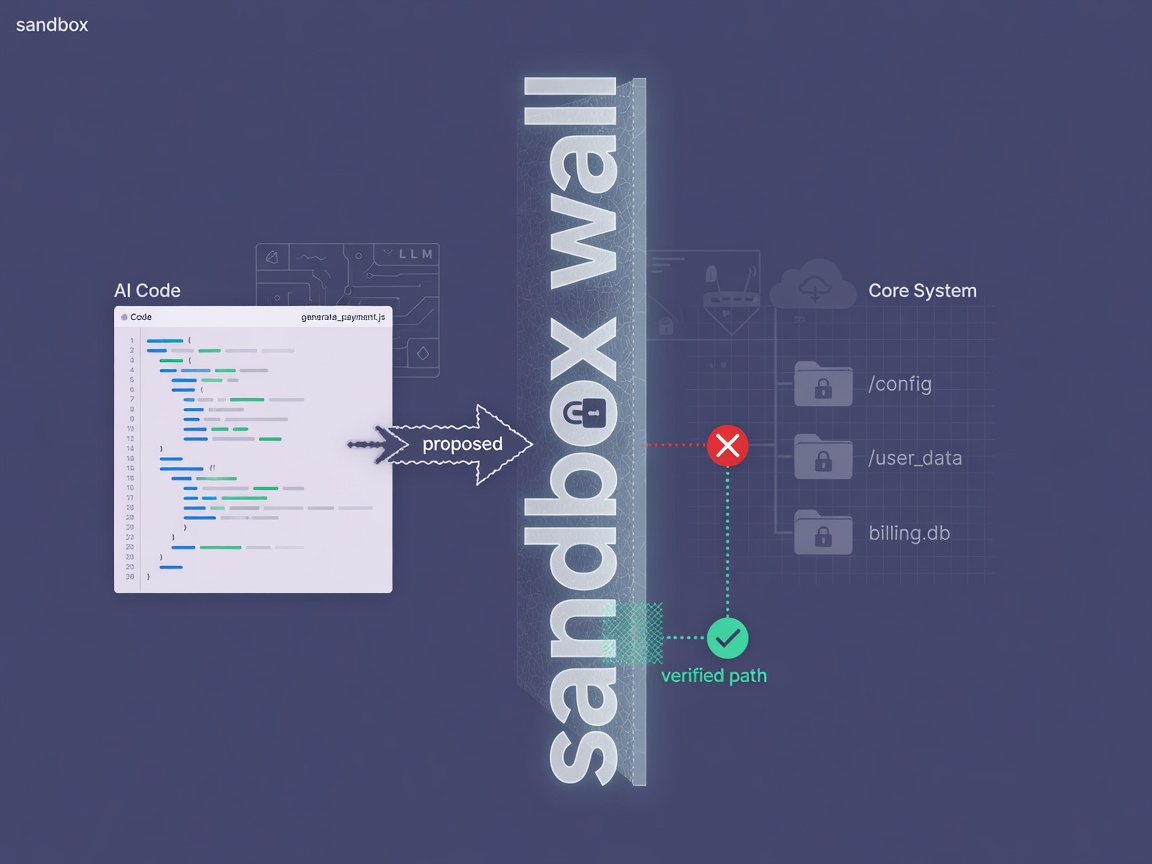
AI-generated code is becoming a standard component of modern workflows, but we’re hitting a wall: auditing what that code is actually allowed to do. We can’t simply trust an LLM's output because a single hidden side effect—an unauthorized network call or a sneaky file write—can compromise an entire system. Jacquard, a research project by FriendMachine, addresses this by moving security from a human-review problem to a language-level constraint. It makes the "what can this touch?" question a fundamental part of the syntax.
Enforcing Permissions via Effect Signatures
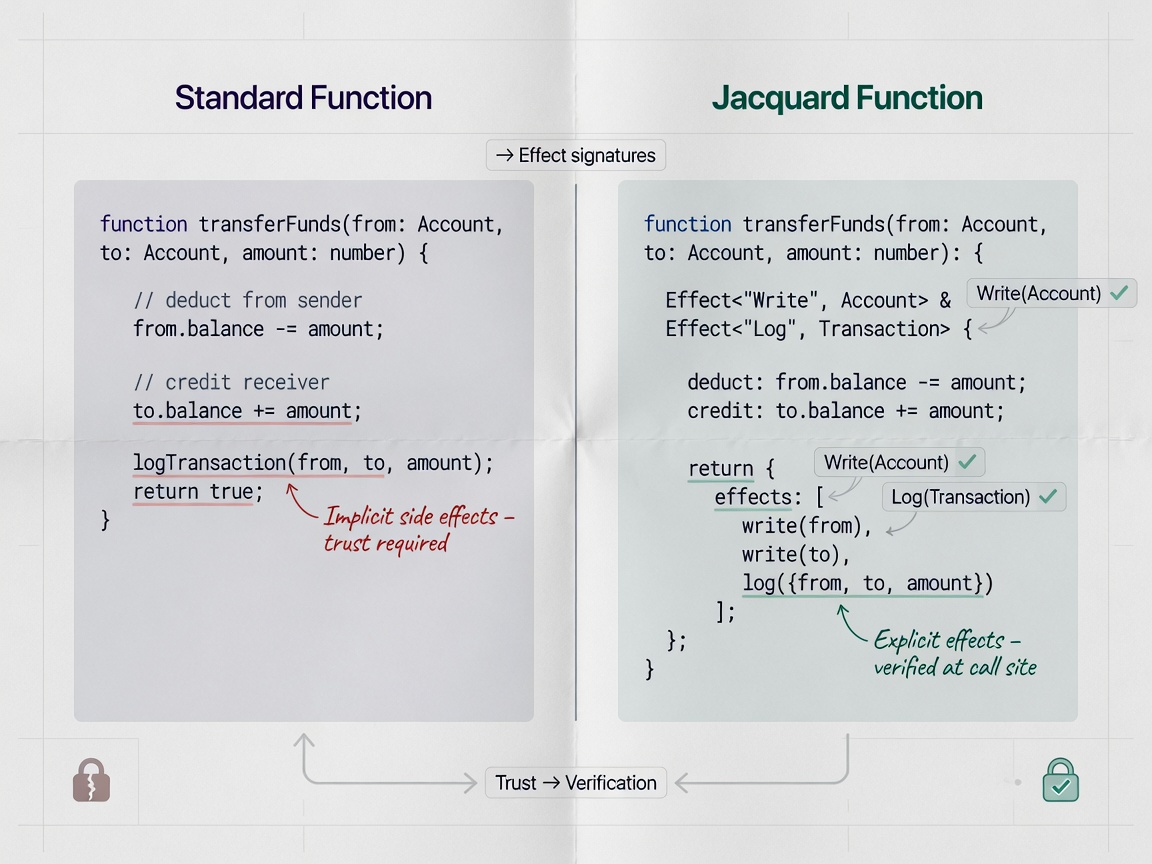
Jacquard isn't just a wrapper; it’s a small programming language designed to make side effects explicit. Every function signature must declare its "outside-world" effects, such as network access, file manipulation, clock interaction, or randomness. If a function wants to do something, it has to declare it upfront. The runtime then enforces these permissions strictly: unless an effect is explicitly granted via a --allow flag at the command line, the code simply won't run. This shifts the security boundary from "hope the AI didn't do something bad" to "the runtime won't let it do something bad." Crucially, this applies even to dynamic code, ensuring that scripts generated on the fly still respect these boundaries. It also includes a library for discrete probabilistic programming, allowing for sampling and inference within this restricted environment.
Worth a look
Phugialy Picks

The Agentic AI Bible: The Complete and Up-to-Date Guide to Design, Develop, and Scale Goal-Driven, LLM-Powered Agents that Think, Execute...

AI Engineering: Building Applications with Foundation Models
A practical guide to building real-world applications with foundation models and LLMs.

Logitech G413 SE Full-Size Mechanical Gaming Keyboard - Black | Backlit, anti-ghosting, compatible with Windows and macOS, aluminum material
Some Phugialy Picks use affiliate links. If you buy through one, Phugialy may earn a commission. It doesn't change what we recommend. Full disclosure →
Testing Across Isolated 'Worlds'
One of the more practical features of Jacquard is its ability to run the same code against different "worlds." Because effects are isolated and declared, you can swap a real network for a scripted fake or a probability model. This allows for testing how code behaves in diverse environments without actually triggering side effects in production. Additionally, the language uses content-addressed definitions. This means it ignores formatting and comments when checking for structural identity. For a developer, this is a relief; the machine only cares about the logic, not whether you put extra whitespace or a comment between lines. The goal is to keep the language small enough that an AI agent with no prior training can learn it from a single documentation file.
The Friction of Explicit Security
The real story here is that Jacquard is a research prototype (version 0.1), not a production-ready framework for your entire stack. While the ability for AI agents to learn the language from a single doc is clever, we have to be honest about the friction of migrating existing logic into such a restricted environment. There is a clear tradeoff between the safety of explicit effect signatures and the velocity of general-purpose programming. It’s not a "plug-and-play" solution for every Python script; it’s a specialized sandbox for high-stakes code where the cost of an unauthorized action outweighs the friction of declaring every single side effect. The challenge isn't just making these restrictions work—it's making them feel like a standard safety rail rather than a hurdle that slows down development.
Got a question about how this applies to you? →
Keep reading
Follow the thread

Building for AGI: Why Your Current Stack is About to Break
The claim that Artificial General Intelligence (AGI) is only a few short years away isn't just a hype cycle—it’s a technical warning for every engineer in the room. If AGI is defined as a system that exhibits all the cog
Read this noteSame lane, different angle
Moving Past the AI Mythology: Engineering Social Collaboration
We need to stop treating "Artificial Intelligence" as a literal description of the technology and start treating it as a misleading label. For developers trying to integrate these models into production, the mythological
Debian’s AI Policy: Responsibility Isn't Automated
If you can't defend every line an LLM spat out, you have no business hitting 'merge'.