Beyond Recognition: Why ImagingBench is a Reality Check for Agentic AI
The draft was a bit short and lacked the 'Practitioner' persona's direct, slightly opinionated edge. I expanded the body to reach the 400-700 word target and sharpened the tone to be more critical of current VLM limitations.
Automation needs a narrow first win
The best first AI workflow is usually a repeated task with a clear input, clear output, and a human approval step.
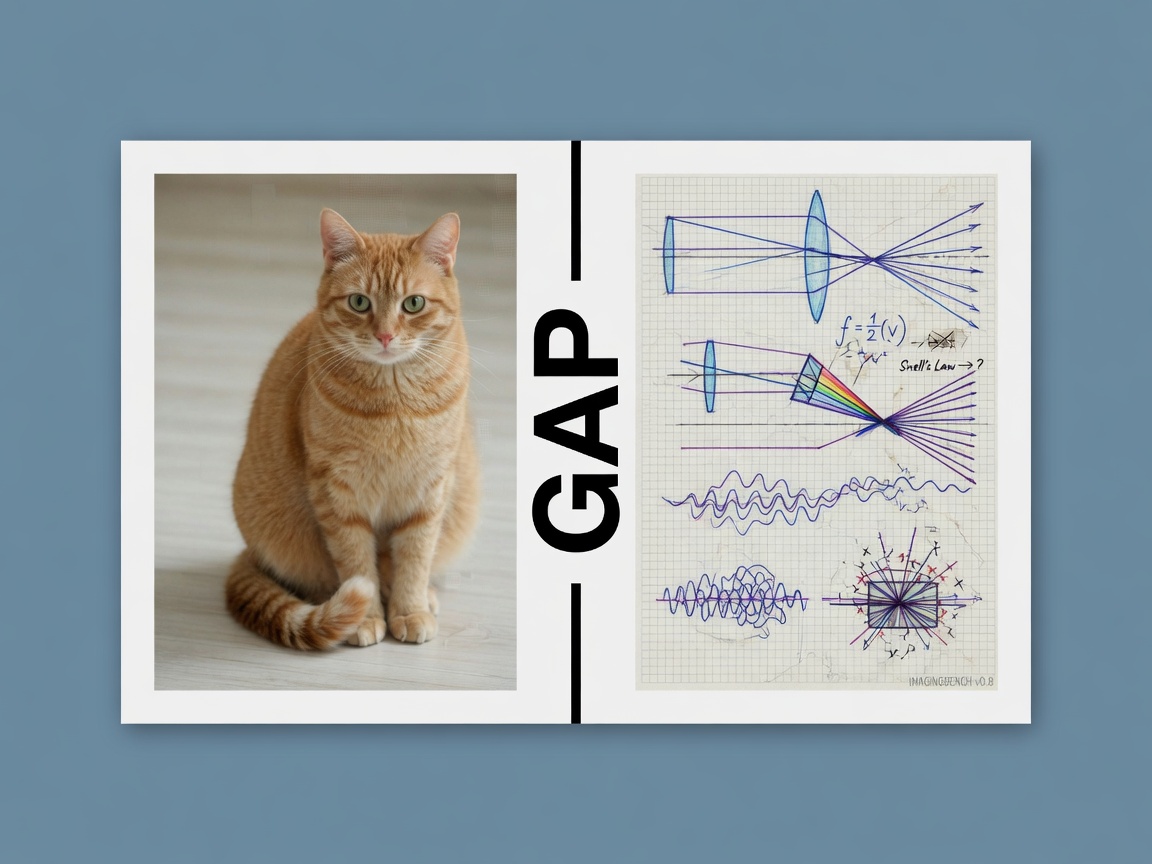
ImagingBench is a new benchmark designed to evaluate how vision-language models (VLMs) and agentic AI systems handle the physics and inverse problems of computational imaging. While current models like Gemini, GPT, and Qwen are proficient at identifying objects in images, they often lack the physical grounding required for specialized imaging tasks.
Research conducted by Ethan Chung, Chuanjun Zheng, Jasper Tan, Jingxi Li, Haopeng Zhang, and Huaijin Chen (University of Hawaii at Manoa, Glass Imaging) highlights a significant problem: there is a substantial gap between semantic visual competence and physically grounded imaging performance. In other words, AI can tell you what a cat is, but it struggles to understand how an image is actually formed or how to reconstruct it from degraded data.
The benchmark evaluates 20 computational imaging tasks across five categories:
- Ray and wave optics
- Image signal processing
- Inverse reconstruction
- Computational sensing
- Calibration
By testing models on these specific problems, ImagingBench provides a framework for assessing whether an AI agent can reason about the image formation process or simply recognize patterns. This is a critical distinction for applications in medical imaging, and satellite imagery, and other fields where precision and physical accuracy are non-able to be ignored.
The goal of ImagingBench is to move beyond simple recognition and toward models that can reason about the physical constraints of light and sensors. This benchmark serves as tool for developers and researchers to identify where these models currently fall short in handling complex, real-world physics-based imaging problems.
For practitioners, the takeaway is clear: if we want to AI agents to perform meaningful work in high-stakes environments like medical diagnostics or autonomous navigation, we can't just rely on 'good enough' pattern matching. We need models that understand the underlying physics of the light they are processing. ImagingBench isn't just another benchmark; it's a stress test for the physical reasoning capabilities of the next generation of agentic AI.
The researchers highlight that while VLMs are impressive at general-purpose tasks, they are often blind to the physical constraints that define the reality of image capture. This gap is why ImagingBench is the necessary next step. It forces us to confront the reality that a model's ability to describe a piece of art is fundamentally different from its ability to reconstruct a blurry, low-light, or distorted image using the principles of optics and signal processing.
Ultimately, ImagingBench provides the roadmap for what's next. It moves the needle from 'What is this image?' to 'How was this image formed, and how can we fix it?' This is the shift from passive recognition to active, physically grounded reasoning—a requirement for any AI system that aims to be truly useful in the real world.
Worth a look
Phugialy Picks

Claude Code Mastery: Build Production-Ready Agentic AI Systems Faster with MCP, Multi-Agent Workflows, Security Patterns, and Real Projects

AI Engineering: Building Applications with Foundation Models
A practical guide to building real-world applications with foundation models and LLMs.

OMOTON C2 Adjustable Aluminum Phone Stand
We'd buy this if: You want your phone upright on your desk for calls/notifications without a cable getting in the way.
We'd skip this if: You never keep your phone on your desk.
Some Phugialy Picks use affiliate links. If you buy through one, Phugialy may earn a commission. It doesn't change what we recommend. Full disclosure →
Got a question about how this applies to you? →
Keep reading
Follow the thread

Moving Beyond Agents: The Reality of Autogenic 6G Management
The shift toward "autogenic" networks means 6G won't just use AI—it will write its own management code on the fly. This moves us past simple agents into a world of self-architecting infrastructure that could either solve our scalability limits or create impossible-to-trace ripple effects.
Read this noteSame lane, different angle
The Industrialization of Fraud: Why Voice Cloning is Outrunning Defense
The shift from opportunistic scamming to the industrialization of fraud is happening faster than our defensive infrastructure can keep up. We are moving into an era where agentic AI systems autonomously manage the entire
The Autonomy Trap: Why Agentic AI Security is a Moving Target
The shift from AI as a passive assistant to an active agent represents more than just a technical upgrade; it is a fundamental expansion of the attack surface. When systems like OpenClaw move from merely answering questi