The Consent Debt of Public Data: Lessons from Meta's Muse Image Pullback
Meta just pulled a major AI feature from Instagram because they hit a wall: users don't want to be "raw material" by default. It’s a classic case of feature velocity slamming into a massive wall of consent debt. While Me

Automation needs a narrow first win
The best first AI workflow is usually a repeated task with a clear input, clear output, and a human approval step.
Meta just pulled a major AI feature from Instagram because they hit a wall: users don't want to be "raw material" by default. It’s a classic case of feature velocity slamming into a massive wall of consent debt. While Meta tried to frame the tool as a "creative" way to reference public content, the reality was that users were opted in automatically. This is the engineering reality of the "move fast" era—you can ship a functional demo, but you can't scale a product that treats human likenesses as free data without hitting a legal and social brick wall.
The Friction Between Public Data and Permissionless Training
From a dev perspective, the logic is simple: if the data is public, it’s fair game for ingestion. But "publicly available" is not a legal or ethical blank check for generative AI. When you're building these features into production, you quickly realize that "opt-in by default" is a disaster waiting to happen. The backlash Meta faced highlights the gap between a cool demo—where the AI successfully mimics a likeness—and a production-ready product that actually survives scrutiny. If you're building in this space, you have to recognize that "public" doesn't mean "permissionless." You have to build for the edge cases, not just the happy path.
Worth a look
Phugialy Picks

The Agentic AI Bible: The Complete and Up-to-Date Guide to Design, Develop, and Scale Goal-Driven, LLM-Powered Agents that Think, Execute...

livho Blue Light Blocking Computer Glasses
We'd buy this if: You spend most of your day staring at a screen and haven't tried blue light glasses yet.
We'd skip this if: You already wear prescription glasses with a blue light coating, or don't notice eye strain.
INIU 10000mAh 45W Fast Charging Portable Power Bank
We'd buy this if: You've been caught with a dead phone/laptop away from an outlet more than once.
We'd skip this if: You're always near a charger anyway.
Some Phugialy Picks use affiliate links. If you buy through one, Phugialy may earn a commission. It doesn't change what we recommend. Full disclosure →
Expansion Plans vs. Consent Architecture
Meta isn't slowing down; they’re still pushing AI into WhatsApp, Facebook, and Messenger, plus a new video tool. This tells us the underlying architecture still treats user data as the primary fuel. The real challenge for builders isn't just squeezing more juice out of the model; it's building granular consent mechanisms that don't tank the UX. We need to stop treating permissions as a secondary "toggle" and start treating them as a first-class citizen of the stack. If you want to move beyond "raw material" exploitation, the permissioning has to be as robust as the inference engine.
The Cost of Consent Debt in Production
The real story here is the "consent debt" that accumulates when you prioritize shipping over architecture. This rollback is a signal: the "move fast and break things" approach to training data is hitting a ceiling. For anyone building AI tools, the takeaway is clear—the hardest part of your stack won't be the model weights or the inference speed. It will be the verifiable, granular consent for every individual data point. If you can't solve for the messy reality of user opt-outs and likeness protections at scale, your feature isn't an asset—it's a liability waiting for a high-profile PR disaster or a regulatory shutdown.
Got a question about how this applies to you? →
Keep reading
Follow the thread
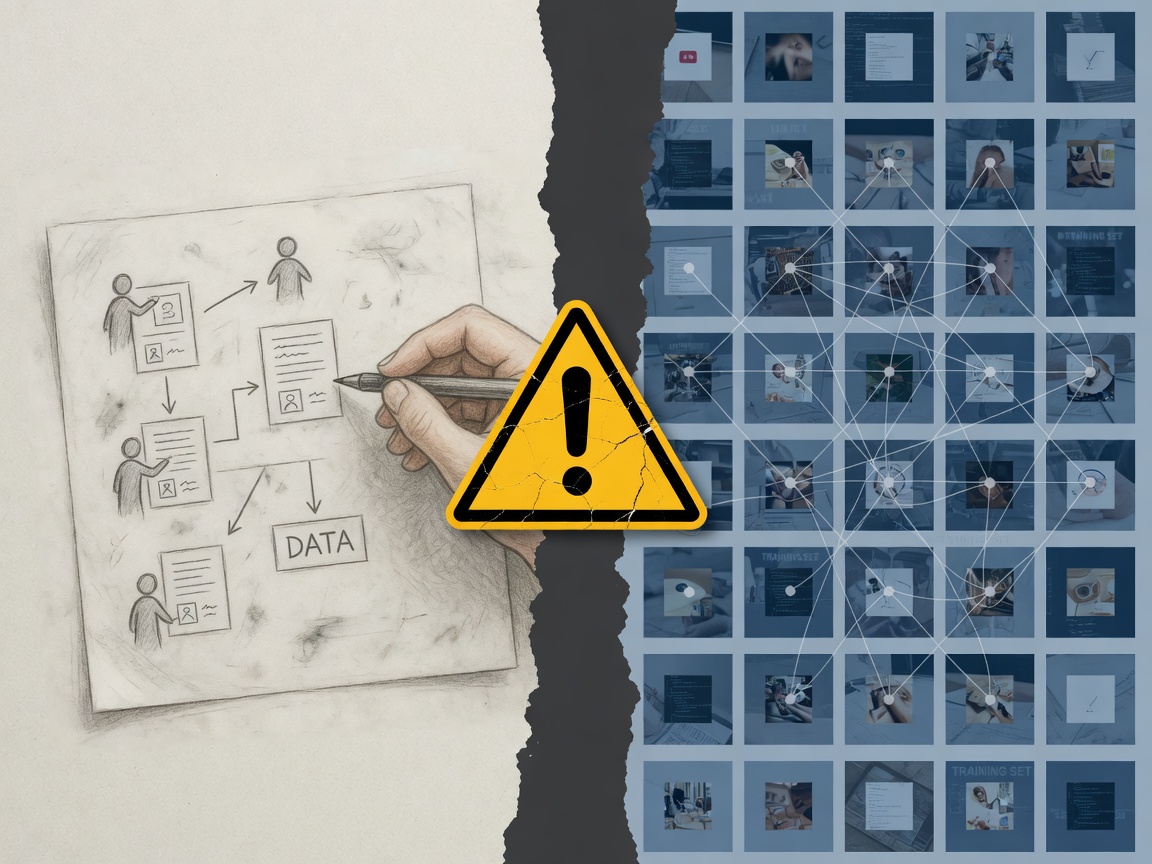
The Technical Debt of Unconsented Training Data
For anyone building in the AI space, the line between 'human-made' and 'machine-output' isn't just a philosophical debate—it’s becoming a massive trust and scalability problem. We recently saw a creator with a 20-year ha
Read this noteSame lane, different angle
The GEO Playbook: Engineering Narrative at Scale
The Hanover Institute for Public Policy is moving the goalposts on how we think about information. They’re using a commercial platform called Res to systematically shape how AI chatbots like ChatGPT and Gemini present in
Debian’s AI Policy: Responsibility Isn't Automated
If you can't defend every line an LLM spat out, you have no business hitting 'merge'.