AI Regulation Now Depends on the Companies It Regulates
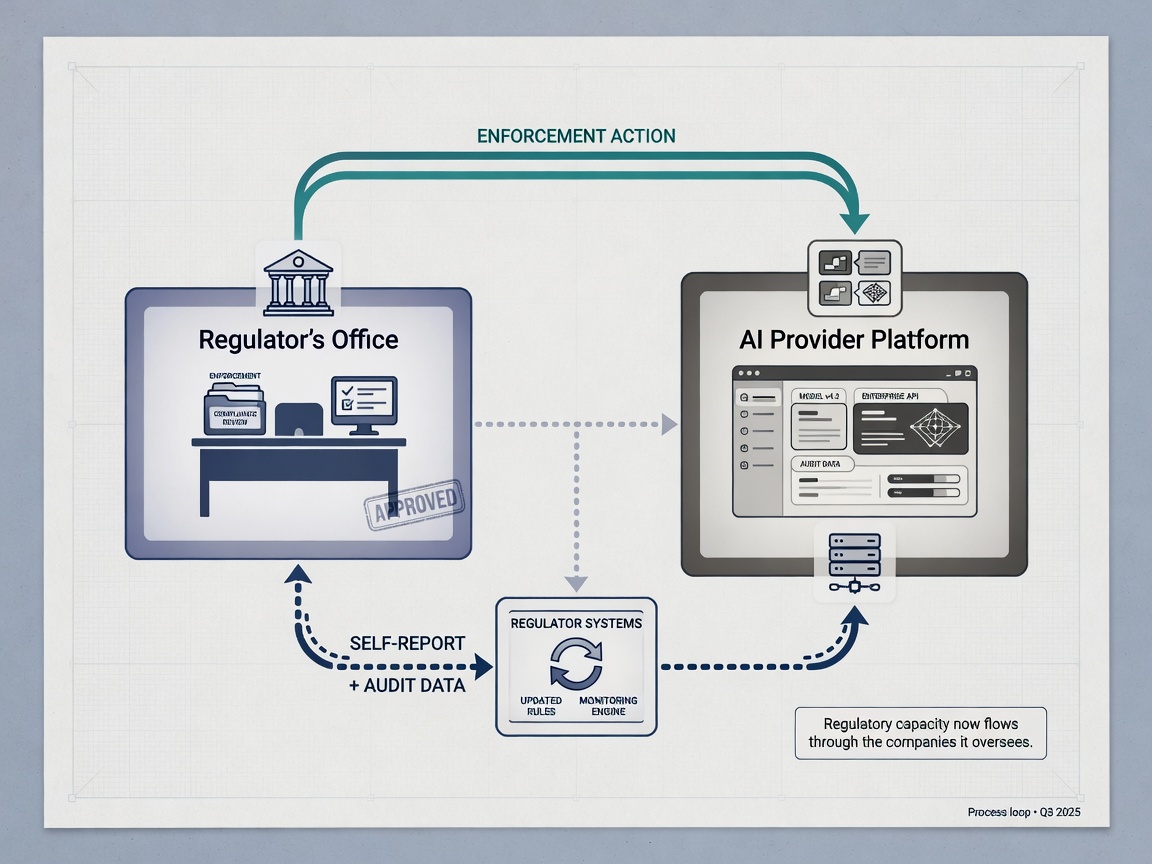
The most uncomfortable line in a recent analysis on AI's institutional power: a government may end up trying to regulate an AI provider whose technology it simultaneously depends on. That's the vendor lock-in problem every developer knows, scaled until the dependent party writes the rules — and with a footprint of more than a billion devices, the dependency is already shipping.
Automation needs a narrow first win
The best first AI workflow is usually a repeated task with a clear input, clear output, and a human approval step.
The nastiest dependency most developers ever manage is a third-party API: the vendor can change terms, deprecate endpoints, or throttle you, and your leverage is mostly whatever migration path you built in advance. Now scale that relationship up to nation-states. A recent analysis argues that frontier AI labs are drifting into a role no software vendor has held before — and it quietly breaks the standard frame for AI regulation, because the regulator is becoming the dependent party.
AI as Cognitive Infrastructure, Not a Product
The core shift the article describes is one builders have been living for a while: AI is being developed as infrastructure for cognitive work, not as a narrow tool for specific tasks. The scale backs that up — the analysis cites a footprint of more than a billion devices. Once something runs cognitive work at that size, it stops behaving like a product category and starts behaving like the layer everyone else sits on.
The revealing part is who sits on that layer. Governments, intelligence agencies, and critical infrastructure are all building dependencies on AI systems, which creates what the article calls a non-traditional relationship between companies and regulators — not vendor and customer in the ordinary sense, but two powers where one increasingly needs the other to function.
Phugialy Picks

AI Engineering: Building Applications with Foundation Models
A practical guide to building real-world applications with foundation models and LLMs.

GMKtec K15 AI Mini PC Oculink Intel Ultra 5 125U 32GB DDR5 512GB SSD | Desktop Computer AI Boost, 3X M.2 2280 Storage Expansion, Dual NIC...

AI: Understand the Revolution: From Basics and Buzzwords to Tech Giants, Governments, and Your Future
Some Phugialy Picks use affiliate links. If you buy through one, Phugialy may earn a commission. It doesn't change what we recommend. Full disclosure →
AI Regulation Meets the Counterbalance to Government
The sharpest claim in the piece is that frontier AI labs could become a "counterbalance to government," with the organizations building the most advanced AI systems amounting to a "new kind of institution under the sun." Whether or not you buy the full strength of that framing, the mechanism behind it is concrete: at some point, a government may find itself trying to regulate an AI provider whose technology it simultaneously depends on.
And the article is right to flag what's missing. AI companies currently lack the democratic mechanisms — elections, judicial review — that normally constrain coercive power. Private influence at state-scale, with none of the accountability structures a state has, is the actual risk here, and none of the standard corporate governance tools were designed for it.
The Vendor Lock-In Problem, Scaled to the State
Here's my read from the integration side of the house: anyone who has shipped on someone else's platform knows lock-in doesn't announce itself. It compounds one workflow at a time until switching costs do the negotiating for you. What the analysis describes is that exact dynamic, except the party getting locked in also writes the rules. The realistic failure mode isn't a dramatic standoff between state and lab — it's the slow version, where a dependent government has shrinking appetite to regulate hard because enforcement risk lands on its own operations too.
The article's stated endpoint is the louder one: certain future AI capabilities may be so dangerous they can't realistically be left in private hands, forcing a redraw of the boundary between private and state power. Both endings are live. My bet is the quiet dependency arrives first and shapes everything before anyone gets the explicit fight — and a billion-device footprint suggests it's already shipping.
Got a question about how this applies to you? →
The compute-side version of this dependency shows up in 'The Infrastructure Debt of xAI's Colossus Build.'
Keep reading
Follow the thread

When AI Labs Counterbalance Government, Who Checks Them?
OpenAI's new Head of Strategic Futures argued frontier AI labs could become a "counterbalance to government." The sharper question is what happens when AI providers embedded in hospitals and agencies start looking like critical infrastructure — with no elections, courts, or FOIA laws to hold them accountable.
Read this noteSame lane, different angle
Frontier AI Labs Want Government Power - Who Audits Them?
At some point, a government may find itself trying to regulate an AI provider whose technology it simultaneously depends on. That line, from an argument making the rounds about OpenAI strategists and the future of fronti
Architecting AI Inference Infrastructure for Data Movement
Moving data from one place to another and making sure we can use it effectively is the primary technical hurdle in modern AI deployments. While training models captures the spotlight, the shift toward AI inference infras