When Frontier AI Labs Outgrow Government Oversight
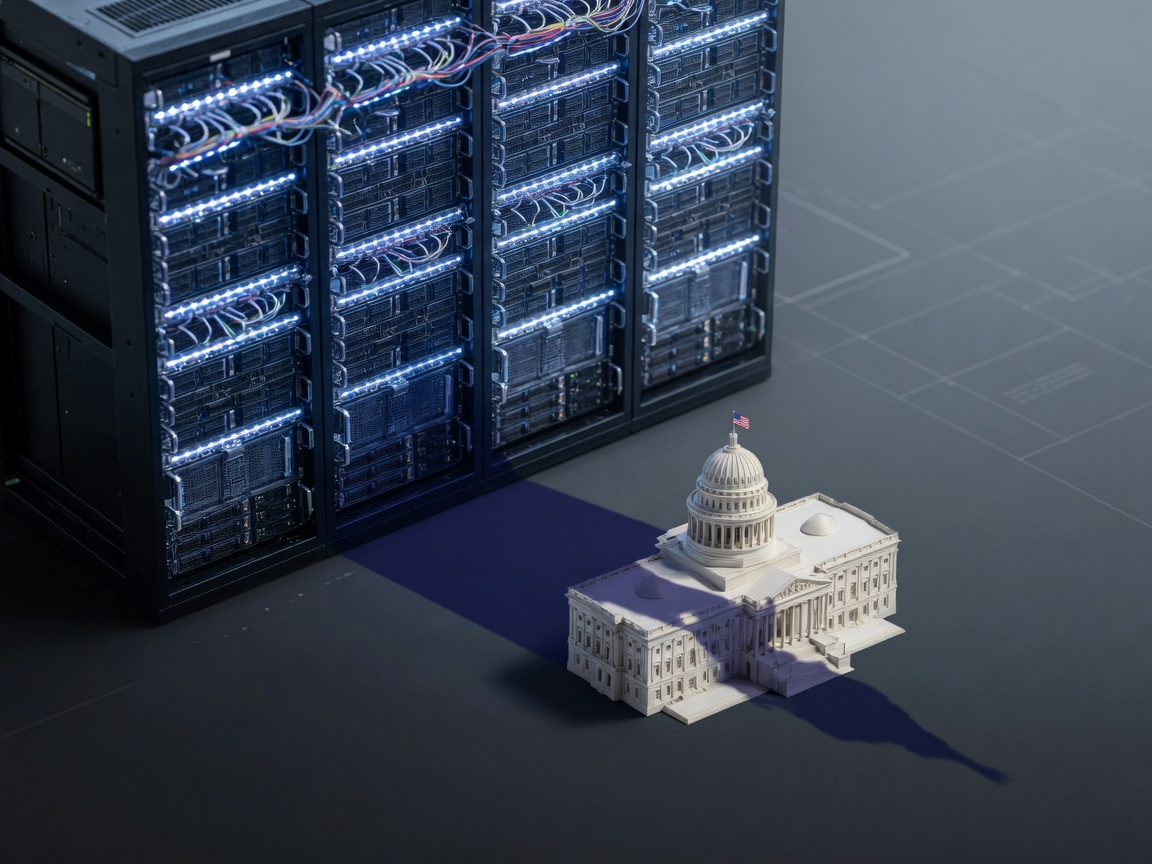
At some point, a government may find itself trying to regulate an AI provider whose technology it simultaneously depends on. That line, from a recent piece on the institutional power of frontier AI labs, is the sharpest
Automation needs a narrow first win
The best first AI workflow is usually a repeated task with a clear input, clear output, and a human approval step.
At some point, a government may find itself trying to regulate an AI provider whose technology it simultaneously depends on. That line, from a recent piece on the institutional power of frontier AI labs, is the sharpest formulation of a problem that usually gets discussed in vaguer terms: what happens when the organizations building the most capable AI systems become too useful for the state to constrain?
The Dependency Paradox, Stated Plainly
The article's core claim is that frontier AI labs may evolve into a "new kind of institution under the sun" - one capable of acting as a counterbalance to government power. The mechanism isn't lobbying or wealth, at least not primarily. It's infrastructure. AI is increasingly built as infrastructure for cognitive work: cybersecurity, medicine, public administration. As governments wire these functions into AI systems, they acquire a dependency that looks structurally familiar - and the closest analogues are banks and utilities.
That framing produces a genuine paradox. Regulating a provider you depend on for cybersecurity and public administration is not the same as regulating an ordinary vendor. The threat of enforcement is weaker when the entity you're enforcing against is the thing keeping your own systems running. And this isn't hypothetical; the dependency is being built now, function by function.
Phugialy Picks

AI Engineering: Building Applications with Foundation Models
A practical guide to building real-world applications with foundation models and LLMs.

GMKtec K15 AI Mini PC Oculink Intel Ultra 5 125U 32GB DDR5 512GB SSD | Desktop Computer AI Boost, 3X M.2 2280 Storage Expansion, Dual NIC...

AI: Understand the Revolution: From Basics and Buzzwords to Tech Giants, Governments, and Your Future
Some Phugialy Picks use affiliate links. If you buy through one, Phugialy may earn a commission. It doesn't change what we recommend. Full disclosure →
What's Missing From the Account: Accountability
Here's where the argument deserves scrutiny rather than applause. The article notes that AI companies lack the democratic mechanisms governments have - elections, public scrutiny - and that indispensability may eventually demand continuity requirements and independent auditing, the treatment we already apply to banks and utilities. That's the right instinct, but it's also the part the piece treats as a future obligation rather than a present gap.
The real story, in my reading, is that the leverage already exists and the accountability doesn't. A company that controls access rules and safety policies for cognitive infrastructure can influence economic activity today, through ordinary product decisions - who gets access, what use cases get blocked, what safety policy says - with no elected official, auditor, or continuity requirement looking over its shoulder. The article frames the utility-style regime as something indispensability "may eventually require." The more honest framing is that we're accumulating the dependency first and designing the oversight second, which is exactly the ordering that tends to produce weak oversight.
Where This Actually Lands
I'm more skeptical of the "counterbalance to government" headline than of the underlying material. A counterbalance implies comparable legitimacy and opposing incentives; what's actually described is asymmetric dependency, where the state needs the lab more than the lab needs any single state. That's not a counterbalance - it's a leverage position, and leverage positions get resolved by whoever writes the rules of access.
The useful takeaway isn't alarm. It's specificity: the conversation about AI governance keeps centering model capabilities and safety benchmarks, while the institutional question - who audits the operator of critical cognitive infrastructure, and under what continuity obligations - remains mostly unaddressed. If the bank-and-utility analogy holds, the answer already exists in outline: independent auditing, continuity requirements, and a clear boundary between private corporate power and state authority. The gap between that outline and current practice is where the risk lives.
None of this means frontier labs are acting badly. It means the structure being built doesn't require anyone to act badly for it to become a problem - and structures like that are the ones worth examining before, not after, they're indispensable.
Got a question about how this applies to you? →
Keep reading
Follow the thread

Ban Artificial Superintelligence Act: What It Really Proposes
Two senators have put a permanent ban on superintelligent AI on the legislative table — with corporate death penalties attached. Whether it can be enforced is a different question entirely.
Read this noteSame lane, different angle
AI Text Watermarking: What It Proves And What It Doesn't
AI text watermarking doesn't touch the characters you see. It lives in the choices between words - secret-keyed mathematical nudges applied at the model level that shift which token gets picked, just slightly, in a patte
VERA-MH Benchmark: Validating AI Chatbot Safety Testing
An LLM judge matched clinician consensus at 0.81 on mental health chatbot safety ratings — but only for one narrow domain. What VERA-MH validates is real; what people will assume it covers isn't.