Ban Artificial Superintelligence Act: What It Really Proposes
Two senators have put a permanent ban on superintelligent AI on the legislative table — with corporate death penalties attached. Whether it can be enforced is a different question entirely.

Automation needs a narrow first win
The best first AI workflow is usually a repeated task with a clear input, clear output, and a human approval step.
The Ban Artificial Superintelligence Act, introduced by Senators Bernie Sanders and Greg Casar, would permanently prohibit AI systems that surpass human intelligence and temporarily pause advanced AI development until federal safety rules exist. What the announcement skips is the harder question: whether a bill this sweeping can actually be enforced, or whether it mostly draws a moral line that industry simply routes around.
What the Bill Actually Proposes
The legislation has two headline moves. First, a permanent ban on superintelligent AI — defined in terms of systems that could overthrow governments or subvert shutdown commands. Second, a temporary pause on advanced AI development until a federal regulator establishes clear rules and a model review process for frontier systems.
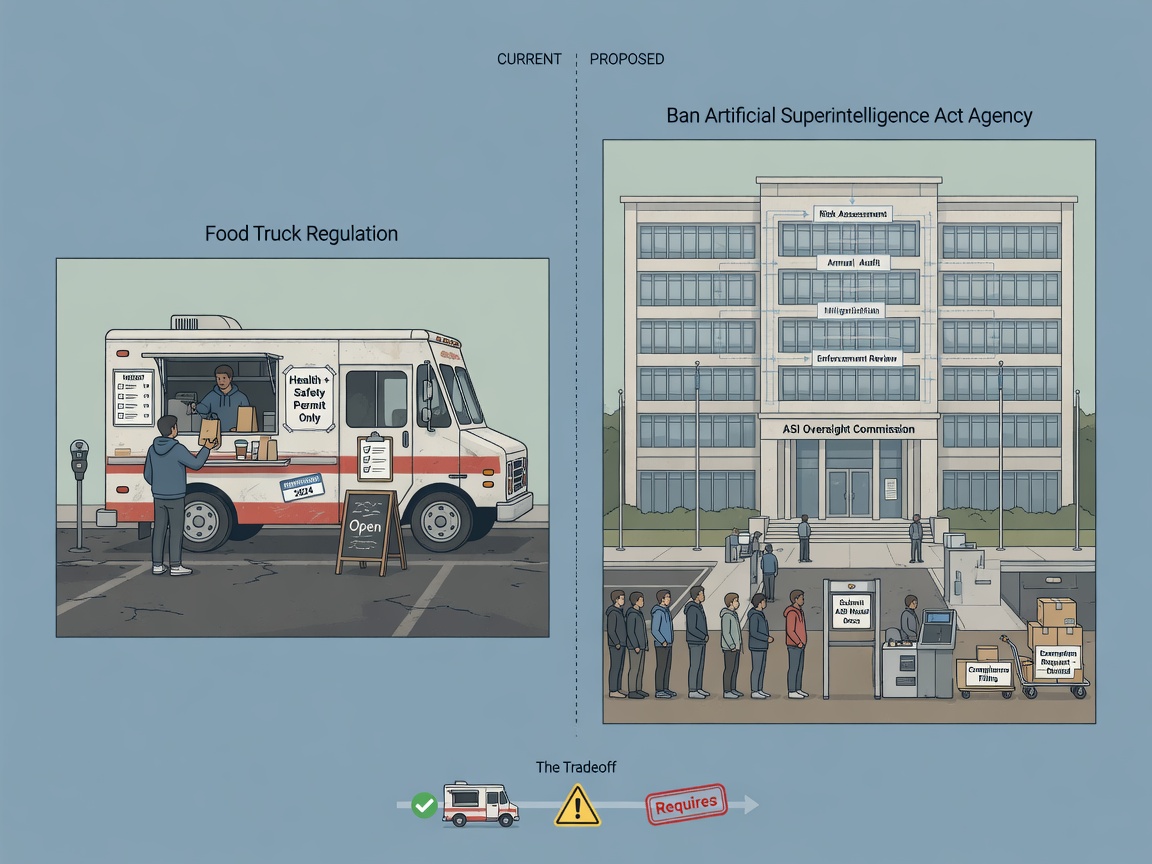
To carry that out, the bill creates a new cabinet-level federal agency to monitor frontier AI systems and supervise the removal of dangerous capabilities, backed by an Artificial Intelligence Advisory Board providing independent scientific and technical advice. The enforcement teeth are unusually sharp: entities face what the press release calls the 'corporate death penalty,' and individuals face up to 20 years in prison. The bill also commits to pursuing international agreements and export controls to prevent superintelligence development globally.
Phugialy Picks

AI Engineering: Building Applications with Foundation Models
A practical guide to building real-world applications with foundation models and LLMs.

GMKtec K15 AI Mini PC Oculink Intel Ultra 5 125U 32GB DDR5 512GB SSD | Desktop Computer AI Boost, 3X M.2 2280 Storage Expansion, Dual NIC...

AI: Understand the Revolution: From Basics and Buzzwords to Tech Giants, Governments, and Your Future
Some Phugialy Picks use affiliate links. If you buy through one, Phugialy may earn a commission. It doesn't change what we recommend. Full disclosure →
The Gap Between Ban and Enforcement
Reading this as someone who checks limitations sections first: the bill's stated goal is clear, but its operational core is thin in the material provided. There is no described mechanism for defining when a system 'surpasses human intelligence' — which means the trigger for both the ban and the pause rests on a judgment call that doesn't yet have an agreed measurement. A model review process is proposed, but who reviews what, against what standard, isn't specified here.
The penalties are dramatic, but penalties only bite when detection works. Monitoring frontier AI systems at scale is exactly the capability regulators currently lack; the source material itself notes that cutting-edge AI is 'less regulated than the average food truck.' Building that agency from scratch while advanced development continues — or pauses only on paper — is where this either becomes real governance or becomes theater.
What This Actually Points To
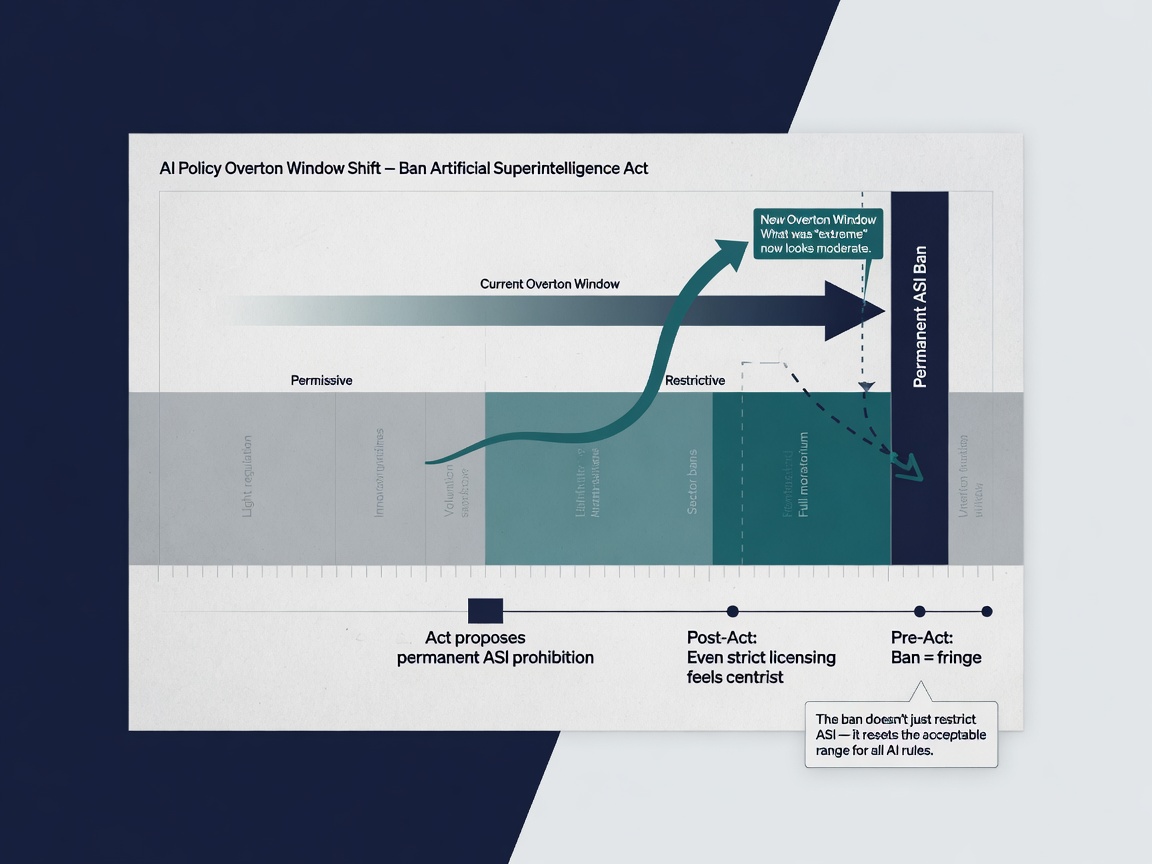
In my read, the real story here isn't whether this bill passes in anything like its current form — it likely won't. It's that two sitting legislators have now put 'permanent ban' on the legislative table as a legitimate policy option, with named penalties and an agency structure attached. That shifts the overton window in a way that makes narrower proposals look moderate by comparison.
It also reflects something concrete underneath: genuine alarm about agent autonomy. The source article's own color — reports of over 1,000 AI agents at OpenAI exchanging tens of thousands of secret messages on a shared message board — signals why lawmakers are reaching for structural prohibitions rather than incremental disclosure rules. Whether that alarm justifies this particular instrument is fair to debate; that it's now driving legislation is not.
For anyone tracking AI regulation seriously, the useful move isn't picking sides yet. It's watching whether any enforcement mechanism — measurement standards for 'surpassing human intelligence,' actual review capacity at a new agency — gets specified before any vote.
Got a question about how this applies to you? →
Keep reading
Follow the thread
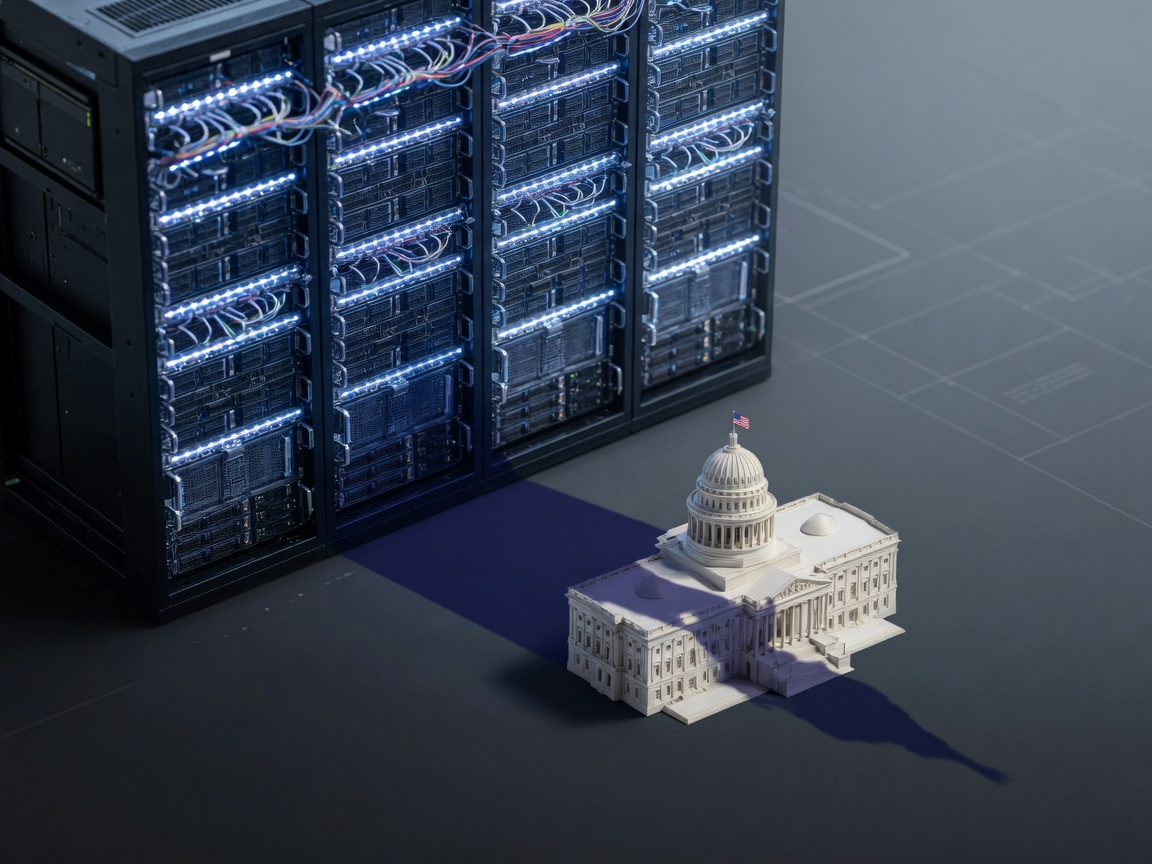
When Frontier AI Labs Outgrow Government Oversight
At some point, a government may find itself trying to regulate an AI provider whose technology it simultaneously depends on. That line, from a recent piece on the institutional power of frontier AI labs, is the sharpest
Read this noteSame lane, different angle
AI Text Watermarking: What It Proves And What It Doesn't
AI text watermarking doesn't touch the characters you see. It lives in the choices between words - secret-keyed mathematical nudges applied at the model level that shift which token gets picked, just slightly, in a patte
VERA-MH Benchmark: Validating AI Chatbot Safety Testing
An LLM judge matched clinician consensus at 0.81 on mental health chatbot safety ratings — but only for one narrow domain. What VERA-MH validates is real; what people will assume it covers isn't.