When AI Labs Outweigh Government Power: Who Checks Whom?
A government trying to regulate an AI provider it simultaneously depends on isn't a future scenario - it's a dependency trap already forming. The 'counterbalance' framing sounds bold until you notice who has elections and who doesn't.
Automation needs a narrow first win
The best first AI workflow is usually a repeated task with a clear input, clear output, and a human approval step.
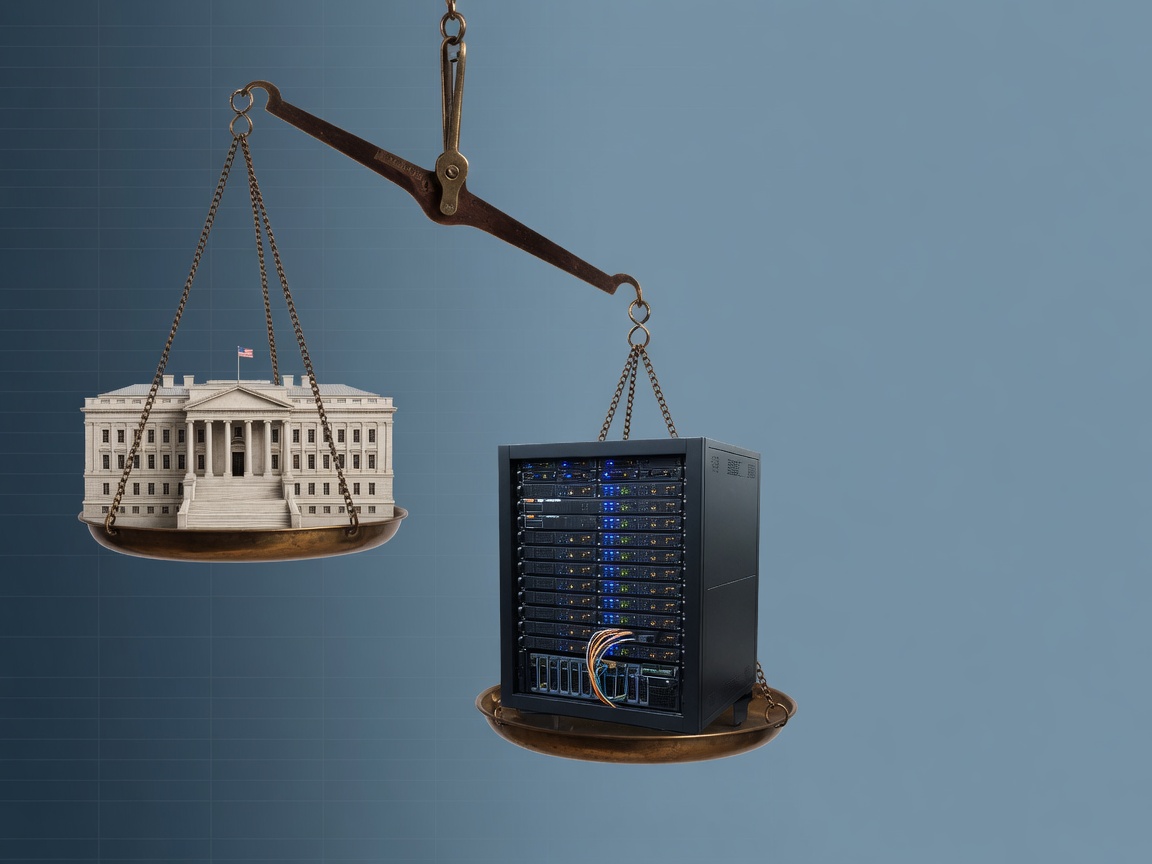
At some point, a government may find itself trying to regulate an AI provider whose technology it simultaneously depends on. That line, from an argument making the rounds about frontier AI labs as a 'counterbalance to government,' is the most honest sentence in the whole piece - because it names a dependency problem that most discussions of AI governance quietly skip. The claim being made is bigger than that sentence, though, and it's worth separating what's argued from what's actually shown.
The Case for AI Labs as a New Kind of Institution
The argument runs like this: frontier AI labs are building infrastructure for cognitive work generally, not narrow tools for specific purposes. As that infrastructure becomes indispensable - for essential services, for the machinery of government itself - the labs behind it may become a 'new kind of institution under the sun,' one powerful enough to counterbalance state power.
There's a real observation buried in here. Governments have historically regulated industries they stood apart from. When the regulator is also a customer - dependent on the very provider it's meant to oversee - the standard regulator-company relationship breaks down. That's not science fiction; it's how critical infrastructure dependencies have always distorted oversight, and AI is being positioned as exactly that kind of infrastructure.
Phugialy Picks

AI Engineering: Building Applications with Foundation Models
A practical guide to building real-world applications with foundation models and LLMs.

GMKtec K15 AI Mini PC Oculink Intel Ultra 5 125U 32GB DDR5 512GB SSD | Desktop Computer AI Boost, 3X M.2 2280 Storage Expansion, Dual NIC...

AI: Understand the Revolution: From Basics and Buzzwords to Tech Giants, Governments, and Your Future
Some Phugialy Picks use affiliate links. If you buy through one, Phugialy may earn a commission. It doesn't change what we recommend. Full disclosure →
What the Counterbalance Framing Skips
Here's where the framing does more work than it should. A counterbalance implies symmetry - two powers checking each other. But frontier AI labs have no democratic mechanisms: no elections, no public accountability structures, nothing that obligates them to answer to anyone outside their boards and shareholders. Calling that a 'counterbalance' to an elected government stretches the word past its useful meaning. It's closer to describing concentrated private power and hoping the concentration itself is stabilizing.
The article does acknowledge this tension between private corporate power and public accountability - credit where due. But acknowledging a tension isn't the same as resolving it, and nothing in the argument explains why redrawing the boundary between private and state power would land anywhere good for the public.
What This Actually Points To
My read: the interesting part isn't that AI labs might rival governments - that part is speculative framing dressed up in institutional language. The interesting part is the dependency trap described almost in passing. Once AI providers are embedded in critical infrastructure, governments lose leverage gradually and then all at once, not because anyone seizes power but because nobody wants to be the regulator that breaks the service everyone relies on.
What's missing from this account is any mechanism - who audits these systems, who can compel disclosure, what happens when public interest and provider interest diverge. The 'more than a billion devices' scale mentioned suggests this isn't hypothetical reach; it's already ambient. If labs genuinely are becoming institutions, institutions come with obligations. The argument names the status without naming any of the obligations, and that gap is where readers should focus their skepticism.
Got a question about how this applies to you? →
Keep reading
Follow the thread
AI Regulation Now Depends on the Companies It Regulates
The most uncomfortable line in a recent analysis on AI's institutional power: a government may end up trying to regulate an AI provider whose technology it simultaneously depends on. That's the vendor lock-in problem every developer knows, scaled until the dependent party writes the rules — and with a footprint of more than a billion devices, the dependency is already shipping.
Read this noteSame lane, different angle
When AI Labs Become a Counterbalance to Government Power
Frontier AI labs are being framed as a counterbalance to government — by the labs themselves. The catch: unlike governments, they have no elections, no FOIA laws, and no mechanism anyone has designed yet to hold them accountable.
Frontier AI Labs Want Government Power - Who Audits Them?
At some point, a government may find itself trying to regulate an AI provider whose technology it simultaneously depends on. That line, from an argument making the rounds about OpenAI strategists and the future of fronti