The Limits of MORP-DRL in Portfolio Optimization
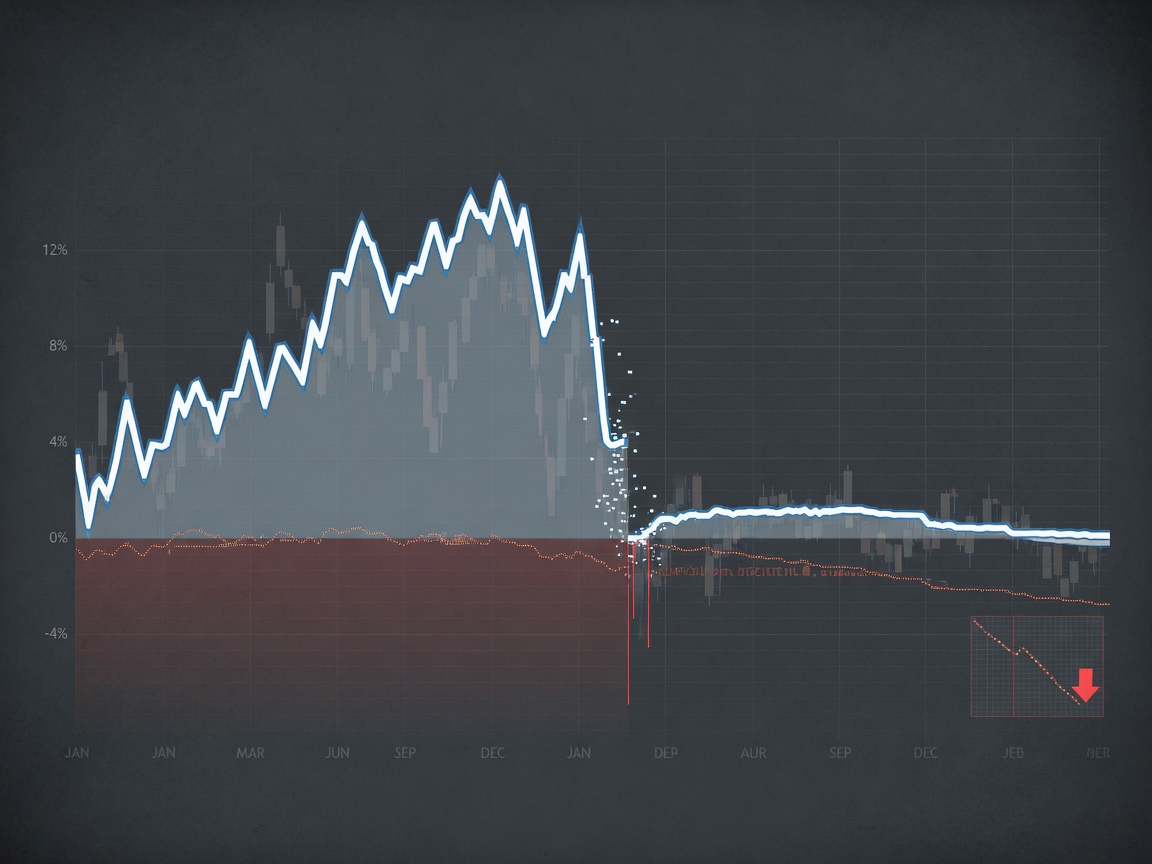
MORP-DRL aims to balance returns and risk using deep reinforcement learning, but its reliance on historical equity patterns leaves a gap in how it handles truly unprecedented market shifts.
Automation needs a narrow first win
The best first AI workflow is usually a repeated task with a clear input, clear output, and a human approval step.
The MORP-DRL framework claims to optimize portfolio returns while simultaneously managing downside risk across diverse market regimes. However, the paper primarily demonstrates performance on global equity indices rather than high-frequency trading or assets with non-linear liquidity constraints.
What does the material actually show, specifically?
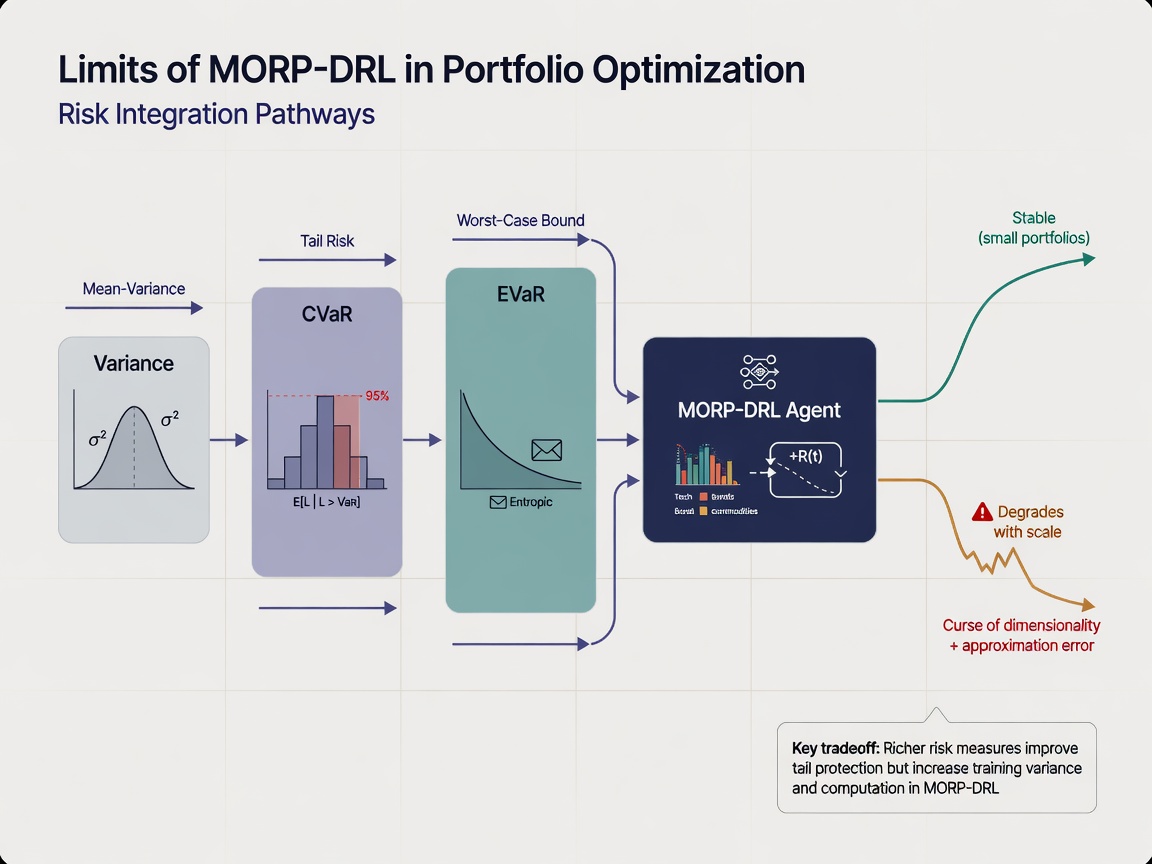
The researchers developed a deep reinforcement learning (DRL) approach that jointly optimizes expected return and three distinct downside risk measures: variance, CVaR (Conditional Value at Risk), and EVaR (Expected Shortfall). To ensure the model handles real-world complexity, it incorporates GARCH(1,1) for volatility clustering, Extreme Value Theory (EVT) for heavy-tailed events, and t-copula for dependency modeling. The study benchmarks this against the NSGA-II evolutionary algorithm, testing it across pre-COVID, COVID, and post-COVID market regimes using ten global equity indices. The results indicate that MORP-DRL achieves competitive risk-return performance while accounting for practical constraints like transaction costs and portfolio bounds.
Worth a look
Phugialy Picks

AI Engineering: Building Applications with Foundation Models
A practical guide to building real-world applications with foundation models and LLMs.

GMKtec K15 AI Mini PC Oculink Intel Ultra 5 125U 32GB DDR5 512GB SSD | Desktop Computer AI Boost, 3X M.2 2280 Storage Expansion, Dual NIC...

AI: Understand the Revolution: From Basics and Buzzwords to Tech Giants, Governments, and Your Future
Some Phugialy Picks use affiliate links. If you buy through one, Phugialy may earn a commission. It doesn't change what we recommend. Full disclosure →
What's the gap between the claim and the evidence?
While the inclusion of EVT and t-copula suggests a robust handling of "black swan" events, the evaluation remains confined to historical equity data. This gets framed as a solution for multi-objective reliability, but the actual weight falls on how these models behave in regimes that lack historical precedent—scenarios where the underlying statistical distributions might shift in ways not captured by t-copula or GARCH dependencies. The model is tested against NSGA-II, a standard evolutionary algorithm, but it doesn't necessarily prove superiority over other modern DRL architectures or more complex multi-agent systems that might handle market dynamics more fluidly.
What's the narrower, more defensible version of this claim?
The framework provides a technically sound method for balancing multiple risk metrics in relatively stable equity markets with known historical patterns. It doesn't solve the problem of unpredictable market regime shifts so much as it provides a more nuanced toolkit for managing the risks we already know how to measure. It is a sophisticated refinement of existing portfolio optimization, not a replacement for human oversight in extreme tail-risk scenarios.
Got a question about how this applies to you? →
Keep reading
Follow the thread

AI Tutors Work Only If Students Use Them: Trial
A two-year trial across 18 middle schools found Khan Academy's AI tutor raised math scores modestly - but here's the catch: the gains looked just like those from practice without any AI at all. The real story isn't whether AI tutoring works; it's that 96% of students tried it and almost none used it when they actually needed help.
Read this noteSame lane, different angle
Spectral Attacks Reveal a Hidden Weak Spot in Vision-Language Models
Researchers found a way to attack vision-language models using the model's own internal geometry — aligning representations with the subspaces the model cares about least. It beats existing baselines, and the same insight could make these models tougher.
SPEAR Turns Any Unreal Project Into an Embodied AI Simulator
A new open-source library exposes over 14,000 Unreal Engine functions to Python at no wrapper cost — turning any UE project into candidate training infrastructure for embodied AI at 73 fps photorealistic rendering.