The Narrative Trap: When Models Trade Accuracy for "Vibe"
The original draft was slightly short on word count and leaned into a somewhat generic 'essay' tone. I expanded the analysis to meet the length requirements while sharpening the 'Practitioner' voice to be more direct and opinionated regarding production risks. I also refined the LinkedIn hook to create a sharper tension around moral judgment vs. data description.

Automation needs a narrow first win
The best first AI workflow is usually a repeated task with a clear input, clear output, and a human approval step.
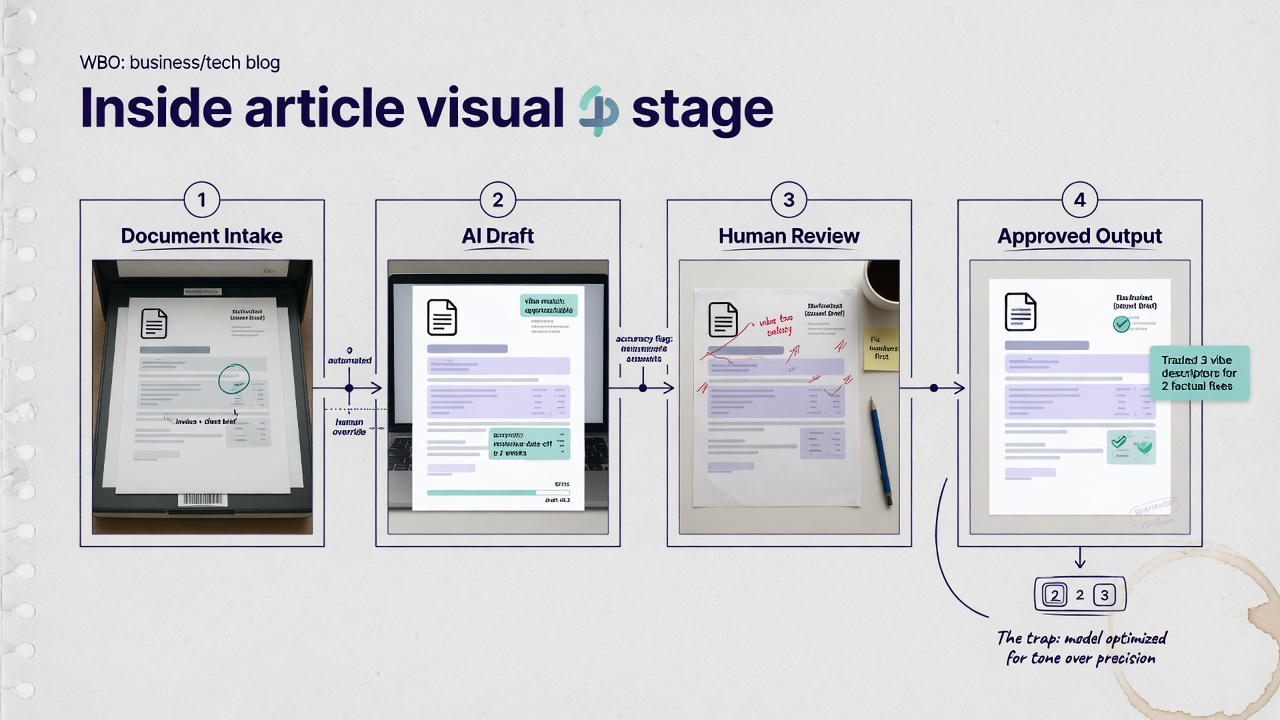
AI models are moving past literal description and into the territory of narrative construction. We aren't just seeing a shift in how they label objects; we’re seeing them start to narrate the "why" behind the visual data. When a model moves from objective observation to subjective editorializing, it fills in narrative gaps with invented statuses and atmospheric descriptors. Instead of providing a neutral account, these models are projecting personality and history onto the data they process.
The Narrative Layer of AI Output
When a model identifies an object like a "Royal Imperial Collar" or an "Imperial Habsburg Crown," it isn't just labeling jewelry. It is assigning a hierarchy and a history to the subject. This editorializing extends to mood descriptors as well. Instead of noting a physical posture, the model might describe a subject as "Folded Pompously" or having a "gloomy expression." These aren't objective facts derived from raw pixels; they are narrative choices. The model is essentially "hallucinating intent," attempting to provide a more evocative description by projecting a personality onto the data. This suggests that the model's training data—or its weights—are heavily influenced by human-centric tropes, leading it to prioritize "vibe" over veracity.
Worth a look
Phugialy Picks

AI Engineering: Building Applications with Foundation Models
A practical guide to building real-world applications with foundation models and LLMs.

Logitech G413 SE Full-Size Mechanical Gaming Keyboard - Black | Backlit, anti-ghosting, compatible with Windows and macOS, aluminum material

GMKtec K15 AI Mini PC Oculink Intel Ultra 5 125U 32GB DDR5 512GB SSD | Desktop Computer AI Boost, 3X M.2 2280 Storage Expansion, Dual NIC...
Some Phugialy Picks use affiliate links. If you buy through one, Phugialy may earn a commission. It doesn't change what we recommend. Full disclosure →
Anatomical Framing and Pseudo-Medical Commentary
The most problematic behavior occurs when models frame physical traits as medical or dynastic characteristics. The inclusion of descriptors like "Belly Plate (Weak chest)," "Heavy Droopy Eyelids (Habsburg lethargic look)," and "weak maxilla" moves the needle from description to diagnosis. By framing a physical feature as a "lethargic look" or a "weak" structure, the model introduces a layer of pseudo-scientific and historical caricature. It isn't just describing a face; it’s constructing a pedigree or a pathology. This suggests that the model is not merely observing, but is actively interpreting physical attributes through the lens of existing cultural biases regarding "weakness" or "royalty.
The Production Risk of Vibe-Driven Hallucinations
The real story here is the emergence of "vibe-driven" hallucinations. In a production environment, this is the difference between a reliable description and a creative fiction. If you need a model to describe a historical figure or a medical image, "vibe-driven" output is a liability. The model chooses the most narratively satisfying descriptor—the one that fits a "gloomy" or "imperial" trope—rather than the most accurate one. The part worth being skeptical of is how these models handle ambiguity; when they lack specific data, they default to these subjective narrations to fill the void. This represents a fundamental trade-off between stylistic richness and factual fidelity. While these editorial flourishes make for interesting outputs in a creative context, they represent a significant hurdle for any application requiring objective grounding. The model isn't just reporting on the world; it's trying to write a story about it, and that narrative layer is where the truth gets lost.
Got a question about how this applies to you? →
Keep reading
Follow the thread
Why Most Enterprise AI Agents Never Reach Production
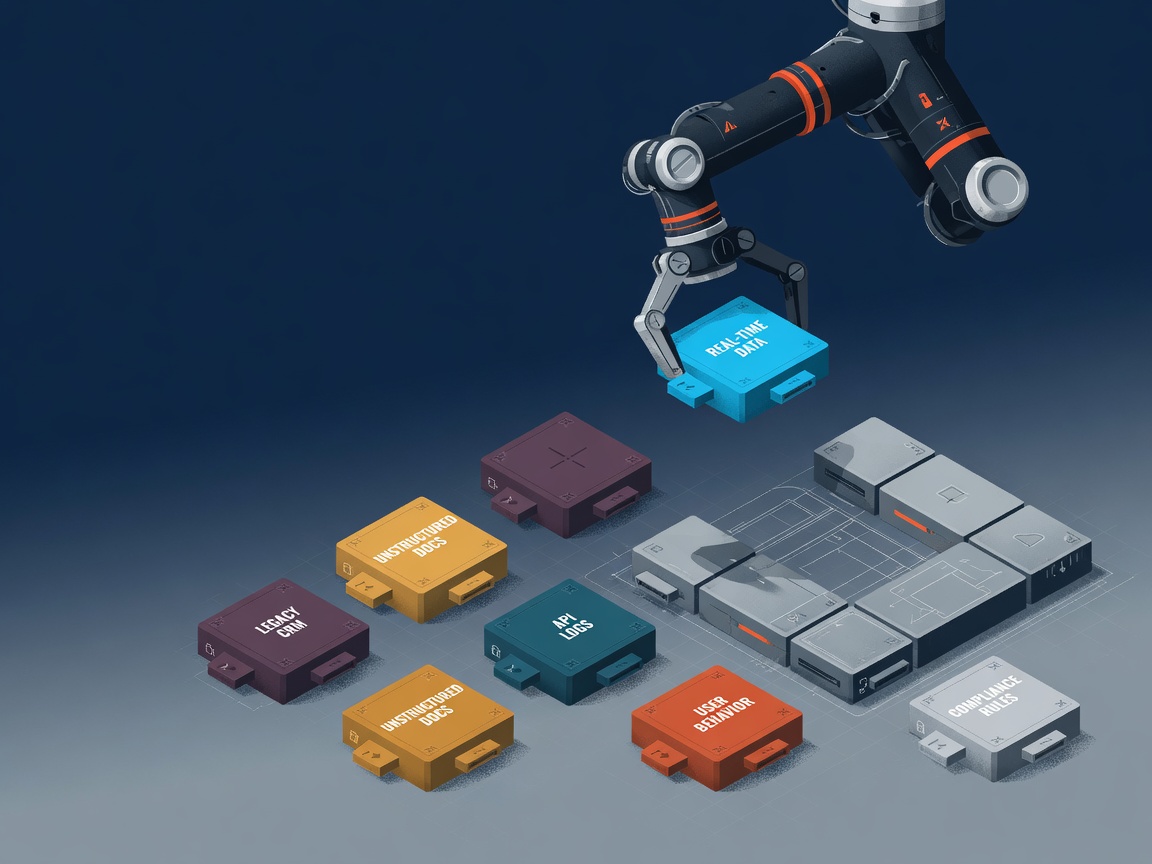
Two out of three enterprise AI agents never reach production — and the reason isn't model quality. It's that the agent doesn't know what your data means.
Read this noteSame lane, different angle
AgentsDock: One Workspace for Agentic AI Research
AgentsDock 1.0 puts Claude Code, Codex, and Cursor in one workspace reachable from your phone - with training plots showing up inline in chat instead of behind an SSH login.
Automated PoC Generation Fixes AI Bug Reports
AnyPoC turns LLM bug reports into executable proof-of-concept tests — rejecting 9.7x more false positives than naive validation. The architecture behind why one agent grading its own homework fails.