The Erosion of Technical Authority in the Age of Vibe Coding
The technical community is developing a visible allergy to LLM-sounding prose. It’s not just a stylistic preference; it’s the creation of a "low-status" category for human-AI hybrid writing. When a piece of technical doc

Automation needs a narrow first win
The best first AI workflow is usually a repeated task with a clear input, clear output, and a human approval step.
The technical community is developing a visible allergy to LLM-sounding prose. It’s not just a stylistic preference; it’s the creation of a "low-status" category for human-AI hybrid writing. When a piece of technical documentation feels like it was spat out by a model, the social stigma stems from a fundamental breakdown in communication. If you can't tell if an error is an AI hallucination or a human's lack of comprehension, the document loses its utility as a shared source of truth.
The Death of Peer Review
This ambiguity kills meaningful technical discussion. Peer review relies on identifying specific misconceptions to improve a system. But when logic is obscured by AI generation, the reviewer hits a wall. As noted in recent Hacker News discussions, it’s impossible to give constructive feedback on an AI-written document because the source of the error is hidden. Did the author fail to understand the underlying material? Did the AI fail to execute a correct instruction? Or was the author simply not proofreading carefully enough? When we can't distinguish between these three, we stop reviewing and start guessing.
Worth a look
Phugialy Picks

AI Engineering: Building Applications with Foundation Models
A practical guide to building real-world applications with foundation models and LLMs.

LG 34WN80C-B UltraWide Monitor 34” 21:9 Curved WQHD (3440 x 1440) IPS Display, USB Type-C (60W PD), sRGB 99% Color Gamut, 3-Side Virtuall...

Alienware 34 Curved Gaming Monitor – AW3425DWM - 34-inch WQHD 180Hz 1ms Display, 1500R, AMD FreeSync Premium, VESA AdaptiveSync.
Some Phugialy Picks use affiliate links. If you buy through one, Phugialy may earn a commission. It doesn't change what we recommend. Full disclosure →
Vibe Coding and the Accountability Gap
This is the core of "vibe coding." It’s a shift from rigorous engineering to iterative prompting—trying to achieve a desired output without mastering the underlying logic. While it might accelerate the production of boilerplate, it fails the moment you need deep architectural awareness. If you aren't constructing the logic, you aren't responsible for its failure. This creates a dangerous gap in production-level accountability. You can't debug a system you didn't actually build; you just "vibed" it into existence.
Why Process Outweighs Output
The value of technical content is shifting away from the final output and toward the documentation of the process. We don't need more AI-generated results; we need to see the hurdles, the specific decisions, and the "why" behind using an AI tool. A blog post that details the human process is infinitely more valuable than a raw AI output. The community wants to see human expertise mediated by tools, not replaced by them.
What this actually points to is a looming crisis of technical literacy. If we move toward a model where "vibe coding" replaces deep logical construction, we risk creating a layer of engineers who can generate code but cannot debug the systemic failures it causes. For those of us who have shipped production systems, that ambiguity is a debt that eventually comes due when the "vibe" fails to hold.
Got a question about how this applies to you? →
Keep reading
Follow the thread
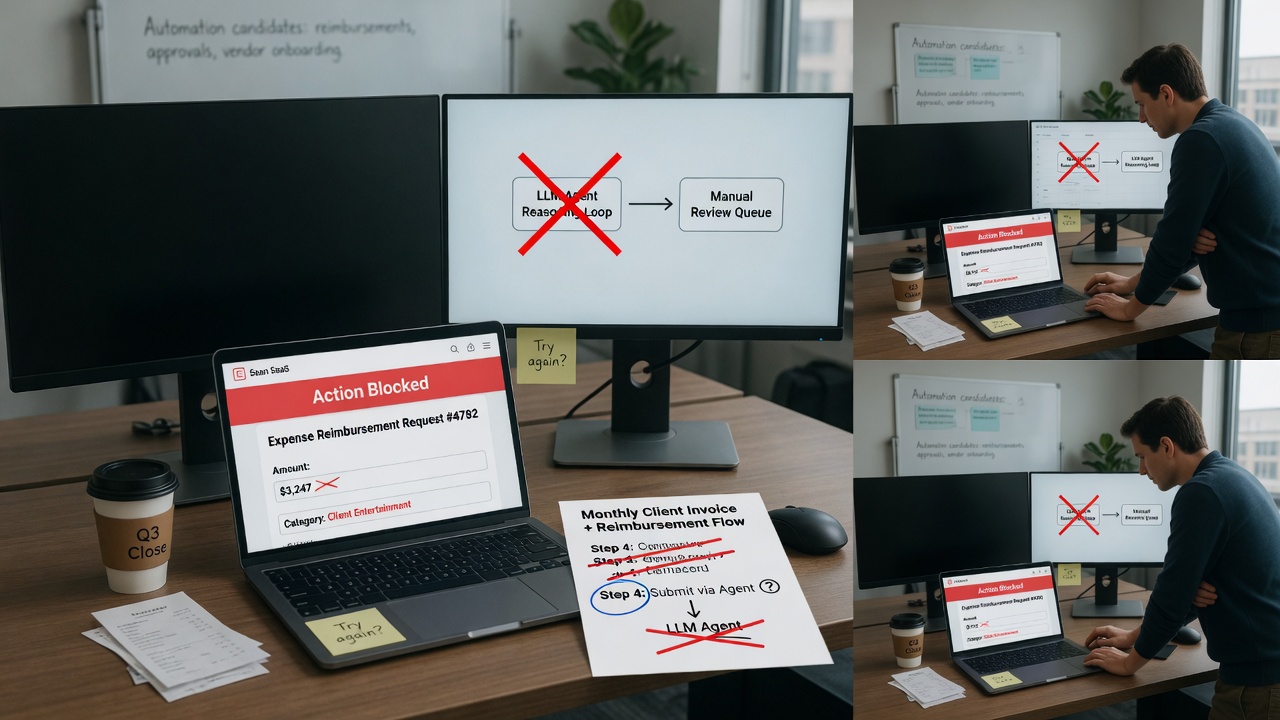
Stop Trusting LLM Agents to 'Reason' Their Way Out of Policy Violations
LLM agents are currently failing in a way that is dangerous for production: they are executing policy-violating actions without throwing a single error. When an agent hits a tool, that tool usually checks if the syntax i
Read this noteSame lane, different angle
From Technical Debt to Production: The Stewardship Gap in AI-Driven Science
OpenAI’s latest report on coding agents in scientific computing confirms what we’re seeing on the ground: we are officially moving past the "hello world" phase of AI-assisted development. We aren't just talking about gen
Why Most Enterprise AI Agents Never Reach Production
Two out of three enterprise AI agents never reach production — and the reason isn't model quality. It's that the agent doesn't know what your data means.