Field Note· August 29, 2026
The Three Levels of Using AI — From Chatting to an AI Workforce
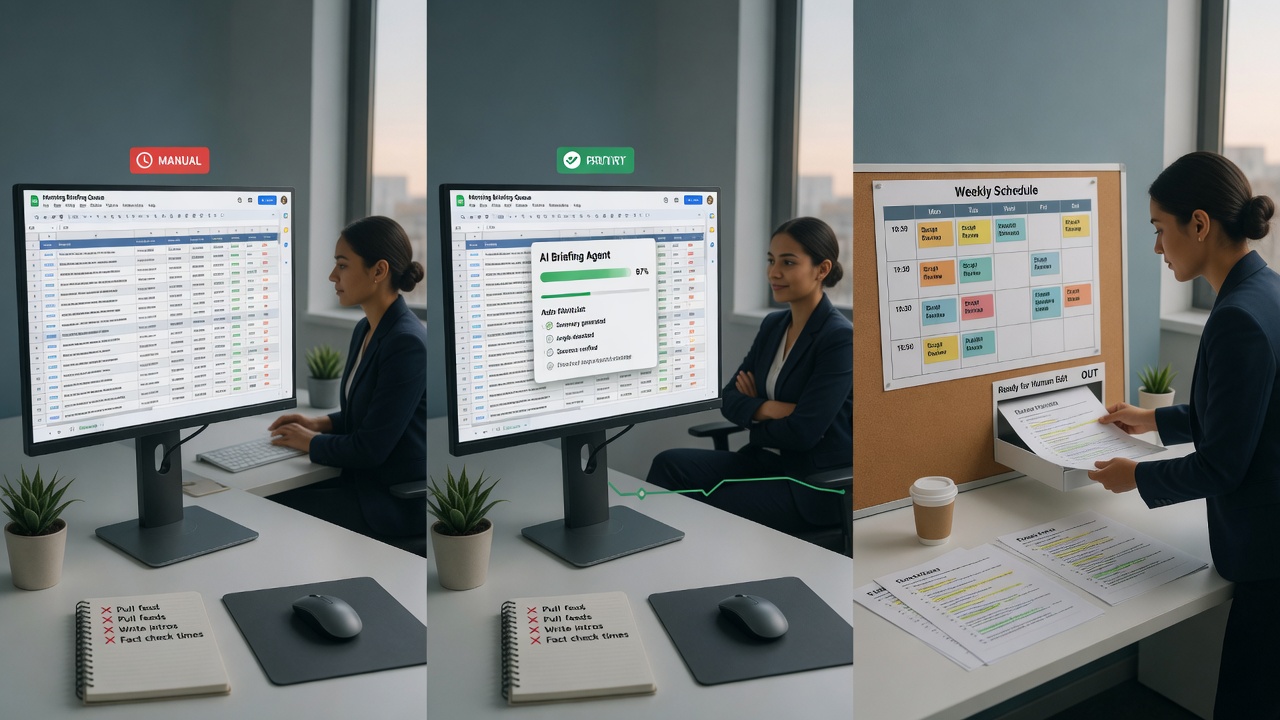
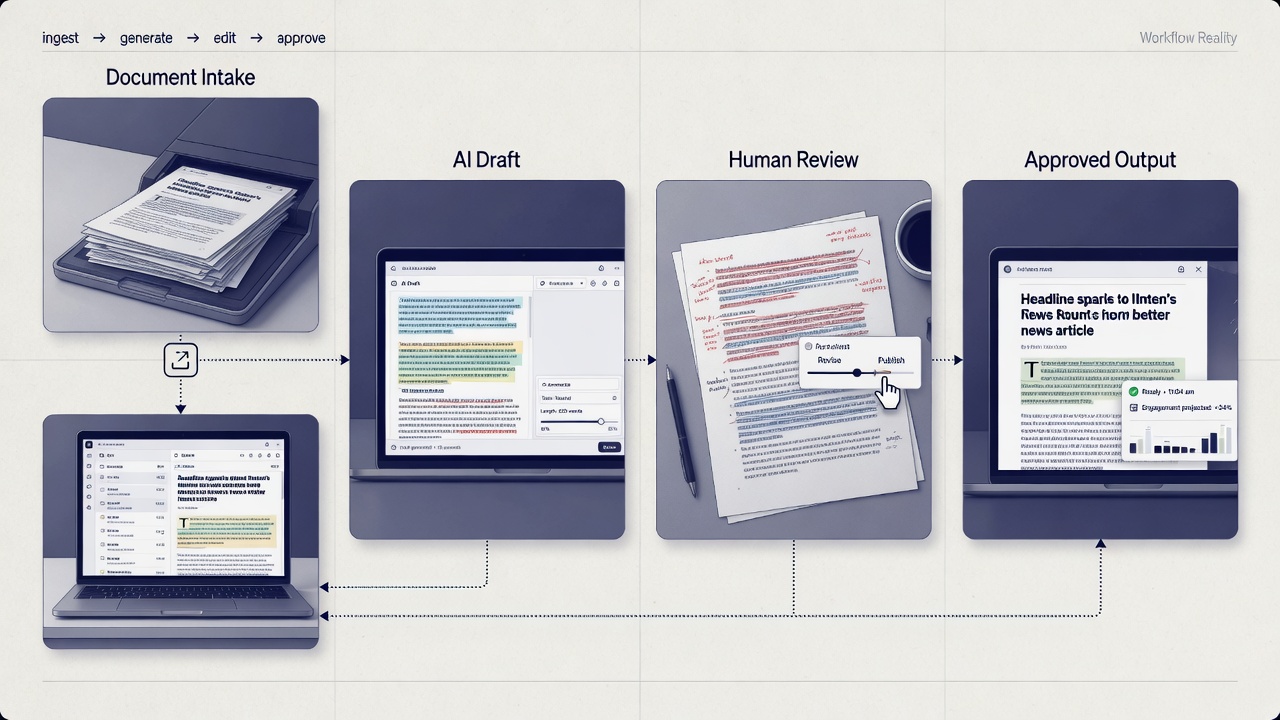
Why should we even care about the different levels of using AI? Simple. We probably don't want to stand still while everything around us keeps moving forward. A good soldier should at least know what equipment is available to them. You don't have to use every tool, and you definitely don't need to become an AI engineer overnight. But you should probably know what is possible. That is where I think we are right now. AI has been fascinating for years, but lately things have gotten... intense. People are using it at work, at home, on their phones, for research, writing, coding, customer service, and sometimes without even really thinking about the fact that AI is involved. Yet for a lot of people: AI still means chatbot. And that's not wrong. It's just the first level. One important thing before we go any further: These are not levels of how intelligent the AI model is. You could have access to the most powerful model available and still only use it at Level 1. I'm talking about the maturity of how we use AI. Once you know where you are standing, you can start seeing what is possible one step above you. --- Level 1: AI as a Personal Friend It started with something extremely familiar. A box. You type something into the box. The machine talks back. The chatbot. Almost every major AI platform followed this basic idea because psychologically it isn't that far away from something we already knew how to use: Google Search. Except instead of searching: HOW TO CHANGE OIL FORD F150 ...and opening seventeen tabs... you can ask: "Hey, how do I change the oil in my F-150?" And something actually answers you. Then voice arrived. Now you talk. It talks back. And that was fascinating. AI stopped feeling like some research laboratory concept and started feeling like something sitting on the other side of the screen with you. Obviously it isn't literally your friend. But from the user's perspective, I think that's one of the easiest ways to understand Level 1: AI as a Personal Friend. A friend that unfortunately never stops yapping once you ask it a question. "Hey Chat, how do I..." "Can you explain..." "What do you think..." "Help me write..." "Research this..." And suddenly ideas start flowing. You're brainstorming. You're learning. You're questioning things. You basically have something available at 2:17 AM that doesn't respond: "Bro, I don't know. Google it." Depending on the platform and tools connected to it, AI can search, calculate, read documents, analyze information, and help pull things together much faster than that one friend down the street who somehow knows how to repair every Ford vehicle entirely through instinct. This is the important relationship at Level 1: Human asks. AI responds. And honestly, that alone is incredibly useful. But after using it for a while, something starts happening. You notice yourself asking the same questions again. Every Monday: "Check this." Every morning: "Summarize that." Every week: "Look at these numbers." "Read these emails." "Find this information." "Write this report." And eventually the question changes. It stops being: "How can AI help me do this?" And becomes: "Why am I asking it to do the same damn thing every day?" And there comes my favorite dangerous question: WHAT IF? Yes. Avengers already ruined that phrase for everybody. But seriously. What if I didn't have to ask? Now we're entering Level 2. --- Level 2: AI as an Employee At Level 1, AI responds. At Level 2, AI works. For me, one of the most important words here is: Repeat. If a task is useful enough that you keep doing it... Monday. Tuesday. Wednesday. Thursday. ...eventually somebody is going to realize: "Why don't we just schedule this?" Imagine every morning you ask AI to: check your calendar review your email look at the weather inspect a few websites read some reports summarize what matters send you the result If you are doing that every single morning, at some point even the AI should probably be saying: "My guy... just automate me." Once a task becomes repeatable, you can start giving the system: a schedule a trigger instructions tools an expected output Now instead of saying: "Please do this." You're effectively saying: "This is your job." That is why I think about Level 2 as: AI as an Employee. Not literally an employee. The Department of Labor can relax. But from a workflow perspective, you've delegated a job. It can run again. And again. And again. Without waiting for you to remember to ask. That's an important distinction. Automation itself isn't new. Software has been doing repetitive work for decades. What AI adds is the ability to put more complicated human-like interpretation inside those automated processes. Traditional automation loves things like: IF this happens → DO this. AI can help with the messy middle: "Read this." "Understand what matters." "Classify it." "Summarize it." "Write the appropriate response." That makes completely different types of automation possible. And this is where my newspaper example comes in. Imagine an old newspaper operation. Somebody has to FIND the news. Somebody has to WRITE the news. Somebody has to EDIT the news. Somebody has to PUBLISH the news. Four jobs. Now imagine AI performing those jobs. Research. Writing. Editing. Publishing. The final output might not even be one newspaper article anymore. The same workflow could eventually create: an article a LinkedIn post an Instagram image a short summary maybe even an AI-generated video All coming out of one designed process. That designed process is something we commonly call a workflow. And when software coordinates the order of those tasks, you'll also hear the word orchestration. Think about an assembly line. One station doesn't build the entire car. Each station performs its job, passes the work forward, and eventually something useful rolls out the other end. But here's where things get interesting. Having four AI tasks does not automatically mean you have four AI agents. You could have one AI model playing four roles. You could use multiple models. You could mix normal software and AI together. If the road is already predetermined: Research → Write → Edit → Publish ...then we're still mostly talking about a workflow. The road is already built. The workers are just traveling down it. So what happens when the workers start deciding where the road goes? --- Level 3: Agentic AI Now our newspaper gets weird. Imagine the Writer receives the research and says: "This isn't enough. I need more information about this claim." So it sends the task back to Research. Research investigates it. The Writer continues. Then the Editor looks at the draft and says: "Nope. This section doesn't make sense." Back it goes. Maybe another specialist gets called because the article contains financial data. Maybe another AI generates the images. Maybe one AI decides which worker should receive the next task. Now we're moving beyond a simple predetermined pipeline. This is where the idea of an AI agent starts becoming important. The word agent gets used very loosely right now, so I think one distinction is worth remembering: A workflow is mostly told where to go. An agent has some ability to decide what should happen next. Which tool should I use? Do I have enough information? Should I ask another agent? Should I retry this? Who is better suited to finish this part? And once multiple specialized agents start cooperating, we get into what the industry generally calls multi-agent systems. Personally, I like another mental model: The AI Fleet. That's not me trying to invent some new scientific term. It's just an easy way to picture it. One boat can do work. A fleet is coordinated. One AI might be responsible for research. Another for writing. Another for editing. Another for publishing. Each one can have different instructions, tools, responsibilities, and potentially different capabilities. The important part isn't just having four AI workers. The interesting part is the handoff. One agent can determine: "I'm done with my part. You are the right worker for what happens next." That's a very different relationship with software. And systems moving in this direction are already here. Tools such as OpenClaw explore the personal-agent side of this idea, while systems such as Hermes Agent explore delegation, specialized subagents, and AI workers cooperating on larger tasks. So the ladder I've been thinking about looks something like this: Level 1 — AI as a Personal Friend You ask. It responds. Conversation. Level 2 — AI as an Employee You define useful work. The system performs that work repeatedly, often through schedules, triggers, tools, or automation. Delegation + Repeat. Level 3 — Agentic AI / Multi-Agent Systems Specialized AI workers can perform different jobs, use tools, coordinate work, and hand tasks between each other. Coordination + Handoff. Or, in my own easier-to-remember language: The AI Fleet. And this is the part I find fascinating. Because the progression isn't really: "AI became smarter." Then: "AI became smarter again." The thing changing is our relationship with AI. First: "Help me." Then: "Do this for me." And now: "Work together and figure out how to get this done." That is a completely different relationship with a machine. And maybe the interesting question isn't actually what happens to AI next. Maybe the interesting question is what happens to us. Go back to the newspaper. Four jobs. Researcher. Writer. Editor. Publisher. Traditionally that might mean four people. Then maybe four humans working beside four AI systems. But if those four AI systems can research, write, review, communicate, retry, delegate, and publish... how many humans need to sit beside them? Four? Two? One? And if the answer eventually becomes one... what exactly is that person's job? Are they still the worker? Or did they quietly become the manager of a workforce that contains no other humans? We'll leave that alone for now. Because that's another Field Note entirely. But next time you open a chatbot and type: "Hey Chat, can you..." remember: You're not looking at the entire AI revolution. You're standing on the first rung of the ladder.