The Carbon Cost of Compute: Microsoft’s AI Expansion Reality Check
Microsoft’s latest sustainability report confirms a hard truth for the AI era: scaling infrastructure comes with a significant environmental price tag. The company reported a 25% year-over-year increase in carbon emissio
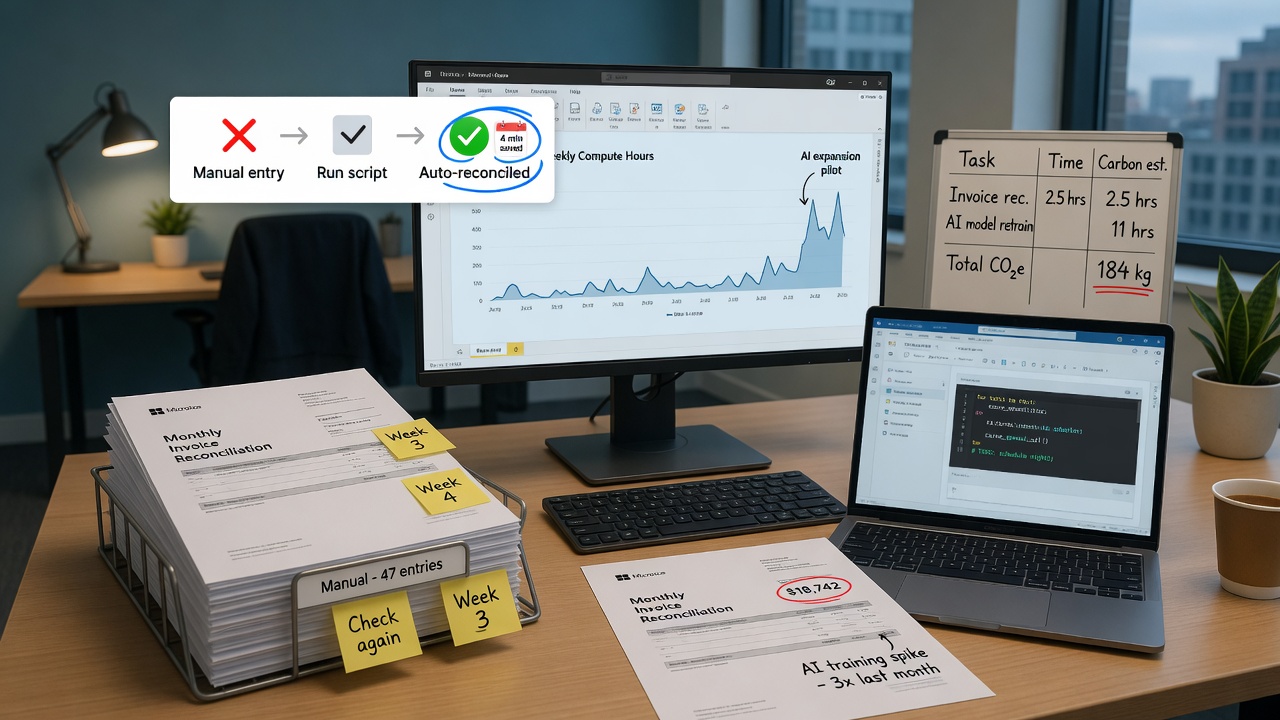
Automation needs a narrow first win
The best first AI workflow is usually a repeated task with a clear input, clear output, and a human approval step.
Microsoft’s latest sustainability report confirms a hard truth for the AI era: scaling infrastructure comes with a significant environmental price tag. The company reported a 25% year-over-year increase in carbon emissions, a jump primarily driven by the rapid expansion of its AI datacenter footprint. While the headlines often focus on the speed of deployment, this data shows the physical reality of that speed. We're moving past the "theoretical" impact of AI and into the era of measurable, heavy-duty consequences.
The Data Integrity Gap
Before looking at the strategy shift, let's clear up the numbers. Public discourse around Microsoft's footprint has been prone to exaggeration; while social media suggested emissions reached 34 million metric tons, the actual reported figure was 20 million metric tons. This correction is more than a minor detail; it highlights a recurring theme in tech reporting—the tendency to inflate environmental impact figures for narrative weight. For practitioners, the takeaway is clear: accuracy matters as much as the scale of the problem. We need reliable data to build actual solutions, not just to fuel headlines.
Worth a look
Phugialy Picks

The Agentic AI Bible: The Complete and Up-to-Date Guide to Design, Develop, and Scale Goal-Driven, LLM-Powered Agents that Think, Execute...

Screen Mom Screen Cleaner Spray (16oz)
We'd buy this if: You've been wiping your monitor with your shirt sleeve.
We'd skip this if: You already have a cleaning routine sorted.
Anker USB-C to USB-C 60W Fast Charging Cable (2-Pack)
We'd buy this if: You need a reliable spare charging cable that won't fray in a month.
We'd skip this if: You already have enough cables lying around.
Some Phugialy Picks use affiliate links. If you buy through one, Phugialy may earn a commission. It doesn't change what we recommend. Full disclosure →
From Paper Offsets to Direct Infrastructure
Microsoft is now pivoting its approach to hit its goal of being carbon negative by 2030. This involves moving away from unbundled renewable energy certificates—which have often been criticized as a way to offset emissions without actually reducing them—toward more direct investments. As of February 2025, the company ceased purchasing these non-additional credits, choosing instead to focus on carbon reduction, carbon removal, and clean electricity procurement. They are also looking at specific hardware interventions, such as energy efficiency improvements for XBOX consoles and the use of sustainable aviation fuel.
The Physics of Scaling vs. The Promise of Efficiency
The real story here is the tension between corporate pledges and the sheer physics of AI scaling. Microsoft is moving toward higher-impact investments because the old model of buying certificates to mask growth is no longer sufficient to meet their targets. However, what this actually points to is a significant looming challenge for the entire industry: as AI models become more complex and datacenter demand spikes, "efficiency" might not be enough to keep emissions flat.
We are seeing a transition from a "buy your way out of it" strategy to a "build it better" reality. While the shift toward clean electricity procurement and carbon removal is a necessary move for long-term viability, the 25% jump shows that the infrastructure build-out is currently outpacing the mitigation efforts. For those of us building in this space, the next few years will be defined by how effectively we can optimize the energy density of every FLOP. The sheer volume of compute required for state-of-the-art AI is fundamentally at odds with a zero-growth carbon profile, and we need to start treating energy density as a primary engineering constraint, not an afterthought.
Got a question about how this applies to you? →
Keep reading
Follow the thread
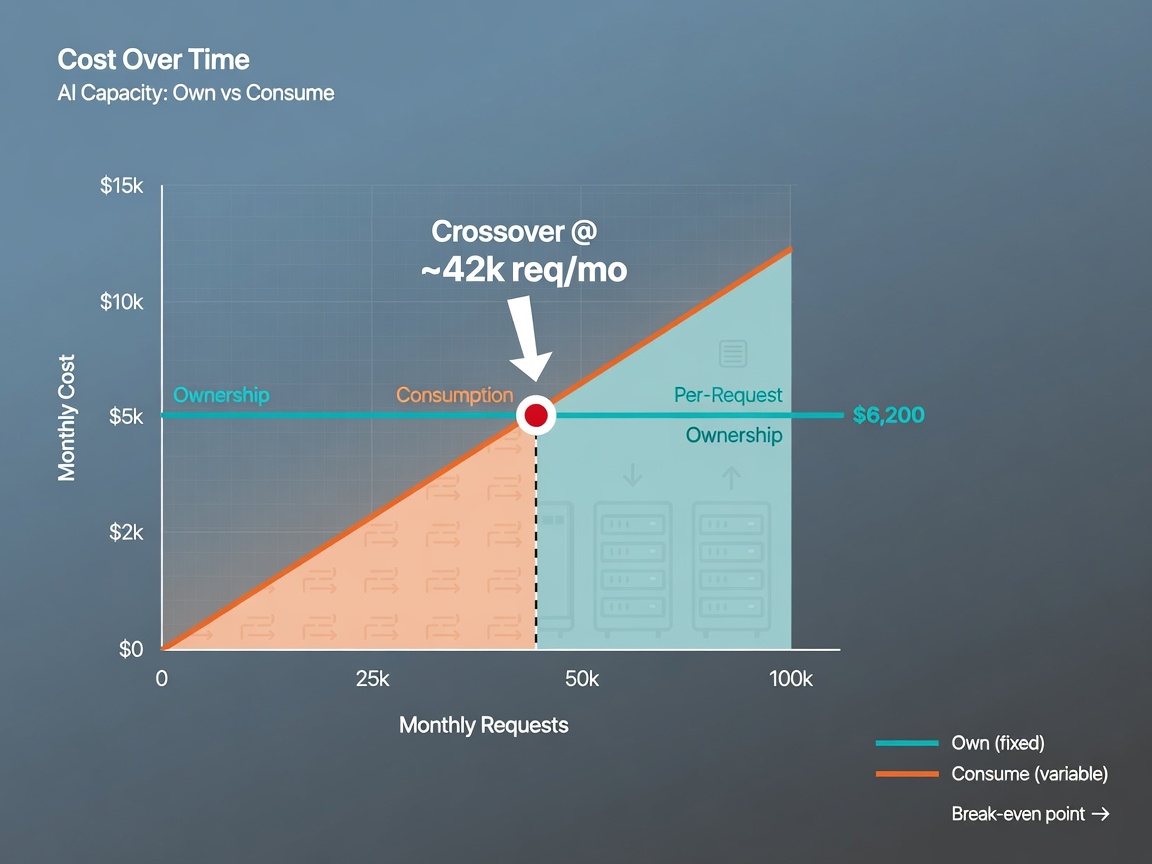
Owning AI Capacity vs Consumption Pricing: When It Pays
Every organization has a crossover point where owning AI capacity becomes cheaper than paying per request — and there is no universal number for where that line sits. That's the core claim of a recent analysis on AI econ
Read this noteSame lane, different angle
Why Advanced Materials Are AI Infrastructure's Next Bottleneck
The constraint on AI's next phase isn't compute or capital - it's whether the physical materials underneath data centers can keep up. That's the argument Syensqo CTO Mike Finelli makes in a recent MIT Technology Review p
AI Regulation Now Depends on the Companies It Regulates
The most uncomfortable line in a recent analysis on AI's institutional power: a government may end up trying to regulate an AI provider whose technology it simultaneously depends on. That's the vendor lock-in problem every developer knows, scaled until the dependent party writes the rules — and with a footprint of more than a billion devices, the dependency is already shipping.