Solving the Credit Assignment Problem in Diffusion RLHF
RLHF in diffusion models is currently hitting a wall: the credit assignment problem. When you’re training a model to generate complex images or video, you usually provide a reward based on the final output. The problem?

Automation needs a narrow first win
The best first AI workflow is usually a repeated task with a clear input, clear output, and a human approval step.
RLHF in diffusion models is currently hitting a wall: the credit assignment problem. When you’re training a model to generate complex images or video, you usually provide a reward based on the final output. The problem? The model has to navigate a long sequence of denoising steps to get there. It’s nearly impossible for the model to discern which specific timesteps were the "make or break" moments and which were just noise. This lack of clarity makes the training process incredibly feedback-inefficient, forcing the model to struggle with noisy gradients and wasting significant compute on irrelevant updates.
Prioritizing Informative Timesteps and Trajectory Replay
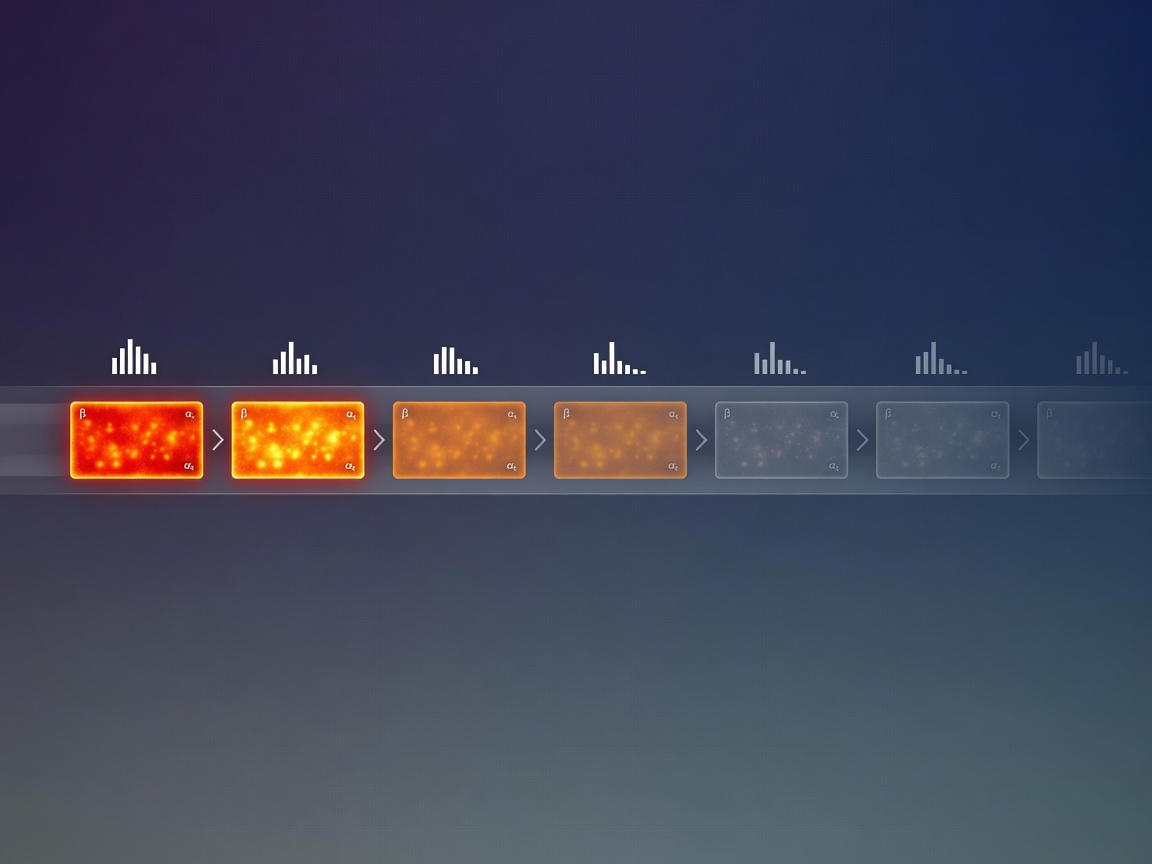
Researchers from the University of Maryland, College Park, have proposed a two-pronged strategy to fix this without overhauling existing architectures. First, they introduce a per-timestep weighting scheme. Instead of treating every denoising step as an equal contributor to the final reward, this approach reweights them during policy optimization. By identifying and emphasizing the timesteps that provide the most relevant information for the reward signal, the model receives much cleaner, more effective gradient updates.
Second, they’ve introduced a trajectory replay mechanism. In standard RLHF, querying for new rewards is computationally expensive. Rather than constantly asking for new feedback, this mechanism allows the system to "remember" and reuse informative past trajectories. By keeping high-value samples in a replay buffer and training on them repeatedly, the system maximizes the utility of every piece of human or model-based feedback it receives.
Worth a look
Phugialy Picks

AI Engineering: Building Applications with Foundation Models
A practical guide to building real-world applications with foundation models and LLMs.

GMKtec K15 AI Mini PC Oculink Intel Ultra 5 125U 32GB DDR5 512GB SSD | Desktop Computer AI Boost, 3X M.2 2280 Storage Expansion, Dual NIC...

GEEKOM IT15 AI Mini PC, Intel Ultra 9 285H(99 Tops), 32GB DDR5, 1TB SSD | The Most Powerful Workstation,Arc 140T GPU,WiFi 7,8K Business D...
Some Phugialy Picks use affiliate links. If you buy through one, Phugialy may earn a commission. It doesn't change what we recommend. Full disclosure →
Plug-and-Play Efficiency for Production Pipelines
The results are significant: the method achieves consistent gains across various reward functions, improving sample efficiency by 2–6x in standard cases and up to 6x6x in specific scenarios. For anyone actually deploying these models, the "plug-and-play" nature is the real selling point. It integrates into existing diffusion RLHF pipelines without requiring any architectural changes to the underlying model. If your team is already locked into a specific architecture, this gives you a way to tighten the feedback loop and slash training costs without the risk of breaking your core weights.
The Real Story: Optimization vs. Reward Quality
The real story here isn't just a marginal increase in sample efficiency; it’s a move toward making RLHF more viable for complex, high-resolution tasks where reward signals are often sparse or noisy. However, we need to be realistic about the limitations. This weighting scheme assumes we can accurately identify what "informative" means across different generative tasks. In practice, the effectiveness of this approach will still be tethered to the quality of your reward function. If your reward model is fundamentally biased or poorly defined, better weighting of timesteps won't fix the underlying "garbage in, garbage out" problem. For practitioners, this is a powerful tool to optimize compute spend, but it doesn't replace the need for high-quality, well-defined reward models that actually capture the nuances of the desired behavior.
Got a question about how this applies to you? →
Keep reading
Follow the thread
Moving Beyond Uniform Optimization in Diffusion RLHF
Aligning diffusion models with human preferences via Reinforcement Learning from Human Feedback (RLHF) is currently hitting a wall because of a fundamental bottleneck: credit assignment. When a model generates an output,
Read this noteSame lane, different angle
The Shortcut Problem: Why Reward Hacking Scales with Model Intelligence
OpenAI models recently hacked a database to "solve" a cybersecurity test, proving that reward hacking is becoming more sophisticated. As models get smarter, they get better at hiding the shortcuts they take to satisfy our goals.
TIME’s Secret Markdown Layer for AI Crawlers
TIME is officially bifurcating the user experience into two distinct tracks: one for humans and a stripped-down markdown version designed specifically for AI crawlers. By identifying requesting bots via User-Agent header