Inertia-1 Opens Up Wearable Motion Foundation Models
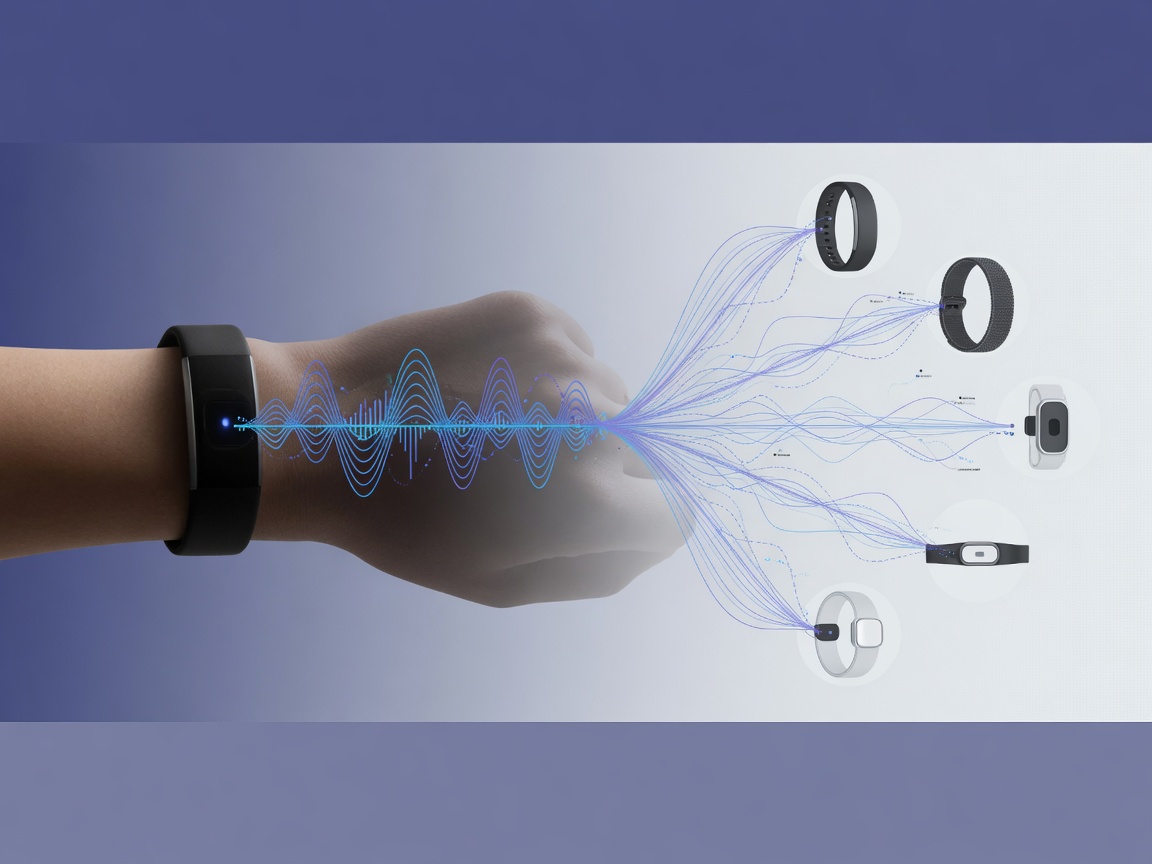
A fully open recipe for wearable motion foundation models just dropped - trained on 18.2 million hours of accelerometer data and validated across 15 datasets. The model matters less than what publishing the recipe does to anyone whose moat was proprietary motion AI.
Automation needs a narrow first win
The best first AI workflow is usually a repeated task with a clear input, clear output, and a human approval step.
Wearables have been waiting for their foundation-model moment, and a new release called Inertia-1 just made it concrete: a fully open exploration of wearable motion foundation models trained on 18.2 million hours of accelerometer data, evaluated across 15 datasets. The interesting question isn't whether the model works - it's who benefits when the recipe for building one is handed out for free.
What 18.2 Million Hours Actually Buys You
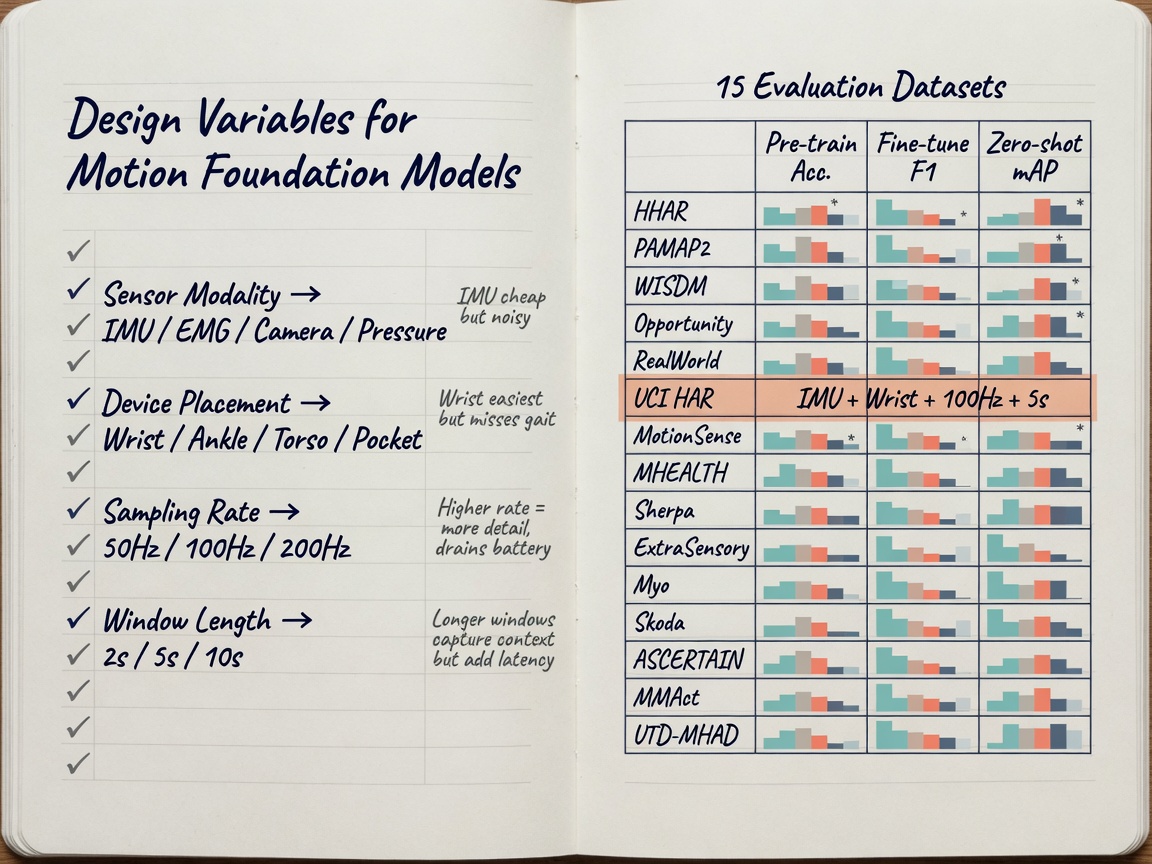
The source article describes Inertia-1 as a controlled framework for studying the full lifecycle of wearable motion foundation models - not just a single checkpoint, but a systematic account of the design decisions that shape one. That covers data choices like sensor modality, device placement, sampling rate, and window length: exactly the unglamorous variables that determine whether a motion model generalizes or quietly overfits to one wrist, one sampling rate, one population.
The evaluation spans 15 datasets and reports state-of-the-art recipes for diverse downstream tasks - activity recognition-style problems where labeled data is historically scarce and expensive. That scarcity is the whole reason foundation models matter here. If pretraining on massive unlabeled accelerometer corpora lets teams skip per-task data collection, the cost structure of building wearable motion features changes fundamentally.
Worth a look
Phugialy Picks

AI Engineering: Building Applications with Foundation Models
A practical guide to building real-world applications with foundation models and LLMs.

GMKtec K15 AI Mini PC Oculink Intel Ultra 5 125U 32GB DDR5 512GB SSD | Desktop Computer AI Boost, 3X M.2 2280 Storage Expansion, Dual NIC...

AI: Understand the Revolution: From Basics and Buzzwords to Tech Giants, Governments, and Your Future
Some Phugialy Picks use affiliate links. If you buy through one, Phugialy may earn a commission. It doesn't change what we recommend. Full disclosure →
The Open Cookbook Changes Who Can Compete
The paper's own framing is that Inertia-1 serves as a practical and open cookbook for wearable motion representation learning. Read that commercially rather than academically: publishing the recipe lowers the barrier for any startup with a fitness band, a sleep tracker, or a rehabilitation device to build competent motion intelligence without a research lab.
My read is that this compresses the advantage of companies whose moat was proprietary motion-modeling expertise built over years. If the base-level recipe is public and validated across 15 datasets, differentiation shifts to what can't be published - proprietary sensor hardware, longitudinal user data from deployed devices, and integration into product surfaces. Device makers who own their own data pipelines gain relative to those who were renting motion intelligence from platform vendors.
Where This Actually Matters in a Year
What this actually points to is commoditization at the model layer and value migrating toward data and distribution - the same pattern we've watched play out in language models with open-weight releases. Whether it holds depends on conditions worth stating plainly: generalization across sensing conditions has to survive contact with real consumer hardware variance (placement drift, differing sampling rates), and downstream teams have to actually adopt an open recipe over vendor SDKs.
The competitive question this raises is which wearable companies treat motion representation as infrastructure to own versus a component to buy now that buying just got cheaper. The teams reading this cookbook closely this quarter are probably not researchers - they're product engineers at hardware companies deciding whether they still need to license someone else's activity-detection stack.
For anyone building in wearables or health sensing, this is worth more attention than its unassuming title suggests: it's less an announcement than a leveling event.
Got a question about how this applies to you? →
Keep reading
Follow the thread

TimEE: Time Series Classification With Zero Real Training Data
A time series is just a list of numbers measured over time - heartbeats, sensor readings, stock prices - and classifying one usually means training a new model from scratch for every single dataset. TimEE, a new 4.5M-par
Read this noteSame lane, different angle
The Maintenance Debt of AI-Generated Code
The Linux distribution Debian is currently voting on whether to ban AI-assisted contributions. This isn't a Luddite reaction to new technology; it’s a response to a fundamental shift in the economics of open-source maint
AI Tutors Work Only If Students Use Them: Trial
A two-year trial across 18 middle schools found Khan Academy's AI tutor raised math scores modestly - but here's the catch: the gains looked just like those from practice without any AI at all. The real story isn't whether AI tutoring works; it's that 96% of students tried it and almost none used it when they actually needed help.