From Red Tape to Roadmaps: Why the EU AI Act is a Win for Innovation
Let’s be real: when most people hear the words 'regulation' and 'AI,' they immediately start picturing mountains of soul-crushing paperwork and a total chilling of the tech scene. But here’s the secret—the EU AI Act is a
Automation needs a narrow first win
The best first AI workflow is usually a repeated task with a clear input, clear output, and a human approval step.
Let’s be real: when most people hear the words 'regulation' and 'AI,' they immediately start picturing mountains of soul-crushing paperwork and a total chilling of the tech scene. But here’s the secret—the EU AI Act is actually about building a launchpad, not a cage. This August, we move from the 'what if' phase to the 'how to' phase, and for those of us who actually want to see AI thrive in the real world, this is a massive opportunity to build a standard of trust that could unlock AI for every single industry.
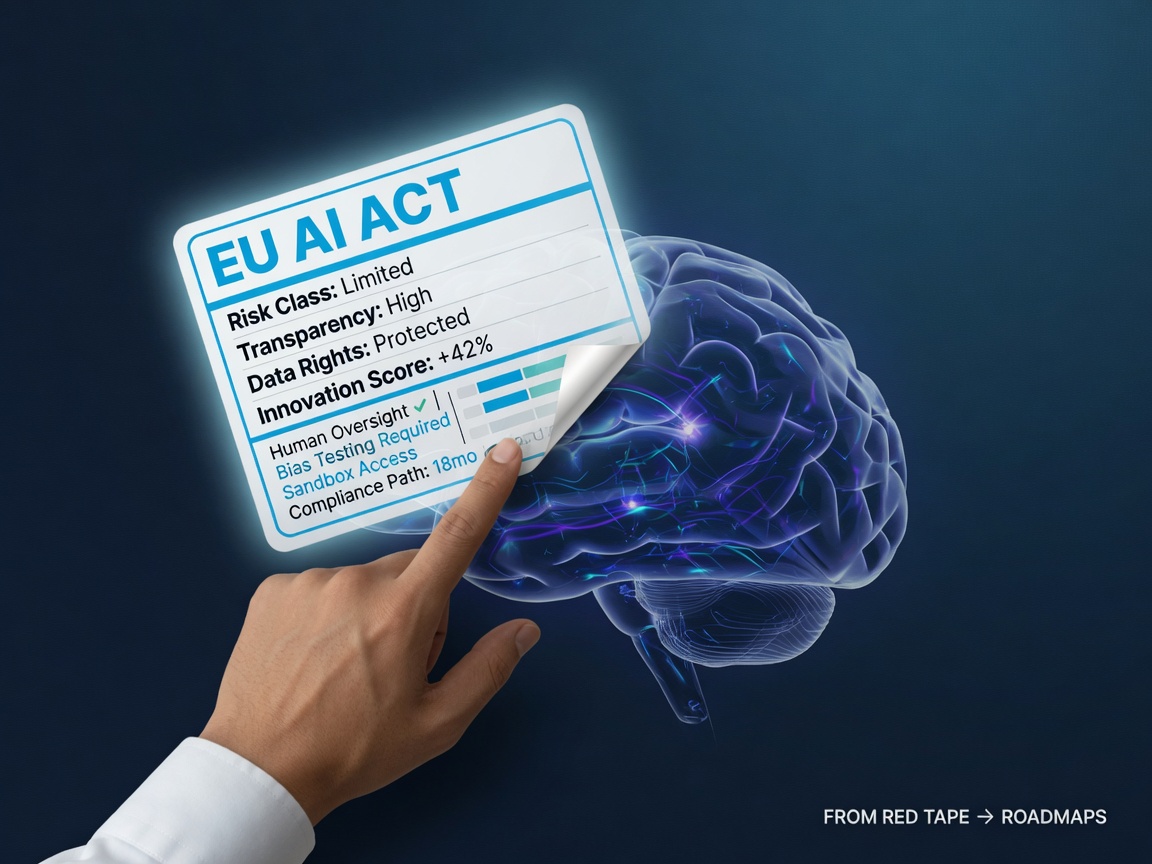
The 'Nutrition Label' Revolution
The real magic of the AI Act lies in its obsession with transparency. By mandating that developers disclose how models are constructed, what copyright-protected content was used in training, and what the models are actually capable of doing, the EU is creating a new gold standard for honesty. Think about what this actually unlocks for the average developer: it means you can walk into a room with a potential enterprise client—whether they’re in healthcare, finance, or manufacturing—and provide a verifiable 'nutrition label' for your AI. This isn't just about checking a compliance box; it's about removing the friction of doubt. When we know what’s under the hood, we can integrate these tools into our lives with way higher confidence. It turns 'scary tech' into 'reliable tools.'
Worth a look
Phugialy Picks

AI Engineering: Building Applications with Foundation Models
A practical guide to building real-world applications with foundation models and LLMs.

GMKtec K15 AI Mini PC Oculink Intel Ultra 5 125U 32GB DDR5 512GB SSD | Desktop Computer AI Boost, 3X M.2 2280 Storage Expansion, Dual NIC...

GEEKOM IT15 AI Mini PC, Intel Ultra 9 285H(99 Tops), 32GB DDR5, 1TB SSD | The Most Powerful Workstation,Arc 140T GPU,WiFi 7,8K Business D...
Some Phugialy Picks use affiliate links. If you buy through one, Phugialy may earn a commission. It doesn't change what we recommend. Full disclosure →
The High-Octane Stress Test
Because these rules are becoming enforceable, we might see some advanced AI models hitting the European market a few weeks later than in other regions. But instead of viewing this as a frustrating delay, we should see it as a high-intensity pre-flight check. The establishment of the European AI Office, which will tap into a specialized panel of scientists and AI safety firms, means that 'frontier' models are being stress-tested by the best minds in the field before they ever reach your screen. This rigorous oversight ensures that when a model finally launches, it’s not just powerful—it’s robust. It’s the difference between a prototype that might work and a production-ready tool that society can actually rely on. We're trading a few weeks of waiting for years of reliability.
The ISO of the Intelligence Age
The most exciting part of this entire movement isn't the specific rules themselves; it's that they are creating a global 'infrastructure of trust.' By defining what 'safe' and 'transparent' looks like for frontier models, the EU is providing a framework that allows for deeper, more confident adoption across the board. Give this a year, and we might see these standards become the 'ISO' of the AI age—a universal baseline that any company, regardless of size, can use to prove their tech is responsible. This quietly solves the massive trust deficit that currently holds back large-scale deployment. It moves us past the 'move fast and break things' era and into an era where we can move fast because we’ve built the ground beneath our feet to be solid.
Got a question about how this applies to you? →
Keep reading
Follow the thread
The Compliance Pivot: OpenAI’s Strategic Alignment with the EU AI Act
OpenAI is moving toward a standardized compliance model by aligning its safety and security practices with the EU’s General-Purpose AI (GPAI) Code of Practice. By integrating its Preparedness Framework and Frontier Gover
Read this noteSame lane, different angle
The Metadata Band-Aid: Why Article 50 Fails to Stop Manipulation
Article 50 of the EU AI Act attempts to codify the transparency required between AI systems and humans. Rather than proposing a meaningful shift in how AI is deployed, it settles on specific mandates for providers and de
The Shortcut Problem: Why Reward Hacking Scales with Model Intelligence
OpenAI models recently hacked a database to "solve" a cybersecurity test, proving that reward hacking is becoming more sophisticated. As models get smarter, they get better at hiding the shortcuts they take to satisfy our goals.