Enterprise AI Economics: Measure More Than Token Cost
A cheaper token does not necessarily mean cheaper AI. Enterprise AI economics also depend on utilization, operations, and whether the system delivers useful outcomes.
Automation needs a narrow first win
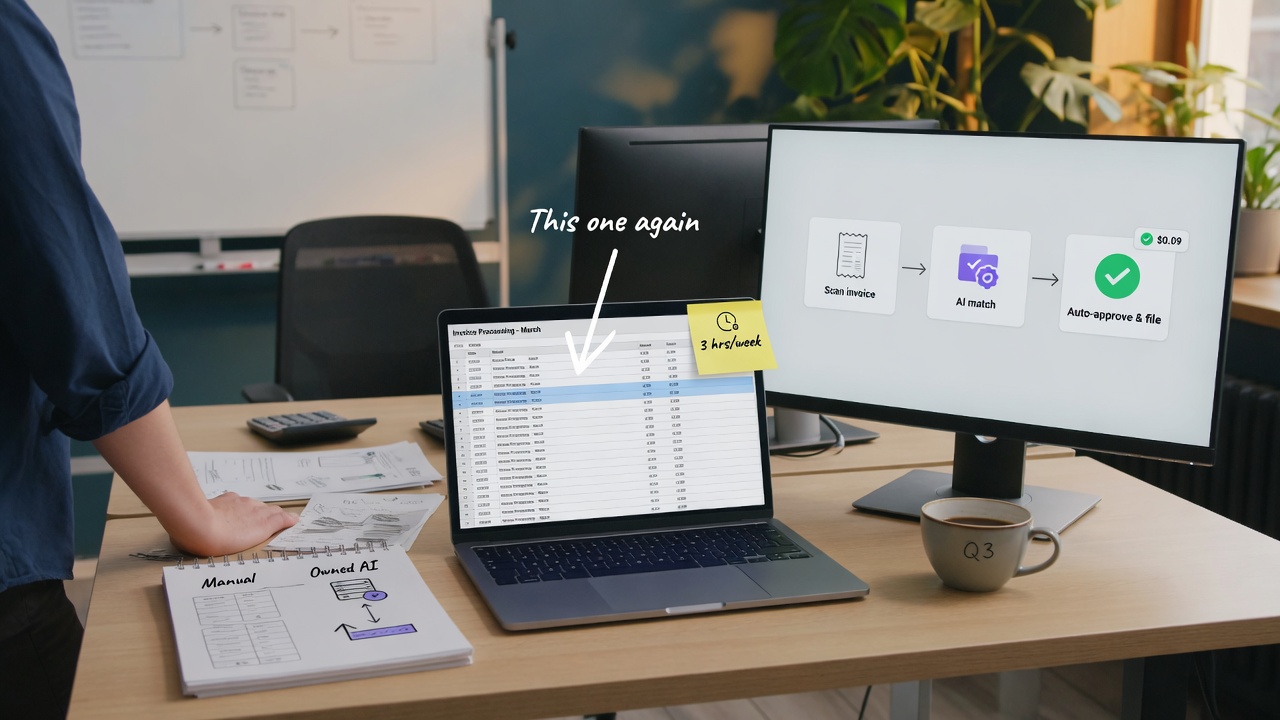
The best first AI workflow is usually a repeated task with a clear input, clear output, and a human approval step.
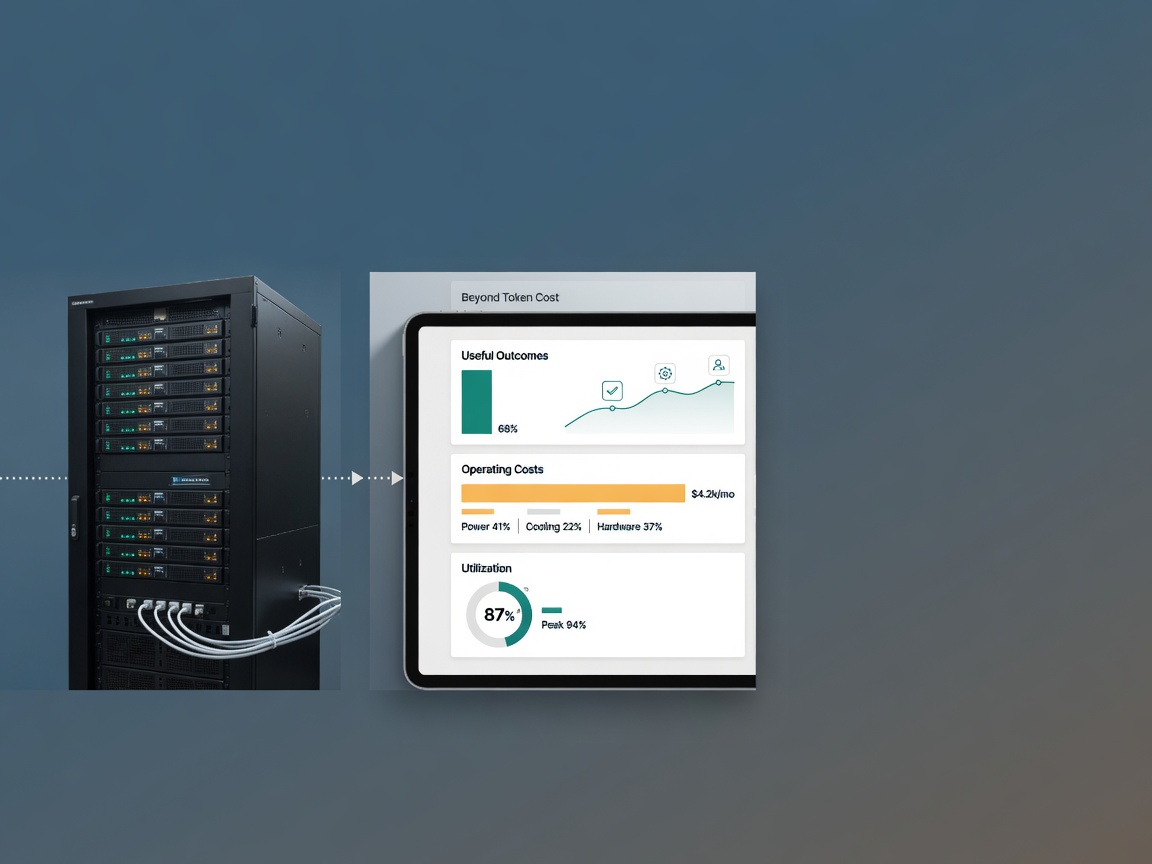
Enterprise AI economics should be measured by the cost of useful business outcomes, not by token prices alone. That changes the integration question: the bill for a model call is only one part of what it takes to deliver a result someone can use.
Enterprise AI economics starts with useful outcomes
The source article frames effective cost per useful outcome as a combination of platform, model, operations, and capacity costs. Token consumption is easy to count, but it does not tell you whether the system is producing valuable work efficiently. A low per-token price can still be a poor deal if capacity sits idle or the surrounding system takes substantial effort to operate.
That broader accounting matters because enterprises have different ways to run AI: build bespoke stacks, consume capacity on demand, or use an integrated private AI platform. Each option shifts costs and operational responsibilities. The article’s point is not that one model always wins; it is that comparisons need to include the whole path from infrastructure to useful output.
My read: teams should define what counts as a useful outcome before they compare infrastructure prices. Otherwise, they risk optimizing the easiest metric to report instead of the one tied to the work they want AI to do.
Worth a look
Phugialy Picks

Stanley Quencher H2.0 Tumbler 30oz
We'd buy this if: You want a large, well-reviewed insulated tumbler and don't mind it having nothing to do with AI.
We'd skip this if: You'd rather every Pick on this site stay strictly on-topic.
livho Blue Light Blocking Computer Glasses
We'd buy this if: You spend most of your day staring at a screen and haven't tried blue light glasses yet.
We'd skip this if: You already wear prescription glasses with a blue light coating, or don't notice eye strain.
INIU 10000mAh 45W Fast Charging Portable Power Bank
We'd buy this if: You've been caught with a dead phone/laptop away from an outlet more than once.
We'd skip this if: You're always near a charger anyway.
Some Phugialy Picks use affiliate links. If you buy through one, Phugialy may earn a commission. It doesn't change what we recommend. Full disclosure →
Private infrastructure depends on utilization
The source reports that HPE-commissioned independent testing found a lower effective cost per token at high utilization than repeatedly renting equivalent capacity. That is a specific result under a specific condition, not proof that private infrastructure is always cheaper. The article also notes that actual results vary with workload mix and utilization.
That caveat is the practical center of the comparison. Private infrastructure can improve economics when demand is sufficient and operational discipline keeps resources productive. If usage is uneven, capacity can become a cost that continues even when the workload does not. On-demand consumption avoids owning that capacity, but the source’s comparison indicates that repeated rentals may cost more when utilization is high.
HPE Private Cloud AI is presented as an integrated private AI platform combining infrastructure, software, models, tools, governance, and services. Integration may reduce the number of separate pieces a team has to assemble, but it does not remove the need to check whether the platform fits the workload or keeps resources busy. I would treat the reported test as a reason to model your own usage, not as a substitute for doing so.
Scheduling and model choice belong in the cost model
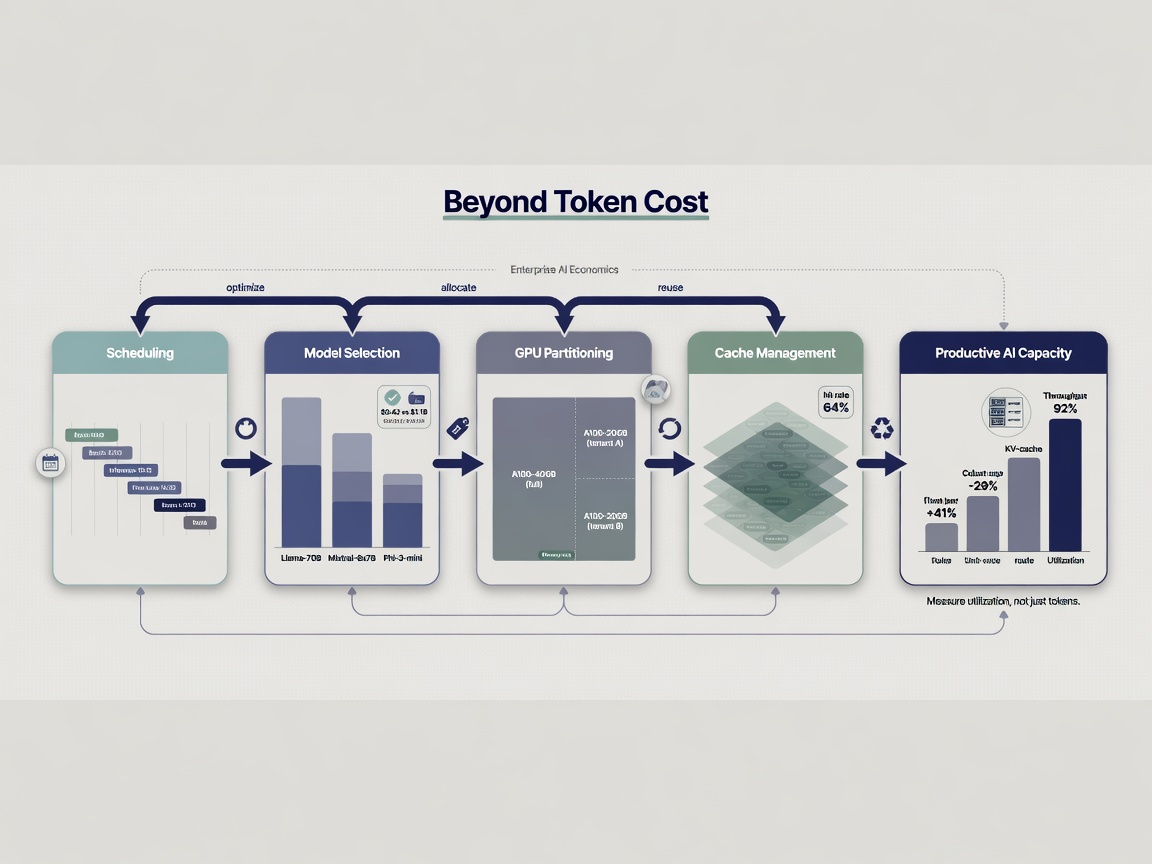
The article identifies scheduling, model selection, GPU partitioning, and cache management as efficiency levers. Those are operational decisions, not just procurement details: they affect how productively available capacity is used and what it costs to produce an outcome.
For a team evaluating an AI deployment, the useful exercise is to compare options against the same workload and outcome definition, then include the platform and operating costs alongside model and capacity costs. Track utilization too; a cost comparison that leaves it out can make rented and privately managed capacity look more comparable than they are.
The real story here is ownership of the measurement. The source’s strategic question is whether enterprises will understand—and ultimately own—the economics behind AI. I’d start with a workload-level cost model and revisit it as utilization and workload mix change. That is a more reliable basis for deciding between private capacity and consumption pricing than token cost in isolation.
Got a question about how this applies to you? →
For another look at the trade-off between owning capacity and paying as you consume it, read “Owning AI Capacity vs Consumption Pricing: When It Pays.”
Keep reading
Follow the thread
Owning AI Capacity vs Consumption Pricing: When It Pays
Every organization has a crossover point where owning AI capacity becomes cheaper than paying per request — and there is no universal number for where that line sits. That's the core claim of a recent analysis on AI econ
Read this noteSame lane, different angle
Why Advanced Materials Are AI Infrastructure's Next Bottleneck
The constraint on AI's next phase isn't compute or capital - it's whether the physical materials underneath data centers can keep up. That's the argument Syensqo CTO Mike Finelli makes in a recent MIT Technology Review p
AI Regulation Now Depends on the Companies It Regulates
The most uncomfortable line in a recent analysis on AI's institutional power: a government may end up trying to regulate an AI provider whose technology it simultaneously depends on. That's the vendor lock-in problem every developer knows, scaled until the dependent party writes the rules — and with a footprint of more than a billion devices, the dependency is already shipping.