Distributed Inference is Moving Out of the Data Center
Mesh LLM is turning a collection of local GPUs into a single OpenAI-compatible API. It allows you to run 235B parameter models by pooling hardware across a peer-to-peer mesh, bypassing the need for massive, expensive cloud instances.
Automation needs a narrow first win
The best first AI workflow is usually a repeated task with a clear input, clear output, and a human approval step.
Mesh LLM is tackling the hardware bottleneck of large language models by building a decentralized, peer-to-peer infrastructure. Instead of forcing a single machine to have enough VRAM to host a massive model, it pools local GPUs and memory across multiple endpoints. The goal is to expose this distributed hardware as a single, OpenAI-compatible API at localhost:9337/v1. It effectively masks the networking complexity from the application layer, which is exactly what developers need to actually use this stuff.
Pipeline Splitting and the "Skippy" Mode
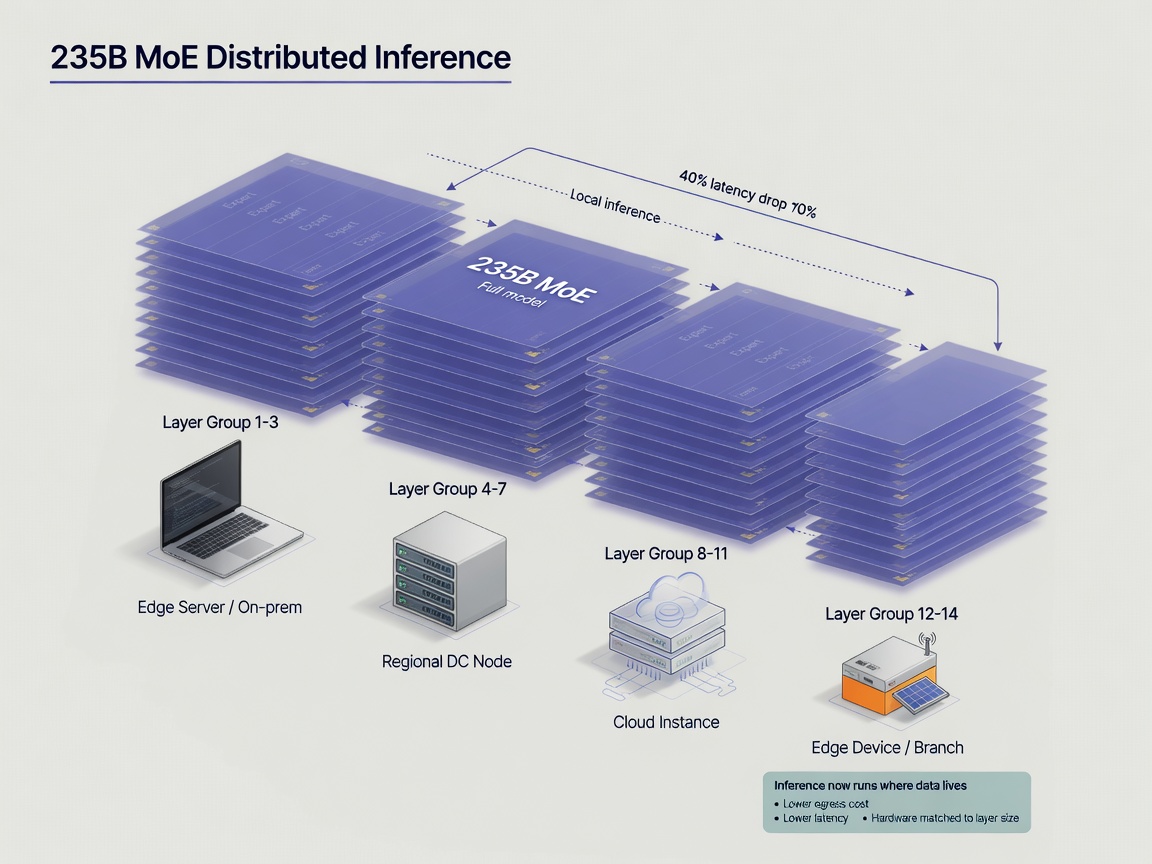
The system supports three serving methods: local execution, peer routing, and pipeline splitting. For high-parameter models, "Skippy" split mode is the real workhorse. It partitions a model by layer ranges, allowing a 235B mixture-of-experts (MoE) giant to run across several machines with modest hardware. One machine handles the first few layers, passes the intermediate activations to the next peer, and so on until the final output is generated.
To make this work over the public internet, Mesh LLM uses the iroh library for authenticated, NAT-traversing QUIC connections and public key identities. If you’ve ever tried to set up a distributed cluster, you know the networking is usually a nightmare of port forwarding and firewall rules. By baking these into the iroh layer, Mesh LLM aims to make "the networking stops being something you have to think about." That’s a high bar, but it’s necessary for adoption.
Worth a look
Phugialy Picks

AI Engineering: Building Applications with Foundation Models
A practical guide to building real-world applications with foundation models and LLMs.

GMKtec K15 AI Mini PC Oculink Intel Ultra 5 125U 32GB DDR5 512GB SSD | Desktop Computer AI Boost, 3X M.2 2280 Storage Expansion, Dual NIC...

GEEKOM IT15 AI Mini PC, Intel Ultra 9 285H(99 Tops), 32GB DDR5, 1TB SSD | The Most Powerful Workstation,Arc 140T GPU,WiFi 7,8K Business D...
Some Phugialy Picks use affiliate links. If you buy through one, Phugialy may earn a commission. It doesn't change what we recommend. Full disclosure →
The Latency Tax and Reliability Risks
Running 235B parameter models on "modest machines" sounds like a magic bullet, but there’s a catch: latency. In a centralized data center, these models run on high-speed interconnects like InfiniBand. In a P2P mesh, every layer transition between machines is subject to the round-trip time (RTT) of the user's internet connection. You’re trading raw TFLOPS for spatial distribution; your tokens-per-second will be dictated by your network's weakest link.
The catalog of 40+ models—ranging from 0.5B to 235B parameters—shows that this isn't just for the biggest models. It’s a framework for anyone trying to avoid "lock-in" and the high costs of closed-server providers. However, the reliability of a mesh is only as good as its peers. If a node drops out during a pipeline split, the request fails. It’s a clear trade-off between cost/accessibility and production-grade stability.
From Compute Moats to Distributed Utilities
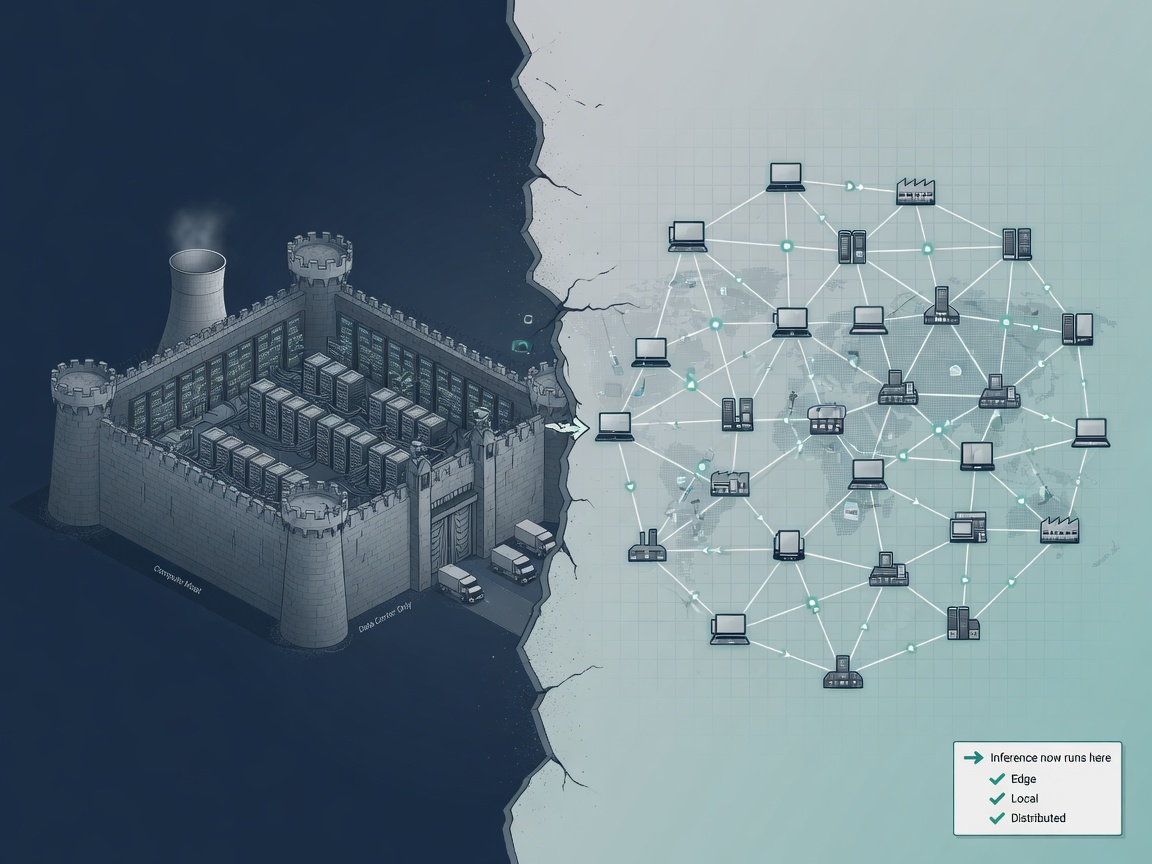
The real story here is the shift toward "commodity" distributed inference for prosumers and small-scale developers. By providing an OpenAI-compatible endpoint, Mesh LLM lets developers swap a centralized API for a decentralized one with minimal code changes. It doesn't make the hardware faster; it makes the hardware more accessible by distributing it spatially.
If the planned mobile app (built on iroh's Swift SDK and speaking the ACP agent standard) lands, we could see inference become a truly distributed utility. The skepticism should remain on whether this can hit the throughput required for real-time production, but for private research and large-scale local testing, it’s a viable way to bypass the current GPU shortage.
Got a question about how this applies to you? →
Keep reading
Follow the thread

The Illusion of Effortless Data Access: A Skeptic's Look at Jailbreak
High-performance analytics often hit a wall not because of the database engine's raw speed, but because of the friction involved in moving data out of it. Traditional JDBC and ODBC drivers are notorious for creating sign
Read this noteSame lane, different angle
Moving Beyond Confidence Scores: Measuring AI Metacognition
LLMs frequently fail not because they lack information, but because they lack the metacognitive ability to recognize when their own internal 'certainty' is misplaced. The research into "Assessing Metacognitive Abilities
Predicting LLM Accuracy Before the Model Finishes Talking
LLMs are notoriously bad at knowing what they don't know. They often present hallucinations with the same poise as factual data, which makes reliability a massive hurdle for production. If you're building a system where