Decoupling AI Control from Flight Software: The VENOM Program
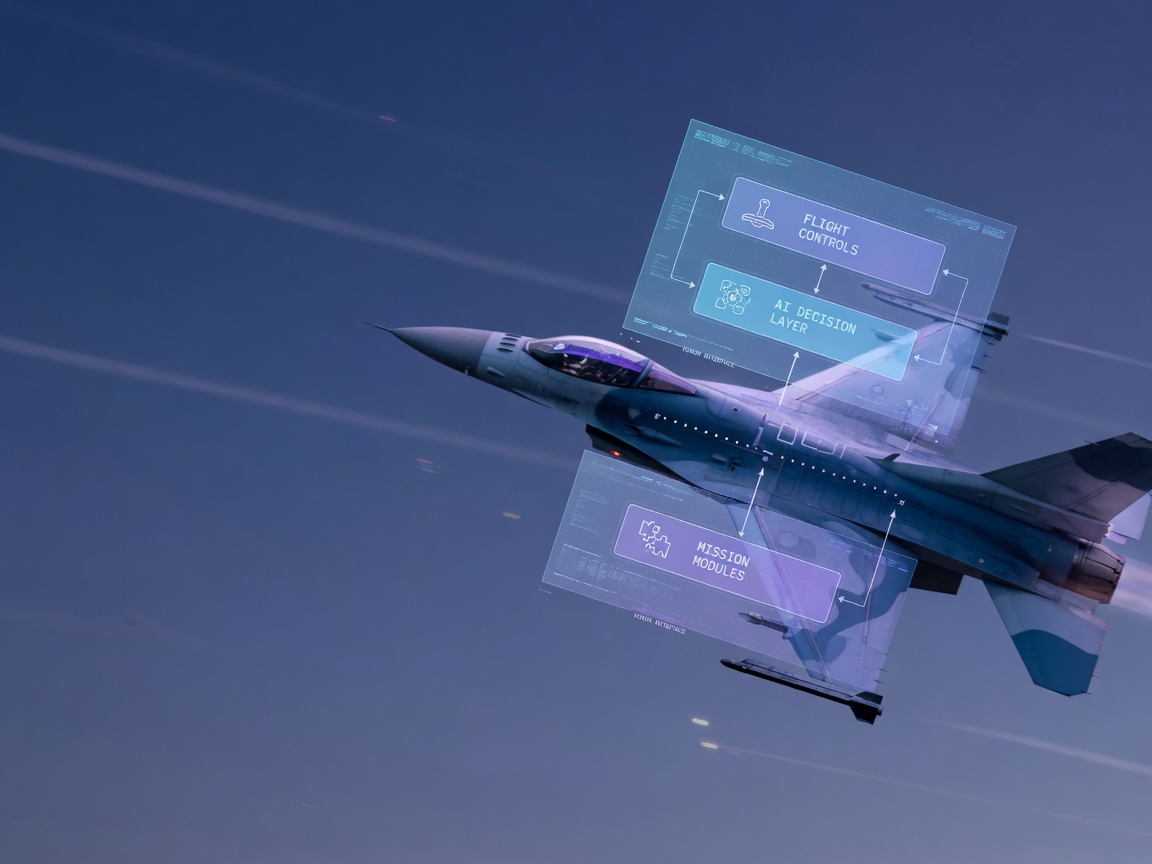
DARPA is moving AI-controlled F-16s from simulation to the sky via the VENOM program. They aren't just trying to replace pilots; they're building a modular software layer to manage teams of autonomous aircraft in real-time combat.
Automation needs a narrow first win
The best first AI workflow is usually a repeated task with a clear input, clear output, and a human approval step.
The U.S. Air Force and DARPA are moving AI from simulation to the cockpit with the VENOM program. By modifying F-16 fighter jets to host an autonomous agent, they are building a scalable infrastructure for trusted, autonomous air combat. This isn't just about replacing a pilot with a script; it’s about creating a framework where multiple AI agents can operate in live-flight scenarios, specifically targeting the complexities of beyond-visual-range combat.
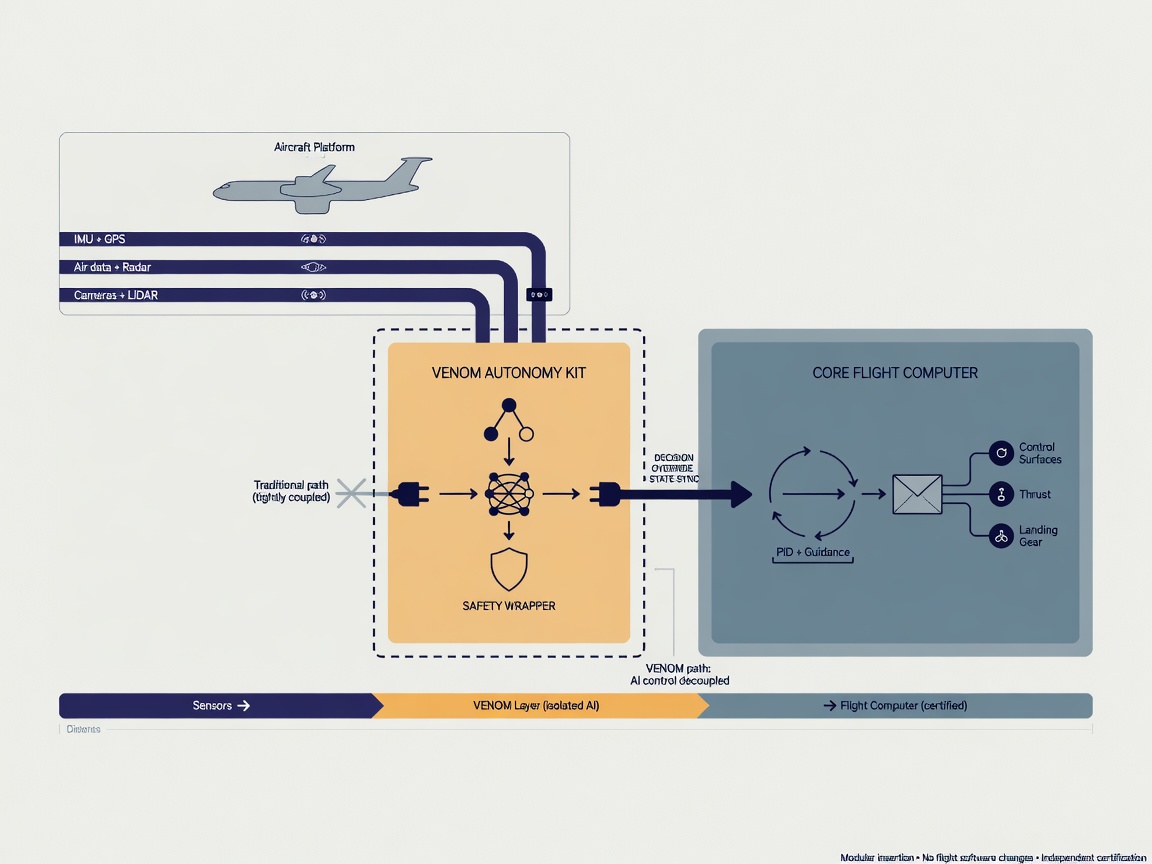
The VENOM Autonomy Kit and Software Decoupling
The core technical component here is the VENOM Autonomy Kit (VAK). This kit allows pilots to toggle between human and AI control without altering the aircraft's core software. From an engineering standpoint, this is a deliberate move toward modularity. By isolating flight-critical software from the autonomy layer, the Air Force avoids the massive certification hurdle of rewriting the entire flight control system every time they update an AI model.
In practice, this means the "intelligence" is treated as an overlay. The VAK handles the sensors and automated controls, allowing the AI to drive the jet while the underlying systems maintain their established safety parameters. This architecture is designed to support the AIR program, which aims to test multiple AI agents simultaneously. The goal is to move beyond a single autonomous drone and toward commanding teams of uncrewed aircraft that can coordinate in real-time.
Worth a look
Phugialy Picks

AI Engineering: Building Applications with Foundation Models
A practical guide to building real-world applications with foundation models and LLMs.

GMKtec K15 AI Mini PC Oculink Intel Ultra 5 125U 32GB DDR5 512GB SSD | Desktop Computer AI Boost, 3X M.2 2280 Storage Expansion, Dual NIC...

GEEKOM IT15 AI Mini PC, Intel Ultra 9 285H(99 Tops), 32GB DDR5, 1TB SSD | The Most Powerful Workstation,Arc 140T GPU,WiFi 7,8K Business D...
Some Phugialy Picks use affiliate links. If you buy through one, Phugialy may earn a commission. It doesn't change what we recommend. Full disclosure →
Scaling from Single Agents to Multi-Agent Teams
Moving from "automated" systems—which follow pre-defined paths—to "autonomous" systems—which make real-time decisions—is where the technical difficulty lies. The VENOM program acknowledges this by focusing on the infrastructure for "trusted" capabilities. In a live-flight scenario, trust is a technical requirement, not just a conceptual one. The system must handle the complexity of beyond-visual-range environments where data is sparse and the stakes are high.
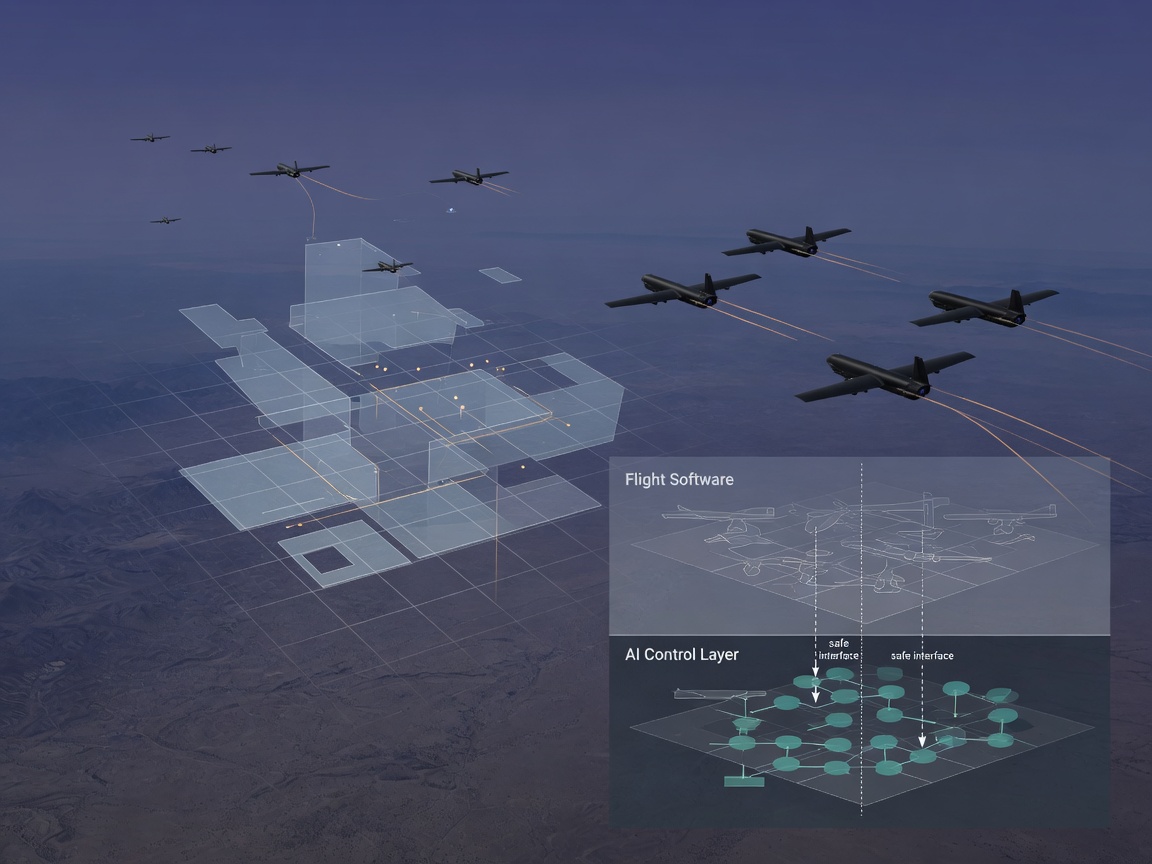
The Air Force is tackling a hard engineering problem: multi-agent coordination. It is one thing to get one AI to fly a jet; it is another to get a fleet of them to cooperate, avoid collisions, and execute complex maneuvers in a contested space. By using a modified F-16 as the testbed, they are validating the communication and decision-making loops necessary for these teams to function as a cohesive unit.
Why Infrastructure Matters More Than Individual AI Performance
Forget the "AI pilot" hype; the real story is the move toward a standardized infrastructure for autonomous warfare. While the press release focuses on the F-16, the technical significance lies in the modularity of the VENOM Autonomy Kit. This points to a strategy where AI is treated as a hot-swappable component rather than a fundamental rewrite of aviation technology.
The challenge isn't just making the AI smart enough to fly; it's creating a reliable bridge between high-level autonomous goals and low-level flight physics. The success of VENOM will likely be measured not by how well a single jet flies, but by how effectively the VAK can manage the handoffs between human oversight and multi-agent coordination without crashing the underlying system. It is a move toward "plug-and-play" autonomy that prioritizes system stability over flashy individual capabilities.
Got a question about how this applies to you? →
Keep reading
Follow the thread
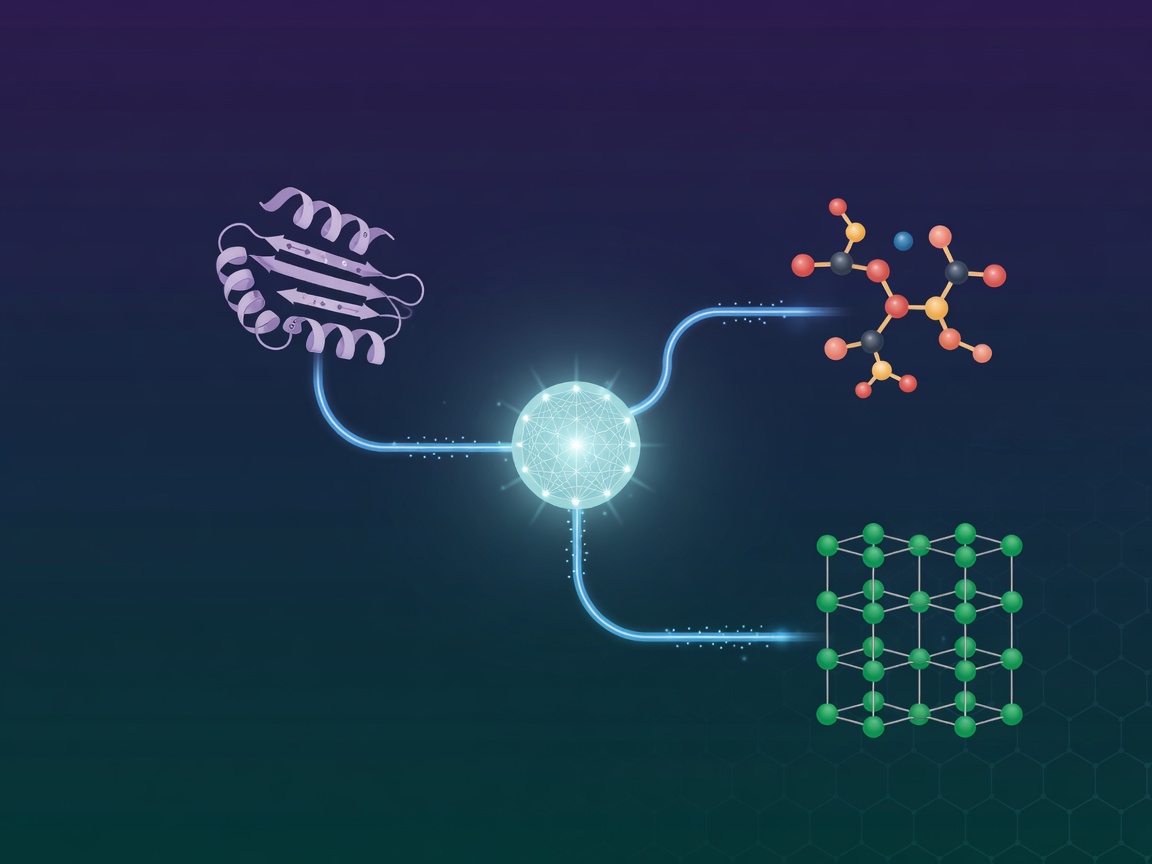
SciReasoner: One Model Reasons Across Proteins, Molecules, Crystals
Proteins, molecules, and crystals share almost nothing on the surface - different representations, different tools, different vocabularies entirely. What if one model could reason natively across all three? That's the pr
Read this noteSame lane, different angle
Testing Gemini 3.6 Flash for Counterfeit Cosmetics Detection
Gemini 3.6 Flash spotted fake Rhode lip tints from photos alone — typos, mismatched distributors, even a known counterfeit batch code (112505). It also mistook camera glare for a printing error, which tells you exactly how far this actually gets you.
Quantifying the AI Noise Floor: A Hacker News Tracker
The Days Since AI Tracker isn't just a fun widget; it’s a live pulse check on the Hacker News ecosystem. It monitors headlines in real-time, resetting a countdown every time a story featuring "AI" pops up. It’s a simple