Declare for AI-Assisted UI Development: Early Evidence
Declare’s ticket-buying app used less code than the React version and passed more hidden checks. But the comparison is still a single-run result, not a benchmark—and that changes what you should do with it.
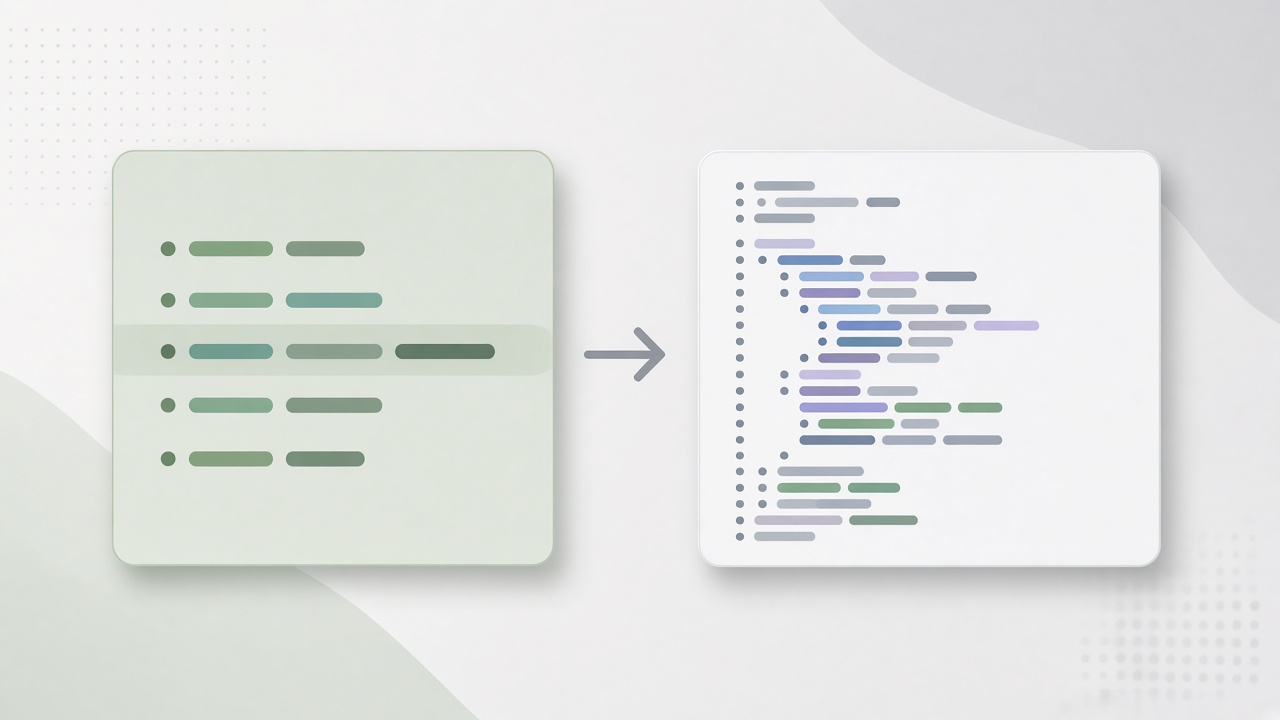
Automation needs a narrow first win
The best first AI workflow is usually a repeated task with a clear input, clear output, and a human approval step.
Declare is worth testing against React for AI-assisted UI development, but the current comparison is too small to justify switching a production team. Its strongest case is not that it has beaten React; it is that a language designed for compiler-checked AI work may reduce the amount of code an agent has to get right.
AI-assisted UI development puts the language itself on trial
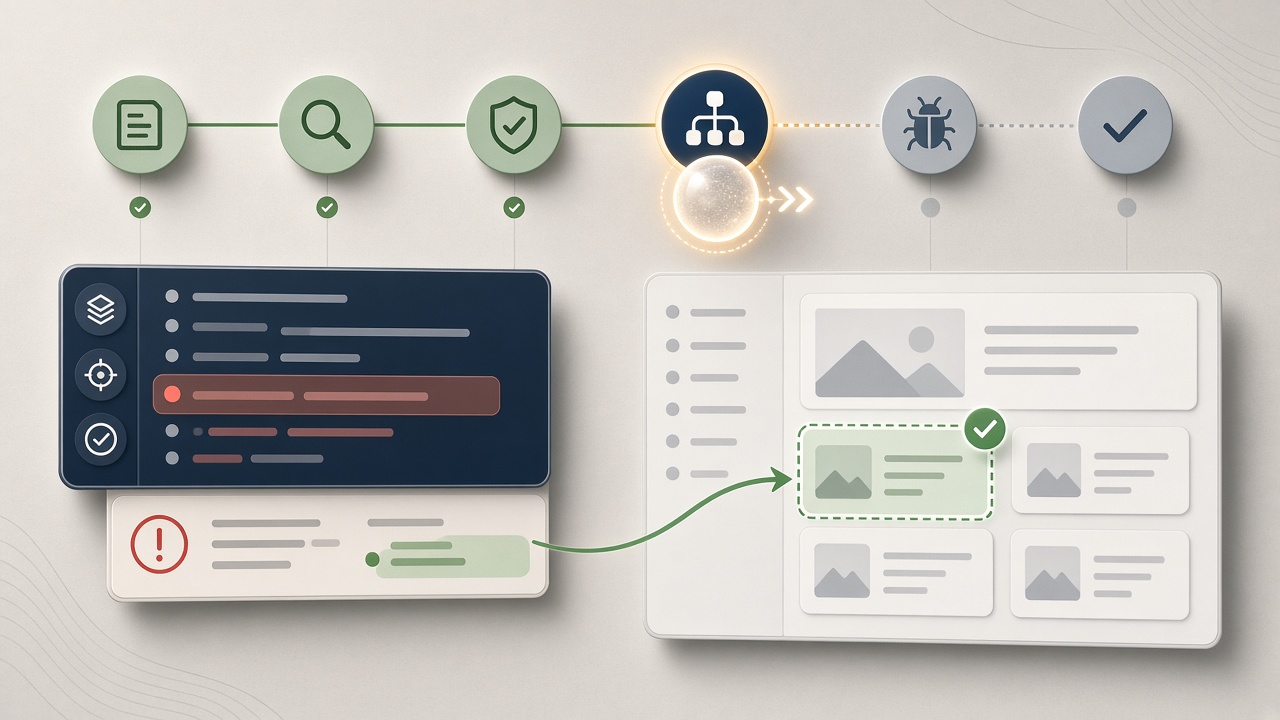
Declare is a domain-specific language for building interfaces. It puts layout, motion, states, theming, and drawing inside the language instead of relying on separate libraries. Its compiler gives diagnostics with precise corrections, while an Inspector and a six-rung verification process are intended to help AI agents understand and check programs.
That design changes the comparison. React is the established alternative in the source’s test, but Declare is not simply another way to write the same components: it moves more of the interface rules into a system the compiler can inspect. My interpretation is that this could matter most when an AI agent is generating an entire interface from a specification. Fewer separate concepts and more actionable errors may make iteration easier—but that is a plausible advantage, not yet a demonstrated general result.
Worth a look
Phugialy Picks

AI Engineering: Building Applications with Foundation Models
A practical guide to building real-world applications with foundation models and LLMs.

Logitech G413 SE Full-Size Mechanical Gaming Keyboard - Black | Backlit, anti-ghosting, compatible with Windows and macOS, aluminum material

RK ROYAL KLUDGE R98 Pro Wired Mechanical Keyboard, 96% Creamy Gaming Keyboard RGB Backlit with Number Pad and Volume Knob, Gasket Mount, ...
Some Phugialy Picks use affiliate links. If you buy through one, Phugialy may earn a commission. It doesn't change what we recommend. Full disclosure →
The Declare and React results are promising, not a benchmark
In a ticket-buying app test using the same AI agent and specification, the Declare version contained 1,279 lines, compared with 2,666 for React. The first Declare build that ran passed all eleven hidden checks; React passed six. Those figures make a strong case for further testing on that task, not a broad claim that Declare produces better applications.
The article also reports results across over a hundred runs: build time for the Declare app fell from 48 minutes to 24, and compiler errors per build fell from 32 to 6. That is useful evidence of improvement over repeated work. It does not erase the article’s explicit caveat: the latest side-by-side comparison consists of single runs, not yet a benchmark. The line-count and hidden-check result should therefore be treated as an encouraging example, not a reliable estimate of what another team will see.
Use Declare where agent feedback is the bottleneck
The practical question is whether Declare’s verification model solves a problem you actually have. If your team is asking AI agents to build interface-heavy applications and spends time correcting opaque or repeated errors, a small trial could test whether the compiler feedback and integrated language reduce that friction. If React already fits your workflow and your main concern is migration cost, this evidence is not enough to justify a switch.
I would compare both approaches on the same real interface task, agent, and acceptance checks, then measure completion time, errors, and whether the finished application passes the checks. The source’s result makes Declare a candidate for that evaluation, not an automatic replacement. The distinction matters: the promising part is not a single win over React, but the possibility that a language built for verification can make AI-generated interfaces easier to inspect and correct. That possibility is worth measuring before committing to a new UI stack.
Holiday picks
Black Friday: big-ticket buys
The big-ticket day: computers, screens, audio and home upgrades worth waiting for.

Audio
DJI Mic 2 (2 TX + 1 RX + Charging Case), All-in-one Wireless Microphone
View on Amazon (opens in a new tab): DJI Mic 2 (2 TX + 1 RX + Charging Case), All-in-one Wireless MicrophonePrices change daily. Check today's price on Amazon.

Home & Kitchen
Keurig K-Elite Single Serve K-Cup Pod Coffee Maker, Brushed Silver
View on Amazon (opens in a new tab): Keurig K-Elite Single Serve K-Cup Pod Coffee Maker, Brushed SilverPrices change daily. Check today's price on Amazon.

Home & Kitchen
De'Longhi Magnifica Duo Automatic Espresso Machine, Milk Frother, Silver
View on Amazon (opens in a new tab): De'Longhi Magnifica Duo Automatic Espresso Machine, Milk Frother, SilverPrices change daily. Check today's price on Amazon.
We earn from qualifying purchases made through these links, at no extra cost to you, as an Amazon Associate and through other affiliate programs. Disclosure. See all Black Friday picks
Got a question about how this applies to you? →
For a related look at agents producing production code, read “From Exploration to Infrastructure: How Agents Build Their Own Production Code.”
Keep reading
Follow the thread
Coding Agents Now Handle More Everyday Development
Coding agents have crossed an important threshold: one developer says newer models became reliable for many everyday coding tasks. The more interesting test is whether goal-driven models can keep improving a result when the target is subjective, as in making a game more fun.
Read this noteSame lane, different angle
STE80 Humanizer: Two Passes for Clearer AI-Written Text
STE80 Humanizer uses two passes: remove 26 AI-writing patterns, then apply 15 controlled-English rules. The design prioritizes preserving facts, not beating AI detectors—but four small cases are only a starting point.
GPT-6 Cyber and the Uneven Costs of AI Deployment
GPT-6 Cyber is restricted to approved security testers, but that access boundary is not proof that the model makes security testing safer. The same roundup reports a separate constraint: non-English prompts can require f