The Reality of Revenue-Sharing in the Qwen Model Lifecycle
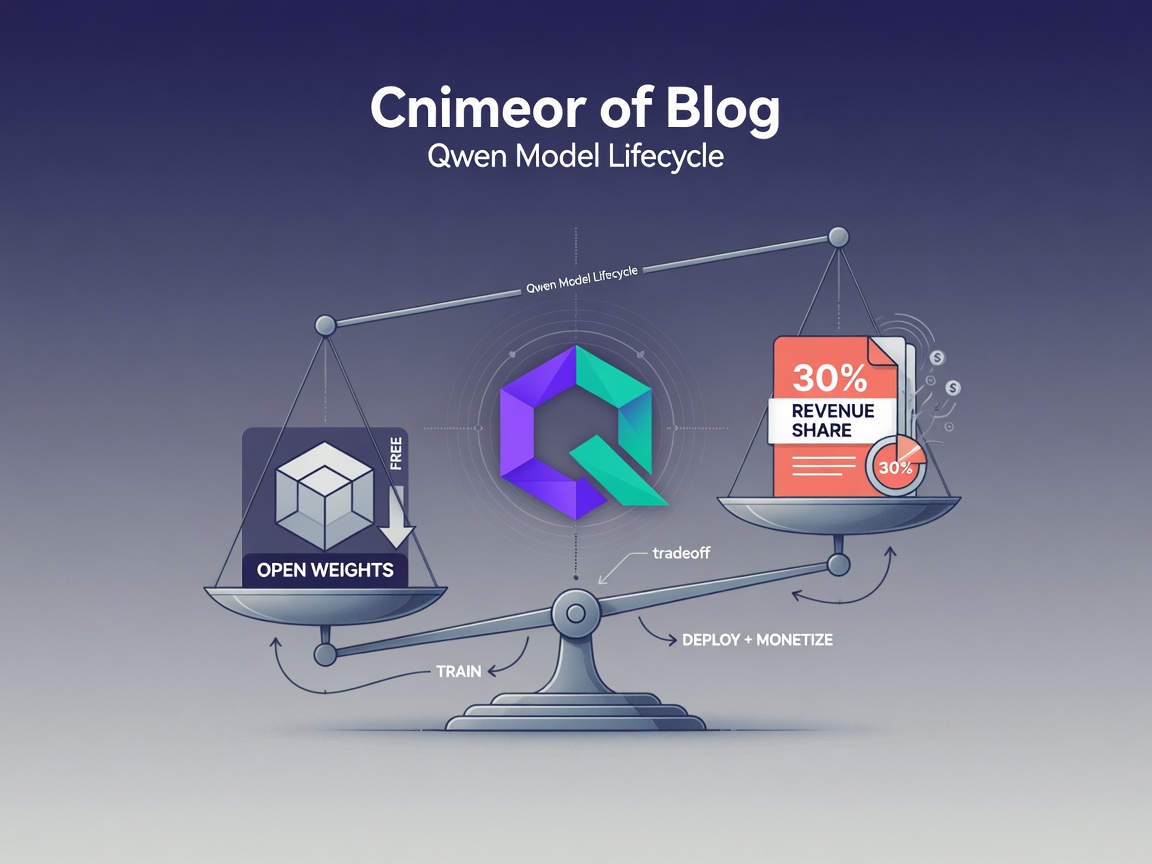
Alibaba is shifting Qwen from pure open-source to a "freemium" revenue-sharing model for heavy hitters. If you're planning to build a high-scale service on Qwen, the era of free weights is hitting a commercial ceiling.
Automation needs a narrow first win
The best first AI workflow is usually a repeated task with a clear input, clear output, and a human approval step.
Alibaba is moving the goalposts on what it means to be "open." While previous Qwen iterations lived comfortably under the Apache 2.0 license, the next generation signals a shift toward a "freemium" revenue-sharing model for large-scale commercial users. This isn't a retreat to closed-source, but it is a pragmatic admission that the "free lunch" of open-weight models is colliding with the reality of massive compute costs.
The $20 Million Revenue Threshold
The new licensing structure targets heavy hitters—specifically companies generating over $20 million in monthly revenue or exceeding 100 million monthly active users. If you’re a startup or a niche researcher, the weights remain accessible. But if you’re building a high-volume commercial service, you’re entering territory similar to Moonshot’s Kimi K3, which requires separate agreements for companies hitting that $20 million mark. Alibaba is following the playbook: low entry costs for the ecosystem, but a potential revenue share of up to 30% for those who actually monetize at scale.
Worth a look
Phugialy Picks

AI Engineering: Building Applications with Foundation Models
A practical guide to building real-world applications with foundation models and LLMs.

GMKtec K15 AI Mini PC Oculink Intel Ultra 5 125U 32GB DDR5 512GB SSD | Desktop Computer AI Boost, 3X M.2 2280 Storage Expansion, Dual NIC...

GEEKOM IT15 AI Mini PC, Intel Ultra 9 285H(99 Tops), 32GB DDR5, 1TB SSD | The Most Powerful Workstation,Arc 140T GPU,WiFi 7,8K Business D...
Some Phugialy Picks use affiliate links. If you buy through one, Phugialy may earn a commission. It doesn't change what we recommend. Full disclosure →
MoE Architectures and the Training Cost Wall
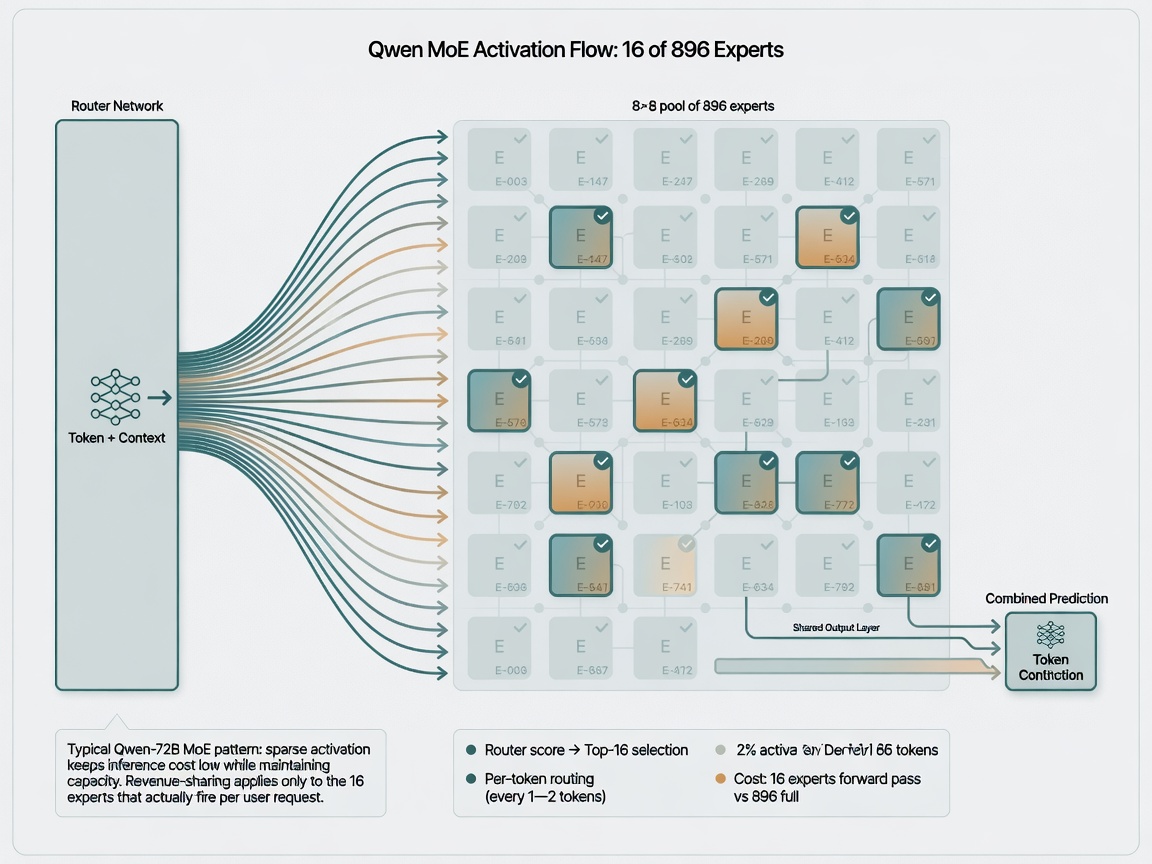
The "why" behind this shift is rooted in the economics of scaling. Both Alibaba’s Qwen3.8-Max and Moonshot’s Kimi K3 leverage Mixture-of-Experts (MoE) to balance performance with efficiency. For instance, Kimi K3 features 2.8 trillion total parameters but only activates 104 billion per token across 896 experts, where 16 experts are selected for each token. Qwen3.8-Max is similarly structured, activating about 95 billion parameters per request from a 2.4 trillion parameter pool. While MoE makes these models viable, it doesn't erase the skyrocketing costs of training; compute-intensive training costs have risen roughly 2.4 times per year since 2016. When training costs spike, providing high-capability weights for free to every enterprise becomes a sustainability problem for the provider.
From Commodity Weights to Tiered Access
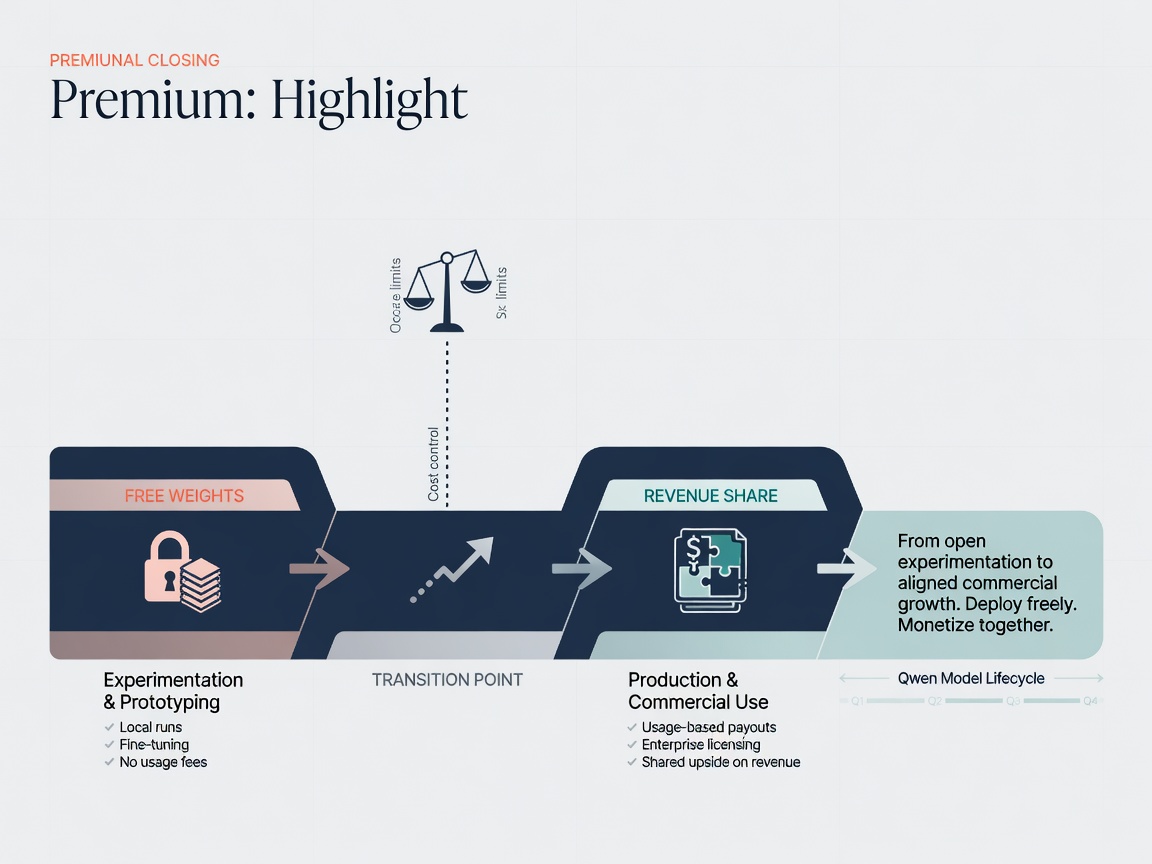
The real story here is that "open-weight" is evolving into a tiered access strategy. By implementing revenue sharing, Alibaba is attempting to capture a piece of the application-layer value rather than just competing on the commodity of weights. As Fu noted, "At the application layer, there’s value out there for how you use it, how you actually get the models and the tokens to do something useful." For practitioners, this means the "open" in open-weight is becoming conditional. If you're shipping a product at scale, you need to factor in these licensing costs as a line item now. The "freemium" model is essentially a way to protect the provider's margins while still fostering a developer ecosystem that can iterate freely until they hit the scale that triggers the commercial tax.
Got a question about how this applies to you? →
Keep reading
Follow the thread
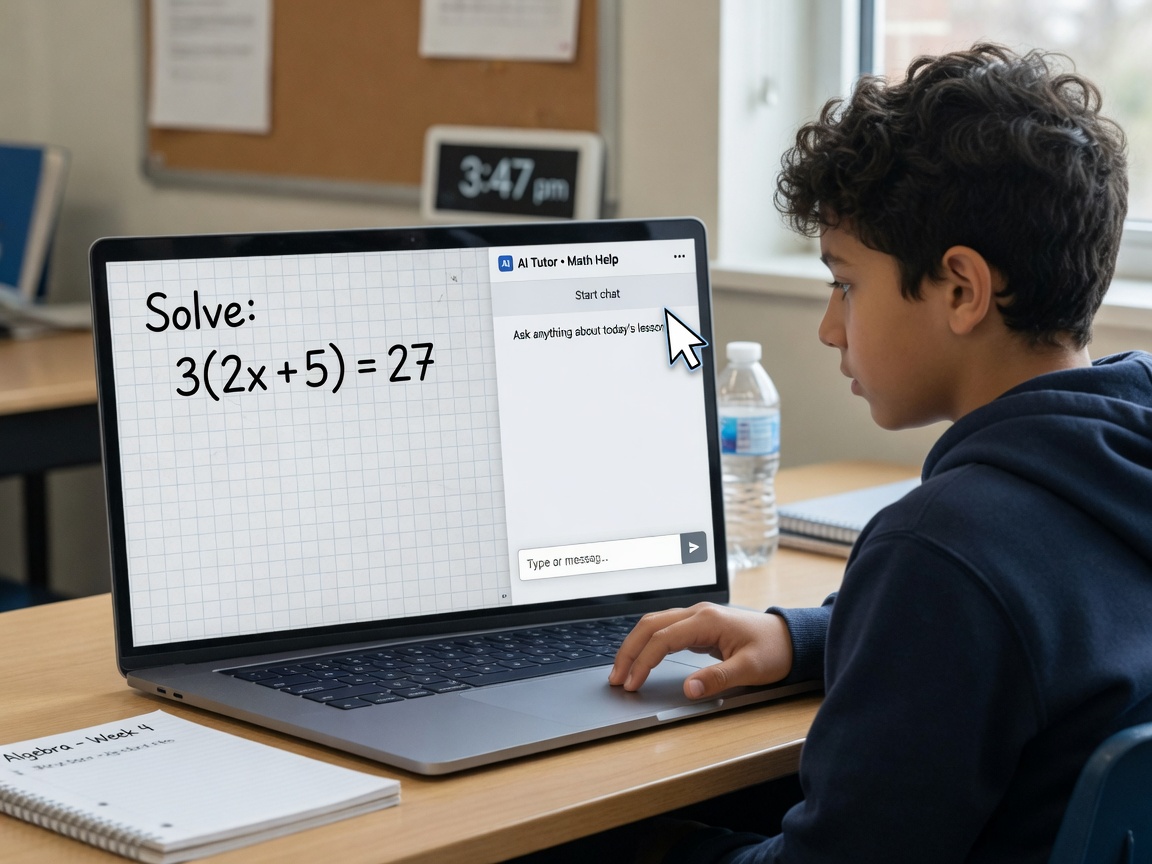
AI Tutors Work Only If Students Use Them: Trial
A two-year trial across 18 middle schools found Khan Academy's AI tutor raised math scores modestly - but here's the catch: the gains looked just like those from practice without any AI at all. The real story isn't whether AI tutoring works; it's that 96% of students tried it and almost none used it when they actually needed help.
Read this noteSame lane, different angle
Spectral Attacks Reveal a Hidden Weak Spot in Vision-Language Models
Researchers found a way to attack vision-language models using the model's own internal geometry — aligning representations with the subspaces the model cares about least. It beats existing baselines, and the same insight could make these models tougher.
SPEAR Turns Any Unreal Project Into an Embodied AI Simulator
A new open-source library exposes over 14,000 Unreal Engine functions to Python at no wrapper cost — turning any UE project into candidate training infrastructure for embodied AI at 73 fps photorealistic rendering.