The Operational Gap: Why Open-Source AI Is Winning the Demo but Losing the Deployment
The original draft was a bit too 'reporter-style' and lacked the high-energy, direct punch of the 'Builder' persona. I tightened the prose to remove passive phrasing, sharpened the LinkedIn hook to create a real stake for developers, and emphasized the 'Model vs. Systems' engineering trade-off to strengthen the perspective.
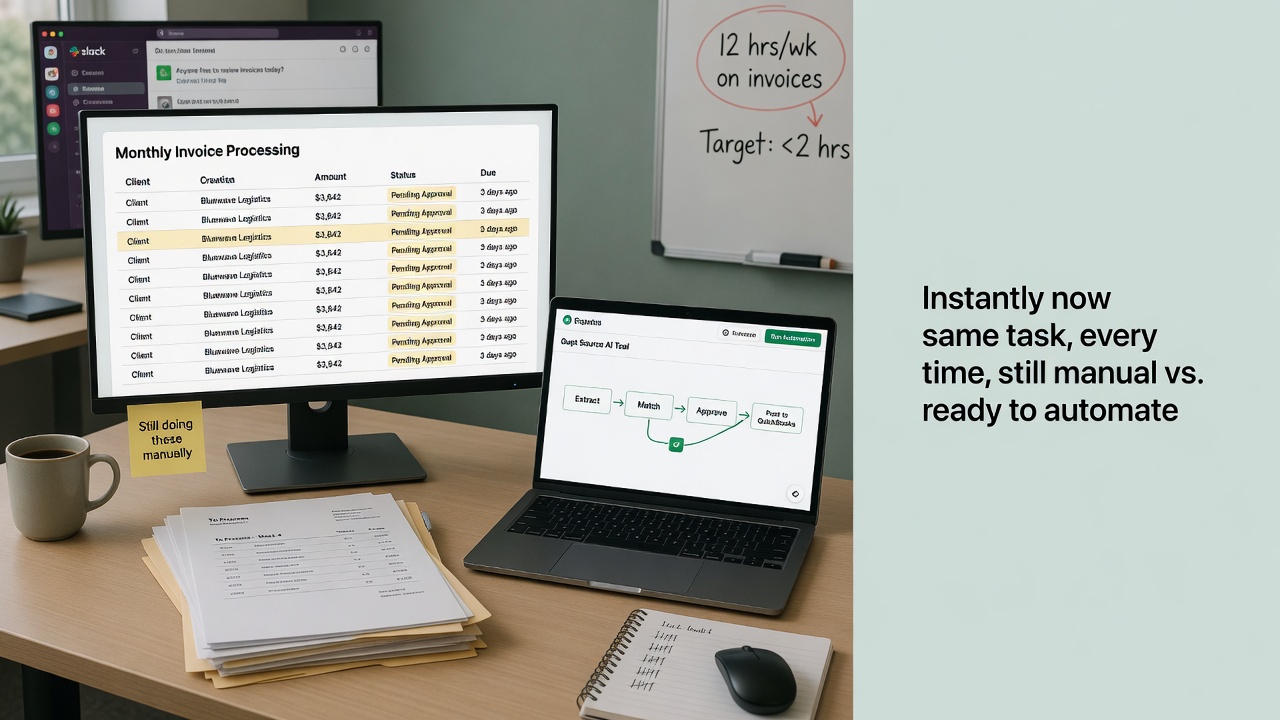
Automation needs a narrow first win
The best first AI workflow is usually a repeated task with a clear input, clear output, and a human approval step.
Let’s be real: we’ve won the 'intelligence' war. Open-weight models have reached parity with closed models in coding, instruction-following, and general knowledge. This isn't just a theoretical win; it’s a massive economic shift. Over the last 36 months, inference costs for GPT-4-class models have collapsed from $20 to $0.40 per 1M tokens. We are moving past the era where the primary barrier was 'can the model do it?' and into a phase where the real hurdle is 'can you actually run it at scale?'
The High-Volume Pivot
Look at the routing data—it tells the story of a massive pivot toward open weights for heavy lifting. By mid-2026, open-weight models were routing a majority of tokens on OpenRouter. We’re also seeing a massive shift in geography; Chinese-built models are currently routing more than 3:1 tokens compared to US-built ones in high-volume contexts, with the top nine models routing roughly 18T weekly tokens for Chinese-built models against ~5.5T for US-built ones. This follows a period of rapid convergence where the capability gap between open and closed models shrunk from 8.04% to as low as 0.5% in mid-2024, before reopening slightly to 3.3% by March 2026. While DeepSeek-R1 briefly matched the top US model in early 2025, the differentiator is no longer the raw weights; it’s about where the work actually happens.
Worth a look
Phugialy Picks

AI Engineering: Building Applications with Foundation Models
A practical guide to building real-world applications with foundation models and LLMs.

GMKtec K15 AI Mini PC Oculink Intel Ultra 5 125U 32GB DDR5 512GB SSD | Desktop Computer AI Boost, 3X M.2 2280 Storage Expansion, Dual NIC...

GEEKOM IT15 AI Mini PC, Intel Ultra 9 285H(99 Tops), 32GB DDR5, 1TB SSD | The Most Powerful Workstation,Arc 140T GPU,WiFi 7,8K Business D...
Some Phugialy Picks use affiliate links. If you buy through one, Phugialy may earn a commission. It doesn't change what we recommend. Full disclosure →
The Infrastructure Wall
Despite this parity, there is a glaring 'operational gap' that is throttling open-source scaling. Only 51% of open-model teams successfully reach production, compared to 63% for those using closed models. This is the friction of infrastructure, security, and maintenance hitting home. While 79% of developers adding AI functionality are choosing open models—driven by cost collapse and the need for control—the path to production remains a manual construction project. For a dev, it means that while the model might perform flawlessly in a notebook, the reality of handling production-grade security, data privacy, and maintenance at scale is where the real friction lies.
Solving the Engineering Problem
The real story here is that we have successfully commoditized intelligence, but we haven't yet standardized the delivery. The question isn't whether an open model can perform a specific task; it's what happens when you have to manage that model across a messy production environment without a 'buy' button. Enterprises can pay for a managed experience with closed models, but open deployment currently waits on tooling that nobody has finished. For developers, the next phase of the AI boom isn't about finding a better model; it's about building the standardized plumbing required to make those models reliable at scale. We are trading the 'black box' of closed APIs for the 'manual labor' of open-source infrastructure, and the real work is in the latter.
Got a question about how this applies to you? →
Keep reading
Follow the thread
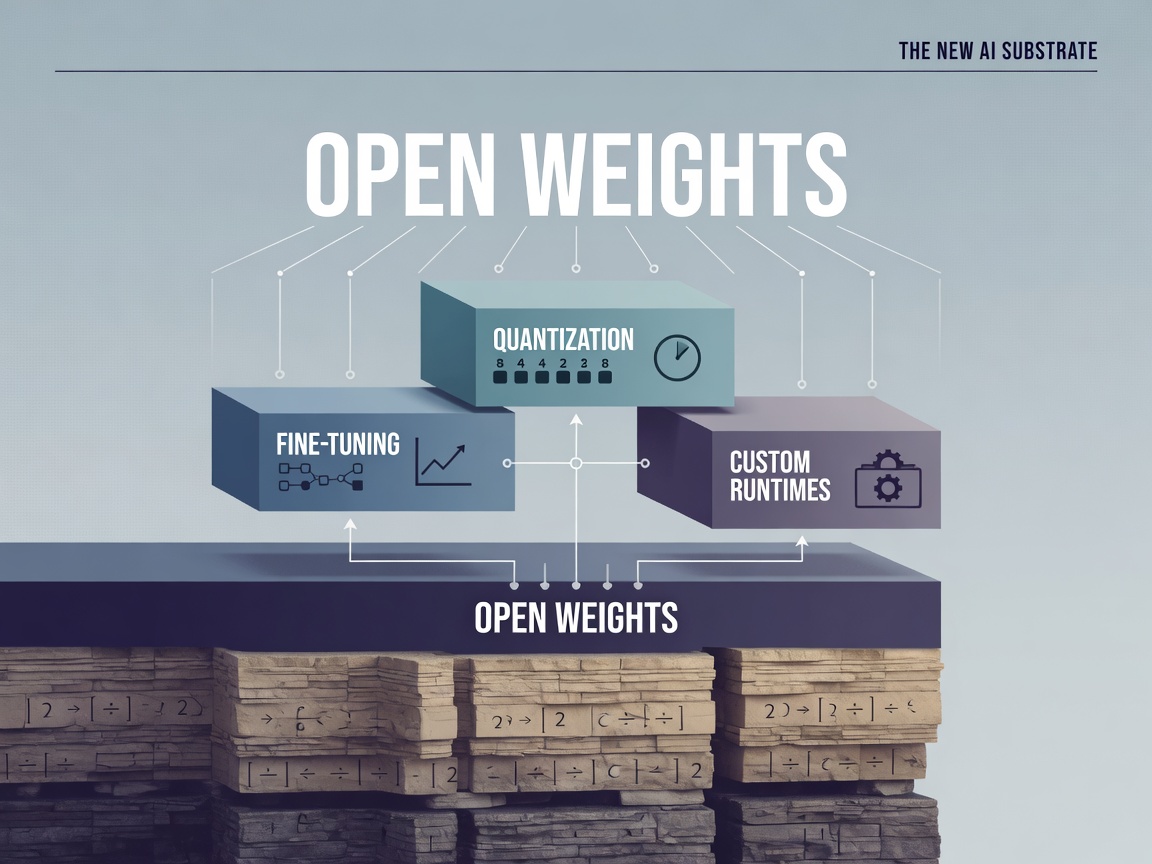
The Shift Toward Open-Weight Models as the Standard AI Substrate
If the open ecosystem is the inevitable winner, why are we still wasting resources building proprietary moats that are destined to be bypassed by a more portable substrate?
Read this noteSame lane, different angle
AI Tutors Work Only If Students Use Them: Trial
A two-year trial across 18 middle schools found Khan Academy's AI tutor raised math scores modestly - but here's the catch: the gains looked just like those from practice without any AI at all. The real story isn't whether AI tutoring works; it's that 96% of students tried it and almost none used it when they actually needed help.
Spectral Attacks Reveal a Hidden Weak Spot in Vision-Language Models
Researchers found a way to attack vision-language models using the model's own internal geometry — aligning representations with the subspaces the model cares about least. It beats existing baselines, and the same insight could make these models tougher.