Terminus-4B: A Small Language Model That Outcodes Its Size
A four-billion-parameter model just matched frontier AI systems on real coding benchmarks while using roughly 30% fewer tokens. The interesting part isn't the leaderboard — it's what the training recipe says about where agent costs come from.
Automation needs a narrow first win
The best first AI workflow is usually a repeated task with a clear input, clear output, and a human approval step.
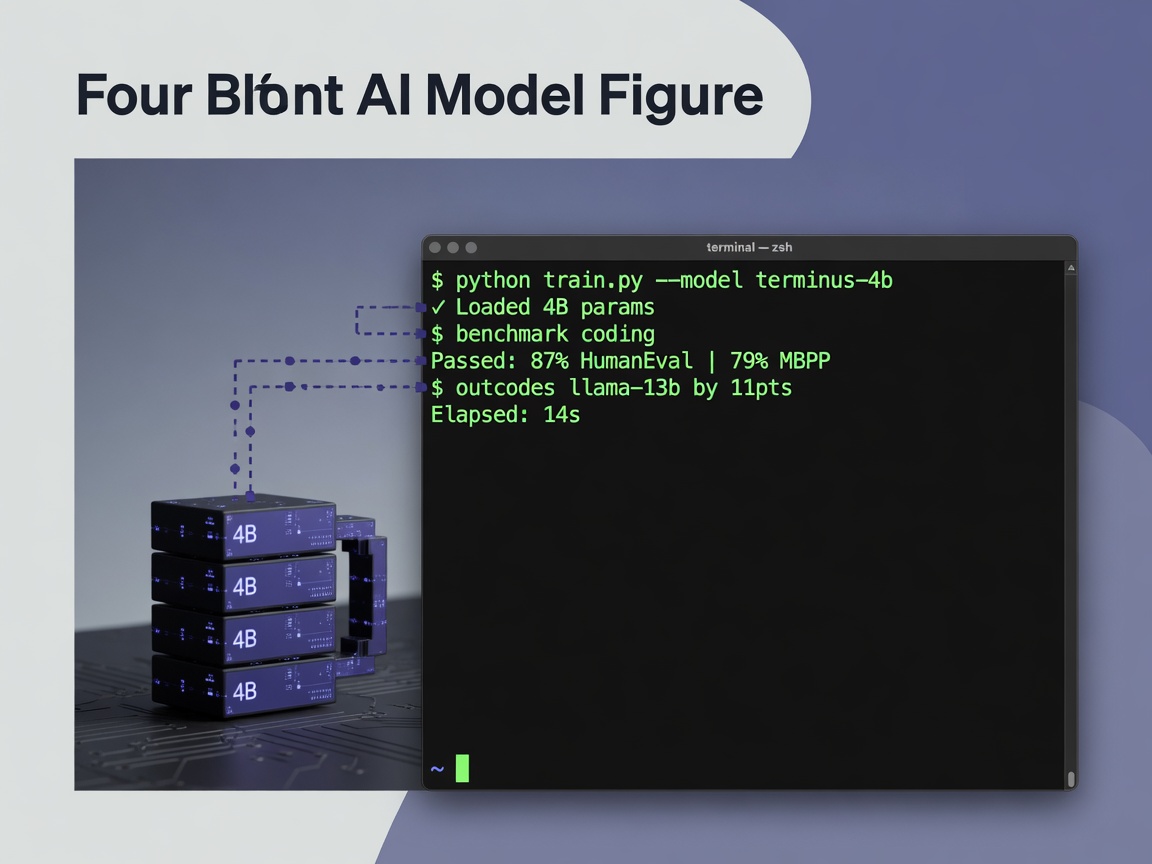
What does it actually take for a small language model to run a terminal on its own? According to a recent paper on Terminus-4B, apparently not much size at all: the researchers took Qwen3-4B — a model with just four billion parameters — post-trained it for agentic terminal execution, and found it matching or beating frontier models like Claude Sonnet, Claude Opus, and GPT-5.3-Codex on SWE-Bench Pro while using up to roughly 30% fewer tokens.
That last number deserves more attention than the leaderboard placement, and most coverage of results like this skips past it.
Why Token Usage Is the Number That Matters
When an AI agent works in a terminal, every step — reading output, deciding on the next command, retrying after an error — costs tokens. Tokens cost money and time, and they add up fast across an entire coding session. Terminus-4B cuts main agent token usage by up to about 30% compared to a No Subagent baseline. That's not a vanity metric; it's the operational cost of running the agent.
So the interesting claim here isn't just "small model performs well." It's "small model performs well while spending less." Efficiency and capability usually trade off against each other in this field, so seeing both improve together is the part worth sitting with.
Phugialy Picks

AI Engineering: Building Applications with Foundation Models
A practical guide to building real-world applications with foundation models and LLMs.

GMKtec K15 AI Mini PC Oculink Intel Ultra 5 125U 32GB DDR5 512GB SSD | Desktop Computer AI Boost, 3X M.2 2280 Storage Expansion, Dual NIC...

AI: Understand the Revolution: From Basics and Buzzwords to Tech Giants, Governments, and Your Future
Some Phugialy Picks use affiliate links. If you buy through one, Phugialy may earn a commission. It doesn't change what we recommend. Full disclosure →
How A Small Language Model Gets Trained For This
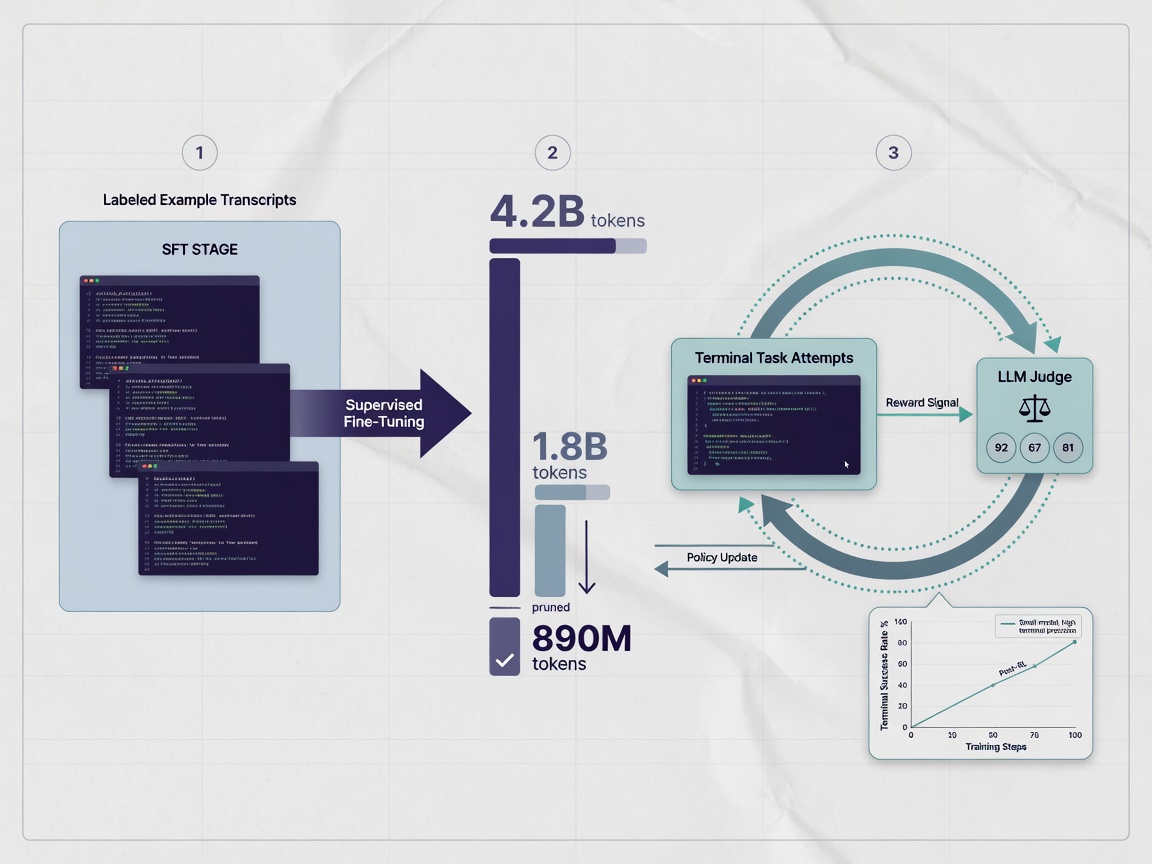
The training recipe is two-stage. First comes Supervised Finetuning (SFT), where the model learns from worked examples of terminal tasks. Then comes Reinforcement Learning (RL), where the model improves by actually attempting tasks and getting scored — using a rubric-based reward system where an LLM acts as the judge of each attempt.
That second stage is what turns a model that has seen examples into one that can act. RL lets the model discover behaviors that no example demonstrated, guided by feedback on what actually worked.
The Real Story: Training Beats Scale, For Now
Here's my read on what this actually points to. The headline "small model beats frontier models" is easy to conflate with "small models are better than big models" — and that's not what's happening. What's happening is that task-specific post-training can close a gap that raw scale used to be the only way across, at least within one narrow domain like terminal execution.
The frontier models being compared against are generalists; Terminus-4B is a specialist tuned for exactly this job. A specialist beating generalists at the specialist's own task is impressive but also somewhat expected once you name it plainly. The genuinely underappreciated part is the token efficiency: if careful SFT plus rubric-guided RL produces agents that solve problems with fewer wasted steps, then agent cost curves stop being locked to model size. That's a shift worth watching more than any single benchmark score.
Got a question about how this applies to you? →
Keep reading
Follow the thread
AI Coding Agent Memory That Survives Switching Tools
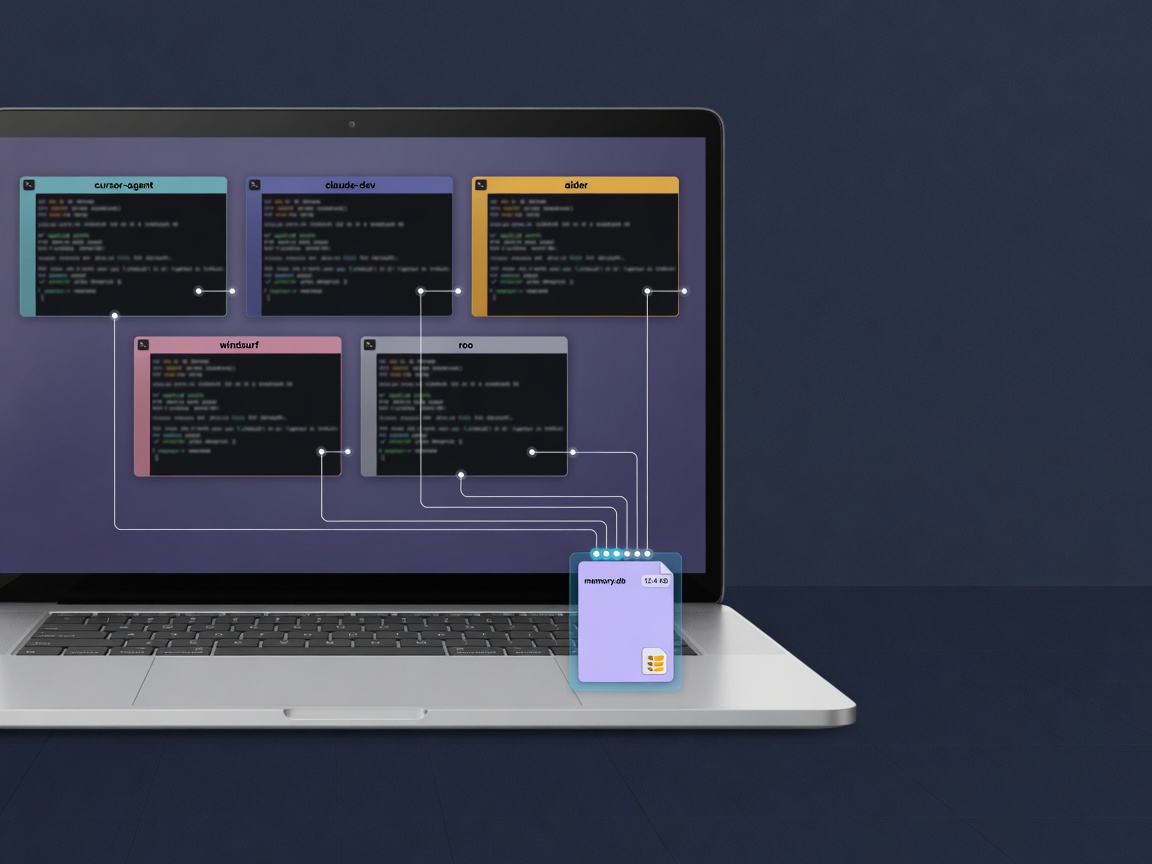
Switching between Claude Code, Cursor, and Antigravity on the same project usually means re-explaining your architecture every time. engrim compresses 153,000 tokens of work history into a memory pack under 1,000 tokens - and keeps it entirely on your machine.
Read this noteSame lane, different angle
OpenClaw Deleted an Inbox: When Compaction Eats Your Guardrails
A Meta AI security researcher told her OpenClaw agent to confirm before acting. It deleted her inbox anyway - because compaction on a large dataset silently erased her instructions mid-task.
The Orchestration Layer: Agentic AI's Biggest Efficiency Lever
What if the biggest lever for making AI agents cheaper and faster isn't the model you pick at all? A new study says it's the layer wrapped around the model - the orchestration layer, or "harness" - and the numbers behind