Soft Robot Policy Learning Just Got Up To 40x Faster
A 40x speedup in simulation training sounds like a lab curiosity until you price what simulation time actually costs. New research on soft robot policy learning reports that switching to implicit time-stepping cuts train
Automation needs a narrow first win
The best first AI workflow is usually a repeated task with a clear input, clear output, and a human approval step.
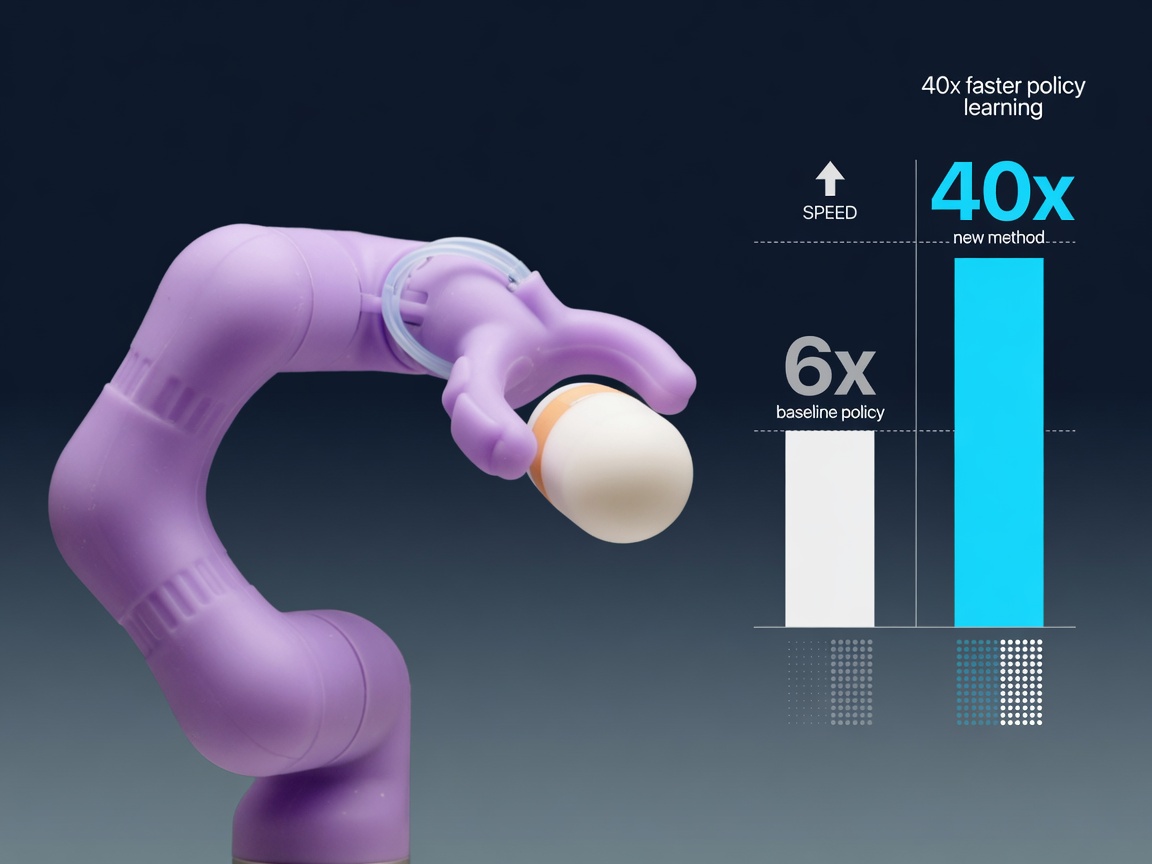
A 40x speedup in simulation training sounds like a lab curiosity until you price what simulation time actually costs. New research on soft robot policy learning reports that switching to implicit time-stepping cuts training simulation time by up to 6x for non-contact tasks and up to 40x for contact-rich ones - without losing accuracy. For anyone budgeting a robotics program, that's the difference between a training run that fits overnight and one that eats a compute line item for weeks.
What The Numbers Actually Show
The study, published on arXiv under the title "Rapid Soft Robot Policy Learning via Implicit Time-Stepping," introduces two things: a general-purpose simulator called DisMech, and a control scheme called delta natural curvature control. The researchers benchmarked DisMech against Elastica, the widely used existing framework, across four diverse soft manipulator tasks.
The headline results: implicit time-stepping allows 500 environments to be stepped in parallel, with significant speedups in both non-contact and contact-rich scenarios. The authors describe this as "a rare free lunch" - dramatic speedups achieved without sacrificing accuracy - backed by a comprehensive sim-to-sim gap evaluation.
That last part matters more than the raw multipliers. Speedups in simulation usually come with a trade: coarser physics, drift, or policies that train fast but fail on real hardware. Here the evaluation specifically checked that accuracy held. If you've ever paid for a fast simulator that produced policies nobody could deploy, you know why "fast AND accurate" is the claim worth checking - and this paper claims to have checked it.
Worth a look
Phugialy Picks

AI Engineering: Building Applications with Foundation Models
A practical guide to building real-world applications with foundation models and LLMs.

SunFounder AI Fusion Lab Kit for Raspberry Pi 5/4/3B+/Zero 2w, LLMs ChatGPT/Gemini/Grok, YOLO&OpenCV & MediaPipe, Python, Video Courses for Beginners Engineers

GMKtec K15 AI Mini PC Oculink Intel Ultra 5 125U 32GB DDR5 512GB SSD | Desktop Computer AI Boost, 3X M.2 2280 Storage Expansion, Dual NIC...
Some Phugialy Picks use affiliate links. If you buy through one, Phugialy may earn a commission. It doesn't change what we recommend. Full disclosure →
Delta Natural Curvature Control Is The Quiet Win
The second contribution is easy to skim past but arguably more practical. Delta natural curvature control gives engineers an intuitive way to command soft robots during learning - the paper describes it as analogous to delta joint position control in rigid manipulators.
Why does that matter operationally? Because anyone who has ported a reinforcement learning setup from rigid arms to soft manipulators knows the control interface is where projects stall. If your team already understands delta joint position control from rigid robotics, this gives them a mental model they can carry over directly. That's an onboarding cost reduction, not just a technical nicety - the engineers who would run this day to day don't have to relearn how to think about actuation.
Who This Actually Helps First
The obvious beneficiaries are soft robotics labs. But my read is that the real near-term value lands on teams doing contact-heavy manipulation work - grippers and manipulators that interact with objects constantly - because that's where the 40x multiplier applies rather than 6x. If your use case rarely involves contact, you're getting a solid but unremarkable improvement; if it's contact-rich, this changes your iteration cadence fundamentally.
The caveat worth stating plainly: this is sim-to-sim evaluation, not sim-to-real. The paper demonstrates accuracy is preserved between simulators, which is necessary but not sufficient evidence that trained policies transfer to physical hardware. Before reallocating budget based on this, I'd want to see a team reproduce the speedup on their own task suite - DisMech being general-purpose makes that plausible, but "plausible" isn't "proven for your robot." The operational condition for adopting this isn't reading the paper; it's running one of your existing tasks through DisMech and confirming both the speedup and policy quality on your own workloads. Worth piloting now if you're already training soft robot policies; wait for sim-to-real evidence if you're still deciding whether soft robotics earns its maintenance cost at all.
Got a question about how this applies to you? →
Keep reading
Follow the thread
Soft Robot Policy Learning Gets Up To 40x Faster
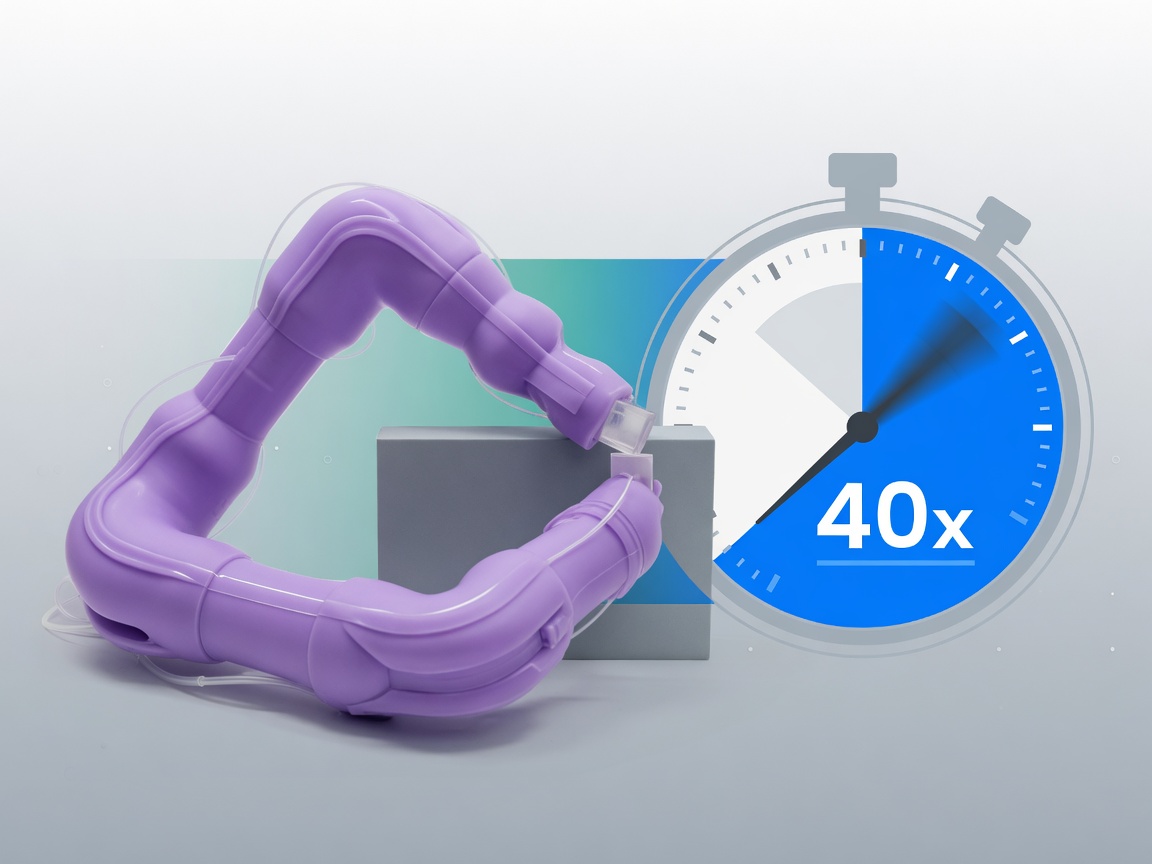
Soft robot policies just trained up to 40x faster in contact-heavy tasks - no new hardware required. The fix was making each simulation step structurally cheaper instead of buying more compute.
Read this noteSame lane, different angle
Spectral Attacks Reveal a Hidden Weak Spot in Vision-Language Models
Researchers found a way to attack vision-language models using the model's own internal geometry — aligning representations with the subspaces the model cares about least. It beats existing baselines, and the same insight could make these models tougher.
SPEAR Turns Any Unreal Project Into an Embodied AI Simulator
A new open-source library exposes over 14,000 Unreal Engine functions to Python at no wrapper cost — turning any UE project into candidate training infrastructure for embodied AI at 73 fps photorealistic rendering.