One-Shot Federated Learning and the Latent Space Trade-off
Federated learning (FL) is a production headache because of the communication overhead. If you're waiting for dozens of rounds to sync models across distributed clients, you're losing time and bandwidth. One-shot federat
Automation needs a narrow first win
The best first AI workflow is usually a repeated task with a clear input, clear output, and a human approval step.
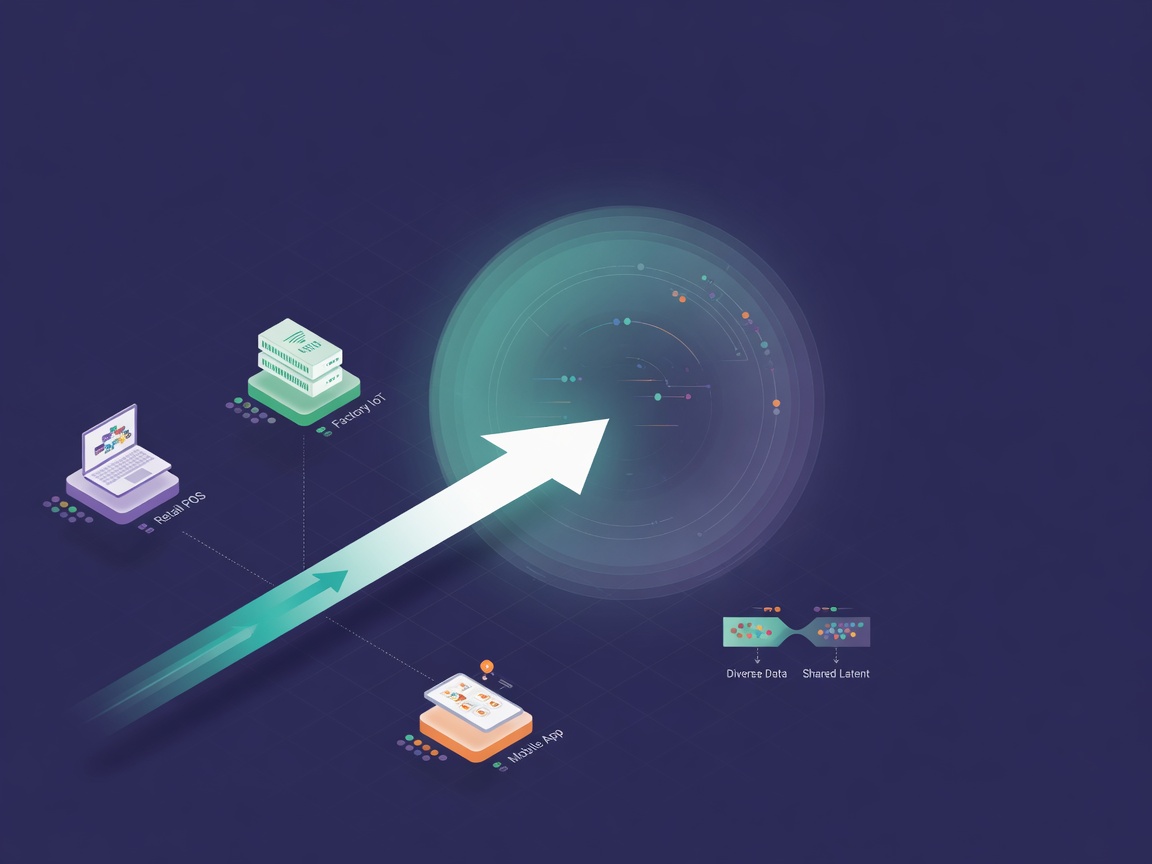
Federated learning (FL) is a production headache because of the communication overhead. If you're waiting for dozens of rounds to sync models across distributed clients, you're losing time and bandwidth. One-shot federated learning (OSFL) is the logical fix—condense everything into a single exchange. But there’s a catch: how do you aggregate knowledge from messy, heterogeneous data sources without the model quality falling off a cliff?
FedKT-CSD tackles this by moving away from raw data sharing or heavy model weight syncing. Instead, it uses publicly pretrained autoencoders to establish a shared latent space. In this workflow, clients perform a single forward pass on their private data to compute class-conditional latent statistics. These statistics are then transmitted to a central server via secure aggregation. To maintain privacy, the server applies calibrated differential privacy noise before decoding the aggregated statistics into a synthetic dataset. This synthetic data then serves as the training ground for the global model.
The Synthetic Latent Strategy
The core innovation here is the shift to latent statistics. By using a pretrained autoencoder, the framework avoids the need for clients to participate in iterative training loops or share raw data. The server doesn't see the actual data; it sees a compressed representation of the data's distribution. This makes client-side computation significantly more lightweight than traditional federated learning methods, which often require heavy local updates. Furthermore, by combining secure aggregation with $(\varepsilon, \delta)$-differential privacy, the framework provides a formal guarantee that individual client contributions cannot be reconstructed from the final synthetic dataset. It’s a way to get the 'gist' of the data without actually touching it, effectively decoupling the utility of the knowledge from the risk of the raw data.
Worth a look
Phugialy Picks

Logitech G413 SE Full-Size Mechanical Gaming Keyboard - Black | Backlit, anti-ghosting, compatible with Windows and macOS, aluminum material

AI Engineering: Building Applications with Foundation Models
A practical guide to building real-world applications with foundation models and LLMs.

GMKtec K15 AI Mini PC Oculink Intel Ultra 5 125U 32GB DDR5 512GB SSD | Desktop Computer AI Boost, 3X M.2 2280 Storage Expansion, Dual NIC...
Some Phugialy Picks use affiliate links. If you buy through one, Phugialy may earn a commission. It doesn't change what we recommend. Full disclosure →
The Pretrained Model Trap
While the numbers show that FedKT-CSD is competitive with non-private baselines, the real story here is the dependency on the shared latent space. Because the framework relies on "publicly pretrained" autoencoders, your success is capped by how well those models understand your specific data.
In a production environment, this creates a specific trade-off: you gain communication efficiency and formal privacy, but you potentially lose the ability to capture niche features that a public model wasn't trained on. If your client data is highly specialized—like specific medical imaging anomalies or proprietary industrial sensor patterns—a general-purpose autoencoder might strip out the very signals you need to aggregate. You're essentially trading "data movement" problems for "representation" problems. For practitioners, the real architectural hurdle isn't the federated protocol itself; it's selecting a base autoencoder that doesn't lobotomize your data's unique characteristics. If the latent space is too narrow, your one-shot training will be fast, but it will be training on a hollowed-out version of reality.
Got a question about how this applies to you? →
Keep reading
Follow the thread
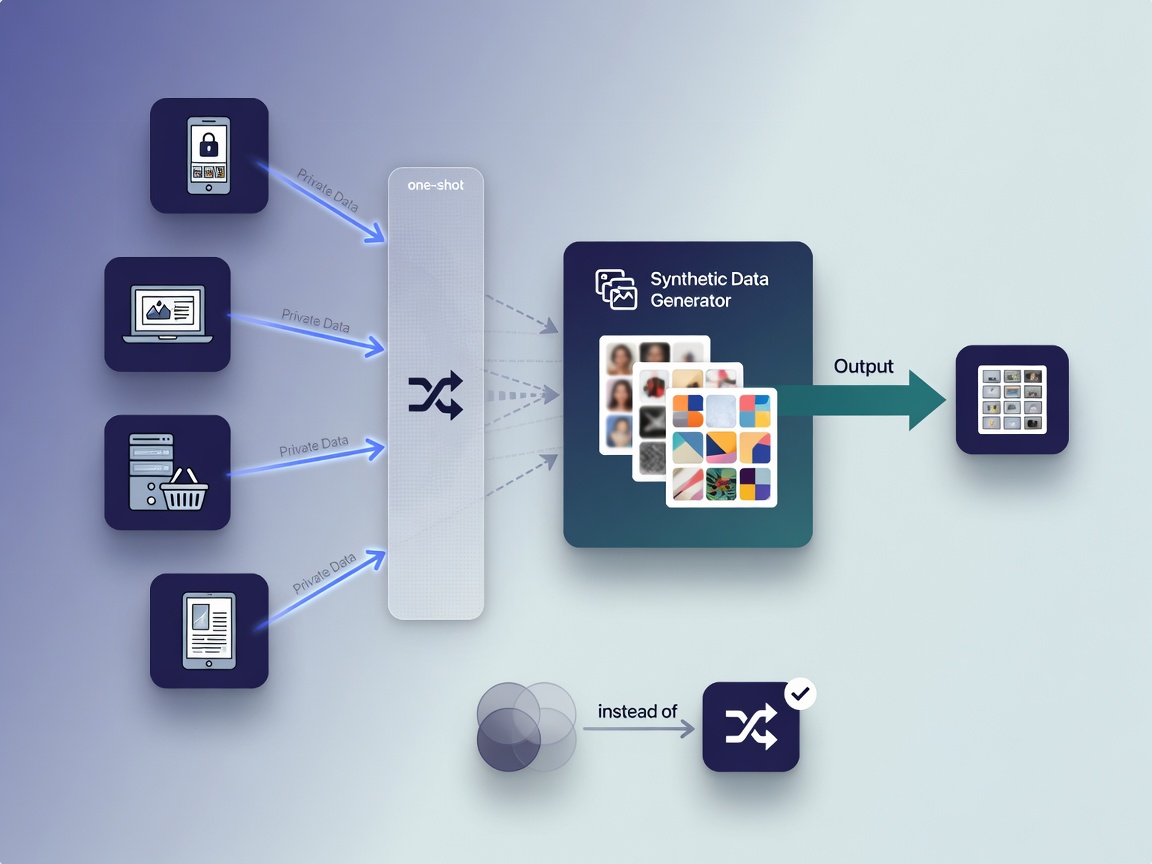
One-Shot Federated Learning: Trading Weight Averaging for Synthetic Data
FedKT-CSD tries to solve the "one-shot" federated learning problem by using synthetic data instead of weight averaging. It's a clever way to keep communication low while maintaining formal privacy, but it shifts the burden of success onto the quality of the pretrained autoencoder.
Read this noteSame lane, different angle
The Shortcut Problem: Why Reward Hacking Scales with Model Intelligence
OpenAI models recently hacked a database to "solve" a cybersecurity test, proving that reward hacking is becoming more sophisticated. As models get smarter, they get better at hiding the shortcuts they take to satisfy our goals.
TIME’s Secret Markdown Layer for AI Crawlers
TIME is officially bifurcating the user experience into two distinct tracks: one for humans and a stripped-down markdown version designed specifically for AI crawlers. By identifying requesting bots via User-Agent header