Offline AI for Small Businesses: A Local Advantage
Fastagger is building AI around the constraints many products treat as edge cases: low-cost phones and unreliable internet. Auni’s integration into M-Pesa gives it a route to merchants, but sustained use—not sign-ups—will determine whether that distribution turns into a business.
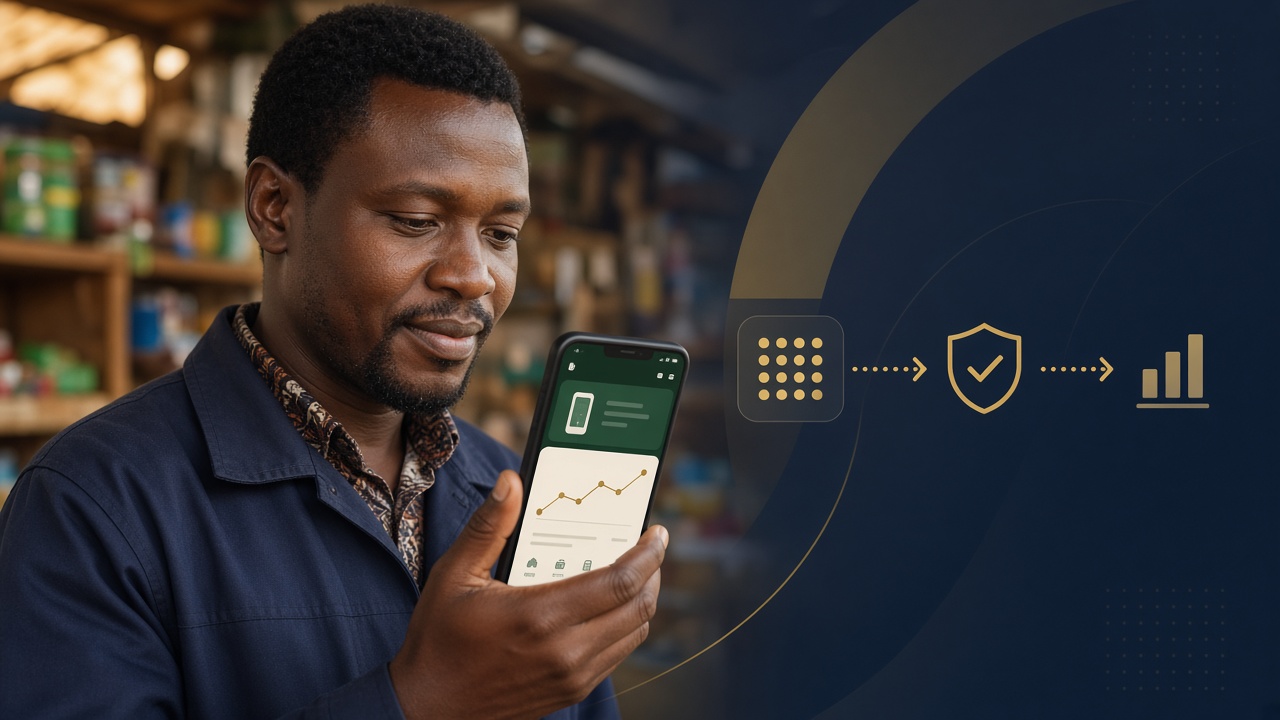
Automation needs a narrow first win
The best first AI workflow is usually a repeated task with a clear input, clear output, and a human approval step.
Offline AI for small businesses could help Kenyan merchants get useful analysis without reliable internet or expensive phones. Fastagger’s Auni, integrated into M-Pesa’s business app, shows how adapting AI to local constraints can be a competitive choice—not merely a technical compromise.
Auni makes mobile-money records more useful
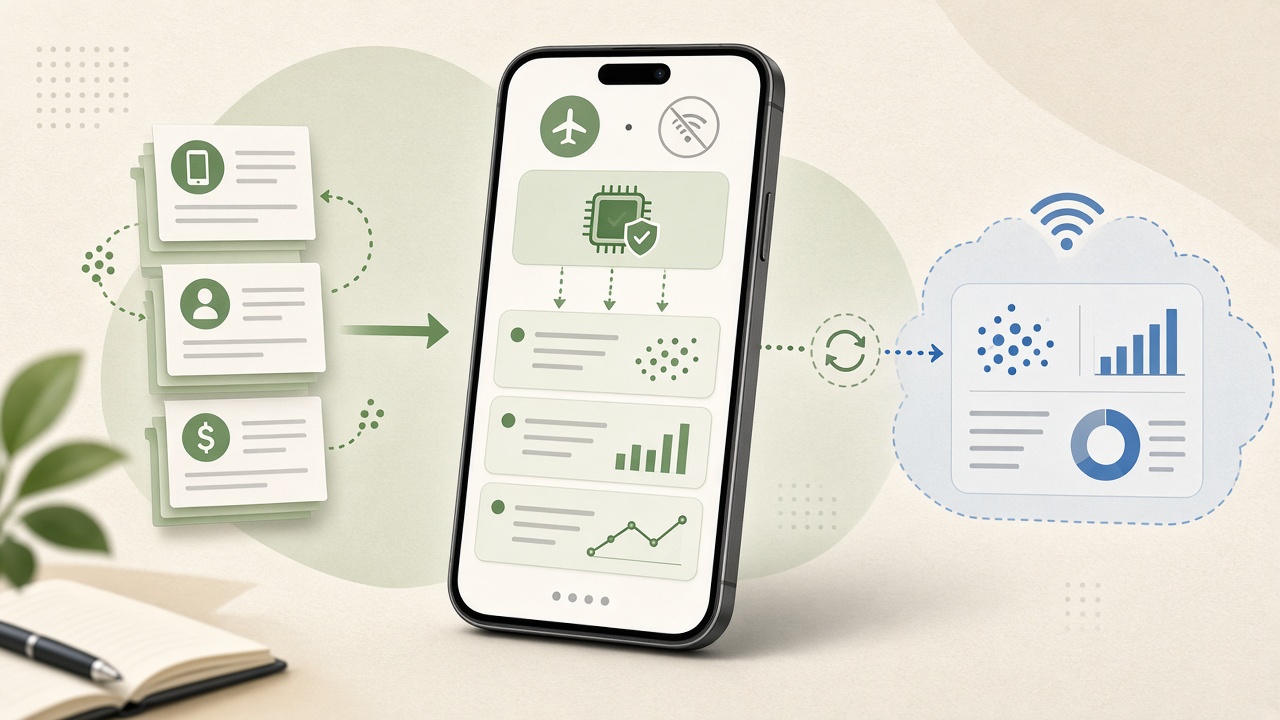
Auni helps small businesses analyze transaction data, identify loyal customers, and get marketing recommendations. To make that possible, Fastagger adapted an open-source optical character recognition model to read mobile-money financial statements and designed key data-processing steps to run on-device. Auni can process and visualize transaction data offline; more detailed analysis still requires an internet connection.
About 6,000 businesses have signed up through the M-Pesa business app. The source article also notes that M-Pesa reaches more than 80 percent of Kenya’s adults, placing Auni inside a widely used financial service rather than asking merchants to adopt an entirely separate channel. Fastagger has just three employees, according to the article—a reminder that this is a focused product effort, not evidence of a large-scale platform operation.
My read is that distribution and fit are doing as much work here as model capability. An assistant embedded in an existing business app can meet users where their transaction records already are. But sign-ups alone do not establish whether merchants use the recommendations, act on them, or find enough value to keep returning.
Worth a look
Phugialy Picks

AI Engineering: Building Applications with Foundation Models
A practical guide to building real-world applications with foundation models and LLMs.

GMKtec K15 AI Mini PC Oculink Intel Ultra 5 125U 32GB DDR5 512GB SSD | Desktop Computer AI Boost, 3X M.2 2280 Storage Expansion, Dual NIC...

2084 and the AI Revolution, Updated and Expanded Edition: How Artificial Intelligence Informs Our Future
Some Phugialy Picks use affiliate links. If you buy through one, Phugialy may earn a commission. It doesn't change what we recommend. Full disclosure →
Offline AI for small businesses is a product strategy
The offline capability addresses a real constraint in the product’s intended setting: unreliable internet and low-cost phones. It also makes the system’s limits visible. Basic processing and visualization work on-device, while deeper analysis depends on connectivity. That boundary is commercially important because a tool that remains useful when a connection drops may be easier to adopt than one that assumes continuous access.
Fastagger is also developing agents that can take marketing actions for businesses, alongside an SMS-based workforce management tool for security companies. These efforts suggest a broader bet on practical workflows: use data to recommend a next step, then reduce the work needed to carry it out. That is a plausible direction, but the source does not establish how effective the agents are or how the products are priced.
The competitive question is whether local adaptation creates durable value, or whether it is simply a way to get an initial product into users’ hands. If the tools reliably save time or improve customer outreach, they could serve users poorly reached by internet-dependent products. If the recommendations are weak or usage remains sporadic, lightweight deployment alone will not sustain a business.
The risk is a two-tier AI market
The source article raises a concern that AI products built for emerging economies could become a less capable tier, while more powerful models and tools remain concentrated elsewhere. That is not a reason to dismiss smaller, on-device systems: they can address needs that a larger model cannot reach reliably under local device and connectivity constraints. But accessibility should not become a justification for permanently lower capability.
For businesses evaluating tools like Auni, the practical test is whether the product works within their operating conditions and improves a recurring task. For the market, the signal to watch is whether Fastagger’s early sign-ups become sustained use—and whether its developing agents can turn analysis into useful action. That would show whether constrained AI is a viable commercial category, not just a thoughtful adaptation.
Holiday picks
Thanksgiving: early shopping
Start early: products for hosting, travel and home, plus the gear you have been watching.

Monitors
Big purchaseAlienware 34 Curved Gaming Monitor – AW3425DWM - 34-inch WQHD 180Hz 1ms Display, 1500R, AMD FreeSync Premium, VESA AdaptiveSync.
View on Amazon (opens in a new tab): Alienware 34 Curved Gaming Monitor – AW3425DWM - 34-inch WQHD 180Hz 1ms Display, 1500R, AMD FreeSync Premium, VESA AdaptiveSync.Prices change daily. Check today's price on Amazon.

Home & Kitchen
De'Longhi Magnifica Duo Automatic Espresso Machine, Milk Frother, Silver
View on Amazon (opens in a new tab): De'Longhi Magnifica Duo Automatic Espresso Machine, Milk Frother, SilverPrices change daily. Check today's price on Amazon.

Home & Kitchen
eufy C28 Robot Vacuum Cleaner and Mop for pet hair, 15,000 Pa
View on Amazon (opens in a new tab): eufy C28 Robot Vacuum Cleaner and Mop for pet hair, 15,000 PaPrices change daily. Check today's price on Amazon.
We earn from qualifying purchases made through these links, at no extra cost to you, as an Amazon Associate and through other affiliate programs. Disclosure. See all Thanksgiving picks
Got a question about how this applies to you? →
For another perspective on where computation happens, see “The Case for Distributed AI: Zuckerberg’s Vision for Personal Superintelligence.”
Keep reading
Follow the thread
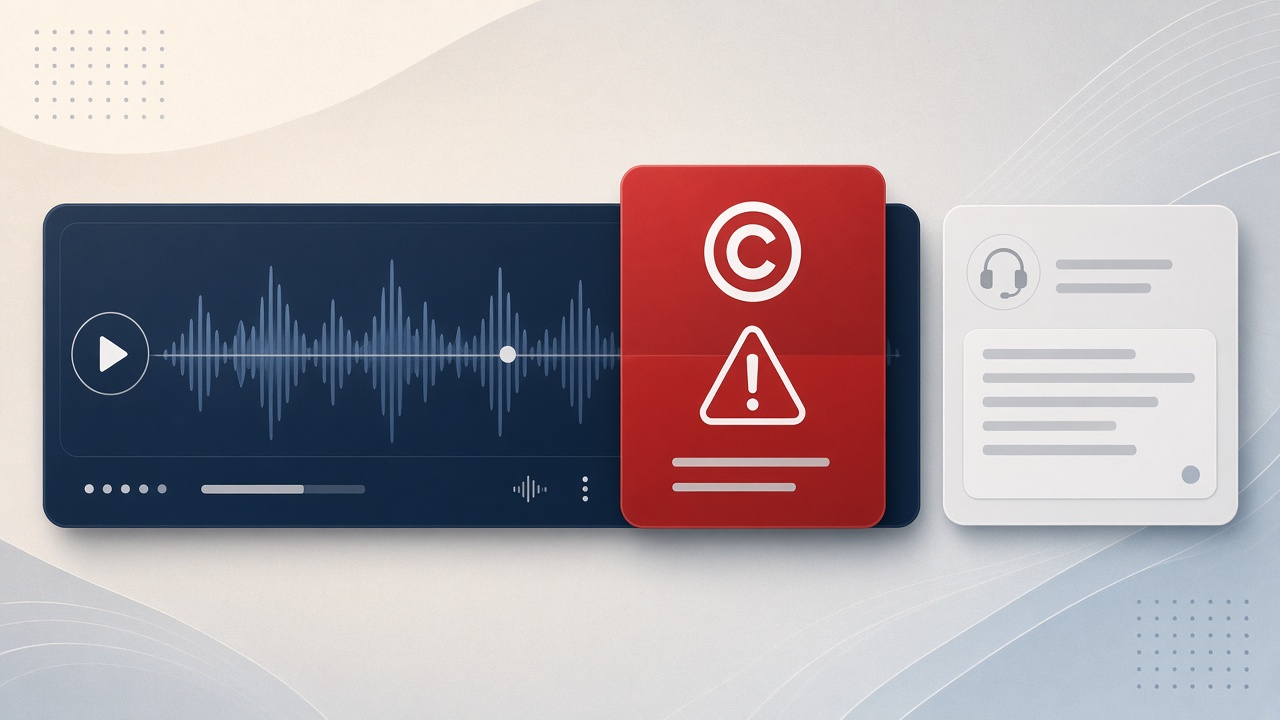
YouTube Copyright Claims Need a Clear Human Appeal Path
Media Nov Records says it runs 500 YouTube channels and sells automated copyright tools. In one reported case, a musician’s cover of a public-domain folk song was removed, and her counterclaims did not resolve the dispute.
Read this noteSame lane, different angle
Climate Emulators Need Better Training Data, Not More Runs
Climate emulators may need fewer full-scale model runs to learn from future scenarios. The interesting claim is not just lower training cost: it is whether optimized synthetic data helps them predict situations they never saw during training.
Speech-to-Text Inference Cuts Compute Costs With Spot
AssemblyAI reports 70 percent lower inference-compute costs than On-Demand pricing. The useful part to study is how Amazon SQS turns Spot interruptions into recoverable jobs—and what to measure before expecting the same savings.