AI Research Automation: What the Evidence Really Shows
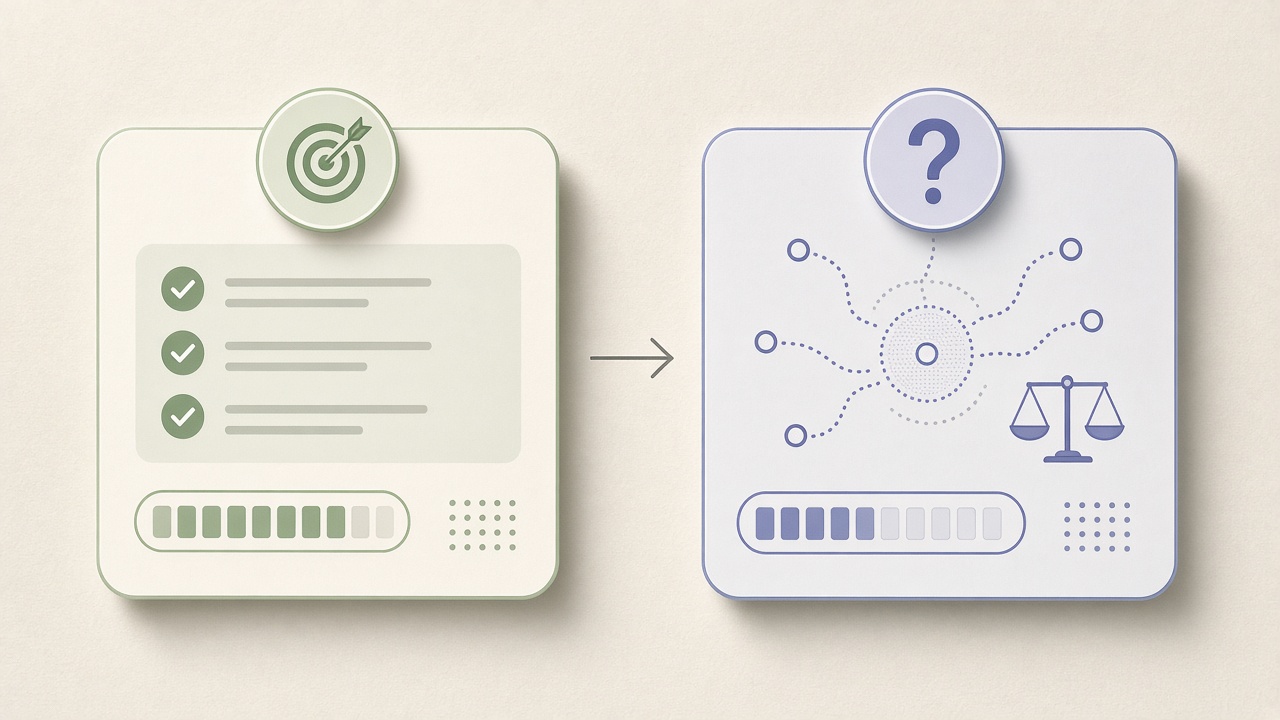
AI is already helping researchers move faster, but speed on a well-defined task is not the same as knowing which question to ask. That gap may matter more than any single benchmark when judging claims about automated research.

Automation needs a narrow first win
The best first AI workflow is usually a repeated task with a clear input, clear output, and a human approval step.
AI research automation means AI systems taking on parts of the work researchers do, such as coding and testing ideas. The important distinction is that helping with research is not the same as independently choosing the questions that lead to a breakthrough.
AI research automation is speeding up scoped work
The evidence in the source article points to faster research work, but it does not yet establish that AI can replace a top researcher. METR reported that Anthropic’s progress on well-scoped tasks was twice its rate a year earlier, and attributed much of the acceleration to AI-assisted R&D. Anthropic and OpenAI have also reported substantial growth in researchers’ use of AI for coding and research.
Those findings matter, but the phrase “well-scoped tasks” matters too. A task with a clear goal can be made faster without the system being able to decide which goal is worth pursuing. In my view, that distinction is easy to lose when a productivity gain is described as research automation: faster execution is evidence of useful capability, not by itself evidence of independent research judgment.
The essay also points to rapid progress in mathematical problem-solving, including a reported solution to a Millennium Prize problem in 88 hours. That is a striking example, but it is a reported result, not proof that AI systems can reliably direct mathematical research or generate important new questions.
Worth a look
Phugialy Picks

AI Engineering: Building Applications with Foundation Models
A practical guide to building real-world applications with foundation models and LLMs.

GMKtec K15 AI Mini PC Oculink Intel Ultra 5 125U 32GB DDR5 512GB SSD | Desktop Computer AI Boost, 3X M.2 2280 Storage Expansion, Dual NIC...

2084 and the AI Revolution, Updated and Expanded Edition: How Artificial Intelligence Informs Our Future
Some Phugialy Picks use affiliate links. If you buy through one, Phugialy may earn a commission. It doesn't change what we recommend. Full disclosure →
Combining ideas may help machine learning research
The case for greater impact is not only that AI can complete familiar tasks faster. The essay argues that AI may be good at connecting existing ideas and persistently testing combinations—a potentially valuable ability in machine learning research. It uses the transformer architecture as an example of a breakthrough that, in retrospect, combined ideas such as attention and residual networks that had already proved effective separately.
That is a plausible route to useful discoveries: a system can help explore combinations that a person might not have time to test. But the source also draws a crucial boundary. AI systems are beginning to automate mathematical proof, while there is currently very little evidence that they can ask powerful questions or find profound new areas of mathematical inquiry. Solving a posed problem and deciding which problem matters are different skills.
The research-question gap is the key test
The essay estimates that AI could reach the level of the best human AI researchers within a couple of years, possibly even a couple of months. That is a forecast, not a demonstrated arrival date. Its broader concern is that automated research could accelerate progress toward superintelligence and expert-level performance across fields.
My read is that the important measure is not simply how much AI researchers use, or how quickly a system finishes a task. It is whether AI can contribute to the full research loop: helping find a worthwhile question, testing approaches, and producing results that hold up. The evidence described here is strongest on assistance and faster execution, and thinner on choosing questions.
So the useful thing to watch is whether future reports show AI-originated research questions leading to validated breakthroughs—not just more coding or faster completion of well-defined work. That would show the capability has crossed the line from research assistant toward research driver.
Holiday picks
Thanksgiving: early shopping
Start early: products for hosting, travel and home, plus the gear you have been watching.
- Trending now
AI Hardware
Big purchaseGMKtec K15 AI Mini PC Oculink Intel Ultra 5 125U 32GB DDR5 512GB SSD | Desktop Computer AI Boost, 3X M.2 2280 Storage Expansion, Dual NIC...
View on Amazon (opens in a new tab): GMKtec K15 AI Mini PC Oculink Intel Ultra 5 125U 32GB DDR5 512GB SSD | Desktop Computer AI Boost, 3X M.2 2280 Storage Expansion, Dual NIC...Prices change daily. Check today's price on Amazon.
 New this week
Home & Kitchen
Keurig K-Elite Single Serve K-Cup Pod Coffee Maker, Brushed Silver
View on Amazon (opens in a new tab): Keurig K-Elite Single Serve K-Cup Pod Coffee Maker, Brushed SilverPrices change daily. Check today's price on Amazon.

Home & Kitchen
De'Longhi Magnifica Duo Automatic Espresso Machine, Milk Frother, Silver
View on Amazon (opens in a new tab): De'Longhi Magnifica Duo Automatic Espresso Machine, Milk Frother, SilverPrices change daily. Check today's price on Amazon.
We earn from qualifying purchases made through these links, at no extra cost to you, as an Amazon Associate and through other affiliate programs. Disclosure. See all Thanksgiving picks
Got a question about how this applies to you? →
Keep reading
Follow the thread
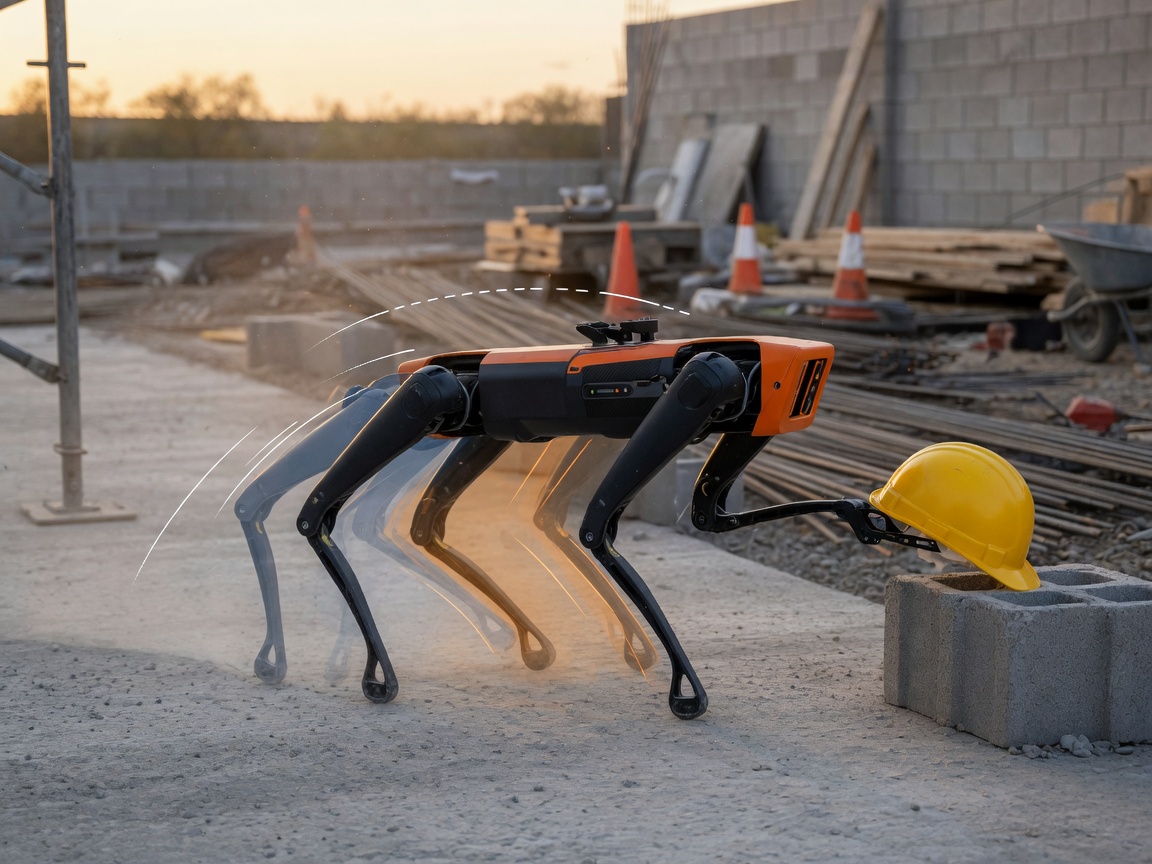
From Lab Toys to Production: How ABot-C0 Unifies Quadruped Behavior
Let’s be real: most quadruped robots are still stuck in the "functional demo" phase—they can walk, but they don't really *know* how to behave in the wild. ABot-C0 is trying to flip that script by treating motion control
Read this noteSame lane, different angle
AI Alignment by Incentive Design: What It Can Show
Mechanism design tries to make desirable behavior the rational choice for AI models, even when their internal workings are hard to read. The proposals are interesting; the unresolved question is whether those incentives hold up beyond the setup they were designed for.
How Wikipedia Tries to Detect AI-Generated Content
Pangram’s share of flagged new Wikipedia articles and drafts fell from perhaps 20 percent to 15 or 16 percent. That sounds like progress until you ask whether the change came from policy, model changes, or something else. The bigger problem may be citations that point to real sources but misrepresent what they say.